Junte-se a nós em uma viagem ao mundo dos livros!
Adicionar este livro à prateleira
Grey
Deixe um novo comentário Default profile 50px
Grey
Assine para ler o livro completo ou leia as primeiras páginas de graça!
All characters reduced
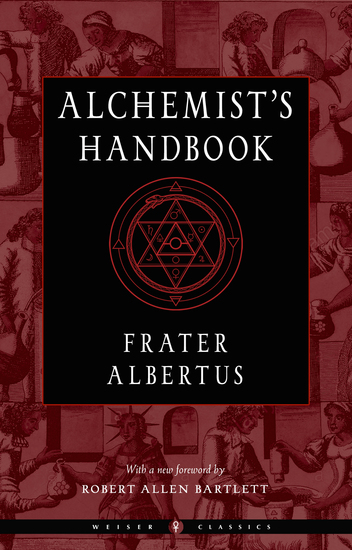
The Alchemist's Handbook - A Practical Manual - cover
LER

The Alchemist's Handbook - A Practical Manual

Frater Albertus

Editora: Weiser Books

  • 1
  • 0
  • 0

Sinopse

“If you really want to learn the basic principles of practical alchemy, Frater Albertus’ Alchemist’s Handbook is literally is worth its weight in gold.”—from the foreword by Israel Regardie, author of The Golden Dawn: The Original Account of the Teachings, Rites, and Ceremonies of the Hermetic OrderThe Alchemist's Handbook has long been considered a modern-day classic on the actual practice of alchemy since its first publication in 1960. The book still stands as a groundbreaking work presenting in clear, concise language a practical manual of working knowledge that was formerly handed down only under oath of secrecy.The scope of alchemical work is to provide both a means to synthesize all the other sciences and the necessary training of the intellectual and spiritual faculties. “Hermetic philosophy, with its practical arcanum,” writes Frater Albertus, “repeats itself over and over again in the ancient axiom ‘As above, so below. As below, so above.’"The Alchemist's Handbook discusses in detail:The basic fundamental principles of alchemy.A guide to the formation of an inexpensive home laboratory with illustrations of the necessary equipment.Step-by-step instructions for the work of the Lesser Circulation, the alchemical transformation within the plant kingdom.  “The teachings of Frater Albertus are part of a lineage that traces back to Rosicrucian sources and much earlier and The Alchemist’s Handbook is still the best introduction to that lineage. If you feel the call of Alchemy and want real information on the subject, this is definitely the book you will want to read, reread, and read again. It may just turn out to be the book that changes your life.”—From the foreword by Robert Allen Bartlett, author of Real Alchemy: A Primer of Practical AlchemyFirst published by Weiser Books in 1974, this new Weiser Classics edition includes a new foreword by Robert Allen Bartlett, author of Real Alchemy.
Disponível desde: 01/06/2022.
Comprimento de impressão: 224 páginas.

Outros livros que poderiam interessá-lo

  • How to Submit - Getting Your Writing Published with Literary Magazines and Small Presses - cover

    How to Submit - Getting Your...

    Dennis James Sweeney

    • 0
    • 0
    • 0
    A comprehensive guide to getting published and building a literary reputation through small presses and magazines—and taking ownership of your own publishing life 
      
    This essential guide is the first of its kind to chart a path to publication that is writer led, community based, and accessible to all. How to Submit speaks to writers who want to publish short stories, essays, or poems in literary magazines, as well as to those looking for a fresh route to publishing a full-length book. 
      
    Whether you’re a first-time submitter or you have experience sending out your work, How to Submit provides you with the tools and knowledge to successfully share your writing. It’s also a manifesto for finding joy in the process, arguing that seeking publication should give writers energy, not take it from them. 
      
    In clear and encouraging chapters, veteran small press author and instructor Dennis James Sweeney shares the secrets of his success, such as: 
      
    • practical advice on formulating a submissions plan, including choosing where to submit and whether to submit to contests 
    • tips for writing a standout cover letter, as well as using an encouraging rejection letter to greatest advantage 
    • strategies on how to manage wait times and payment 
    • suggestions for building connections with editors, readers, and fellow writers and increasing your involvement in the literary world 
      
    Perfect for writers of any genre, How to Submit demystifies the small press and literary magazine landscape for those seeking a place for their work that really feels like home. 
      
    "There are plenty of sources available—online and in print—that provide lists of where to submit your writing this guide explains how to submit. Dennis James Sweeney brings together case studies and his own experiences as an author and teacher to help writers find more success with their writing. This book has it all."—Robort Leo Brower, editor of Writer's Market and senior editor of Writer's Digest
    Ver livro
  • Evil History - Warlords Criminals Dictators and Murderers - cover

    Evil History - Warlords...

    Kelly Mass

    • 0
    • 0
    • 0
    This is a massive combo with 26 audiobooks! You'll find biographies of the following people in here: 
    1 Alexander the Great 
    2 Attila the Hun 
    3 Genghis Khan 
    4 Hannibal Barca 
    5 Napoleon Bonaparte 
    6 Suleiman the Magnificent 
    7 Vlad the Impaler 
    8 William the Conqueror 
    9 Adolf Eichmann 
    10 Benito Mussolini 
    11 Enver Pasha 
    12 Francisco Pizarro 
    13 Josef Mengele 
    14 Oliver Cromwell 
    15 Paul Joseph Goebbels 
    16 Pol Pot 
    17 Robespierre 
    18 Rudolf Hoess 
    19 Torquemada 
    20 Al Capone 
    21 Charles Manson 
    22 Edmund Kemper 
    23 Jack the Ripper 
    24 Lizzie Borden 
    25 Pablo Escobar 
    26 Ted Bundy
    Ver livro
  • The Law - cover

    The Law

    Frédéric Bastiat

    • 0
    • 0
    • 0
    "The Law" by Frédéric Bastiat is a seminal work in political philosophy and economics, offering a robust defense of individual liberty and property rights against the encroachments of government. Written in 1850, Bastiat's concise yet profound treatise critiques the use of law as an instrument of coercion and redistribution, arguing instead that its proper role is the protection of individual freedoms. Through eloquent and accessible prose, Bastiat expounds on the dangers of socialism and economic interventionism, advocating for a system where the law serves only to uphold justice, ensure public order, and protect rights. His work remains a cornerstone of libertarian thought, celebrated for its lucid analysis of the principles underpinning a free society and its prescient warnings against the overreach of governmental power.
    Ver livro
  • Tutankhamen's Curse - The Legend of the Pharaoh's Deadly Tomb - cover

    Tutankhamen's Curse - The Legend...

    John Harpoon

    • 0
    • 0
    • 0
    The discovery of Tutankhamen's tomb in 1922 remains one of the most significant archaeological events in history, but it also brought with it a mysterious and terrifying legend—the Curse of the Pharaoh. For centuries, the tomb of the young Egyptian king, who ruled during the 18th dynasty, lay hidden beneath the sands of the Valley of the Kings. It wasn’t until British archaeologist Howard Carter and his financial backer, Lord Carnarvon, unearthed the tomb that the world was introduced to the wonder and mystique surrounding King Tutankhamen’s final resting place. 
    Tutankhamen, who ascended to the throne as a child, died young under uncertain circumstances, leaving behind a legacy that has fascinated historians, archaeologists, and the public alike. His tomb, filled with precious artifacts, murals, and the famous golden mask, was unlike anything ever discovered in ancient Egyptian tombs. Yet, the treasures would be overshadowed by an eerie series of deaths, leading many to believe in a curse linked to the tomb. 
    The first death tied to the curse was that of Lord Carnarvon, who financed the excavation. His sudden death just months after entering the tomb in 1923 shocked the world, and rumors of a deadly curse spread rapidly. Over the next few years, several individuals connected to the tomb’s discovery met untimely and mysterious deaths, fueling the belief that the wrath of Tutankhamen had been unleashed upon those who dared to disturb his resting place.
    Ver livro
  • The Madness Pill - One Doctor's Quest to Understand Schizophrenia - cover

    The Madness Pill - One Doctor's...

    Justin Garson

    • 0
    • 0
    • 0
    A rollicking history of the life and work of an unheralded genius: Dr. Solomon Snyder, whose experiments with mind-altering drugs helped change the way we think about the causes and treatments of schizophrenia.In the 1950s, the field of psychiatry had nothing to show for itself. While polio was being cured, antibiotics were being discovered, and cancer research was developing, the mental health world had no wins. Asylums were full and nobody had figured out how to fix insanity—specifically schizophrenia, the severest mental illness. Scientists became convinced that if they could engineer a pill to create madness, then they could cure it.Centered around Solomon Snyder, the psychiatrist who ultimately did identify the madness pill, and the community of doctors and researchers he worked with, THE MADNESS PILL recounts the drug-fueled quest to cure schizophrenia. A wunderkind who started medical school at 19, Snyder worked steadily for decades to replicate the illness, ultimately finding in 1970 that amphetamines could trigger a schizophrenia-like state by flooding the brain with dopamine. Five years later, he went on to discover the dopamine receptor and proved that antipsychotic drugs work by disabling dopamine neurons. Snyder’s dopamine hypothesis inspired a generation of researchers to part ways with psychoanalysis and look for the biological basis of schizophrenia and other mental disorders.Using first-hand research and interviews, THE MADNESS PILL is at once a raucous history and insightful portrait of a remarkable scientist who turned psychiatry into a respected science by transforming how mental illness is treated.
    Ver livro
  • Is There Energy Not Based On Idea Or Ideology? - Saanen 1974 - Public Talk 1 - cover

    Is There Energy Not Based On...

    Jiddu Krishnamurti

    • 0
    • 0
    • 0
    "Is there energy not based on idea or ideology? - 16 July 1974  
    • Why is thought divisive? 
    • The desire to change in a particular direction gives an energy that is divisive. 
    • Will you free the mind taking time, through analysis, or can you look totally and 
    therefore be totally free? 
    • Does choiceless rejection of the false give a different kind of energy? 
    • Does a foundation give me direction or does it bring confusion? 
    • Is the operation of intelligence insight? 
    Questions from the audience followed the talk."
    Ver livro