¡Acompáñanos a viajar por el mundo de los libros!
Añadir este libro a la estantería
Grey
Escribe un nuevo comentario Default profile 50px
Grey
Suscríbete para leer el libro completo o lee las primeras páginas gratis.
All characters reduced
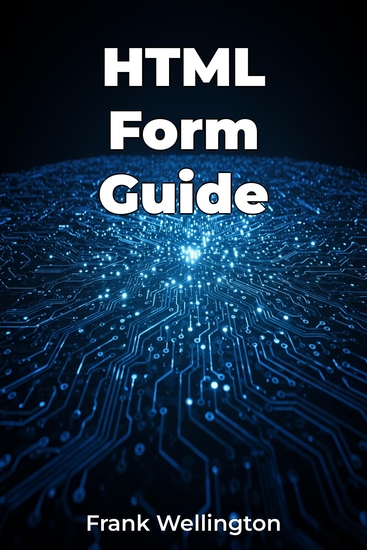
HTML Form Guide - cover

HTML Form Guide

Frank Wellington

Traductor A AI

Editorial: Publifye

  • 0
  • 0
  • 0

Sinopsis

HTML Form Guide explores the critical role of HTML forms in web applications, highlighting how they serve as the primary interface for user interaction and data collection. Forms are more than simple data entry points; they are essential architectural components that impact user experience and data integrity. The book uncovers how well-structured and properly validated forms can significantly enhance web application functionality.

 
The guide begins with the basics of HTML form elements, such as input fields and text areas, and progresses through client-side and server-side validation techniques. For example, using HTML5's built-in validation can prevent common errors before data even reaches the server.

 
The book also examines advanced design principles, including accessibility and security, to ensure forms are usable by everyone and protected from threats like XSS. Through code examples and real-world case studies, HTML Form Guide emphasizes best practices in form design within the broader context of web development. It provides a practical approach that is valuable for both novice and experienced web developers aiming to improve user satisfaction and data collection processes.
Disponible desde: 22/02/2025.
Longitud de impresión: 182 páginas.

Otros libros que te pueden interesar

  • Lost in Automatic Translation - Navigating Life in English in the Age of Language Technologies - cover

    Lost in Automatic Translation -...

    Vered Shwartz

    • 0
    • 0
    • 0
    The last decade has seen an exponential increase in the development and adoption of language technologies, from personal assistants such as Siri and Alexa, through automatic translation, to chatbots like ChatGPT. Yet questions remain about what we stand to lose or gain when we rely on them in our everyday lives. As a non-native English speaker living in an English-speaking country, Vered Shwartz has experienced both amusing and frustrating moments using language technologies: from relying on inaccurate automatic translation, to failing to activate personal assistants with her foreign accent. English is the world's foremost go-to language for communication, and mastering it past the point of literal translation requires acquiring not only vocabulary and grammar rules, but also figurative language, cultural references, and nonverbal communication. Will language technologies aid us in the quest to master foreign languages and better understand one another, or will they make language learning obsolete?
    Ver libro
  • The Uranium Club - Unearthing Lost Relics of the Nazi Nuclear Program - cover

    The Uranium Club - Unearthing...

    Miriam E. Hiebert, Timothy W. Koeth

    • 0
    • 0
    • 0
    Tim Koeth peered into the crumpled brown paper lunch bag; inside was a surprisingly heavy black metal cube. He recognized the mysterious object instantly—he had one just like it sitting on his desk at home. It was uranium metal, taken from the nuclear reactor that Nazi scientists had tried—and failed—to build at the end of World War II. This unexpected gift, wrapped in a piece of paper inscribed with a few cryptic but crucial lines, would launch Koeth, a nuclear physicist and professor, and his colleague Miriam Hiebert, a cultural heritage scientist, on an odyssey to trace the tale of these cubes—two of the original 664 on which the Third Reich had pinned their nuclear ambitions. 


    From Werner Heisenberg and Germany's nuclear program to the Curies, the first family of nuclear physics, to the Allied Alsos Mission's infiltration of Germany to capture Nazi science to the renegade geologists of Murray Hill scouring the globe for uranium, the cubes are lodestars that illuminate a little-known—and hugely consequential—chapter of history. 


    The cubes are physical testimony to the stories of the German failure, and the successful American program that launched the world into the modern nuclear age, and the lessons for modern science that the contrast in these two programs has to offer.
    Ver libro
  • Touchpad Plus Ver 40 Class 8 - cover

    Touchpad Plus Ver 40 Class 8

    Nidhi Gupta

    • 0
    • 0
    • 0
    Computer Science Textbook with New Pedagogical Approaches 
    
    KEY FEATURES 
    - National Education Policy 2020 
    - Tech Funda: This section provides a practical information or tip to the students. 
    - Clickipedia: This section provides interesting computer facts. 
    - Lab Session: This is a lab activity to develop practical skills. (Subject Enrichment) 
    - Explore More: This section contains supplement topics for add-on knowledge. 
    - QR Code: Scan the QR Code given on the first page of each chapter to start chapter animation. 
    - Mind Boggler: This section has puzzle or fun based activity to help understand the concepts better. 
    
    DESCRIPTION 
    Computer technology has become essential and an integral part of life at work, in recreation, social networking and education too. With the constant development of new technology, it has become more significant in helping and preparing students for jobs. Computers have revolutionised the way education is imparted to children. 
    
    Touchpad Plus Version 4.0 is a complete computer science curriculum solution for grades 1-8. It is based on Windows 10 and MS Office 2019, with new and future-ready content. Fun is the most important element of learning. Keeping in mind the concept of Joyful Learning, varied activities have been designed based on multiple intelligences and 21st century skills for holistic development. 
    
    The books have a conversational style introduction of each chapter to make learning fun and engaging. The topics and their approaches are integrated in different themes as per ICT learning. Grade I and II books have four-line writing space to enhance writing skills in children. Each book is accompanied by digital learning resources that offer interesting animation and interactive tests for the student to supplement classroom learning with independent learning. 
    
    The books are curated in a way that they make students and teachers equal partners in the learning process and take learning beyond classroom. We welcome and look forward to all meaningful and valuable suggestions for improving the book 
    
    WHAT WILL YOU LEARN 
    You will learn about: 
    - Digital World 
    - Cyber World 
    - Coding World 
    - Computational Thinking 
    - Artificial Intelligence 
    
    WHO THIS BOOK IS FOR 
    Grade 8 
    
    TABLE OF CONTENTS 
    1. Computer Networking 
    2. Krita- Image Editing 
    3. Trending Technologies 
    4. Images, Links & Frames in HTML5 
    5. Forms in HTML5 
    6. Algorithmic Intelligence 
    7. Loops in Python 
    8. Functions and String in Python 
    9. List in Python 
    10. Domains of AI 
    11. Future of AI 
    ADD-ONS 
    ASSESSMENTS
    Ver libro
  • Bet on Everything Using ChatGPT or Claude - How to Profit from Sports Politics Economics and Culture Contracts on Kalshi and Polymarket - cover

    Bet on Everything Using ChatGPT...

    Jonathan Smith

    • 0
    • 0
    • 0
    This audiobook is narrated by an AI Voice. Prediction markets reward people who are right. AI helps you be right more often. This audiobook shows you how to combine the two. 
     
    Bet on Everything Using ChatGPT or Claude is the practical guide to using AI as a research and analysis engine for trading prediction market contracts on Kalshi and Polymarket—covering sports, politics, economics, and culture events where an edge in information and reasoning translates directly into profit. This is not a book about gambling. It is a book about building a systematic research workflow that finds mispriced contracts before the market corrects them. 
    Inside this audiobook you will learn how Kalshi and Polymarket work, how contracts are structured, and how odds reflect collective market probability, how to use ChatGPT and Claude to research political markets including elections, legislation, and policy outcomes faster and more thoroughly than manual research allows, how to apply statistical analysis and AI-assisted pattern recognition to sports contracts to identify edges the market has not yet priced in, how to use AI for macro research on economic markets covering inflation, Fed decisions, jobs reports, and GDP outcomes, how to build a repeatable prompt engineering workflow that extracts high-quality market intelligence from AI tools consistently, how to manage risk and bankroll across multiple open contracts so a wrong call does not wipe out a winning streak, and how to track your results, identify your strongest market categories, and sharpen your edge over time. 
     
    The prediction market edge has always gone to better-informed traders. AI just made better-informed accessible to everyone.
    Ver libro
  • No Way Down - Life and Death on K2 - cover

    No Way Down - Life and Death on K2

    Graham Bowley

    • 0
    • 0
    • 0
    "No Way Down is both a gripping read and a clear-eyed investigation of the hubris, politics, and bad luck that brought on one of the worst disasters in modern mountaineering history." —Michael Kodas, author of High Crimes: The Fate of Everest in an Age of Greed 


    "Graham Bowley's No Way Down does a great job of putting you on the mountain. It is a refreshingly unadorned account of the true brutality of climbing K2, where heroes emerge and egos are stripped down, and the only thing achieving immortality is the cold ruthless mountain." —Norman Ollestad, author of Crazy for the Storm 


    In the tradition of Into Thin Air and Touching the Void, No Way Down by New York Times reporter Graham Bowley is the harrowing account of the worst mountain climbing disaster on K2, second to Everest in height . . . but second to no peak in terms of danger. From tragic deaths to unbelievable stories of heroism and survival, No Way Down is an amazing feat of storytelling and adventure writing, and, in the words of explorer and author Sir Ranulph Fiennes, "the closest you can come to being on the summit of K2 on that fateful day."
    Ver libro
  • Forgiving Humanity - How the Most Innovative Species Became the Most Dangerous - The Curse of Exponential Change - cover

    Forgiving Humanity - How the...

    Peter Russell

    • 0
    • 0
    • 0
    Why has the most innovative of species become so dangerous? The answer, suggests Peter Russell, lies in humanity’s accelerating pace of development. He shows how innovation breeds further innovation—a positive feedback loop leading to exponential rates of change. But our minds cannot grasp the full implications of exponential growth. We think more in terms of linear change, leading to a blind spot on the future.  
    However fast the pace of change may be today, it will be even faster in the years to come, bringing ever more rapid scientific and technological advances. But ever-accelerating change also creates stress on the systems involved. The faster the change, the greater the stress, and the more likely systemic breakdown. We are heading into a future with technology beyond our dreams, but in a world that is breaking at the seams. 
    Russell argues there is no blame for this. Spiraling rates of development, with all their consequences, positive and negative, are the inevitable fate of any intelligent, technologically-empowered species.  
    How do we live with such unsettling conclusions? How can we prepare for a world that is becoming increasingly unpredictable? What does it mean for the future of humanity? 
    Peter Russell, the widely acclaimed author of The Global Brain and other pioneering works, earned an honors degree in theoretical physics and psychology —as well as a masters degree in computer science —at the University of Cambridge. He subsequently went to India where he explored meditation and Eastern philosophy, and was one of the first people to introduce personal development programs to corporations in the 1970s. His other books include The TM Technique, The Upanishads, Waking Up in Time, From Science to God, and Letting Go of Nothing.
    Ver libro