Join us on a literary world trip!
Add this book to bookshelf
Grey
Write a new comment Default profile 50px
Grey
Subscribe to read the full book or read the first pages for free!
All characters reduced
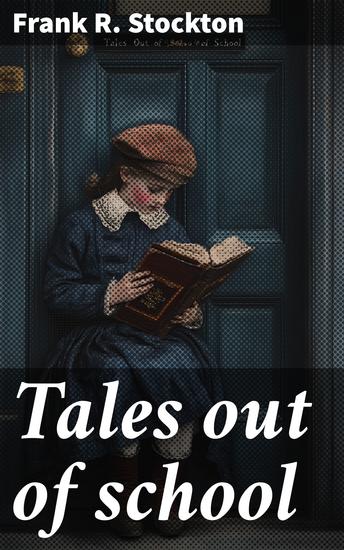
Tales out of school - cover

Tales out of school

Frank R. Stockton

Publisher: Good Press

  • 0
  • 0
  • 0

Summary

In "Tales Out of School," Frank R. Stockton presents a collection of whimsical and thought-provoking short stories that blend humor, social commentary, and a touch of the fantastical. Written in the late 19th century, these tales reflect the era's fascination with moral dilemmas and the complexities of human nature. Stockton's distinctive literary style, characterized by its playful dialogue and clever narrative twists, positions the collection within the rich tradition of American humorists. The stories often feature children as protagonists, allowing for a fresh perspective on adult conflicts and societal norms, making it a compelling read for both adults and younger audiences alike. Frank R. Stockton, an influential American author, gained prominence through his ability to infuse humor into poignant explorations of life's challenges. His experiences in the rapidly changing landscape of post-Civil War America, along with his background in journalism, informed his storytelling. Stockton's work often addresses themes of gender roles and social expectations, which may have inspired him to create these engaging narratives that challenge his readers to confront conventional wisdom. "Tales Out of School" is a delightful invitation to delve into the human experience through playful yet insightful storytelling. Readers seeking both entertainment and thought-provoking reflections on childhood and society will find Stockton's tales enchanting and enduring. This collection is not just for those interested in historical literature but for anyone who appreciates the timeless interplay of humor and profundity.
Available since: 03/02/2025.
Print length: 120 pages.

Other books that might interest you

  • A Man Could Stand Up — - cover

    A Man Could Stand Up —

    Ford Madox

    • 0
    • 0
    • 0
    There are not many English novels which deserve to be called great: Parade's End is one of them. — W. H. Auden  
    A Man Could Stand Up — is the third of four installments in Ford Madox Ford's Parade's End tetralogy, which follows Christopher Tietjens, a wealthy British landowner and the last British Tory; his unfaithful wife, Sylvia; and his mistress, Valentine Wannop.   
    Opening on Armistice Day (November 11, 1918), A Man Could Stand Up — serves as the climax of the series. Highlighting the tension between traditional values and a rapidly changing social order, the novel details Christopher and Valentine's trials as the post-war world takes shape around them.  
    Unique among other war fiction of the time, the Parade's End tetralogy privileges not the conflict of World War I itself, but the impact the war had on its participants and upon society writ large. With it's publication, Ford hoped to contribute to the obviating of all future wars. Parade's End is often referred to as one of the greatest 20th century novels, and one of the best depictions of war in literature. The 2012 television adaptation, written by Tom Stoppard and starring Benedict Cumberbatch and Rebecca Hall, was nominated for two Primetime Emmy Awards and seven BAFTA Television Awards.
    Show book
  • Enchiridion - Audiobook - cover

    Enchiridion - Audiobook

    Epictetus, Classic Audiobooks,...

    • 0
    • 0
    • 0
    A timeless guide to mastering the art of living, The Enchiridion distills the teachings of the Stoic philosopher Epictetus into concise, practical wisdom. This short manual emphasizes the importance of self-discipline, inner freedom, and distinguishing between what we can and cannot control. With its enduring lessons on resilience, virtue, and peace of mind, it offers a profound blueprint for navigating life's challenges with grace and purpose.
    Show book
  • David Copperfield - cover

    David Copperfield

    Charles Dickens

    • 0
    • 0
    • 0
    "David Copperfield," often referred to as "The Personal History, Adventures, Experience and Observation of David Copperfield the Younger of Blunderstone Rookery," is a novel by Charles Dickens, first published as a book in 1850. It follows the life journey of David Copperfield, from his birth and idyllic early childhood through trials and tribulations in youth, to his eventual success and happiness as an adult. The story is written in the first person and has been described by Dickens himself as his "favorite child" among his works. Throughout the narrative, Dickens addresses themes like class, family, and the challenges and rewards of personal development.
    Show book
  • Cordelia the Crude - From their pens to your ears genius in every story - cover

    Cordelia the Crude - From their...

    Wallace Thurman

    • 0
    • 0
    • 0
    The bookshelves of American literature are incredible collections that have gathered together centu-ries of very talented authors.  From this continent their fame spread and whilst among their number many are now forgotten or neglected their talents endure.  Among them is Wallace Thurman.
    Show book
  • Sherlock Holmes: The Adventure of the Blue Carbuncle - cover

    Sherlock Holmes: The Adventure...

    Sir Arthur Conan Doyle

    • 0
    • 0
    • 0
    The Adventure of The Blue Carbuncle, one of the 56 short Sherlock Holmes stories written by British author Sir Arthur Conan Doyale, is the seventh story of 12 in The Adventure of Sherlock Holmes. The story was first published in Strand Magazine in January 1892. 
    A "Blue Carbuncle" is stolen from a hotel suite, and a former felon is soon arrested. However, an acquaintance of Holmes discovers the carbuncle in the throat of a Christmas goose. 
    Holmes traces the owner of the goose, but soon determines that he was not the thief by offering him a replacement goose. The detective continues his search, first to an inn and then to a dealer in Covent Garden. The dealer refuses to provide Holmes with information about the source of the goose, but Holmes observes another man trying to find the same information, and confronts him. The man, the head attendant at the hotel, confesses to his crime. Holmes allows him to remain free, arguing that prison could make him a hardened criminal later. 
    ©2016 Rick Sheridan (P)2016 Rick Sheridan
    Show book
  • War and Peace (Book Five: 1806-07) - cover

    War and Peace (Book Five: 1806-07)

    Leo Tolstoy

    • 0
    • 0
    • 0
    War and Peace is a literary work mixed with chapters on history and philosophy by the Russian author Leo Tolstoy. It was first published serially, then published in its entirety in 1869. It is regarded as one of Tolstoy's finest literary achievements and remains an internationally praised classic of world literature.
    Book 5: 1806-07: After his interview with his wife Pierre left for Petersburg. At the Torzhók post station, either there were no horses or the postmaster would not supply them. Pierre was obliged to wait. Without undressing, he lay down on the leather sofa in front of a round table, put his big feet in their overboots on the table, and began to reflect.
    Show book