Junte-se a nós em uma viagem ao mundo dos livros!
Adicionar este livro à prateleira
Grey
Deixe um novo comentário Default profile 50px
Grey
Assine para ler o livro completo ou leia as primeiras páginas de graça!
All characters reduced
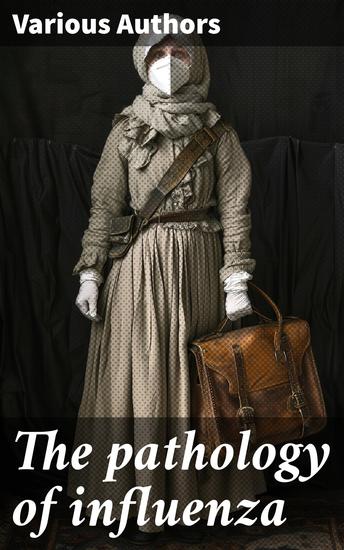
The pathology of influenza - Unveiling the Viral Apocalypse: A Multidisciplinary Exploration of the Influenza Pandemic - cover
LER

The pathology of influenza - Unveiling the Viral Apocalypse: A Multidisciplinary Exploration of the Influenza Pandemic

Frank P. McNamara, Isabel M. Wason, M. C. Winternitz

Editora: Good Press

  • 0
  • 0
  • 0

Sinopse

In 'The Pathology of Influenza,' readers are invited to delve into a comprehensive anthology that encapsulates the diverse and intricate world of influenza through a range of literary lenses. This collection marries scientific discourse with nuanced narratives, offering an array of perspectives that examine the disease's impact on society, medicine, and culture. The anthology's breadth is evident in its inclusion of essays, historical accounts, and diagnostic treatises, each providing a unique insight that collectively paints a cohesive picture of influenza'Äôs pervasive reach and complexity. Standout works within the collection engage in poignant reflections on past epidemics, the evolution of medical understanding, and the profound social transformations induced by this global ailment. The esteemed contributors'ÄîFrank P. McNamara, Isabel M. Wason, and M. C. Winternitz'Äîbring to the anthology a wealth of expertise and diverse backgrounds that enrich the dialogue surrounding influenza. Their collective work aligns with significant historical and medical movements, shedding light on influenza's evolving narrative across different eras. The editors' meticulous curation ensures that each piece contributes to a deepened understanding of the theme, harmonizing the varied voices of scientists, historians, and writers to illustrate the multifaceted nature of influenza. This anthology is a must-read for those eager to explore the varied dimensions of influenza through a scholarly lens. It offers a unique opportunity to engage with multiple viewpoints within a single volume, serving as an educational treasure trove for medical historians, literary enthusiasts, and students of cultural studies. Readers are invited to immerse themselves in the anthology's rich tapestry of insights, fostering a greater appreciation of the complex interplay between disease and human experience through the diverse works it presents.
Disponível desde: 14/11/2023.
Comprimento de impressão: 109 páginas.

Outros livros que poderiam interessá-lo

  • A Chameleon - From their pens to your ears genius in every story - cover

    A Chameleon - From their pens to...

    Anton Chekhov

    • 0
    • 0
    • 0
    Anton Pavlovich Chekhov was born on 29th January 1860 in Taganrog, on the south coast of Russia.  
    His family life was difficult; his father was strict and over-bearing but his mother was a passionate story-teller, a subject Chekhov warmed to. As he later said; ‘our talents we got from our father, but our soul from our mother’.  
    At school Chekhov was distinctly average. At 16 his father mis-managed his finances and was declared bankrupt. His family fled to Moscow. Chekhov remained and eked out a living by various means, including writing and selling short sketches to newspapers, to finish his schooling. That completed and with a scholarship to Moscow University obtained he rejoined his family. 
    He was able to help support them by selling satirical sketches and vignettes of Russian lifestyles and gradually obtained further commissions. In 1884, he qualified as a physician and, although it earned him little, he often treated the poor for free, he was fond of saying ‘Medicine is my lawful wife, and literature is my mistress.’ 
    His own health was now an issue as he began to cough up blood, a symptom of tuberculosis.  Despite this his writing success enabled him to move the family into more comfortable accommodation.  
    Chekhov wrote over 500 short stories which included many, many classics including ‘The Kiss’ and ‘The Lady with a Dog’.  His collection ‘At Dusk’ won him the coveted Pushkin Prize when was only 26.  
    He was also a major playwright beginning with the huge success of ‘Ivanov’ in 1887.   
    In 1892 Chekhov bought a country estate north of Moscow. Here his medical skills and money helped the peasants tackle outbreaks of cholera and bouts of famine. He also built three schools, a fire station and a clinic.  It left him with less time for writing but the interactions with real people gained him detailed knowledge about the peasantry and their living conditions for his stories.  
    His most famous work, ‘The Seagull’ was received disastrously at its premiere in St Petersburg. It was later restaged in Moscow to highlight its psychological aspects and was a huge success. It led to ‘Uncle Vanya’, ‘The Three Sisters’ and ‘The Cherry Orchard’.  
    Chekhov suffered a major lung hemorrhage in 1897 while visiting Moscow. A formal diagnosis confirmed tuberculosis and the doctors ordered changes to his lifestyle.  
    Despite a dread of weddings the elusive literary bachelor quietly married the actress Olga Knipper, whom he had met at rehearsals for ‘The Seagull’, on 25th May 1901. 
    By May 1904 with his tuberculosis worsening and death imminent he set off for the German town of Badenweiler writing cheerful, witty letters to his family and assuring them his health was improving.  
    On 15th July 1904 Anton Chekhov died at Badenweiler.  He was 44.
    Ver livro
  • Interview with Serial Killer Ted Bundy An - cover

    Interview with Serial Killer Ted...

    Ted Bundy

    • 0
    • 0
    • 0
    Theodore Robert Bundy (November 24, 1946 - January 24, 1989) was an American serial killer who abducted, raped and murdered dozens of women and girls between 1974 and 1978. His modus operandi typically consisted of convincing his target that he was in need of assistance or duping them into believing he was an authority figure. He would then lure his victim to his vehicle, at which point he would bludgeon them unconscious, then restrain them with handcuffs before driving them to a remote location to be sexually assaulted and killed. Bundy was executed by the electric chair on January 24, 1989 at Florida State Prison. The following recording is from a 1977 jailhouse tv interview.
    Ver livro
  • Hold Please - Stage Managing A Pandemic - cover

    Hold Please - Stage Managing A...

    Richard Hester

    • 0
    • 0
    • 0
    A Broadway Stage Manager's pandemic memoir! 
    March 12, 2020 
    Last night, after weeks of downplaying and ridiculing the virus, we were finally told by our President, that it is, in fact, serious… 
    And so, it began. Broadway shut down. Instead of sitting in a darkened theatre every night watching Jersey Boys, Richard Hester found himself sitting on his sofa glued to the news. Hold, Please chronicles what came next from the particular point of view of a career Broadway stage manager living in Manhattan. Part journal, part blog, these essays attempted to make sense of the crisis and what it was doing to us. 
    What follows is a journey through one of the most fascinating periods in both our cultural and our personal histories. Written with humor and compassion, Hold, Please provides a unique perspective on this time and delivers the most important lesson of all - Hope. 
    “I’ve watched Richard create order out of chaos for years, so it comes as no surprise when he was able to do it again with these beautiful posts. Together they create a powerful reminder of where we’ve been as well as a thoughtful and compassionate guide for moving ahead.” - Bernadette Peters 
    “I am so grateful that Richard wrote all of this down so that I don’t have to remember it myself.” - Patti LuPone  
    “(Hester) describes such experiences in a warm, conversational tone in a book in which his lyrical writing about the natural world adds dimension to humorous stories about working—and not working—from home....Hester interweaves descriptions of living through Covid-19 with stories of his colorful theatrical career…” - Kirkus Reviews
    Ver livro
  • The Importance of Not Being Ernest - My Life with the Uninvited Hemingway - cover

    The Importance of Not Being...

    Mark Kurlansky

    • 0
    • 0
    • 0
    The New York Times–bestselling author of Salt examines the intersections between his life and Ernest Hemingway’s in this mix of travel memoir and history. 
     
    By a series of coincidences, Mark Kurlansky’s life has always been intertwined with Ernest Hemingway’s legend, starting with being in Idaho the day of Hemingway’s death. The Importance of Not Being Ernest explores the intersections between Hemingway’s and Kurlansky’s lives, resulting in creative accounts of two inspiring writing careers. Travel the world with Mark Kurlansky and Ernest Hemingway in this personal memoir, where Kurlansky details his ten years in Paris and his time as a journalist in Spain—both cities important to Hemingway’s adventurous life and prolific writing. 
     
    Paris, Basque Country, Havana and Idaho.Get to know the extraordinary people he met there—those who had also fallen under the Hemingway spell, including a Vietnam veteran suffering from the same syndrome the author did, two winners of the Key West Hemingway look-alike contest, and the man in Idaho who took Hemingway hunting and fishing. 
     
    In The Importance of Not Being Ernest, find:A memoir full of entertaining and illuminative storiesLittle-known historical facts about Hemingway’s lifeAnecdotes about those who suffer from what the Kurlansky calls “hemitis” 
     
    Readers of Haruki Murakami’s What I Talk About When I Talk About Running, John Steinbeck’s Travels with Charley in Search of America, or The Boys will love The Importance of Not Being Ernest. 
     
    Praise for The Importance of Not Being Ernest 
     
    “An absolute delight! Full of personality, Kurlansky’s book will enchant history, literature, and Hemingway fans alike.” —Library Journal (starred review)
    Ver livro
  • The Essential François Mauriac - Saint Margaret of Cortona Letters on Art and Literature and Proust’s Way - cover

    The Essential François Mauriac -...

    François Mauriac

    • 0
    • 0
    • 0
    Three great nonfiction works from the Nobel Prize–winning, Catholic, French author of Thérèse Desqueyroux.Saint Margaret of CortonaFor François Mauriac, Saint Margaret of Cortona became a source of fascination and solace during the Nazi occupation of France. During that time, feeling himself and all his countrymen to be among the downtrodden, he wrote this biography of the thirteenth-century Italian penitent who would become the patron saint of the homeless . . .Born in 1247 to a farming family in a small village outside Perugia, Margaret of Cortona was willful and reckless in her youth. At age seventeen, she became a wealthy man’s mistress—even bearing his son out of wedlock. But her life of sin ended when she found her lover murdered.Devoting herself to prayer and penance, Margaret eventually joined the Third Order of St. Francis and took a vow of poverty. She established a hospital for the poor and homeless at Cortona. On divine command, she challenged her own bishop for his lavish and warlike lifestyle. Canonized by Pope Benedict XIII in 1728, she became a patron saint of the downtrodden, including the falsely accused, homeless, orphaned, and mentally ill, as well as midwives, penitents, single mothers, reformed prostitutes, and third children.Letters on Art and LiteratureIn this collection of letters, Mauriacshares fascinating insights through correspondence with Albert Camus, Jean Cocteau, and other authors, artists, intellectuals, as well as the readers of his various articles and columns. The letters delve into a variety of topics—from the death of Georges Bernanos to the correspondence between Paul Claudel and Andre Gide, and the Routier youth movement.Proust’s Way The thinking and suffering of the author of Remembrance of Things Past are intimately exposed in these letters to Mauriac.
    Ver livro
  • The Man Who Shook Mountains - In the footsteps of my ancestors - cover

    The Man Who Shook Mountains - In...

    Lesley Mofokeng

    • 0
    • 0
    • 0
    'This is a South African story of an unsung hero, a man forgotten by history – though not by me, nor by the people who knew and respected him …'
    When his grandfather gave sermons, he was 'capable of shaking mountains', a church leader tells journalist and author Lesley Mofokeng. 'Ntate Mofokeng pulled people towards God with the great and rare talent of a motivator.'
    In this revealing book, Mofokeng investigates the life of his grandfather, Mongangane Wilfred Mofokeng, a prominent Dutch Reformed Church evangelist. In the 1950s, as Black South Africans were being evicted from the cities to live in reserves and homelands, Mongangane set out to build a community at a dusty cattle post in the far North West province. There he managed to establish a resilient community that mostly lived outside the repressions of the apartheid regime. The journey takes the author from Johannesburg's Marabi-soaked townships of the 1930s to his childhood home of Gelukspan near Lichtenburg and then to rural Free State and the mountain kingdom of Lesotho. In what becomes a spiritual quest, he traces the inspirational footsteps of his ancestors and the legendary King Moshoeshoe.
    Mofokeng also explores the politics and history of the Dutch Reformed Church's Black constituency and uncovers why to this day it is called Kereke ya Fora – or 'Church of the French' – and its hymns are sung across denominations and in social spaces outside the church.
    Ver livro