¡Acompáñanos a viajar por el mundo de los libros!
Añadir este libro a la estantería
Grey
Escribe un nuevo comentario Default profile 50px
Grey
Suscríbete para leer el libro completo o lee las primeras páginas gratis.
All characters reduced
The Donovan chance - cover

The Donovan chance

Francis Lynde

Editorial: Good Press

  • 0
  • 0
  • 0

Sinopsis

In "The Donovan Chance," Francis Lynde crafts a compelling narrative steeped in the spirit of American individualism and adventurous ambition. Set against the backdrop of the early 20th-century West, the novel intricately weaves elements of romance, drama, and moral choice as it charts the journey of its protagonist, a man navigating the complexities of life, love, and fortune. Lynde's vivid descriptions and keen observations contribute to a rich literary style that evokes the natural beauty and challenges of frontier life while exploring universal themes of chance and destiny. Francis Lynde was an author deeply influenced by his experiences as an adventurer and businessman in the American West, drawing from his own life's tapestry to shape his characters and stories. His background in journalism enhanced his narrative technique, enabling him to create relatable characters facing profound dilemmas. Lynde's sympathy for the struggles of everyday individuals resonates throughout "The Donovan Chance," making it a significant reflection of his era and an homage to the tenacity of the human spirit. Readers seeking an engaging exploration of human resilience amid life's uncertainties will find "The Donovan Chance" a captivating addition to their literary collection. Lynde's mastery of storytelling invites contemplation on the role of fate versus free will, making it not only a pleasurable read but also a thought-provoking one.
Disponible desde: 24/04/2025.
Longitud de impresión: 200 páginas.

Otros libros que te pueden interesar

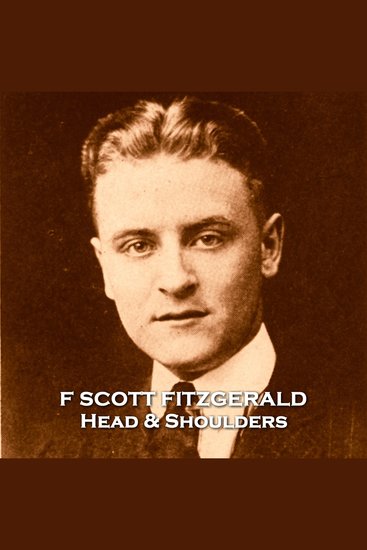
  • Head & Shoulders - A coming of age classic showing the power of love - cover

    Head & Shoulders - A coming of...

    F. Scott Fitzgerald

    • 0
    • 0
    • 0
    Francis Scott Key Fitzgerald was born on 24th September 1896 in Saint Paul, Minnesota into an upper-middle class family. Whilst his mother was pregnant with him, his two young sisters tragically died.  Fitzgerald once said this was when his destiny as a writer was ordained. 
     
    His intelligence and talent was recognised from an early age, with his first story, about a detective being published in the school magazine when he was just 13.   
     
    In 1913 he enrolled at Princeton but his devotion to his own literary pursuits resulted in him leaving and, rather bizarrely, joining the Army.  In 1918, stationed at Fort Sheridan near Montgomery, Alabama he met and became infatuated and then inseparable from Zelda Sayre.  Initially though she refused to marry him but with the success of ‘This Side of Paradise’, the fame and the flow of money enabled them both to begin a gilded life.  For them this was The Jazz Age.  For Fitzgerald he was already an alcoholic. 
     
    He continued to write with great mastery and the titles of his novels and many of his 164 short stories are household names.  The Great Gatsby, often cited as The Great American Novel was published to mixed reviews.  As America moved from the Great Depression to the slaughter of the Second World War his works and himself were seen as far too entwined with the decadent twenties. The world had moved on and he hadn’t.   
     
    Further tragedy was never far from his life. Zelda after years of erratic and now intolerable behaviour was committed to an institution in 1936.  His own sales began to decline and he became a hack for hire in Hollywood, dependent on increasing amounts of booze and the weekly pay check.  His drunken state had often resulted in arrest or hospitalisation, further imperiling his talents.   Despite his contribution to many MGM films he received only one credit. 
     
    The end came all too soon for one of America’s greatest ever writers.  On 21st December 1940, at only 44 years of age in Hollywood, F Scott Fitzgerald succumbed to a heart attack.
    Ver libro
  • The Night Before Christmas - cover

    The Night Before Christmas

    Clement Clarke Moore

    • 0
    • 0
    • 0
    'Twas the night before Christmas—when wonder filled every corner of the home.
    This timeless poem captures the magic of Christmas Eve as St. Nicholas arrives with his sleigh, reindeer, and boundless cheer. With its rhythmic verse, vivid imagery, and warm spirit, the poem brings to life a moment of pure childhood wonder that has shaped Christmas celebrations for generations.
    
    Cherished as "the poem that defined the modern image of Santa Claus," this classic continues to delight readers young and old. Its joyful cadence, cozy charm, and festive heart make it a treasured part of the holiday season.
    
    If you love Christmas traditions, poetic storytelling, and stories that glow with warmth and nostalgia, this beloved poem is a holiday essential.
    
    Open the book—and relive the magic of Christmas Eve, one perfect line at a time.
    Ver libro
  • Our Mutual Friend - Book the Fourth: A Turning (Unabridged) - cover

    Our Mutual Friend - Book the...

    Charles Dickens

    • 0
    • 0
    • 0
    Charles Dickens was a writer and social critic who created some of the world's best-known fictional characters and is regarded as the greatest novelist of the Victorian era. His works enjoyed unprecedented popularity during his lifetime, and by the twentieth century critics and scholars had recognised him as a literary genius. His novels and short stories enjoy lasting popularity.
    BOOK THE FOURTH: A TURNING: Plashwater Weir Mill Lock looked tranquil and pretty on an evening in the summer time. A soft air stirred the leaves of the fresh green trees, and passed like a smooth shadow over the river, and like a smoother shadow over the yielding grass.
    Ver libro
  • Elderbush The - Story Time Episode 65 (Unabridged) - cover

    Elderbush The - Story Time...

    Hans Christian Andersen

    • 0
    • 0
    • 0
    Once upon a time there was a little boy who had taken cold. He had gone out and got his feet wet; though nobody could imagine how it had happened, for it was quite dry weather. So his mother undressed him, put him to bed, and had the tea-pot brought in, to make him a good cup of Elderflower tea. Just at that moment the merry old man came in who lived up a-top of the house all alone; for he had neither wife nor children--but he liked children very much, and knew so many fairy tales, that it was quite delightful...
    Ver libro
  • Ben Hur - A Tale of the Christ - cover

    Ben Hur - A Tale of the Christ

    Lewis Wallace

    • 0
    • 0
    • 0
    Ben Hur: A Tale of the Christ is a novel by Lew Wallace, published by Harper and Brothers on November 12, 1880, and considered "the most influential Christian book of the nineteenth century". It became a best-selling American novel, surpassing Harriet Beecher Stowe's Uncle Tom's Cabin (1852) in sales. The book also inspired other novels with biblical settings and was adapted for the stage and motion picture productions.
    Ben Hur remained at the top of the U.S. all-time bestseller list until the 1936 publication of Margaret Mitchell's Gone with the Wind. The 1959 MGM film adaptation of Ben Hur is considered one of the greatest films ever made and was seen by tens of millions, going on to win a record 11 Academy Awards in 1960, after which the book's sales increased and it surpassed Gone with the Wind. It was blessed by Pope Leo XIII, the first novel ever to receive such an honour. The success of the novel and its stage and film adaptations also helped it to become a popular cultural icon that was used to promote numerous commercial products.
    The story recounts the adventures of Judah Ben-Hur, a Jewish prince from Jerusalem, who is enslaved by the Romans at the beginning of the first century and becomes a charioteer and a Christian. Running in parallel with Judah's narrative is the unfolding story of Jesus, from the same region and around the same age. The novel reflects themes of betrayal, conviction, and redemption, with a revenge plot that leads to a story of love and compassion.
    Ver libro
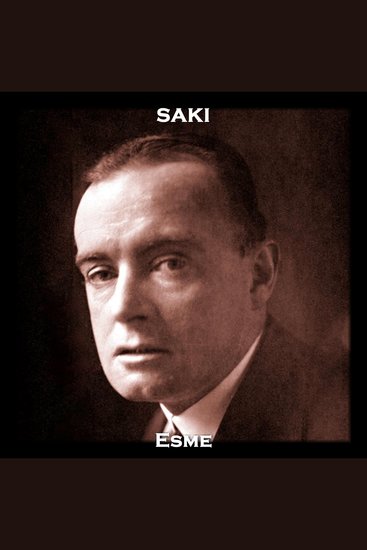
  • Esme - From their pens to your ears genius in every story - cover

    Esme - From their pens to your...

    Saki Saki

    • 0
    • 0
    • 0
    Hector Hugh Munro, more familiarly known by his pen-name ‘Saki’ was born in what was then Akyab in British Burma on 18th December 1870. His father was an Inspector General for the Indian Imperial Police, and his mother the daughter of a Rear Admiral. 
    When he was 2 his mother died and he and his siblings were sent back to England to be raised by their grandmother and paternal maiden aunts in a strict, puritanical household near Barnstaple, Devon. Educated by governesses Saki used many of these women as character models for his later writing. 
    At 17 his father retried and returned to England and then embarked on a series of European travels with Saki and his siblings. 
    After a short stint working in Burma with the Indian Imperial Police Saki decided to move to London to make a living as a writer. Initially he wrote as a journalist for a number of newspapers and magazines before attempting an historical study, ‘The Rise of the Russian Empire’, whose real value lay in directing him to writing short stories instead, the first of which, ‘Dogged’, he published in 1899. 
    From here it was a short stab of the pen to writing political satire before in 1902 he became the foreign correspondent for The Morning Post, first in the Balkans, then Russia, Paris and back to London in 1908, where 'the agreeable life of a man of letters with a brilliant reputation awaited him.'  
    Collections of his short stories full of witty, mischievous and often macabre stories that satirized Edwardian society and two novels now appeared in the years up to the Great War.  At its’ outbreak he was 43 but managed to join as an ordinary trooper. More than once he returned to the battlefield when officially too sick or injured.  
    On 14th November 1916 Hector Hugh Munro was sheltering in crater during the Battle of the Ancre, when he was shot and killed by a German sniper. According to several sources, his last words were "Put that bloody cigarette out!"
    Ver libro