Junte-se a nós em uma viagem ao mundo dos livros!
Adicionar este livro à prateleira
Grey
Deixe um novo comentário Default profile 50px
Grey
Assine para ler o livro completo ou leia as primeiras páginas de graça!
All characters reduced
Aristocracy in America From the sketch-book of a German nobleman vol 2 (of 2) - Navigating the Social Divide: A Nobleman's Insight on 19th Century America - cover
LER

Aristocracy in America From the sketch-book of a German nobleman vol 2 (of 2) - Navigating the Social Divide: A Nobleman's Insight on 19th Century America

Francis J. Grund

Editora: Good Press

  • 0
  • 0
  • 0

Sinopse

In "Aristocracy in America. From the Sketch-Book of a German Nobleman, Vol. 2," Francis J. Grund offers a compelling exploration of American society through the eyes of a European aristocrat. This volume continues the rich narrative established in the first, blending astute social commentary with vibrant descriptive prose. Grund juxtaposes the remnants of European class structures with the burgeoning American ideals of democracy and egalitarianism, employing a reflective and at times ironic tone that sheds light on the complexities of American identity in the mid-19th century. His observations are steeped in a historical context that uncovers the tensions between aristocratic traditions and the American experience of social mobility. Francis J. Grund, a German nobleman himself, was uniquely positioned to navigate these themes. His background provided him with a perspective that was both critical and appreciative of American society. Grund emigrated to the United States, observing the vast differences in social and political landscapes that shaped the nation. His firsthand experience and intimate understanding of European aristocracy compelled him to articulate both admiration and critique within this work. "Aristocracy in America" is essential for any reader intrigued by the intersections of class, society, and culture. It not only enriches our understanding of 19th-century America but also serves as a poignant reflection on the evolving nature of democracy. This book is a must-read for scholars, historians, and general readers alike seeking to comprehend the enduring legacy of social stratification in America.
Disponível desde: 10/07/2023.
Comprimento de impressão: 174 páginas.

Outros livros que poderiam interessá-lo

  • Atlantis; The Antediluvian World - cover

    Atlantis; The Antediluvian World

    Ignatius Donnelly

    • 0
    • 0
    • 0
    Atlantis: The Antediluvian World explores the mysteries and possibilities of a lost civilization that may have shaped ancient history. Originally written by Ignatius Donnelly, this groundbreaking work pieces together mythological, geological, and historical clues that suggest Atlantis was once a thriving, technologically advanced society destroyed by a cataclysm. Through compelling arguments and fascinating insights, Donnelly's work has inspired generations to question what we know about human history and what might lie hidden beneath the waves. 
    Perfect for anyone with an interest in ancient mysteries, lost civilizations, and alternative histories, Atlantis: The Antediluvian World challenges us to reconsider humanity's origins and ponder what forgotten knowledge might still influence our present.
    Ver livro
  • The Complete Warrior’s Mindset Collection - History’s Greatest Military Minds on Power Discipline and Mental Toughness - cover

    The Complete Warrior’s Mindset...

    Sun Tzu, Miyamoto Musashi,...

    • 0
    • 0
    • 0
    What if you could cultivate an unbreakable mindset, combining strategic acumen with emotional resilience and philosophical depth? 
    This powerhouse anthology assembles texts from celebrated military tacticians, Stoic philosophers, and existential thinkers. Adapted for modern readers, it offers a unique fusion of external strategy and internal mastery. From Sun Tzu’s battlefield tactics to Nietzsche’s call for self-overcoming, each work fortifies your mental arsenal for life’s toughest challenges. 
    What You’ll Discover in This Modern Anthology: 
    - The Art of War – Sun Tzu – Timeless strategies for leadership and conflict. 
    - The Book of Five Rings – Miyamoto Musashi – Samurai wisdom on discipline and mastery. 
    - Meditations – Marcus Aurelius – Stoic reflections on resilience and virtue. 
    - Letters from a Stoic – Seneca – Practical guidance on ethics and adversity. 
    - The Maxims of War – Napoleon Bonaparte – Lessons on strategy and leadership. 
    - Instructions to His Generals – Frederick the Great – Tactical insights from a legendary commander. 
    - The Commentaries of Julius Caesar – Julius Caesar – Firsthand accounts of war and conquest. 
    - Fear and Trembling – Søren Kierkegaard – A deep exploration of faith and courage. 
    - Thus Spoke Zarathustra – Friedrich Nietzsche – A poetic vision of human potential. 
    - Beyond Good and Evil – Friedrich Nietzsche – A critique of morality and power. 
    Imagine facing any battle—whether in leadership, personal growth, or philosophy—with unwavering resolve and clarity. This collection is your key to integrating ancient war tactics, Stoic resilience, and profound existential insight. 
    Embrace the power of a disciplined and enlightened mind. Get your copy now and transform how you confront life’s challenges.
    Ver livro
  • Dangerous Liaisons - cover

    Dangerous Liaisons

    Pierre Choderlos de Laclos

    • 0
    • 0
    • 0
    Set in pre-revolutionary France, "Dangerous Liaisons" is an epistolary novel that revolves around the cynical Marquise de Merteuil and the Vicomte de Valmont, two former lovers who engage in a web of seduction, manipulation, and betrayal. Through their letters, the novel exposes the moral corruption and decadence of the French aristocracy. With themes of sexual intrigue, power dynamics, and the consequences of unbridled passions, Laclos crafts a gripping and psychologically intricate narrative that continues to captivate readers today. "Dangerous Liaisons" remains a timeless exploration of human desires and the destructive nature of games played with hearts. 
     
    Pierre Choderlos de Laclos, a French army general and writer, is most famous for his epistolary novel "Les Liaisons Dangereuses" ("Dangerous Liaisons"), published in 1782. The novel, exploring themes of seduction, manipulation, and revenge among the French aristocracy, became a literary classic and a seminal work of French literature.
    Ver livro
  • Moors The: The History of the Muslims Who Lived in North Africa and Europe during the Middle Ages - cover

    Moors The: The History of the...

    Editors Charles River

    • 0
    • 0
    • 0
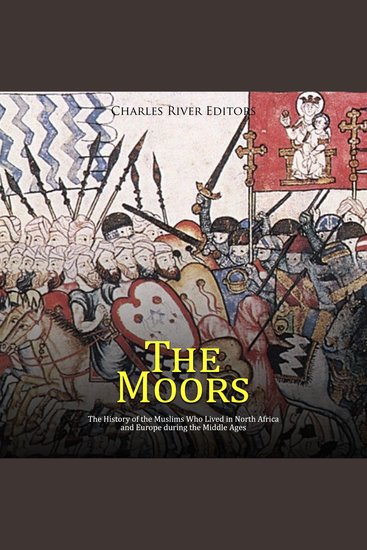
    The term Moor is a historical rather than an ethnic name. It is an invention of European Christians for the Islamic inhabitants of Maghreb (North Africa), Andalusia (Spain), Sicily and Malta, and was sometimes use to designate all Muslims. It is derived from Mauri, the Latin name for the Berbers who lived in the Roman province of Mauretania, which ranged across modern Algeria and Morocco. Saracen was another European term used to designate Muslims, though it usually referred to the Arabic peoples of the Middle East and derives from an ancient name for the Arabs, Sarakenoi. The Muslims of those regions no more refer to themselves by that term than those of North Africa call themselves Moors. Maghreb, or al-Maghreb, is a historical term used by Arabic Muslims for the territory of coastal North Africa from Alexandria to the Atlantic Coast. It means “The West” and is used in opposition to Mashrek, “The East,” used to refer to the lands of Islam in the Middle East and north-eastern Africa. The Berbers refer to the region in their own language as Tamazgha. In a limited, precise sense it can also refer to the Kingdom of Morocco, the proper name of which is al-Mamlakah al-Maghribiyyah, “Kingdom of the West.” 
    The history of the Spanish Peninsula is closely bound to that of the Moors. The term “Spain” was not in wide use until the region was united by the monarchs of Aragon and Castile, and the Moors called the lands they ruled in the Iberian Peninsula Al-Andalus, traditionally thought to be an Arabic transliteration of Vandal, the Germanic tribe which briefly ruled the region in the early fifth century. The English name Andalusia derives from the Spanish Andalucia, which is still used by Spain to name its southern region. Not surprisingly, three religions attempting to coexist during medieval times resulted in nearly incessant conflicts.
    Ver livro
  • The American Presidents - A Comprehensive Guide to the Men Who Led the Country - cover

    The American Presidents - A...

    Harry Montgomery

    • 0
    • 0
    • 0
    The Founding Presidents of the United States played a pivotal role in shaping the early direction of the nation. Their leadership laid the groundwork for the establishment of a new republic and the principles that would guide the country for generations. George Washington, the first President, set the tone for the presidency itself. His leadership during the Revolutionary War had earned him widespread admiration, and when the new government was formed, Washington was unanimously chosen as the first leader of the United States. His presidency established many of the precedents for the executive branch, including the creation of a Cabinet, the two-term limit, and the peaceful transfer of power. 
    Washington’s leadership was tested with several challenges during his presidency, most notably the issue of neutrality in foreign affairs. As tensions rose between France and Great Britain, Washington carefully navigated the country through these conflicts, urging the nation to avoid entanglement in European wars. His Farewell Address warned against permanent foreign alliances and political factions, offering advice that would resonate throughout American history. Washington’s decision to step down after two terms also set a significant precedent that would shape the expectations of future presidents. 
    Following Washington’s tenure, John Adams became the second President of the United States. A Federalist and a key figure in the early American Revolution, Adams had been a vocal advocate for independence and the formation of a strong central government. His presidency, however, was marked by political divisions and foreign policy struggles. The most notable event during his administration was the Quasi-War with France, which resulted from tensions over the French Revolution and the actions of the French government against American shipping.
    Ver livro
  • Ancient Rome’s Provinces: The History of the Foreign Lands Ruled by the Roman Empire in Antiquity - cover

    Ancient Rome’s Provinces: The...

    Editors Charles River

    • 0
    • 0
    • 0
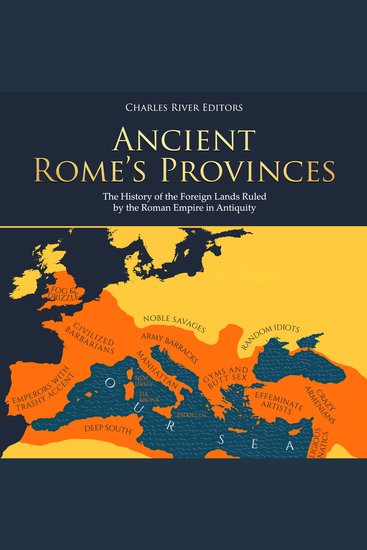
    It can be argued that Roman culture was, indeed, Graeco-Roman rather than Roman. It was the Greek language that served as the lingua franca in the Eastern Empire and much of the west including Italy. Many Greek intellectuals, including Galen, were based in Rome and the Roman aristocracy more and more came to embrace Greek literature and philosophy. Homer’s epics inspired Virgil’s Aeneid and Seneca wrote in Greek. Earlier, Scipio Africanus (236 – 183 B.C.), the epitome of the Roman martial hero, studied Greek philosophy and regarded Greek culture as the benchmark against which all others had to be judged. The Roman poet and philosopher Horace studied in Athens during the Principate and, in common with many of his class, saw that city as the intellectual centre of the world. 
    In the minds of most people today, Gaul equates to modern France. However, the vast geographical area that Caesar named Gaul, in fact, was made up of a number of very distinct regions and covered, in addition to modern-day France, Belgium, Luxembourg, parts of the Netherlands, Germany, Switzerland and Northern Italy. The Romans called the northern area of the Italian peninsula, which is now part of modern Italy, Cisalpine Gaul, or Gaul on this side of the Alps. Early Romans did not even consider this region as part of Italy and repeated incursions southwards, and the sacking of Rome itself in 390 B.C., resulted in Rome taking full control of the area in 221 B.C. and thoroughly Romanizing it to the extent that even the Celtic language totally disappeared and was replaced by Latin. The region was initially a province but by the beginning of the 1st century B.C., it had become fully integrated into the Roman heartland and became an administrative region of Italy rather than a province. 
    Ver livro