Junte-se a nós em uma viagem ao mundo dos livros!
Adicionar este livro à prateleira
Grey
Deixe um novo comentário Default profile 50px
Grey
Assine para ler o livro completo ou leia as primeiras páginas de graça!
All characters reduced
T Tembarom - cover
LER

T Tembarom

Francis Hodgson Burnett

Editora: DigiCat

  • 0
  • 0
  • 0

Sinopse

In Frances Hodgson Burnett's novel "T. Tembarom," readers are introduced to an exuberant and resourceful protagonist whose charisma and unwavering optimism embody the spirit of early 20th-century America. Set against the backdrop of class disparities and societal expectations, the book employs a rich narrative style that deftly blends humor, sentimentality, and social commentary. Burnett's deft characterization and vivid imagery create a compelling portrait of the search for identity and belonging, resonating with thematic elements typical of her other works, such as "A Little Princess" and "The Secret Garden." Frances Hodgson Burnett, born in England in 1849 and later a prominent figure in American literature, was deeply influenced by her own experiences with poverty and societal constraints. Her early life shaped her belief in the transformative power of hope and compassion, which permeates her writing. Burnett's personal journey—from an impoverished childhood to literary success—imbued her narratives with authenticity and a keen understanding of human resilience. "T. Tembarom" is a must-read for those interested in early 20th-century literature, offering insights into social mobility and the American Dream. This novel not only entertains but also prompts readers to reflect on their values and aspirations, making it a timeless exploration of the human condition.
Disponível desde: 16/09/2022.
Comprimento de impressão: 438 páginas.

Outros livros que poderiam interessá-lo

  • Frankenstein - cover

    Frankenstein

    Mary Shelley

    • 0
    • 0
    • 0
    Frankenstein tells the story of Victor Frankenstein, a young scientist who creates a sapient creature in an unorthodox scientific experiment. Shelley started writing the story when she was 18, and the first edition was published anonymously in London on 1 January 1818, when she was 20. Her name first appeared in the second edition, which was published in Paris in 1821.Shelley travelled through Europe in 1815, moving along the river Rhine in Germany, and stopping in Gernsheim, 17 kilometres (11 mi) away from Frankenstein Castle, where, two centuries before, an alchemist had engaged in experiments.[note She then journeyed to the region of Geneva, Switzerland, where much of the story takes place. Galvanism and occult ideas were topics of conversation for her companions, particularly for her lover and future husband Percy B. Shelley. In 1816 Mary, Percy and Lord Byron had a competition to see who could write the best horror story. After thinking for days, Shelley was inspired to write Frankenstein after imagining a scientist who created life and was horrified by what he had made.Though Frankenstein is infused with elements of the Gothic novel and the Romantic movement, Brian Aldiss has argued for regarding it as the first true science-fiction story. In contrast to previous stories with fantastical elements resembling those of later science fiction, Aldiss states, the central character "makes a deliberate decision" and "turns to modern experiments in the laboratory" to achieve fantastic results. The novel has had a considerable influence on literature and on popular culture; it has spawned a complete genre of horror stories, films, and plays.Since the publication of the novel, the name "Frankenstein" has often been used, erroneously, to refer to the monster, rather than to his creator/father.
    Ver livro
  • The Ugly Duckling and Other Stories - cover

    The Ugly Duckling and Other Stories

    Hans Christian Andersen

    • 0
    • 0
    • 0
    First published as "Den Grimme Ælling" in 1843, The Ugly Duckling is one of the best-known and well-loved fairy tales of the Danish poet and author Hans Christian Andersen. An unusual looking young duck is bullied by the other barnyard inhabitants and wanders the world trying to find where he can fit in. This collection also includes The Naughty Boy, The Leaping Match and Sunshine Stories.
    Ver livro
  • Cain - From their pens to your ears genius in every story - cover

    Cain - From their pens to your...

    Alexander Kuprin

    • 0
    • 0
    • 0
    Alexander Kuprin was born in Narovchat, Penza in Russia on 7th September 1870. 
    At 3 his Father died and he and mother moved to Moscow. By 10 he was enrolled at the Second Moscow Military High School and there his interest in literature began. The Alexander Military Academy followed and two years later he was a sub-lieutenant and posted to an Infantry Regiment for a further four years. 
    Despite his duties he was a now a keen writer and published his first short story at this time. His military duties also garnered him experiences for his breakthrough work ‘The Duel’.  Leaving the military he left for Kiev to work for local newspapers.  He continued to publish both stories and novels and by 1901 he was in St Petersburg becoming part of a group that included Chekhov, Ivan Bunin, Maxim Gorky and Leonid Andreyev.  
    In the years that followed further controversial works and acclaim followed.  His comments on the regime meant he was also put under secret police surveillance.   
    As World War I erupted, Kuprin opened a military hospital but was then given command of an infantry company in Finland. He was soon discharged on grounds of ill health.  
    The October Revolution saw him praise Lenin, but he warned that the Bolsheviks threatened Russian culture and might cause further widespread suffering to the peasants.  As Civil War raged he took his family to Helsinki and then on to Paris. 
    Exile saw his talents decline further and his succumbing to alcoholism. He became lonely and withdrawn. The family's poverty increased his malaise.   
    In May 1937, the Kuprin’s returned to Moscow.  He now saw his work published but wrote almost nothing new.  In 1938 his health rapidly deteriorated.  Already suffering from a kidney problems and sclerosis, he had now developed cancer of the oesophagus.  
    Alexander Kuprin died on 25th August 1938.
    Ver livro
  • The Salem Horror - cover

    The Salem Horror

    Henry Kuttner

    • 0
    • 0
    • 0
    In Henry Kuttner's "The Salem Horror," a writer named Carson moves into an old house in Salem, formerly owned by the executed witch Abigail Prinn. He discovers a hidden "Witch Room" in the basement, designed to revive Prinn's spirit. Carson's writing is influenced by dreams and he uncovers Prinn's plot to summon a dark entity. An occultist, Michael Leigh, intervenes, and together they thwart Prinn's plan, sending her and the entity back to their realm, though a chilling memento remains.
    Ver livro
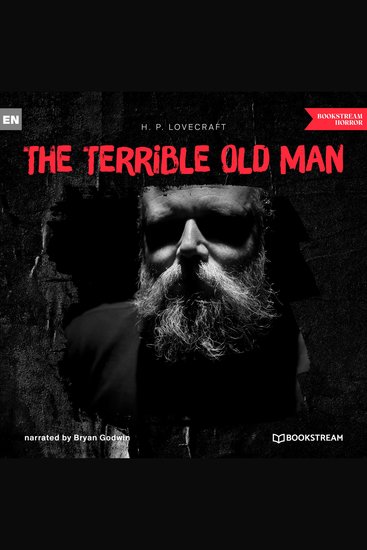
  • Terrible Old Man The (Unabridged) - cover

    Terrible Old Man The (Unabridged)

    H. P. Lovecraft

    • 0
    • 0
    • 0
    A strange old man, "so old that no one can remember when he was young, and so taciturn that few know his real name," lives alone in an ancient house on Water Street in the town of Kingsport. Even among the locals, few know the details of the old man's life, but it is believed that he once captained East Indian clipper ships in his youth and accumulated great riches throughout his life. Those who had visited the property had seen bizarre collections of stones in the front yard and observed the old man carrying on conversations with mysterious bottles on his table, which make "certain definite vibrations as if in answer." Most locals take care to avoid the man and his house. Angelo Ricci, Joe Czanek and Manuel Silva, three robbers, learn about the old man's supposed hoard of treasure and resolve to take it. Ricci and Silva go inside to "interview" the old man about the treasure, while Czanek waits outside in the getaway car. After waiting impatiently for a long time, Czanek is startled by an outburst of horrific screaming from the house but assumes that his colleagues have been too rough with the old man during their interrogation. However, the gate of the house opens, revealing the old man "smiling hideously" at him. For the first time, Czanek takes note of the man's unsettling yellow eyes. The mutilated bodies of the three robbers are later found by the seaside, "horribly slashed as with many cutlasses, and horribly mangled as by the tread of many cruel boot-heels." The people of Kingsport talk about the discovery, as well as about the abandoned car and the screams heard in the night, but the old man shows no interest in their gossip.
    Ver livro
  • Little Wars (Unabridged) - cover

    Little Wars (Unabridged)

    H. G. Wells

    • 0
    • 0
    • 0
    Little Wars is a set of rules for playing with toy soldiers, written by English novelist H. G. Wells in 1913. The book, which had a full title of Little Wars: a game for boys from twelve years of age to one hundred and fifty and for that more intelligent sort of girl who likes boys' games and books, provided simple rules for miniature wargaming. Although first printed in 1913.
    Ver livro