¡Acompáñanos a viajar por el mundo de los libros!
Añadir este libro a la estantería
Grey
Escribe un nuevo comentario Default profile 50px
Grey
Suscríbete para leer el libro completo o lee las primeras páginas gratis.
All characters reduced
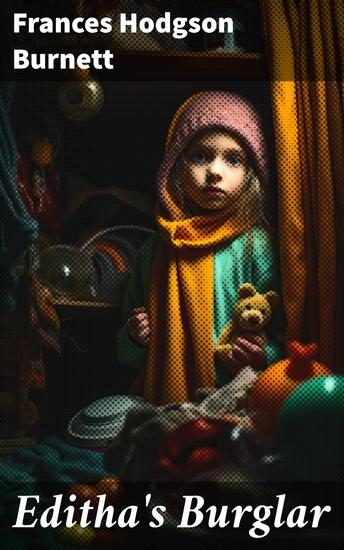
Editha's Burglar - A Story for Children - cover

Editha's Burglar - A Story for Children

Frances Hodgson Burnett

Editorial: Good Press

  • 0
  • 0
  • 0

Sinopsis

In 'Editha's Burglar', Frances Hodgson Burnett masterfully weaves a narrative that explores themes of love, societal expectations, and personal redemption. Set against the backdrop of early 20th century America, this novella captures the eccentricities of its characters with vivid detail and insightful dialogue. Burnett employs a blend of humor and poignancy, propelling the reader through a plot that intertwines the mundane with the extraordinary, offering a reflective commentary on moral choices and human relationships within a constricted societal framework. Frances Hodgson Burnett, renowned for her ability to create enchanting tales, infused 'Editha's Burglar' with personal touches reflective of her own experiences. The daughter of an embattled family, Burnett often grappled with themes of loss, resilience, and transformation throughout her writing, as evidenced in her well-received works like 'The Secret Garden' and 'A Little Princess'. Drawing from the complexity of her own life, she presents characters that resonate with authenticity and depth, making her observations of human nature all the more poignant. This novella is highly recommended for readers seeking both entertainment and introspection. Burnett's engaging storytelling and rich characterization make 'Editha's Burglar' a delightful exploration of life'Äôs unpredictable twists and the transformative power of love, inviting readers to reflect on their own lives and choices.
Disponible desde: 10/11/2023.
Longitud de impresión: 23 páginas.

Otros libros que te pueden interesar

  • How to be a Tarot Card (or a Teenager) - cover

    How to be a Tarot Card (or a...

    Jennifer A. McGowan

    • 0
    • 0
    • 0
    The tarot has been used to play games since the 15th century. Since that time each card has also accumulated meanings. By the 18th century the tarot was used for divination or for oracular purposes, much like the Delphic oracles of old. Nowadays the trumps, or major arcana, are believed to chronicle, symbolically, the journey of the Fool through life.
    How to be a Tarot Card (or a Teenager) explores, exploits, and sometimes downright twists the major arcana and the meanings they have accumulated, in the order in which the many hundreds of tarot decks now travelling the world present them. The Star, connoting hope, exists simultaneously as metaphor and feral dog; the rebirth nestled inside the Death card becomes female friendship and escape from patriarchal binds.
    Ver libro
  • A Young Boy Named David Book 23 - Welcome to Special Ed! - cover

    A Young Boy Named David Book 23...

    David M. Smith

    • 0
    • 0
    • 0
    The "Young Boy Named David" series is designed to help young ones deal with difficult situations that are hard to talk about. In Book 23, David goes to a new school and gets put into a special class designed to help him do better in class. Not only does he meet a teacher from his past, but David also makes a new best friend.
    Ver libro
  • HAPPYAGONY - A Collection of Poems by Mem Ferda - cover

    HAPPYAGONY - A Collection of...

    Mem Ferda

    • 0
    • 0
    • 0
    Life can be a tumultuous journey, filled with both heartache and joy. Since his teenage years, the actor Mem Ferda has poured his soul into crafting poetry, and now feels compelled to share these words with the world. Through these verses, he strives to awaken deep emotions, ignite inspiration, and spread positivity, all the while offering a glimpse into the tapestry of reality, as seen through his own introspection and experiences.
     
    These poems are like kaleidoscopes, each revealing a unique pattern, open to interpretation based on one's worldview, values, and principles. They emanate from the depths of the author's being, bearing the weight of true-life encounters. As readers immerse themselves in these words, they will, hopefully, find solace and delight, just as he has found solace and delight in their creation. If these poems can elicit such a response, then they will have accomplished their purpose.
    Ver libro
  • Hope Beauty and Friendship - cover

    Hope Beauty and Friendship

    John Angus Walker-Smith

    • 0
    • 0
    • 0
    This selection of poems by a new author was triggered by the tragic death of his 28-year-old daughter. So the collection begins with loss and the aftermath of loss: the hope of the author that his daughter and he may be reunited in the life to come. This hope underlies many of the poems. This is clearly articulated in ‘Osler and Son’, where a father grieves for loss of his son in World War I but in a stoical, unexpressed manner. 
    The author records his childhood experience of emotions being held back in ‘Boys Don’t Cry John’. While some poems look back, most are contemporary, such as those inspired by the lockdown and the Ukraine War. 
    The author advocates expression of feelings. This is powerfully expressed in relation to his experience of Friendship, both past and present. Transcendental beauty is a theme in the metaphysical poems ‘The Colour Blue’ and ‘Roman Glass’. 
    However, each poem is unique. Many of them speak from the heart and have an emotional impact. The author hopes that these will resonate with readers.
    Ver libro
  • Poems - Evening Mary Virgin Presaging Autumn Silent Hour The Angels and many others - cover

    Poems - Evening Mary Virgin...

    Rainer Maria Rilke

    • 0
    • 0
    • 0
    Rainer Maria Rilke (1875-1926) is the finest Austrian poet of this century and one of the greatest lyrical writers in the history of Western literature. A major figure in the modernist movement, with some affinities to Yeats, Rilke had a profound influence on other 20th century poets such as Pasternak and Akhmatova. He is a master of vivid and breathtakingly original imagery in which difficult ideas are made directly apprehensible to the reader and new worlds of experience are opened up.
    This selection includes poems:
    Evening
    Mary Virgin
    Presaging 
    Autumn
    Silent Hour
    The Angels and many others
    Ver libro
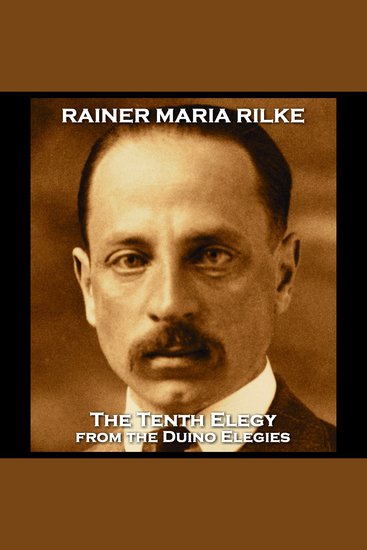
  • The Tenth Elegy - Lyrical poem about the emotional rollercoaster that is the human experience - cover

    The Tenth Elegy - Lyrical poem...

    Rainer Maria Rilke

    • 0
    • 0
    • 0
    René Karl Wilhelm Johann Josef Maria Rilke was born into a troubled marriage on the 4th December 1875 in Prague, then part of the Austro-Hungarian Empire.  His mother, having previously lost a baby girl, would dress the young boy up in girl’s clothing.   
    Later his father dispatched him to a military academy at age 10 but after a miserable 5 years the young Rilke left due to illness and instead entered first Prague and then Munich and finally Berlin university to study art history, philosophy and literature. 
    His initial forays into literature was in poetry.  His intense, mystical and lyrical style was much admired and over time inspired many in succeeding generations.    
    His short prose collection ‘Stories of God’, written in an impassioned burst over several nights was published in 1900 and offers a beguiling view of much of Rilke’s influences and outlook.  
    The following year he married the pioneering sculptor and artist Clara Westhoff.  The union produced one child, a daughter Ruth.   
    He lived in Paris for most of the Century’s first decade where he mixed with many great minds of the time.  Although he continued to write he also worked as a secretary to the sculptor, Rodin.   
    It was only after they settled in Switzerland in 1919 that his writing output was in full flow.  Here he wrote profusely in both German and French, which included much on his previous travels, his left-wing sympathies, his religious and existential thoughts, all part of a unique and consummate style. 
    From 1923 on, Rilke increasingly struggled with his health which was now in constant decline and often spent time rehabilitating at a sanatorium.   
    Rainer Maria Rilke died of leukaemia on the 29th December 1926 in Montreux, Switzerland.  He was 51.
    Ver libro