Junte-se a nós em uma viagem ao mundo dos livros!
Adicionar este livro à prateleira
Grey
Deixe um novo comentário Default profile 50px
Grey
Assine para ler o livro completo ou leia as primeiras páginas de graça!
All characters reduced
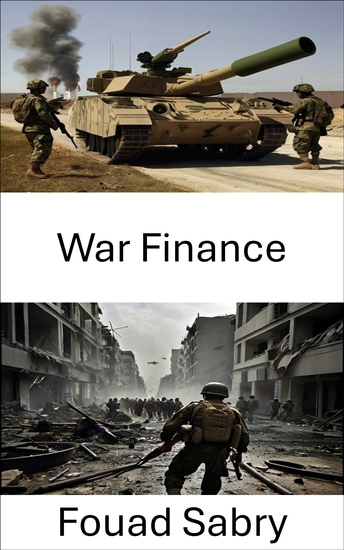
War Finance - Strategic Funding for Modern Combat Operations - cover
LER

War Finance - Strategic Funding for Modern Combat Operations

Fouad Sabry

Editora: One Billion Knowledgeable

  • 0
  • 0
  • 0

Sinopse

What is War Finance
 
There is a subfield of defense economics known as war finance. It is the economic base of a military that determines its might, and without this financial support, soldiers will not be paid, weapons and equipment will not be made, and food will not be purchased. In light of this, achieving victory in a war requires not only achieving success on the battlefield but also achieving economic dominance and maintaining economic stability within a state. The term "war finance" refers to a wide range of financial programs, including fiscal and monetary efforts, that are implemented in order to support the expensive expenditures that are associated with a war.
 
How you will benefit
 
(I) Insights, and validations about the following topics:
 
Chapter 1: War finance
 
Chapter 2: Tax
 
Chapter 3: Government bond
 
Chapter 4: Fiscal policy
 
Chapter 5: Fiscal multiplier
 
Chapter 6: Deficit spending
 
Chapter 7: Public finance
 
Chapter 8: Government budget balance
 
Chapter 9: Debt of developing countries
 
Chapter 10: Government debt
 
(II) Answering the public top questions about war finance.
 
Who this book is for
 
Professionals, undergraduate and graduate students, enthusiasts, hobbyists, and those who want to go beyond basic knowledge or information for any kind of War Finance.
Disponível desde: 23/06/2024.
Comprimento de impressão: 136 páginas.
Outros livros que poderiam interessá-lo

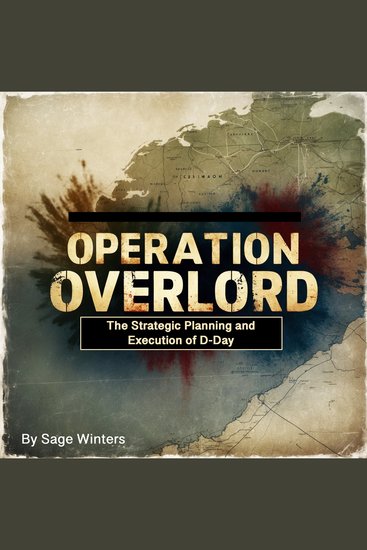
  • Operation Overlord - The Strategic Planning and Execution of D-Day - cover

    Operation Overlord - The...

    Sage Winters

    • 0
    • 0
    • 0
    Operation Overlord, the Allied invasion of Normandy on June 6, 1944, stands as one of the most significant military operations in modern history. Known globally as D-Day, it marked the beginning of the end of Nazi occupation in Western Europe and paved the way for the eventual defeat of Adolf Hitler’s regime. The operation was not only a turning point in World War II but also in the broader scope of 20th-century history, reshaping the political, military, and cultural landscape of Europe. 
      
    The importance of D-Day lies in its magnitude and complexity. It was the largest amphibious invasion ever attempted, involving over 156,000 Allied troops from the United States, the United Kingdom, and Canada, supported by thousands of aircraft, ships, and landing vehicles. The scale of the operation reflected the urgency and determination of the Allies to open a second front in Europe, relieving pressure on the Soviet Union in the east and setting the stage for the liberation of France and the rest of Western Europe. 
      
    D-Day's significance can also be seen in the way it exemplified the combined effort of different Allied nations, each contributing their expertise and resources to a unified cause. American forces, under the leadership of General Dwight D. Eisenhower, provided much of the manpower and logistical support. British forces contributed vital naval and air power, while Canadian troops played a crucial role in the assault on Juno Beach. This collaboration was a testament to the strength of the Allies’ commitment to defeating the Axis powers, despite the political and cultural differences that existed between them.
    Ver livro
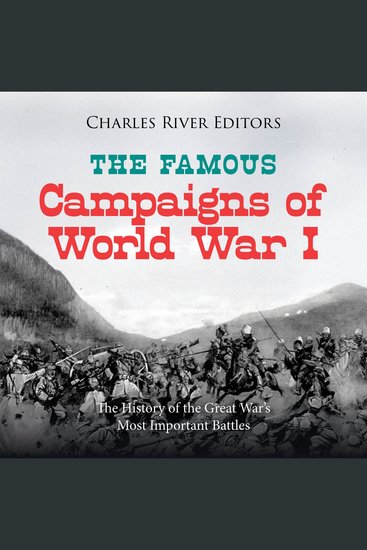
  • Famous Campaigns of World War I The: The History of the Great War’s Most Important Battles - cover

    Famous Campaigns of World War I...

    Charles River Editors

    • 0
    • 0
    • 0
    World War I, also known in its time as the “Great War” or the “War to End all Wars”, was an unprecedented holocaust in terms of its sheer scale. Fought by men who hailed from all corners of the globe, it saw millions of soldiers do battle in brutal assaults of attrition which dragged on for months with little to no respite. Tens of millions of artillery shells and untold hundreds of millions of rifle and machine gun bullets were fired in a conflict that demonstrated man’s capacity to kill each other on a heretofore unprecedented scale, and as always, such a war brought about technological innovation at a rate that made the boom of the Industrial Revolution seem stagnant.  
    	The enduring image of World War I is of men stuck in muddy trenches, and of vast armies deadlocked in a fight neither could win. It was a war of barbed wire, poison gas, and horrific losses as officers led their troops on mass charges across No Man’s Land and into a hail of bullets. While these impressions are all too true, they hide the fact that trench warfare was dynamic and constantly evolving throughout the war as all armies struggled to find a way to break through the opposing lines. 
    	Though World War I is almost synonymous with trench warfare, that method of combat was nothing new. There had been extensive use of trenches during the later stages of the American Civil War (1864-1865), and trench warfare was constant during the Second Boer War (1899-1902), the Russo-Japanese War (1904-1905), and the Balkan Wars (1912-1913). These conflicts showed that modern firepower combined with entrenched positions gave a decisive advantage to the defender, yet European observers failed to learn any lessons from these conflicts, and the scale of trench warfare in World War I far eclipsed anything seen before or since, especially on the Western Front.
    Ver livro
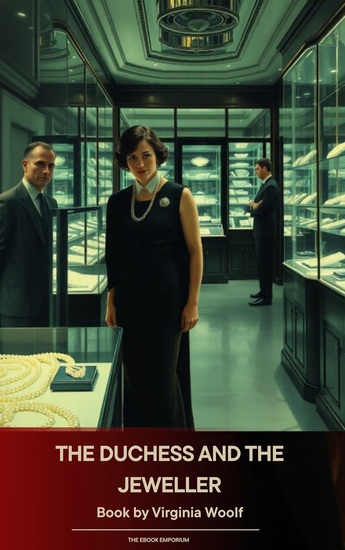
  • The Duchess and the Jeweller - cover

    The Duchess and the Jeweller

    Virginia Woolf

    • 0
    • 0
    • 0
    "He was the richest jeweller in England; but his mind was not on his jewels."
    
    Oliver Bacon has climbed from the gutters of London to the pinnacle of luxury. He is the most powerful jeweller in the world, yet he is haunted by a relentless hunger for something money cannot buy: acceptance into the upper echelons of the aristocracy. When the Duchess of Lambourne arrives at his shop with a desperate secret and a string of questionable pearls, a high-stakes psychological game begins—one where the currency is not just gold, but blood, reputation, and the past.
    
    A Masterclass in Modernist Tension: Virginia Woolf uses her signature psychological insight to peel back the layers of her characters' motivations. Oliver is a man of "checks and balances," constantly weighing his humble origins against his present grandeur. The Duchess is a woman of fading glory, willing to trade her family's legacy for the sake of her gambling debts. Their encounter is a clinical study of how the "new money" of the merchant class collides with the "old status" of a crumbling nobility.
    
    The Glittering Surface of Corruption: Through vivid imagery—from the "shining fish" of the jewels to the "rotting meat" of the Duchess's lies—Woolf explores the rot beneath the polished surface of Mayfair society. The Duchess and the Jeweller is a biting, satirical look at a world where everything is for sale, and the ultimate transaction is the soul itself. It remains one of Woolf's most accessible and provocative explorations of greed and the vanity of human wishes.
    
    Discover the dark side of the diamond. Purchase "The Duchess and the Jeweller" today and witness a clash of titans in the heart of London.
    Ver livro
  • The Absent Father Effect on Daughters - Father Desire Father Wounds - cover

    The Absent Father Effect on...

    Susan E. Schwartz

    • 0
    • 0
    • 0
    The Absent Father Effect on Daughters investigates the impact of absent—physically or emotionally—and inadequate fathers on the lives and psyches of their daughters through the perspective of Jungian analytical psychology. This book tells the stories of daughters who describe the insecurity of self, the splintering and disintegration of the personality, and the silencing of voice. 


    Issues of fathers and daughters reach to the intra-psychic depths and archetypal roots, to issues of self and culture, both personal and collective. Susan E. Schwartz illustrates the maladies and disappointments of daughters who lack a father figure and incorporates clinical examples describing how daughters can break out of idealizations, betrayals, abandonments, and losses to move towards repair and renewal. The book takes an interdisciplinary approach, expanding and elucidating Jungian concepts through dreams, personal stories, fairy tales, and the poetry of Sylvia Plath, along with psychoanalytic theory, including Andre Green's 'dead father effect' and Julia Kristeva's theories on women and the body as abject. 


    Examining daughters both personally and collectively affected by the lack of a father, this book is highly relevant for those wanting to understand the complex dynamics of daughters and fathers to become their authentic selves.
    Ver livro
  • The End of Knowledge - cover

    The End of Knowledge

    David Vivancos

    • 0
    • 0
    • 0
    Is humanity ready to give up knowledge to machines?
    Ver livro
  • The Joy Journey - How to Find Happiness in Every Step - cover

    The Joy Journey - How to Find...

    Anna Bridges

    • 0
    • 0
    • 0
    Life is a journey, and along this journey, we often find ourselves searching for something that will bring us lasting contentment: happiness. Yet, happiness is not a destination to be reached, but a path to be walked. In a world that constantly demands more from us, it can be easy to overlook the power of small, intentional steps toward joy. We get caught up in the chase for success, the pursuit of external validation, or the quest to fix what we perceive as wrong in our lives. However, true happiness lies not in the perfect outcome, but in how we approach the journey itself. 
      
    The idea of joy often seems elusive, something that is dependent on circumstances or fleeting moments. But what if we could choose joy, not just as a reaction to life’s happenings, but as a conscious decision we make each day? What if every step along the way, regardless of the situation or challenge, could be an opportunity to cultivate happiness? This book is about discovering that joy is not just something you find, but something you create as you go.
    Ver livro