¡Acompáñanos a viajar por el mundo de los libros!
Añadir este libro a la estantería
Grey
Escribe un nuevo comentario Default profile 50px
Grey
Suscríbete para leer el libro completo o lee las primeras páginas gratis.
All characters reduced
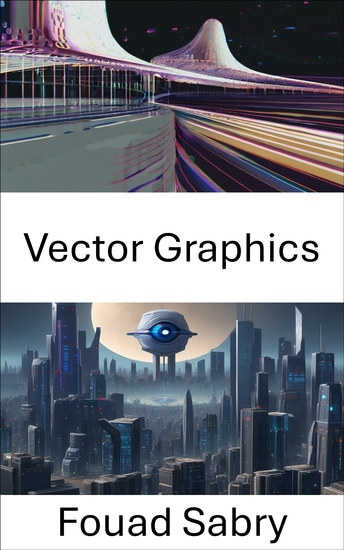
Vector Graphics - Mastering Vector Graphics in Computer Vision - cover

Vector Graphics - Mastering Vector Graphics in Computer Vision

Fouad Sabry

Editorial: One Billion Knowledgeable

  • 0
  • 0
  • 0

Sinopsis

What is Vector Graphics
 
Vector graphics are a form of computer graphics in which visual images are created directly from geometric shapes defined on a Cartesian plane, such as points, lines, curves and polygons. The associated mechanisms may include vector display and printing hardware, vector data models and file formats, as well as the software based on these data models. Vector graphics are an alternative to raster or bitmap graphics, with each having advantages and disadvantages in specific situations.
 
How you will benefit
 
(I) Insights, and validations about the following topics:
 
Chapter 1: Vector graphics
 
Chapter 2: Raster graphics
 
Chapter 3: SVG
 
Chapter 4: Raster graphics editor
 
Chapter 5: Vector graphics editor
 
Chapter 6: Rasterisation
 
Chapter 7: Comparison of vector graphics editors
 
Chapter 8: Image file format
 
Chapter 9: Image tracing
 
Chapter 10: Boxy SVG
 
(II) Answering the public top questions about vector graphics.
 
(III) Real world examples for the usage of vector graphics in many fields.
 
Who this book is for
 
Professionals, undergraduate and graduate students, enthusiasts, hobbyists, and those who want to go beyond basic knowledge or information for any kind of Vector Graphics.
Disponible desde: 13/05/2024.
Longitud de impresión: 94 páginas.

Otros libros que te pueden interesar

  • Treat and Shrink Fibroids Naturally – The Self-Help Book: How to Uncover the Causes of Fibroids and Successfully Treat Them Naturally – incl Immediate Relief Tips for Acute Symptoms - cover

    Treat and Shrink Fibroids...

    Elisabeth Cornelsen

    • 0
    • 0
    • 0
    Self-Treating and Shrinking MyomasYour body is your most valuable asset, so I am pleased to welcome you to a topic that affects a large portion of the female population: myomas. First, some good news: in most cases, myomas do not cause lasting harm to the body. However, fascinating as they may be, they are a disruptive factor in daily life, potentially painful, and certainly worrying—or at the very least, annoying.Given that we are all—men and women, young and old—already burdened with countless everyday struggles, we should not have to subject ourselves to the stress of possibly unnecessary surgeries, medications, or other avoidable treatments.I am happy to share with you the knowledge I have gathered, which includes approaches to independently treat the female challenge called "myoma."Not only will you receive understandable medical background information, but you will also gain the tools to recognize, identify, and alleviate symptoms and discomfort—without the fear of major interventions.My greatest wish is that you discover how to gently and naturally bring your body back into balance, allowing you to regain the highest possible level of vitality and quality of life.
    Ver libro
  • The Hype About Hydrogen - False Promises and Real Solutions in the Race to Save the Climate: Revised and Updated - cover

    The Hype About Hydrogen - False...

    Joseph J. Romm

    • 0
    • 0
    • 0
    For decades, we've been promised that a hydrogen economy is just around the corner. After billions in investment, hydrogen has failed to live up to these overblown promises. Yet it is as hyped as ever, a target of media enthusiasm and hefty investment from government and industry. Is it time to accept that the "fuel of the future" may never arrive?In 2003, energy expert Joesph J. Romm wrote The Hype About Hydrogen to explain why hydrogen wasn't the panacea we were promised—and may never be. In this newly revised and updated edition, Romm builds an even stronger case, explaining the barriers hydrogen faces. In a series of significant updates, Romm breaks down the latest methods of production, including "green" hydrogen, hydrogen made with nuclear power, geologic hydrogen, and "blue" hydrogen from natural gas with carbon capture and storage (CCS), laying out the challenges with each. He then explores the limitations of suggested applications of hydrogen.The Hype About Hydrogen is essential for anyone who hopes that hydrogen will be a major solution to the climate crisis. The good news? We don't need it to be. With advancements in renewables and battery technology, electrification offers us a path forward that is cleaner, safer—and can be implemented today.
    Ver libro
  • Swimming Upstream - One man's fight to save the Atlantic wild salmon - cover

    Swimming Upstream - One man's...

    Patsy Peril, Deirdre Nuttall

    • 0
    • 0
    • 0
    'Unlike me, the Atlantic wild salmon does not have a voice, so it cannot tell the story of why and how it has been driven to the point of extinction.'
    Once, the River Shannon was teeming with wild salmon swimming upstream. But when the enormous hydro-electric station at Ardnacrusha was built in 1929, what began as the Free State's crowning achievement would have a devastating impact on the environment.
    In this evocative and thought-provoking memoir, Patsy Peril recalls a life deeply entwined with Irish wildlife and embedded in the history of modern Ireland. From a childhood spent on the water to a national conservation campaign, Patsy has a lifetime of knowledge to share about the wild Atlantic salmon – and a plan to save it.
    Ver libro
  • TV Lobotomy The Scientific Truth About the Effects of Television - cover

    TV Lobotomy The Scientific Truth...

    Michel Desmurget

    • 0
    • 0
    • 0
    "TV unleashes the imagination and feeds intelligence." • "A child deprived of TV risks social isolation." • "TV dumbs you down." • "TV makes you obese." It seems that everything—and its opposite—has already been said about TV. But what is it really? How can we distinguish between the radical "No TV" of some and the supposedly entertaining virtues touted by others? Michel Desmurget, a doctor in neuroscience, has sifted through and synthesized thousands of research articles published over the last fifty years in the most rigorous international journals. The conclusion is unequivocal—we must stop watching television for good, whatever the program. All content, even that meant to teach, can never come close to any other learning method. The data is clear—television viewing is detrimental to school performance. For a child in elementary school, for example, every hour spent daily watching television increases the likelihood that he or she will one day leave the school system without any qualifications. For specialists, there is no doubt that television has a negative influence, not only on intellectual development but also on behavior. Thus, certain eating disorders (anorexia, bulimia) are related to a frantic consumption of—television programs! In short, watching television has an impact on our life expectancy. However, the harmful impact of this risk is largely underestimated, because of the large sector of the public exposed to television (more than 85% of Western households have at least one television set), and because of a debate on the subject that has become inaudible and confused. Moreover, the results of the research initiated by the big media groups on the subject remain "proprietary," i.e., closed to the general public. Believing that we is facing a real public health problem, Michel Desmurget wants to act as a responsible scientist—with a clear, concise and rigorously referenced book, the message cannot go unnoticed. Michel Desmurget is a doctor of neuropsychology. He attended several major American universities (MIT, Emory, UCSF) and is now a research director at INSERM in cognitive neuroscience. He is particularly interested in the problems of brain organization and plasticity. He is the author of the book TV Lobotomy (Max Milo, 2022), which is based in part on his personal history. Exasperated by having to constantly justify the choice not to have television at home—and to prevent his children from having access to it—and not to be seen as a sociopath in the eyes of those around him, he has done a massive job to argue his point. 
    This audiobook is read by a synthesized voice.
    Ver libro
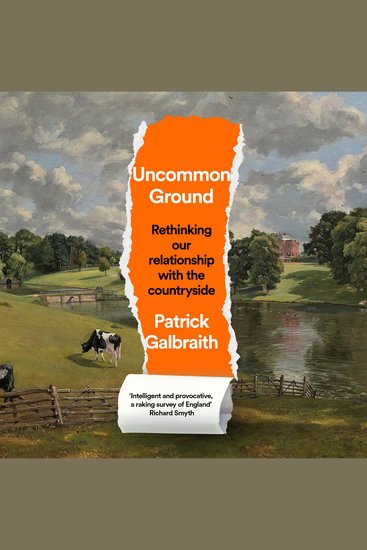
  • Uncommon Ground: Rethinking our relationship with the countryside - cover

    Uncommon Ground: Rethinking our...

    Patrick Galbraith

    • 0
    • 0
    • 0
    ‘A curious-minded and subtle intervention in the politics of the countryside’ Sunday Times 
    'Galbraith spent three years investigating the truth about rural Britain and how we treat it. Uncommon Ground is the brilliant result' Daily Telegraph 
    'Very funny. Acutely observed. An attempt to look beyond the usual clichés of country life' Observer 
    “Brilliant. This book is a sort of necessary clever trespass itself, on everyone’s notions about ‘our land’.”Country Life 
    "Filled with voices from people who don’t always make the headlines in the UK land access debate."Scotsman 
    The countryside is under increasing pressure and people, the science shows, need nature. Access to the countryside is essential for our health, our happiness and our future. But does nature need us? 
    In January 2023, the largest land access demonstration since the 1930s took place on a bright wintery morning on Dartmoor. The access movement demands that the countryside be thrown open. This, they argue, would help nature by giving the public the opportunity to hold farmers and wealthy landowners to account. 
    But would it really work for Britain’s growing population to spill out across the countryside, and is access quite as restricted as we are led to believe? 
    In Uncommon Ground, Patrick Galbraith takes us on an extraordinary tour of rural Britain, from the Hebrides to Devon, and from Anglo-Saxon England to the present day. To uncover the truth and fully understand our deep connection with the land, he meets farmers, Irish Travellers, politicians, salmon poachers, and the nation's most-hated landowners, as well as activists calling for a total abolition of the right to own land. 
    In his much-celebrated style, Galbraith works hard to listen to those who often don’t get listened to. This raking survey of our fast-changing country, reveals the essence of rural Britain's soul. Uncommon Ground argues that what matters is not greater access but how we engage with the land and demands that landowners give us more opportunities to do so, while also giving endangered wildlife the right to tranquility. 
    Galbraith's Uncommon Ground is a top pick in non-fiction, offering a deep dive into the science of agriculture and the sociology of rural Britain. The book explores the delicate balance between public access and environmental protection, examining the political policies that shape our interactions with the land and the ecosystems that inhabit it. 
    For fans of John Lewis-Stempel (England), Benedict Macdonald (Cornerstones), Lee Schofield (Wild Fell), Isabella Tree (Wilding), and Derek Gow (Birds, Beasts and Bedlam). 
    HarperCollins 2025
    Ver libro
  • Quantum Cryptography - Comprehensive Introduction to Security in the Quantum Realm - cover

    Quantum Cryptography -...

    SAM CAMPBELL

    • 0
    • 0
    • 0
    "Quantum Cryptography: Comprehensive Introduction to Security in the Quantum Realm" is an enlightening journey into the cutting-edge field that is reshaping the landscape of secure communication. Authored with clarity and depth, this book serves as a comprehensive guide for both novices and seasoned professionals, providing a thorough exploration of the principles, technologies, and applications that define quantum cryptography. 
    Delving into the quantum realm, the book demystifies the intricacies of quantum mechanics and its application to cryptography. Readers are guided through the foundational concepts of Quantum Key Distribution (QKD), uncovering how quantum properties such as superposition and entanglement are harnessed to create unbreakable cryptographic keys. The text seamlessly bridges the gap between theory and practice, offering real-world insights into the implementation of quantum-safe communication protocols. 
    As the digital era confronts the looming threat of quantum computers, the book becomes an essential resource for understanding the quantum-resistant algorithms crucial for future-proofing cryptographic systems. It navigates the reader through the challenges posed by quantum adversaries, providing strategic insights into securing information in the face of advancing quantum technologies. 
    With a balanced blend of technical depth and accessibility, "Quantum Cryptography" stands as a beacon for those eager to grasp the transformative potential of quantum technologies in ensuring the confidentiality, integrity, and resilience of communication in the quantum era. 
     
    Ver libro