Join us on a literary world trip!
Add this book to bookshelf
Grey
Write a new comment Default profile 50px
Grey
Subscribe to read the full book or read the first pages for free!
All characters reduced
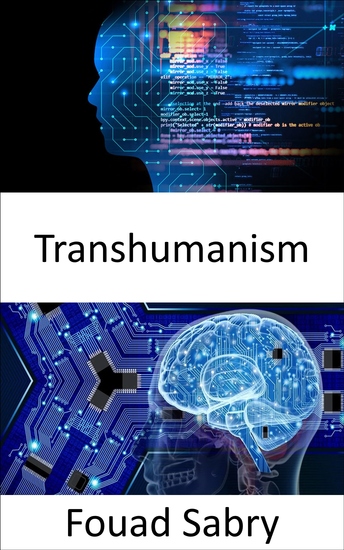
Transhumanism - Fundamentals and Applications - cover

Transhumanism - Fundamentals and Applications

Fouad Sabry

Publisher: One Billion Knowledgeable

  • 0
  • 0
  • 0

Summary

What Is Transhumanism
 
The term "transhumanism" refers to a philosophical and intellectual movement that promotes improving the human condition by creating and making publicly available advanced technology that can significantly improve both longevity and cognition. Transhumanism is a philosophical and intellectual movement.
 
How You Will Benefit
 
(I) Insights, and validations about the following topics:
 
Chapter 1: Transhumanism
 
Chapter 2: Posthumanism
 
Chapter 3: Extropianism
 
Chapter 4: David Pearce (philosopher)
 
Chapter 5: Nick Bostrom
 
Chapter 6: Humanity+
 
Chapter 7: Human enhancement
 
Chapter 8: Transhumanist Party
 
Chapter 9: Transhumanist politics
 
Chapter 10: Posthuman
 
(II) Answering the public top questions about transhumanism.
 
(III) Real world examples for the usage of transhumanism in many fields.
 
(IV) 17 appendices to explain, briefly, 266 emerging technologies in each industry to have 360-degree full understanding of transhumanism' technologies.
 
Who This Book Is For
 
Professionals, undergraduate and graduate students, enthusiasts, hobbyists, and those who want to go beyond basic knowledge or information for any kind of transhumanism.
Available since: 07/02/2023.
Print length: 57 pages.

Other books that might interest you

  • Nuclear and Particle Physics - A Comprehensive Introduction to Subatomic Physics - cover

    Nuclear and Particle Physics - A...

    Mark Hedges

    • 0
    • 0
    • 0
    Subatomic physics is the branch of physics that studies the fundamental particles and forces that constitute the universe at the smallest scales. It explores the nature of matter and energy at the level of atomic nuclei and beyond, delving into the complex interactions that govern the behavior of elementary particles. The study of subatomic physics emerged from the broader field of nuclear physics, which initially focused on the structure and properties of atomic nuclei. Over time, discoveries of new particles and interactions led to the expansion of the field into what is now known as particle physics. 
    The foundation of subatomic physics was laid with the discovery of the electron by J.J. Thomson in 1897, which provided the first evidence that atoms were composed of smaller constituent particles. This was followed by the discovery of the proton by Ernest Rutherford in 1917 and the neutron by James Chadwick in 1932, establishing the basic structure of the atomic nucleus. The development of quantum mechanics in the early 20th century provided a theoretical framework for understanding the behavior of these particles, revealing that their properties could only be accurately described through probabilistic wave functions and discrete energy levels. 
    In the mid-20th century, the discovery of a wide variety of new particles, including mesons, baryons, and leptons, suggested that protons and neutrons themselves were composed of more fundamental constituents. This led to the development of the quark model by Murray Gell-Mann and George Zweig in 1964, which proposed that protons and neutrons are made up of combinations of quarks held together by the strong nuclear force, mediated by gluons. The quark model became a central component of the Standard Model of particle physics, which describes the known elementary particles and the fundamental forces—excluding gravity—that govern their interactions.
    Show book
  • The New Era of Space Stations - cover

    The New Era of Space Stations

    Martin K. Ettington

    • 0
    • 0
    • 0
    We are at an exciting threshold for the development and deployment of private space stations and more advanced designs from various countries. This trend shows how quickly space technologies are developing. 
    The advancements in cheaper rockets to carry more payloads into Earth’s orbit in a less costly manner is another trend which is supporting the development of these new space stations and space transportation options. 
    The last few years a lot of companies and governments are making plans to develop and deploy a variety of space stations and moon bases. This seems like to good time to update everyone with what are these latest plans, space technologies, transportation options and more. 
    I’ve tried to include all I could find on new space technologies and plans relevant to working and living in space. 
    I wrote a book on Space in 2017 titled “Designing and Building Space Colonies” along with another ten space related books later on. So this is one of my favorite genres.
    Show book
  • The Safety Anarchist - Relying on human expertise and innovation reducing bureaucracy and compliance - cover

    The Safety Anarchist - Relying...

    Sidney Dekker

    • 0
    • 0
    • 0
    Work has never been as safe as it seems today. Safety has also never been as bureaucratized as it is today. Over the past two decades, the number of safety rules and statutes has exploded, and organizations themselves are creating ever more internal compliance requirements. At the same time, progress on safety has slowed to a crawl. Many incident- and injury rates have flatlined. Worse, excellent safety performance on low-consequence events tends to increase the risk of fatalities and disasters. Bureaucracy and compliance now seem less about managing the safety of the workers we are responsible for, and more about managing the liability of the people they work for. We make workers do a lot that does nothing to improve their success locally. Paradoxically, such tightening of safety bureaucracy robs us of exactly the source of human insight, creativity and resilience that can tell us how success is actually created, and where the next accident may well happen. 
    It is time for Safety Anarchists: people who trust people more than process, who rely on horizontally coordinating experiences and innovations, who push back against petty rules and coercive compliance, and who help recover the dignity and expertise of human work.
    Show book
  • Blogging for Profit - The Ultimate Beginners Guide to Learn Step-by-Step How to Make Money Blogging and Earn Passive Income up to $10000 a Month - cover

    Blogging for Profit - The...

    Daren H. Russell

    • 0
    • 0
    • 0
    If you want to discover how to monetize and profit from writing a blog and earn sustainable income to help you reach your financial freedom goals, keep reading... 
    Have you asked yourself the following: 
    - can Blogging be profitable and earn me money? 
    - what can Blogging do for me? 
    - will Blogging work long term? 
    …but finding it difficult to get the information you seek in order to understand blogging better and how it actually makes a profit? 
    Have you always wanted to know: 
    - which Blogging platform should be used the best? 
    - which Blogging topic to write about? 
    … but yet to find a resource that will show you how in a simple, step-by-step approach? 
    If you answered "Yes" to any of the questions above, then "Blogging for Profit: The Ultimate Beginners Guide to Learn Step-by-Step How to Make Money Blogging and Earn Passive Income up to $10,000 a Month" is for you. 
    In "Blogging for Profit", here is What You Will Learn:Monetizing your blog - how to make money with your blogSteps to learn the most widely used platform for writing blogsBrainstorming and deciding upon a niche market for your blog - save time and money by finding the best profitable topic for your blogStep-by-step information to learn better and get results from your blogging efforts 
    PLUS: Bonus Section Included - How to Integrate Social Media to your Blog and gain that promotional advantage and reach a larger audience. 
    By implementing the lessons in this book, you will discover whole new online money-making opportunities ready for you to profit from whatever Blogging topic you feel passionate to write about. We’ll walk through everything you need to know about how to discover your audience, connect to consumers, monetize your blog, and consider long-term options.
    Show book
  • Social Bookmarking Success - cover

    Social Bookmarking Success

    Margarette Selby

    • 0
    • 0
    • 0
    Social Bookmarking Success: The Essential Guide to Social Bookmarking and How It Can Make Your Time Online Easier and More Fun!Social bookmarking is probably one of the most convenient and popular aspects of the Internet. While some people spend their time online for work or business purposes, many others spend their time browsing for popular games, shopping sites or even the most current news events. Social bookmarking makes each of these things easy and fun.In this audiobook, you will learn what social bookmarking is all about and how to use this well so you can get the most out of your online experience. This audiobook will cover the following topics:- WHAT IS SOCIAL BOOKMARKING?- WHY SOCIAL BOOKMARKING IS A TRUE SUCCESS STORY- WHAT'S SO SPECIAL ABOUT SOCIAL BOOKMARKING?- ADVANTAGES OF SOCIAL BOOKMARKING- GETTING STARTED WITH SOCIAL BOOKMARKING- THE CONCEPT BEHIND SOCIAL BOOKMARKING- LEARNING ABOUT SOCIAL BOOKMARKING- GOOD SOCIAL BOOKMARKING CONTENT- MAKING FRIENDS THROUGH SOCIAL BOOKMARKING SITES- GENERATING TRAFFIC WITH SOCIAL BOOKMARKING- SIGNIFICANCE OF SOCIAL BOOKMARKING- SOCIAL BOOKMARKING VERSUS SOCIAL NEWS- And many more!Social bookmarking has become a true success story that combines the ability to collaborate online with the knowledge of millions and the social dimension of the ever changing Internet. If you want to learn more, scroll up and click “add to cart” now!
    Show book
  • God Technology and the Christian Life - cover

    God Technology and the Christian...

    Tony Reinke

    • 0
    • 0
    • 0
    What Does God Think about Technology?
    From smartphones to self-driving cars to space travel, new technologies can inspire us. But the breakneck pace of change can also frighten us. So how do Christians walk by faith through the innovations of Silicon Valley? And how does God relate to our most powerful innovators?
    To build a biblical theology of technology, journalist and tech optimist Tony Reinke examines nine key texts from Scripture to show how the world's discoveries are divinely orchestrated. Ultimately, what we believe about God determines how we respond to human invention. With the help of several theologians and inventors throughout history, Reinke dispels twelve common myths in the church and offers fourteen ethical convictions to help Christians live by faith in the age of big tech.
    Show book