¡Acompáñanos a viajar por el mundo de los libros!
Añadir este libro a la estantería
Grey
Escribe un nuevo comentario Default profile 50px
Grey
Suscríbete para leer el libro completo o lee las primeras páginas gratis.
All characters reduced
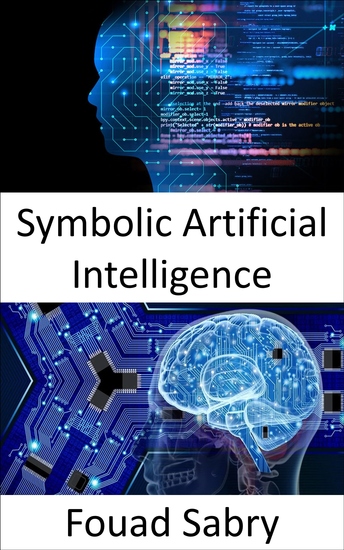
Symbolic Artificial Intelligence - Fundamentals and Applications - cover

Symbolic Artificial Intelligence - Fundamentals and Applications

Fouad Sabry

Editorial: One Billion Knowledgeable

  • 0
  • 0
  • 0

Sinopsis

What Is Symbolic Artificial Intelligence
 
In the field of artificial intelligence, the term "symbolic artificial intelligence" refers to the collection of all methods in artificial intelligence research that are based on high-level symbolic (human-readable) representations of issues, logic, and search. In other words, symbolic artificial intelligence is the name for the collection of all methods in artificial intelligence research. Symbolic AI created applications such as knowledge-based systems, symbolic mathematics, automated theorem provers, ontologies, the semantic web, and automated planning and scheduling systems. It utilized techniques such as logic programming, production rules, and semantic nets and frames. The paradigm of symbolic artificial intelligence led to the development of important ideas in the fields of search, symbolic programming languages, agents, multi-agent systems, the semantic web, as well as the benefits and drawbacks of formal knowledge and reasoning systems.
 
How You Will Benefit
 
(I) Insights, and validations about the following topics:
 
Chapter 1: Symbolic Artificial Intelligence
 
Chapter 2: Artificial Intelligence
 
Chapter 3: Expert System
 
Chapter 4: Knowledge Representation and Reasoning
 
Chapter 5: Neats and Scruffies
 
Chapter 6: Dendral
 
Chapter 7: Computational Cognition
 
Chapter 8: Physical Symbol System
 
Chapter 9: History of Artificial Intelligence
 
Chapter 10: Hybrid Intelligent System
 
(II) Answering the public top questions about symbolic artificial intelligence.
 
(III) Real world examples for the usage of symbolic artificial intelligence in many fields.
 
(IV) 17 appendices to explain, briefly, 266 emerging technologies in each industry to have 360-degree full understanding of symbolic artificial intelligence' technologies.
 
Who This Book Is For
 
Professionals, undergraduate and graduate students, enthusiasts, hobbyists, and those who want to go beyond basic knowledge or information for any kind of symbolic artificial intelligence.
Disponible desde: 03/07/2023.
Longitud de impresión: 104 páginas.
Otros libros que te pueden interesar

  • How to use Pinterest - cover

    How to use Pinterest

    Shawn Jones

    • 0
    • 0
    • 0
    Learn how to use Pinterest.
    Ver libro
  • The Graphene Bridge - Unlocking Tomorrow with the Graphene Technology Revolution in AI Quantum Computing & Atomic Batteries - cover

    The Graphene Bridge - Unlocking...

    Kireet Kokala, Supantha Banerjee

    • 0
    • 0
    • 0
    The Graphene Bridge: AI, Quantum Computing, and the Future of Innovation Graphene is one of the most extraordinary materials ever discovered, with the potential to reshape industries, power next-generation Artificial Intelligence, and revolutionize quantum computing. Unlocking its full potential requires bridging the gaps between cutting-edge science, technological advancement, and real-world application. The Graphene Bridge explores the intersection of graphene, artificial intelligence, quantum cryptography, and atomic batteries, blending scientific exploration with thrilling storytelling. Through a mix of real-world advancements and speculative fiction, this book provides an in-depth look at how graphene’s unmatched conductivity, strength, and flexibility could drive breakthroughs in cybersecurity, energy storage, and computing. Ethical dilemmas, security concerns, and global power struggles will shape the adoption of these transformative technologies, and understanding them is critical for those who want to stay ahead of the curve. Written for technology enthusiasts, business leaders, and forward-thinkers, The Graphene Bridge is both an eye-opening introduction to graphene’s possibilities and a compelling exploration of the future it may create. Readers will gain valuable insights into the forces driving innovation, the risks that come with progress, and the profound impact these advancements will have on society.
    Ver libro
  • Consider the Birds - Heartwarming True Stories of Our Feathered Friends - cover

    Consider the Birds -...

    Callie Smith Grant

    • 0
    • 0
    • 0
    Whether we watch quick little songbirds at our backyard feeders, keep a flock of chickens, teach parrots to talk, or stand looking up at the sky, mesmerized by the aerial acrobatics of blackbirds gathering as the leaves turn in the fall, humans have an almost universal admiration of and interest in birds. We love the birdsong of spring, the fledglings in summer, the deep V of geese in autumn, the bright spot of red cardinals against white snow. 


    Wild or domestic, birds are clearly one of God's best gifts. This collection of forty heartwarming true stories of our fine feathered friends from animal-lover Callie Smith Grant celebrates that gift. With stories of brave budgie brothers, serene shore birds, hungry hummingbirds, a curious crow, an owl that came into a boy's life as an answer to prayer, and many more, Consider the Birds is the perfect companion to a cozy blanket, a cup of tea, and a chair by the window—where you can see the birds.
    Ver libro
  • The Martians - The True Story of an Alien Craze that Captured Turn-of-the-Century America - cover

    The Martians - The True Story of...

    David Baron

    • 0
    • 0
    • 0
    In the early 1900s, many Americans actually believed we had discovered intelligent life on Mars, as bestselling science writer David Baron chronicles in The Martians, his truly bizarre tale of a nation swept up in Mars mania. 


    At the center of Baron's historical drama is Percival Lowell, the Boston Brahmin and Harvard scion, who observed "canals" etched into the surface of Mars. Lowell devised a grand theory that the red planet was home to a utopian society that had built gargantuan ditches to funnel precious meltwater from the polar icecaps to desert farms and oasis cities. The public fell in love with the ambitious amateur astronomer who shared his findings in speeches and wildly popular books. 


    While at first people treated the Martians whimsically―Martians headlining Broadway shows, biologists speculating whether they were winged or gilled―the discussion quickly became serious. Inventor Nikola Tesla announced he had received radio signals from Mars; Alexander Graham Bell agreed there was "no escape from the conviction" that intelligent beings inhabited the planet. Martian excitement reached its zenith when Lowell financed an expedition to photograph Mars from Chile's Atacama Desert, resulting in what newspapers hailed as proof of the Martian canals' existence.
    Ver libro
  • Inca Astronomy and Astrology: The History of the Inca’s Measurements of the Planets and Stars - cover

    Inca Astronomy and Astrology:...

    Editors Charles River

    • 0
    • 0
    • 0
    Though the Spanish physically conquered them in quick fashion, the culture and legacy of the Inca Empire has continued to endure throughout the centuries in both Europe and South America, due in no small part to the fact they were one of the most advanced and sophisticated cultures on the continent. Like the Aztecs, the Spanish burned much of the Inca’s extant writings, but it is estimated that as many as 35 million once fell under their banner, and the empire’s administrative skills were so sharp that they kept accurate census records. Their religion, organization, and laws were also effectively centralized and tied to the rulers of the empire, and their military mobilization would have made the ancient Spartans proud. After the Spanish conquest, several rebellions in the area attempted to reestablish the proud Inca Empire over the next two centuries, all while famous Europeans like Voltaire glorified the Inca Empire in optimistic artistic portrayals. 
    The sun was the main element present in the Inca worldview, so Inti, the sun god, was worshipped above all others and, even though the different parts of the empire were allowed to practice their individual beliefs, they were encouraged to venerate the sun. The connection with the sun even extended to their kings since they were considered to be the sons of the sun. Naturally, this meant astronomy was a key component of the Incas’ beliefs, and in addition to the sun, the Inca observed the moon, stars, constellations, and some planets, all of which became integral parts of their cosmology. The Cusco Valley was the heart of the Inca Empire, and many of the Inca's settlements have been found to contain important astronomical elements, providing clear evidence of the importance astronomy had among the Inca. 
    Ver libro
  • Creation Care Discipleship - Why Earthkeeping Is an Essential Christian Practice - cover

    Creation Care Discipleship - Why...

    Steven Bouma-Prediger

    • 0
    • 0
    • 0
    Although our planet faces numerous ecological crises, including climate change, many Christians continue to view their faith as primarily a "spiritual" matter that has little relationship to the world in which we live. But Steven Bouma-Prediger contends that protecting and restoring our planet is part and parcel of what it means to be a Christian. 
     
    Making his case from Scripture, theology, and ethics and including insights from the global church, Bouma-Prediger explains why Christians must acknowledge their identity as earthkeepers and therefore embrace their calling to serve and protect their home planet and fellow creatures. To help readers put an "earthkeeping faith" into practice, he also suggests numerous practical steps that concerned believers can take to care for the planet. 
     
    Bouma-Prediger unfolds a biblical vision of earthkeeping and challenges Christians to view care for the earth as an integral part of Christian discipleship.
    Ver libro