Junte-se a nós em uma viagem ao mundo dos livros!
Adicionar este livro à prateleira
Grey
Deixe um novo comentário Default profile 50px
Grey
Assine para ler o livro completo ou leia as primeiras páginas de graça!
All characters reduced
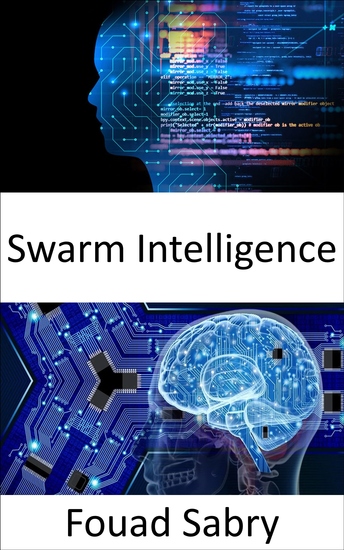
Swarm Intelligence - Fundamentals and Applications - cover
LER

Swarm Intelligence - Fundamentals and Applications

Fouad Sabry

Editora: One Billion Knowledgeable

  • 0
  • 0
  • 0

Sinopse

What Is Swarm Intelligence
 
The collective behavior of decentralized, self-organized systems, either natural or artificial, is what is referred to as swarm intelligence (SI). The idea is used in research that is being done on artificial intelligence. In 1989, Gerardo Beni and Jing Wang were the ones who first used the expression "cellular robotic systems" in connection with their respective fields of study.
 
How You Will Benefit
 
(I) Insights, and validations about the following topics:
 
Chapter 1: Swarm intelligence
 
Chapter 2: Quorum sensing
 
Chapter 3: Cellular automaton
 
Chapter 4: Complex system
 
Chapter 5: Collaborative intelligence
 
Chapter 6: Artificial immune system
 
Chapter 7: Distributed artificial intelligence
 
Chapter 8: Global brain
 
Chapter 9: Multi-agent system
 
Chapter 10: Promise theory
 
(II) Answering the public top questions about swarm intelligence.
 
(III) Real world examples for the usage of swarm intelligence in many fields.
 
(IV) 17 appendices to explain, briefly, 266 emerging technologies in each industry to have 360-degree full understanding of swarm intelligence' technologies.
 
Who This Book Is For
 
Professionals, undergraduate and graduate students, enthusiasts, hobbyists, and those who want to go beyond basic knowledge or information for any kind of swarm intelligence.
Disponível desde: 01/07/2023.
Comprimento de impressão: 99 páginas.


Outros livros que poderiam interessá-lo

  • Circumcision - How an Ancient Ritual Became a Questionable Surgery—A Complete Analysis - cover

    Circumcision - How an Ancient...

    Kenneth S. Lipman

    • 0
    • 0
    • 0
    Winner of the Independent Publisher (IPPY) Book Award Gold Medal for health and medicine 
    Winner of the Firebird Book Award for medical nonfiction 
    Nominated for the prestigious Montaigne Medal science award 
    Finalist for the Eric Hoffer Book Award Grand Prize 
    Finalist for the First Horizon Award 
    Every year, millions of baby boys are circumcised, either for purported health benefits, or for religious reasons. This book provides a comprehensive and clear explanation of the risks and rewards of that practice, which has significant effects on sexuality, psychology, and overall health. 
    Drawing on 869 research references and firsthand accounts, Dr. Lipman sheds light on the disparity between traditional views and contemporary medical perspectives. 
    Whether you're a parent contemplating the procedure for your child or an academic in search of an in-depth analysis, Circumcision provides a balanced and factual perspective on this widely performed yet increasingly debated surgery. 
    In this groundbreaking, meticulously rendered book, you will learn: 
    • Why circumcision does not improve a baby's health 
    • Why circumcision does not reduce the incidence of AIDS or urinary tract infections, as is often claimed 
    • The deep financial incentives behind the six billion-dollar circumcision industry 
    • That the pain of circumcision is equivalent to torture, and why anesthesia is rarely used 
    • Circumcision's significant physical and mental health risks, including death 
    • Why both men and women enjoy sex more if the man is uncircumcised 
    • That adherents to Judaism or Islam may not be required to ritually circumcise their child, as is often thought 
    • The history of circumcision 
    • The ethics and legality of circumcision 
    • Why America is the only country in the world with a high rate of medical circumcision
    Ver livro
  • Mastering Data-Intensive Applications - Building for Scale Speed and Resilience - cover

    Mastering Data-Intensive...

    Chuck Sherman

    • 0
    • 0
    • 0
    In an era dominated by data, the ability to harness its power is a game-changer for businesses and industries. "Mastering Data-Intensive Applications" is your definitive guide to navigating the complex landscape of building and managing applications that can handle the massive volumes of data that define the modern world. 
    This book delves into the core principles, strategies, and best practices required to architect, develop, and maintain data-intensive applications that excel in scale, speed, and resilience. Whether you're a seasoned software engineer, a system architect, or a technical leader, this book will empower you to conquer the challenges of working with data at an unprecedented scale. 
    "Mastering Data-Intensive Applications" is more than just a technical manual—it's a comprehensive journey through the intricacies of modern application development. Authored by experts in the field, this book combines theoretical knowledge with practical wisdom, enabling you to create applications that are not only responsive and robust but also capable of extracting valuable insights from the vast sea of data. 
    Equip yourself with the skills to architect data-intensive applications that excel in scale, speed, and resilience. Whether you're building the next social media sensation, revolutionizing e-commerce, or driving advancements in healthcare analytics, this book will be your steadfast companion in the world of data-intensive application mastery. 
     
    Ver livro
  • Unleash Your Vagus Nerve: Stimulate Your Vagal Tone and Activate Its Healing Power with Daily Exercises to overcome Anxiety Depression Inflammation Autoimmunity Brain Fog and Gut Sensitivities - cover

    Unleash Your Vagus Nerve:...

    Yumi Park

    • 0
    • 0
    • 0
    YOUR COMPREHENSIVE GUIDE TO A HAPPIER AND HEALTHIER LIFE IS HERE! 
    Do you suffer from anxiety, depression, inflammation, autoimmunity, brain fog, or gut sensitivities? 
    If so, then this audiobook is for you! 
    You've heard that the vagus nerve is important for health, but you're not sure how to activate its healing power or what to do with it.  
    The Vagus Nerve is one of the most important nerves in the body, controlling everything from your digestion to your mood. And yet, most people don't know how to use it or even what it does. 
    The good news is that activating your Vagus Nerve is simple and can be done with a few easy exercises each day.  
    And in this audiobook, we'll show you how! 
    Learning about the Vagus Nerve will help you understand how your Vagus Nerve works and what it does. It will also teach you how to stimulate your vagal tone through daily exercises that can lead to a happier life. 
    You’ll learn the best ways to manage stress and find relief from symptoms of these conditions. This audiobook also includes information on other treatments such as medication and therapy along with helpful advice on effective diet and lifestyle changes. 
    By listening to this audiobook today, you are taking an important step towards regaining control of your health!  
    Let us guide you down the path towards healing by helping you understand the power of your Vagus Nerve in detail. 
    SCROLL UP, GET THIS AUDIOBOOK, AND START CHANGING YOUR LIFE TODAY!
    Ver livro
  • Belonging in Healthcare - The Better Allies® Approach to Creating More Inclusive Workplaces - cover

    Belonging in Healthcare - The...

    Karen Catlin

    • 0
    • 0
    • 0
    It’s become increasingly clear that healthcare workplaces are filled with non-inclusive behavior. People who are underrepresented because of their gender, race, ethnicity, sexual orientation and identity, disabilities, and other factors regularly face biases and challenges that hold them back from success. These include everything from harassment, dismissive behavior, and lack of credit for their contributions, to pay inequity, extra hurdles to advancement, and more. And while many organizations are looking to address these issues with top-down initiatives, there's also an important role for individuals to play in creating a more inclusive culture via everyday acts of allyship. 
    In this new book, inclusive workplace expert Karen Catlin brings her popular Better Allies® approach to healthcare workplaces. 
    Belonging in Healthcare provides a practical, research-based guide for how to be a better ally for coworkers who are from underrepresented groups. Filled with firsthand accounts from nurses, physicians, staff, administrators, and professors, combined with published studies, the book will help you spot situations where you can create a more inclusive workplace and everyday actions to reshape culture so everyone can thrive. 
    This is the book that allies in healthcare have been searching for: an industry-specific guide to the mindsets, strategies, and changes needed to make their workplaces more equitable from the inside out.
    Ver livro
  • Data Virtualization - The Power of Unified Data Harnessing the Benefits of Data Virtualization - cover

    Data Virtualization - The Power...

    Brian Murray

    • 0
    • 0
    • 0
    In a world driven by data, organizations face the challenge of integrating and accessing diverse data sources efficiently. Data Virtualization: The Power of Unified Data is your ultimate guide to unlocking the full potential of your data ecosystem without the complexity of traditional data integration methods. 
    This book demystifies data virtualization, a transformative approach that enables seamless access, integration, and management of data from disparate sources without physical movement or replication. Learn how to create a unified view of your data, improve decision-making, and streamline workflows—all while reducing costs and complexity. 
    Through clear explanations, real-world use cases, and practical tips, you’ll explore how data virtualization supports modern data needs such as real-time analytics, business intelligence, and cloud migration. Discover its advantages, including faster time to insights, enhanced flexibility, and improved data governance. 
    Whether you’re a business leader, data professional, or IT enthusiast, Data Virtualization: The Power of Unified Data will equip you with the knowledge to harness the benefits of this innovative technology and drive your organization toward a more agile, data-driven future. Unlock the power of unified data and revolutionize how you manage information.
    Ver livro
  • Empiricism - Knowledge Through Experience - cover

    Empiricism - Knowledge Through...

    Hector Davidson

    • 0
    • 0
    • 0
    Empiricism, as a philosophical doctrine, asserts that knowledge is primarily derived from sensory experience. This perspective contrasts sharply with rationalism, which emphasizes reason and innate knowledge. Empiricism has shaped our understanding of the world and influenced numerous fields, from the natural sciences to ethics and epistemology. The essence of empiricism lies in the conviction that the mind begins as a "blank slate" (tabula rasa) and that experience, rather than pre-existing ideas or concepts, forms the foundation of all knowledge. 
    At the heart of empiricist thought is the belief that all human knowledge starts with perception. We acquire information about the world through our senses—sight, hearing, touch, taste, and smell—which provide the raw data from which we form concepts and beliefs. For empiricists, knowledge is not something we discover internally, but something we gather from external reality. This view stands in contrast to the rationalist emphasis on a priori knowledge, which is independent of experience and accessible only through reason. 
    Empiricism's roots can be traced back to ancient philosophy, with early proponents like Aristotle, who argued that all knowledge comes from sensory observation. However, the modern development of empiricism is largely credited to three major figures: John Locke, George Berkeley, and David Hume. Locke introduced the idea of the mind as a tabula rasa, arguing that individuals are born without innate ideas and that all knowledge comes from experience. Berkeley took this further by suggesting that even the existence of the external world depends on perception, encapsulating the notion that "to be is to be perceived." Hume, the most radical empiricist of the three, questioned the very basis of causality and inductive reasoning, asserting that our beliefs in cause-and-effect relationships were not rationally justified but arose from habitual experience.
    Ver livro