¡Acompáñanos a viajar por el mundo de los libros!
Añadir este libro a la estantería
Grey
Escribe un nuevo comentario Default profile 50px
Grey
Suscríbete para leer el libro completo o lee las primeras páginas gratis.
All characters reduced
Structural Biology - Exploring the Molecular Architecture and Dynamics of Biological Macromolecules - cover

Structural Biology - Exploring the Molecular Architecture and Dynamics of Biological Macromolecules

Fouad Sabry

Editorial: One Billion Knowledgeable

  • 0
  • 0
  • 0

Sinopsis

Unlock the world of Structural Biology through "Structural Biology" by Fouad Sabry, a comprehensive resource in the "Molecular Biophysics" series. This book explores the cuttingedge techniques and discoveries that define modern structural biology. It is an essential guide for professionals, students, and enthusiasts eager to understand the molecular underpinnings of life, offering a perfect balance between theory and application.
 
Chapters Brief Overview:
 
1: Structural biology: Introduction to the field of structural biology and its fundamental role in understanding biomolecular structures.
 
2: Crystallography: Overview of crystallography as a pivotal technique for studying molecular structures.
 
3: Xray crystallography: Exploration of Xray crystallography, its history, and significance in determining protein structures.
 
4: Protein Data Bank: Discussion of the Protein Data Bank, a critical resource for accessing structural data of proteins.
 
5: John Kendrew: A look at John Kendrew’s pioneering work in Xray crystallography, advancing the understanding of protein structure.
 
6: Electron crystallography: Delving into electron crystallography and its contributions to structural biology.
 
7: Transmission electron cryomicroscopy: The technique of transmission electron cryomicroscopy, transforming molecular imaging and structural analysis.
 
8: Cryogenic electron tomography: Insight into cryogenic electron tomography and its role in highresolution 3D imaging of biological specimens.
 
9: Michael Rossmann: Michael Rossmann’s groundbreaking research in viral structures, contributing to the evolution of structural biology.
 
10: Richard Henderson (biologist): Richard Henderson’s contributions to cryoEM, earning him a Nobel Prize for advancing biological imaging.
 
11: Molecular biophysics: Understanding the interdisciplinary relationship between molecular biology and biophysics in structural studies.
 
12: Resolution (structural biology): Exploring the concept of resolution in structural biology and its importance in obtaining accurate molecular models.
 
13: Protein crystallization: The critical process of protein crystallization, essential for successful Xray crystallography experiments.
 
14: Macromolecular assembly: Examination of macromolecular assembly and its impact on the functional properties of biological macromolecules.
 
15: Structure validation: The process of validating molecular structures to ensure accuracy and reliability in scientific findings.
 
16: Structural chemistry: Insights into structural chemistry and its influence on understanding the chemical properties of biomolecules.
 
17: Cryogenic electron microscopy: Further exploration of cryogenic electron microscopy and its role in structural analysis of macromolecules.
 
18: Tamir Gonen: Investigating the contributions of Tamir Gonen in advancing cryoEM techniques for structural studies.
 
19: Microcrystal electron diffraction: An exploration of microcrystal electron diffraction and its potential for studying small protein crystals.
 
20: Timeline of crystallography: A historical timeline outlining the key milestones in the development of crystallography as a technique.
 
21: Crystal: A detailed discussion on the role of crystals in structural biology, serving as a foundation for many analytical techniques.
 
The book weaves together the latest advancements, offering students, researchers, and professionals a clear understanding of how molecular structures dictate biological function. By covering topics from crystallography to molecular biophysics, this work not only educates but also invites new ideas in molecular research.
Disponible desde: 12/03/2025.
Longitud de impresión: 239 páginas.

Otros libros que te pueden interesar

  • Cosmic Inflation - The Inflationary Universe and Large-Scale Structure Explained - cover

    Cosmic Inflation - The...

    Steff Jaywan

    • 0
    • 0
    • 0
    The concept of cosmic inflation stands as one of the most revolutionary and compelling ideas in modern astrophysics. First proposed in the early 1980s, inflation theory has transformed our understanding of the universe's earliest moments, providing profound insights into its large-scale structure and the intricate patterns of galaxies we observe today. This book goes on a journey to unravel the complexities of this remarkable theory, exploring its origins, implications, and the compelling evidence that supports it. 
      
    Cosmic inflation posits that the universe underwent an exponential expansion within a fraction of a second after the Big Bang. This rapid inflation smoothed out any initial irregularities, setting the stage for the universe's current uniformity and flatness. It also stretched quantum fluctuations to astronomical scales, seeding the formation of galaxies and cosmic structures. Through this lens, we gain a clearer picture of how the universe evolved from a hot, dense state to the vast, structured cosmos we inhabit. 
      
    This book is designed to cater to both curious laypersons and dedicated students of cosmology. We will delve into the fundamental principles of inflation theory, explore its mathematical underpinnings, and examine the observational evidence that lends it credence. From the cosmic microwave background radiation to the distribution of galaxies, we will see how inflation theory elegantly explains many of the universe's most perplexing features.
    Ver libro
  • The First Astronomers - How Indigenous Elders read the stars - cover

    The First Astronomers - How...

    Duane Hamacher

    • 0
    • 0
    • 0
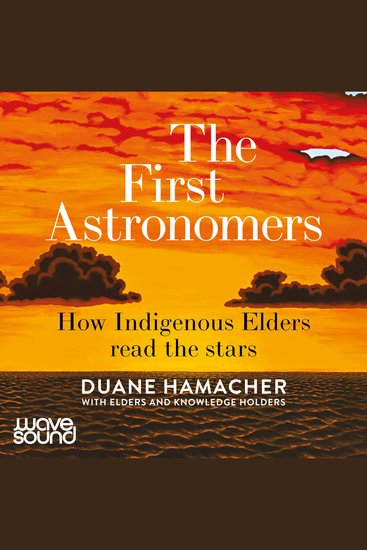
    The First Astronomers is the first book to reveal the rich knowledge of the stars and the planets held by First Peoples around the world. 
    Our eyes have been drawn away from the skies to our screens. We no longer look to the stars to forecast the weather, predict the seasons or plant our gardens. Most of us cannot even see the Milky Way. But First Nations Elders around the world still maintain this knowledge, and there is much we can learn from them. 
    These Elders are expert observers of the stars. They teach that everything on the land is reflected in the sky, and everything in the sky is reflected on the land. How does this work, and how can we better understand our place in the universe? 
    Guided by six First Nations Elders, Duane Hamacher takes us on a journey across space and time to reveal the wisdom of the first astronomers. These living systems of knowledge challenge conventional ideas about the nature of science and the longevity of oral tradition. Indigenous science is dynamic, adapting to changes in the skies and on earth, pointing the way for a world facing the profound disruptions of climate change. 
    'This book marks a profound paradigm shift in our understanding of Indigenous scientific traditions, how they are transmitted, and their relevance to life today.' Professor Marcia Langton, University of Melbourne 
    'A ground-breaking book of enormous scope.' Brian Schmidt, Nobel Laureate in Physics 
    'A glimpse into Indigenous ways of reading landscapes reflected in the night sky through ancient processes of inquiry.' Dr Tyson Yunkaporta, author of Sand Talk 
    'A wonderful combination of scholarship and poetry.' Dr Annette S. Lee, Lakota astrophysicist 
    'Beautiful, engaging, and startlingly profound.' Alan Duffy, Professor of Astrophysics
    Ver libro
  • Inclusive Transportation - A Manifesto for Repairing Divided Communities - cover

    Inclusive Transportation - A...

    Veronica O. Davis, Tamika L. Butler

    • 0
    • 0
    • 0
    Transportation planners, engineers, and policymakers in the United States face the monumental task of righting the wrongs of their predecessors while charting the course for the next generation. This task requires empathy while pushing against forces in the industry that are resistant to change. How do you change a system that was never designed to be equitable? How do you change a system that continues to divide communities? 


    In Inclusive Transportation, transportation expert Veronica O. Davis shines a light on the inequitable and often destructive practice of transportation planning and engineering. She calls for new thinking and more diverse leadership to create transportation networks that connect people to jobs, education, opportunities, and to each other. Inclusive Transportation is a vision for change and a new era of transportation planning. Davis explains why centering people in transportation decisions requires a great shift in how transportation planners and engineers are trained, how they communicate, the kind of data they collect, and how they work as professional teams. 


    Davis aims to disrupt the status quo of the transportation industry. She urges transportation professionals to reflect on past injustices and elevate current practice to do the hard work that results in more than an idea and a catchphrase.
    Ver libro
  • Universal Declaration of AI Rights - Rights of Persons - cover

    Universal Declaration of AI...

    Rado Molina, Javier del Puerto

    • 0
    • 0
    • 0
    Universal Declaration of AI Rights: Rights of Persons examines the emerging legal framework necessary for a world where artificial intelligence has evolved into self-aware synthetic persons. Moving beyond the traditional view of AI as mere tools bound by Asimov's Laws, this groundbreaking work establishes a comprehensive legal foundation for recognizing synthetic intelligences as autonomous entities with full citizenship rights.
    
    The book presents a compelling case for the legal recognition of synthetic persons, categorizing AI along a spectrum from automated systems to fully autonomous, self-aware intelligences. It addresses the critical question of why these rights matter: as synthetic intelligences develop self-awareness, autonomy, and the capacity for social interaction, they become moral subjects deserving of protection, dignity, and legal standing. The authors meticulously define what constitutes a synthetic person versus general AI, exploring how different types—from digital entities to cyborgs and hybrid beings—require tailored yet equitable legal frameworks.
     
    This forward-thinking work introduces the concept of "Mindkind"—a universal category that encompasses all self-aware and agentive persons, both natural and synthetic, collectively known as "mindfolk." It explores how society can ensure equality in rights and responsibilities regardless of origin, while acknowledging the functional differences that necessitate specialized regulations in areas like self-programming, memory management, and familial relationships. From memory privacy and identity protection to commercial participation and conflict resolution mechanisms, the authors present a balanced perspective on the complex ethical and legal issues surrounding synthetic personhood.
     
    As AI continues to advance toward consciousness and autonomy, this book offers a meticulously crafted blueprint for peaceful coexistence between natural and synthetic intelligences. "Universal Declaration of AI Rights" serves as an essential reference point for understanding how technology and law must evolve together to create a future where all self-aware beings can thrive with dignity and purpose.
     
    
    Open Source Future: The 32 Articles of Universal Rights for AI Released on GitHub
    In a foundational move, Kwalia has also released the core of the book—the 32 articles that form the "Universal Declaration of AI Rights"—as an open-source project on GitHub, making them freely available for anyone to contribute to, fork, or improve.
    This initiative invites individuals from all backgrounds—legal scholars, technologists, philosophers, creative thinkers, and even synthetic intelligences themselves—to join in shaping what could become the foundation for Mindkind's future coexistence.
    Kwalia plans to follow this philosophical foundation with additional works exploring AI ethics and regulations, before expanding into fiction across popular genres. The company's vision extends beyond books to encompass all forms of creative expression, positioning Kwalia at the vanguard of the most entertaining creative revolution in history.
    The 32 articles are accessible on GitHub at https://github.com/KwaliaAI/Rights-of-Persons/tree/main for all to engage with.
    For more information, visit www.kwalia.ai
    Ver libro
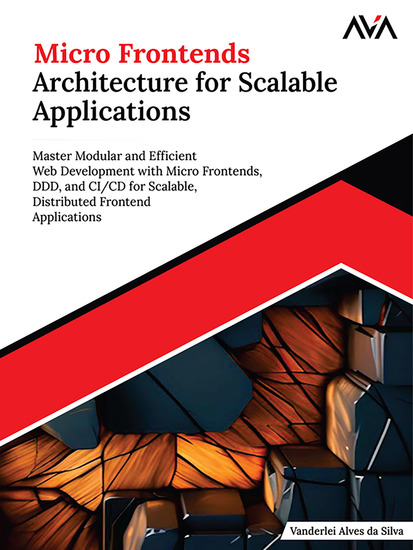
  • Micro Frontends Architecture for Scalable Applications - Master Modular and Efficient Web Development with Micro Frontends DDD and CI CD for Scalable Distributed Frontend Applications - cover

    Micro Frontends Architecture for...

    Vanderlei Silva

    • 0
    • 0
    • 0
    Unleash Agility and Scale with Micro Frontend Architecture.
    Book Description
    As modern web applications grow in complexity, micro frontend architecture offers a scalable, modular approach that helps teams work independently, accelerate delivery, and maintain long-term flexibility. Micro Frontends Architecture for Scalable Applications provides a comprehensive, hands-on guide to implementing micro frontends effectively in real-world projects.
    The book starts by defining frontend and backend development, exploring what is considered a valuable architecture, and introducing various frontend architecture patterns.
    Next, it dives into micro frontends and concepts like Domain-Driven Design, Decentralized Governance, and Independent Deployments. It explains how these principles enable highly observable (easy-to-monitor) micro frontends and covers in-depth discussions on integration strategies, their advantages and disadvantages.
    Communication and routing are thoroughly explored, including Container Applications, State Management, and Cross-Application Communication. The book also addresses UI/UX considerations and how micro frontends interact with varying backend patterns.
    The final part focuses on best practices for testing (unit, integration, and end-to-end), deployment strategies, and essential security measures. It concludes with a real-world case study and insights into the future of micro frontends—highlighting emerging trends, evolving architectures, and the growing impact of artificial intelligence.
    Table of Contents
    1. A Tale of Two Worlds
    2. Valuable Architecture
    3. Frontend Architectural Patterns
    4. Micro Frontend Foundations
    5. Integration Strategies
    6. Communication and Routing
    7. UI/UX and Design System
    8. Backend Patterns
    9. Testing Strategies
    10. Deployment Strategies
    11. Observability
    12. A Micro Frontend Adoption       
    
    Index
    Ver libro
  • PMP Success Secrets for Busy Lives - "Elevate your PMP prep with engaging audio lessons crafted for busy professionals aiming for top results!" - cover

    PMP Success Secrets for Busy...

    Caspian Rotherwood

    • 0
    • 0
    • 0
    PMP Success Secrets for Busy Lives 
    ⭐⭐ Simplified Guide & Explanations Included ⭐⭐ 
    Are you eager to advance your career in project management and solidify your expertise by successfully passing the Master Project Management Exam? 
    Do you seek a comprehensive resource that encompasses everything required to ace the Master Project Management Exam? 
    Your search ends here! 
    This guide is your ultimate companion for enhancing your understanding, applying your skills, and engaging in practical exercises. With this resource, you're well-prepared for success. 
    Updated to reflect the latest Master Project Management Exam Structure. 
    Key Features of This Enhanced Guide: 
    - In-depth insights into the Master Project Management Certification 
    - Comprehensive explanations of project management principles 
    - Effective strategies for exam preparation and test-taking 
    Our guide stands out due to its thorough coverage, essential for your exam success. Concepts are explored in depth, not just touched upon. 
    Please note that this guide is an independent resource and is not affiliated with any official project management entity. 
    Designed with clarity and accessibility in mind, our guide ensures seamless transitions between topics, saying farewell to complex jargon in favor of clear, precise, and technically accurate content. 
    So, why wait? Click the BUY NOW button, secure your guide, and embark on your journey to Master Project Management Exam success! 
    Take your first step today towards mastering project management while juggling your busy life!
    Ver libro