¡Acompáñanos a viajar por el mundo de los libros!
Añadir este libro a la estantería
Grey
Escribe un nuevo comentario Default profile 50px
Grey
Suscríbete para leer el libro completo o lee las primeras páginas gratis.
All characters reduced
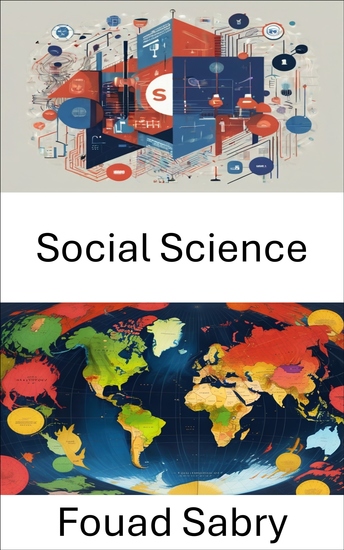
Social Science - Understanding Human Behavior and Institutions in Political Contexts - cover

Social Science - Understanding Human Behavior and Institutions in Political Contexts

Fouad Sabry

Editorial: One Billion Knowledgeable

  • 0
  • 0
  • 0

Sinopsis

Unlock the connections between human behavior and political systems with "Social Science," a key addition to the Political Science series. This book explores societal structures and interactions, offering insights into the dynamic world of social sciences within a political context.
 
1: Social Science - Examine the essence and significance of social science in shaping political understanding.
 
2: Interdisciplinarity - Discover how integrating various disciplines enriches political science research.
 
3: Political Science - Understand core principles and how they intersect with broader social science themes.
 
4: Behavioral Sciences - Explore how behavioral sciences reveal the psychological roots of political actions.
 
5: Philosophy of Social Science - Reflect on the philosophical foundations influencing political analysis.
 
6: History of the Social Sciences - Trace key milestones in the evolution of social sciences and their impact on political science.
 
7: Sociology - Learn how sociology analyzes societal structures with political implications.
 
8: Outline of Social Science - Get a comprehensive overview of social science disciplines and their political relevance.
 
9: List of Social Science Journals - Access essential journals for further research.
 
10: Outline of Anthropology - Explore anthropology's influence on political understanding through the study of human cultures.
 
11: Outline of Linguistics - Understand how linguistics informs political discourse and communication.
 
12: Musicology - Investigate how musicology intersects with social science to reflect political and social contexts.
 
13: Outline of Sociology - Delve deeper into sociology’s role in political theory.
 
14: Outline of Academic Disciplines - Examine the connections between academic disciplines, social science, and political studies.
 
15: Intercultural Relations - Explore the significance of intercultural relations in global political interactions.
 
16: Discourse Analysis - Learn about discourse analysis techniques for studying political communication.
 
17: Outline of Science - Understand the scientific method's impact on social science research.
 
18: List of Fields of Doctoral Studies in the United States - Discover advanced study fields in social and political science.
 
19: Outline of the Humanities - Explore the connections between the humanities and social science in political thought.
 
20: List of Academic Fields - Review a comprehensive list of academic fields relevant to social science.
 
21: List of Cambridge University Press Book Series - Explore notable book series in social and political science.
 
"Social Science" offers a deep understanding of the forces shaping our world, making it invaluable for professionals, students, and enthusiasts alike.
Disponible desde: 08/08/2024.
Longitud de impresión: 346 páginas.
Otros libros que te pueden interesar

  • Caesar's Conquest: The Unveiling of a Visionary Leader - A Journey into the Life Triumphs and Legacy of Julius Caesar - cover

    Caesar's Conquest: The Unveiling...

    Alexander Roman

    • 0
    • 0
    • 0
    In "Caesar's Conquest: The Unveiling of a Visionary Leader," dive into the fascinating history of Julius Caesar, his political rise, military conquests, and lasting legacy in the Roman Empire. This captivating account explores the life of Julius Caesar, his strategic genius, exceptional leadership, and the enduring impact of his decisions on world history. 
    Whether you are looking for information on Julius Caesar, Julius Ceaser, or Julius Ceasar, this comprehensive exploration provides valuable insights into his influence on the Roman Republic and his campaigns in Gaul. Learn about the intricate power struggles, alliances, and military tactics that shaped his journey and propelled him to greatness. 
    From his early years and political maneuvers to his remarkable military victories and ultimate downfall, this narrative captures the essence of one of history’s most influential figures. Discover Julius Caesar’s role in shaping the Roman Republic, his leadership style, and his impact on future generations. 
    If you are fascinated by the Roman Empire, military strategy, and the political intrigue of ancient Rome, this account of Julius Caesar’s life offers a detailed and engaging exploration. Covering key events such as his alliances, wars, and the fateful Ides of March, it provides an in-depth look at his journey from military general to dictator. 
    Whether you know him as Julius Caesar, Julius Ceaser, or Julius Ceasar, this insightful narrative presents a thorough understanding of his achievements, his challenges, and his lasting mark on Western civilization.Alexander Roman
    Ver libro
  • Farewell Address Oval Office - cover

    Farewell Address Oval Office

    Ronald Reagan

    • 0
    • 0
    • 0
    On January 11, 1989, Reagan gave the following farewell address to the nation from the Oval Office. The two things I’m proudest of are the economic recovery which created 19 million new jobs and that America is respected again in the world.  
    In 1980 pundits said our economic policies would cause inflation and collapse while our foreign policies would lead to war. Instead, tax cuts created “the longest peacetime expansion in our history” and “an explosion in research and new technology.” We knocked “down protectionist walls abroad instead of erecting them at home.” 
    We rebuilt our defenses and saw a new peacefulness around the globe. “Countries across the globe are turning to free markets and free speech and turning away from the ideologies of the past.” 
    I went into politics to protect something precious. “Our Constitution is a document in which ‘We the People’ tell the government what it is allowed to do. In the 1960s the government was taking our freedom with rules and regulations and confiscatory taxes.  
    People are “not free unless government is limited. There's a clear cause and effect here that is as neat and predictable as a law of physics: As government expands, liberty contracts.” 
    Are “we doing a good enough job teaching our children what America is and what she represents in the long history of the world?” “America is freedom -- freedom of speech, freedom of religion, freedom of enterprise. And freedom is special and rare.” Let’s start with more attention to American history. 
    I see America as a “shining city upon a hill” teeming with all kinds of people living in harmony, with ports humming with commerce, with doors open to anyone with the will to get here, a beacon and magnet for all who must have freedom. 
    Audio recording courtesy of the Ronald Reagan Presidential Library. 
    AspenLeafMedia.com
    Ver libro
  • The Shocking Truth about Political Ideologies - cover

    The Shocking Truth about...

    Zoey Fraisers

    • 0
    • 0
    • 0
    The history of political ideologies is as old as civilization itself. Since the dawn of organized society, people have debated how power should be structured, who should govern, and what principles should guide leadership. These debates have given rise to various ideologies that have shaped nations, influenced policies, and determined the course of history. From monarchy and democracy to socialism and capitalism, political ideologies have evolved, merged, and sometimes clashed, reflecting the values and priorities of different societies.  
      
    At their core, political ideologies serve as frameworks for understanding the role of government, individual rights, and economic systems. They define the relationship between the state and its citizens, offering a vision of how a society should function. Some ideologies emphasize individual liberty and free markets, while others advocate for collective responsibility and state intervention. The spectrum of political thought is broad, ranging from the conservative defense of tradition to radical calls for revolution. While some ideologies have remained relatively stable over time, others have adapted to changing social and economic conditions.  
      
    Throughout history, political ideologies have been both a source of progress and division. The struggle between competing ideas has led to revolutions, wars, and the rise and fall of empires. Ideologies have inspired movements that fought for freedom, equality, and justice, but they have also justified oppression, discrimination, and totalitarian rule. The power of ideology lies in its ability to unite people under a common cause, but it can also create deep divisions, leading to conflict and unrest. Understanding political ideologies is crucial in making sense of global events, public policies, and societal changes.  
    Ver libro
  • Broadcasting Vietnam - Media Public Opinion And The Rise Of The American Antiwar Movement - cover

    Broadcasting Vietnam - Media...

    Davis Truman

    • 0
    • 0
    • 0
    "Broadcasting Vietnam" offers a powerful and deeply human look at one of the most controversial wars in modern history and how it was brought into the living rooms of America. With an unflinching eye on the role of mass media, Davis Truman examines how televised images, frontline reporting, and photojournalism contributed to turning the tide of public opinion and fueling one of the most significant protest movements in U.S. history. 
    From the revolutionary leadership of Ho Chi Minh and the early days of conflict to the escalating American involvement and the devastating use of napalm and chemical weapons, this book chronicles the Vietnam War in vivid detail. Through chapters like "Napalm Girl" and "War and Mass Media," Truman highlights the undeniable impact of iconic moments that shocked a nation and galvanized a generation. 
    Combining historical analysis with cultural insight, Truman also explores the long-term consequences of the war, including its profound impact on American society, politics, and public trust. This is not just a book about war. It's a story about how information, images, and voices changed the course of history. 
    Bold, gripping, and unflinchingly honest, Broadcasting Vietnam is essential reading for anyone seeking to understand the power of media in shaping truth, perception, and resistance.
    Ver libro
  • Clarity in the Political Circus - Realizing Fact from Fiction - cover

    Clarity in the Political Circus...

    Richard Frank

    • 0
    • 0
    • 0
    Step into the Arena of Reality with "Clarity in the Political Circus: Realizing Fact from Fiction." This book is an expedition for those ready to dissect the intricacies of political engagement and unveil the truth obscured by the spectacle. Begin with an exploration of the individual's role in politics, followed by a journey into the craft of political communication. Decode the power of narratives, persuasion, and the impact of social media on political discourse. 
     
    The guide navigates through the dense forest of propaganda, gaslighting, and tactics used to distort truth. Uncover projection and deflection strategies, exposing their role in political blame games. Chapter Ten reveals the art of drama as a distraction. Analyze the manipulation of emotions in politics, from leveraging fear to dangling hope like a carrot on a stick. 
     
    Distinguish genuine grassroots movements from manufactured ones, known as 'Astroturfing.' The Conclusion encourages active participation, providing critical thinking tools and fact-checking resources in an appendix. "Clarity in the Political Circus" is your companion to pierce through the noise, understand the political show, and engage with reality in an informed and assured way.
    Ver libro
  • How States Think - The Rationality of Foreign Policy - cover

    How States Think - The...

    John J. Mearsheimer, Sebastian...

    • 0
    • 0
    • 0
    A groundbreaking examination of a central question in international relations: Do states act rationally? 
     
    To understand world politics, you need to understand how states think. Are states rational? Much of international relations theory assumes that they are. But many scholars believe that political leaders rarely act rationally. The issue is crucial for both the study and practice of international politics, for only if states are rational can scholars and policymakers understand and predict their behavior. 
     
    John J. Mearsheimer and Sebastian Rosato argue that rational decisions in international politics rest on credible theories about how the world works and emerge from deliberative decision‑making processes. Using these criteria, they conclude that most states are rational most of the time, even if they are not always successful. Mearsheimer and Rosato make the case for their position, examining whether past and present world leaders, including George W. Bush and Vladimir Putin, have acted rationally in the context of momentous historical events, including both world wars, the Cold War, and the post–Cold War era.  
     
    By examining this fundamental concept in a novel and comprehensive manner, Mearsheimer and Rosato show how leaders think, and how to make policy for dealing with other states.
    Ver libro