¡Acompáñanos a viajar por el mundo de los libros!
Añadir este libro a la estantería
Grey
Escribe un nuevo comentario Default profile 50px
Grey
Suscríbete para leer el libro completo o lee las primeras páginas gratis.
All characters reduced
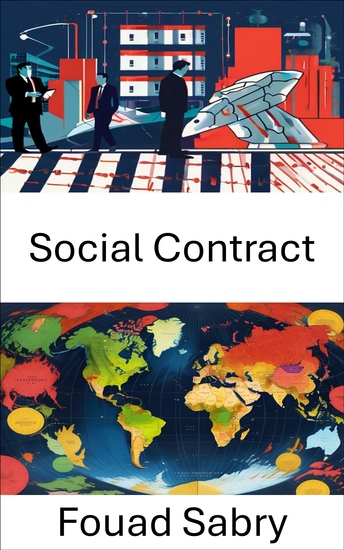
Social Contract - Democratic Foundations and Governance in Modern Societies - cover

Social Contract - Democratic Foundations and Governance in Modern Societies

Fouad Sabry

Editorial: One Billion Knowledgeable

  • 0
  • 0
  • 0

Sinopsis

Discover Modern Governance with "Social Contract"
 
"Social Contract," a key volume in the "Political Science" series, explores the core theories of governance and societal unity. Essential for understanding political legitimacy and state power evolution, this book examines social contracts from their philosophical roots to contemporary applications.
 
Chapter Overview:
 
1. Social Contract: Introduces the concept and its impact on governance.
 
2. John Locke: Locke’s contributions on government and individual rights.
 
3. Natural Law: Principles guiding social contracts and moral standards.
 
4. Political Philosophy: Overview of key thinkers and their influence.
 
5. Sovereignty: State authority and its relation to citizens.
 
6. Original Position: Rawls’ idea for assessing social contract fairness.
 
7. State of Nature: Foundation for social contracts and political societies.
 
8. Natural Rights and Legal Rights: Their relevance and protection.
 
9. Consent of the Governed: Political legitimacy from consent.
 
10. Philosophy of Human Rights: Human rights and their role in governance.
 
11. David Gauthier: Rational choice and moral dimensions of agreements.
 
12. Will (Philosophy): Impact of will on social contracts.
 
13. Life, Liberty, and Pursuit of Happiness: Their role in democratic governance.
 
14. Positive Liberty: Acting on free will within social contracts.
 
15. Popular Sovereignty: Its significance in democratic systems.
 
16. Negative Liberty: Freedom from constraints and its role in theory.
 
17. Social Philosophy: Relevance to social contracts.
 
18. General Will: Rousseau’s concept and its impact on legitimacy.
 
19. Early Modern Philosophy: Evolution of social contract theory.
 
20. Two Treatises of Government: Locke’s influence on modern thought.
 
21. Amour de soi: Rousseau’s idea and its impact on social contracts.
 
"Social Contract" offers a thorough analysis of these topics, enriching your understanding of political theory and its application to modern issues. This detailed work is invaluable for professionals, students, and enthusiasts, providing insights that surpass the reading investment.
Disponible desde: 04/09/2024.
Longitud de impresión: 263 páginas.

Otros libros que te pueden interesar

  • Revolution and Terror - cover

    Revolution and Terror

    Graeme Gill

    • 0
    • 0
    • 0
    This book is a study of the relationship between revolution and terror. Historically many have claimed that revolution inevitably devolves into terror, best reflected in the way in which after coming to power the revolutionary elite turns on itself, and one section of it uses terrorist means to eliminate another section. Graeme Gill argues that in order to understand the relationship between revolution and terror, it is necessary to distinguish between different types of terror. There are three such types: revolutionary terror, in which the aim is to destroy enemies and thereby consolidate the regime; transformational terror, designed to drive the politico-socio-economic transformation of society that is the purpose of the 'great' revolutions; and inverted terror, which is when terror is turned against part of the elite and regime more broadly. The analysis explains how these different types of terror are related to the revolutionary seizure of power, showing that revolutionary and transformational terror are organically connected to revolution while for inverted terror the connection is mediated through the leader. The argument is prosecuted through detailed analysis of the French, Russian, and Chinese revolutions. The study ends by assessing the contemporary salience of the lessons of the great revolutions in the light of the low level of violence in the negotiated revolutions of 1989.
    Ver libro
  • Ancient Greece - cover

    Ancient Greece

    Nicolas Sofos

    • 0
    • 0
    • 0
    Ancient Greece, widely recognized as the birthplace of western civilization thrived from 800 BCE to 146 BCE. It is renowned for its contributions, to domains, including literature, philosophy, politics, arts and sciences. These contributions have had an impact on societies. 
    The civilization was characterized by a multitude of city states with Athens and Sparta being particularly notable. Athens, considered the cradle of democracy prioritized philosophy, education and cultural pursuits. It gave rise to thinkers like Socrates, Plato and Aristotle. In contrast Sparta embraced a society that emphasized training and excellence. 
    The Ancient Greeks practiced a religion with a connection to their daily lives. One of their religious and sporting events was the Olympic Games held every four years in honor of Zeus. 
    Greek literature holds status due to works like Homers poems The Iliad and The Odyssey. Playwrights such, as Sophocles, Euripides and Aristophanes created enduring tragedies and comedies that delved into the complexities of existence. 
    In the realm of science and mathematics the Greeks achieved significant breakthroughs. 
    Prominent individuals such, as Pythagoras, Euclid and Archimedes played roles in advancing the fields of geometry and calculus. Meanwhile philosophers, like Thales and Democritus laid the foundations for reasoning. 
    Turning to politics Ancient Greece primarily relied on city states, each governed by its system. Athens implemented a form of democracy where citizens actively participated in decision making processes while Sparta had an disciplined structure. 
    Ancient Greece's influence can still be seen in various aspects of modern society, including government, philosophy, language, art, and sports. Its legacy continues to resonate in the Western world, making it one of the most impactful civilizations in history.
    Ver libro
  • Jaanbaaz Rakha - Sant Jarnail Singh Da Ubhar - cover

    Jaanbaaz Rakha - Sant Jarnail...

    A.R.Darshi

    • 0
    • 0
    • 0
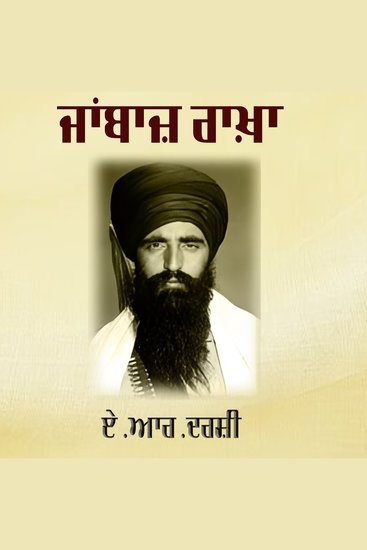
    "Jaanbaaz Rakha" by A.R.Darshi 
    The author of the book is a retired officer from the Punjab Civil Services, who has had firsthand experience with government policies. In this book, he shares an honest account of important historical events related to Punjab and Sikh history, particularly focusing on the life of Sant Jarnail Singh Bhindranwale. The author aims to present a clear and truthful story of the key events that shaped the political and social history of Punjab and Sikhism. 
    You can order it from Sikh Siyasat and get it delivered anywhere in the world.
    Ver libro
  • The Populist Wave - Understanding the Rise of Populism in Modern Politics - cover

    The Populist Wave -...

    Arlo Holders

    • 0
    • 0
    • 0
    Populism, a term often used in modern political discourse, refers to movements or ideologies that seek to represent the interests of ordinary people, often contrasting with the perceived elite or establishment. Understanding the origins of populism requires exploring both its historical roots and its evolution over time. Though its contemporary forms are often associated with charismatic leaders and mass mobilization, populism has a deep and complex history that spans several centuries. 
    Historically, populism can trace its roots back to the late 19th century, when agrarian movements in the United States and Russia first used the term. The Populist Party, founded in the U.S. in 1891, advocated for the interests of farmers who felt exploited by industrial elites and urban centers. In Russia, the narodniks, or "people's movement," emerged around the same time, focusing on the belief that Russia’s future lay in the empowerment of the peasantry. These early populist movements were fueled by economic and social inequalities, with the central grievance being the concentration of wealth and power in the hands of a few. 
    The core tenet of these early populist movements was the idea of a moral divide between the "pure" common people and the corrupt elites. This populist rhetoric resonated strongly with those who felt neglected by the political establishment, emphasizing a deep distrust of centralized political systems and economic power. Populism, then, was not simply about policy disagreements but a call for a deeper cultural and moral reckoning with societal inequalities.
    Ver libro
  • When Left Moves Right - The Decline of the Left and the Rise of the Populist Right in Postcommunist Europe - cover

    When Left Moves Right - The...

    Maria Snegovaya

    • 0
    • 0
    • 0
    Over the past two decades, postcommunist countries have witnessed a sudden shift in the electoral fortunes of their political parties: previously successful center-left parties suffered dramatic electoral defeats and disappeared from the political scene, while right-wing populist parties soared in popularity and came to power. This dynamic echoed similar processes in Western Europe and raises a question: Were these dynamics in any way connected? When Right Moves Left argues that they were. And that the root of the connection between them lies in the pro-market rebranding of the ex-communist left—the key explanatory variable. This book asserts that, though the left's pro-market shift initially led to electoral rewards, it had a less straightforward impact on left-wing parties' electoral fortunes in the long run. 


    The book draws upon different levels of analysis: cross-country observational data, case studies, and individual-level experimental surveys. It argues that scholars should incorporate the economic policy dimension when explaining the demise of the left and the rise of the populist right in the region. It also examines important parallels between the dynamics of Western and postcommunist countries by arguing that the idiosyncrasy of Eastern European politics has been overstated in scholarly literature.
    Ver libro
  • The Solution Revolution - How Business Government and Social Enterprises Are Teaming Up to Solve Society’s Toughest Problems - cover

    The Solution Revolution - How...

    William Eggers, Paul Macmillan

    • 0
    • 0
    • 0
    World hunger. Climate change. Crumbling infrastructure. It’s clear that in today’s era of fiscal constraints and political gridlock the government alone can no longer tackle these and other towering social problems. What’s required is a new, more collaborative and productive economic system. The Solution Revolution brings hope—revealing a new economy where players from across the spectrum of business, government, philanthropy, and social enterprise converge to solve big problems and create public value.By erasing public-private sector boundaries, the solution economy is unlocking trillions of dollars in social benefit and commercial value. Where tough societal problems persist, new problem solvers are crowdfunding, ridesharing, app-developing, or impact-investing to design innovative new solutions for seemingly intractable problems. Providing low-cost health care, fighting poverty, creating renewable energy, and preventing obesity are just a few of the tough challenges that also represent tremendous opportunities for those at the vanguard of this movement.Government cannot handle alone the huge challenges facing our global society—and it shouldn’t. We need a different economic paradigm that can flexibly draw on resources, combine efforts, and create value, while improving the lives of citizens. The Solution Revolution shows the way.
    Ver libro