Join us on a literary world trip!
Add this book to bookshelf
Grey
Write a new comment Default profile 50px
Grey
Subscribe to read the full book or read the first pages for free!
All characters reduced
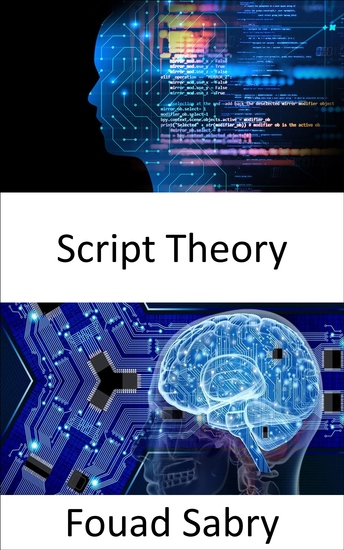
Script Theory - Fundamentals and Applications - cover

Script Theory - Fundamentals and Applications

Fouad Sabry

Publisher: One Billion Knowledgeable

  • 0
  • 0
  • 0

Summary

What Is Script Theory
 
The Script Theory is a psychological theory that postulates that the majority of human behavior can be categorized into patterns that are referred to as "scripts" because these patterns work similarly to that of a written script, which is to say that they provide a program for action. Because the purely biological response of affect may be followed by awareness and by what we cognitively do in terms of acting on that affect, Silvan Tomkins realized that more was required to produce a complete explanation of what he called "human being theory." As a result, he created script theory as a further development of his affect theory, which regards human beings' emotional responses to stimuli as falling into categories called "affects." Script theory regards human beings' emotional responses to stimuli as falling into categories called "affects."
 
How You Will Benefit
 
(I) Insights, and validations about the following topics:
 
Chapter 1: Script Theory
 
Chapter 2: Cognitive Science
 
Chapter 3: Cognitive Psychology
 
Chapter 4: Natural-Language Understanding
 
Chapter 5: Schema (psychology)
 
Chapter 6: Roger Schank
 
Chapter 7: Outline of Thought
 
Chapter 8: Frame (artificial intelligence)
 
Chapter 9: Conceptual Dependency Theory
 
Chapter 10: Outline of Natural Language Processing
 
(II) Answering the public top questions about script theory.
 
(III) Real world examples for the usage of script theory in many fields.
 
(IV) 17 appendices to explain, briefly, 266 emerging technologies in each industry to have 360-degree full understanding of script theory' technologies.
 
Who This Book Is For
 
Professionals, undergraduate and graduate students, enthusiasts, hobbyists, and those who want to go beyond basic knowledge or information for any kind of script theory.
Available since: 06/30/2023.
Print length: 139 pages.

Other books that might interest you

  • Dermatology - Skin Diseases and Treatments - cover

    Dermatology - Skin Diseases and...

    Ava Westwood

    • 0
    • 0
    • 0
    Dermatology is a specialized branch of medicine that focuses on the diagnosis, treatment, and prevention of skin, hair, and nail disorders. It plays a crucial role in maintaining overall health, as the skin is the body’s largest organ and serves as a protective barrier against environmental factors. Dermatologists are trained to treat a wide variety of conditions, ranging from common skin issues like acne and eczema to life-threatening diseases such as melanoma. 
    The importance of skin health cannot be overstated. Skin diseases can affect an individual’s quality of life, often causing physical discomfort, emotional distress, and social stigma. Early detection and treatment are vital to prevent complications and improve outcomes. Dermatology is not only about managing diseases but also about enhancing cosmetic appearance and improving skin function, contributing to patients' self-esteem and overall well-being. 
    Skin functions as the first line of defense against external factors such as bacteria, viruses, pollutants, and harmful UV radiation. It also plays a role in regulating body temperature, preventing dehydration, and producing vitamin D. Understanding the skin’s structure and functions is fundamental to diagnosing and treating dermatologic conditions. The skin is composed of three primary layers: the epidermis, dermis, and subcutaneous tissue. The epidermis serves as the outermost layer, providing a waterproof barrier and containing melanocytes responsible for skin pigmentation. Beneath it lies the dermis, which houses blood vessels, hair follicles, sweat glands, and nerve endings, playing a crucial role in sensation and temperature regulation. The deepest layer, the subcutaneous tissue, contains fat and connective tissue that insulate and protect internal organs.
    Show book
  • Useless Sleep Trivia That Will Put You to Sleep Fast - cover

    Useless Sleep Trivia That Will...

    Calmy Heart

    • 0
    • 0
    • 0
    Tired of sleepless nights and restless tossing? Useless Sleep Trivia That Will Put You to Sleep Fast is here to save the day—or rather, your night! This audiobook is packed with the most random, quirky, and utterly useless trivia designed to entertain just enough to quiet your overactive mind. From bizarre facts about historical sleep customs to fascinating tidbits about dreams and yawns, this collection of trivia is the ultimate relaxation tool. 
    Delivered in a calm and soothing voice, this audiobook takes your mind off stress and gently leads you into the world of peaceful sleep. It’s the perfect way to wind down after a long day without staring at your phone or counting sheep for hours. Each useless fact is like a lullaby for your thoughts, keeping your mind light and free of worries. 
    Whether you're an insomniac, an overthinker, or just someone who loves a bit of quirky entertainment before bed, this audiobook is your ticket to fast, stress-free sleep. Don’t let another sleepless night steal your rest. Hit play, relax, and let the trivia take you to dreamland.
    Show book
  • The Big Bang of Numbers - How to Build the Universe Using Only Math - cover

    The Big Bang of Numbers - How to...

    Manil Suri

    • 0
    • 0
    • 0
    Our universe has multiple origin stories, from religious creation myths to the Big Bang of scientists. But if we leave those behind and start from nothing—no matter, no cosmos, not even empty space—could we create a universe using only math? Irreverent and boundlessly creative, The Big Bang of Numbers invites us to try. 


    In this new mathematical origin story, mathematician and novelist Manil Suri creates a natural progression of ideas needed to design our world, starting with numbers and continuing through geometry, algebra, and beyond. He reveals the secret lives of real and imaginary numbers, teaches them to play abstract games with real-world applications, discovers unexpected patterns that connect humble lifeforms to enormous galaxies, and explores mathematical underpinnings for randomness and beauty. With evocative examples ranging from multidimensional crochet to the Mona Lisa's asymmetrical smile, as well as ingenious storytelling that helps illuminate complex concepts like infinity and relativity, The Big Bang of Numbers charts a playful, inventive course to existence. Mathematics, Suri shows, might best be understood not as something we invent to explain Nature, but as the source of all creation, whose directives Nature tries to obey as best she can.
    Show book
  • Tenacious Beasts - Wildlife Recoveries That Change How We Think about Animals - cover

    Tenacious Beasts - Wildlife...

    Christopher J. Preston

    • 0
    • 0
    • 0
    The news about wildlife is dire—more than 900 species have been wiped off the planet since industrialization. Against this bleak backdrop, however, there are also glimmers of hope and crucial lessons to be learned from animals that have defied global trends toward extinction: bears in Italy, bison in North America, whales in the Atlantic. These populations are back from the brink, some of them in numbers unimaginable in a century. How has this happened? What shifts in thinking did it demand? In crisp, transporting prose, Christopher Preston reveals the mysteries and challenges at the heart of these resurgences. 


    Drawing on compelling personal stories from the researchers, Indigenous people, and activists who know the creatures best, Preston weaves together a gripping narrative of how some species are taking back vital, ecological roles. Each section of the book offers a philosophical shift in how humans ought to think about animals, passionately advocating for the changes in attitude necessary for wildlife recovery. 


    Tenacious Beasts is quintessential nature writing for the Anthropocene, touching on different facets of ecological restoration from Indigenous knowledge to rewilding practices. More important, perhaps, the book offers a road map—and a measure of hope—for a future in which humans and animals can once again coexist.
    Show book
  • Guarding Against Online Identity Fraud - A Simple Guide to Online Security - cover

    Guarding Against Online Identity...

    Tim Trott

    • 0
    • 0
    • 0
    The internet can be a fearful and frightening place, especially when we hear about things like online identity theft. As scary as they may seem, there are some simple steps that anyone can take to protect ourselves from those dangers. 
    This audiobook will explain what those threats are, and what you can use to guard against being a victim. It’s all broken down in simple terms you can understand. Once you have a basic understanding of how the pieces fit together, you can then protect yourself from danger. 
    We will define the terms, like Phishing and Pharming, explain what identity theft is, and what to do to avoid and defend against it. 
    Show book
  • In the Shadows of the Stars - Dark Space and the Fate of the Universe - cover

    In the Shadows of the Stars -...

    Dirk Fallon

    • 0
    • 0
    • 0
    The concept of the universe has captivated human curiosity for centuries, but what lies at its edge? The truth is that the edge of the universe is not defined by a physical boundary but by the limits of what we can observe and understand. Space stretches endlessly in every direction, but as we look farther and farther, the light from distant objects becomes increasingly redshifted, eventually disappearing beyond our ability to detect it. This phenomenon marks the boundary of the observable universe, a region from which light has had enough time to reach us since the beginning of the universe, around 13.8 billion years ago. 
    At the edge of the observable universe, we find a vast expanse of empty space, known as the "cosmic void." These regions contain few galaxies, stars, or other celestial objects, and their emptiness gives them an eerie and mysterious quality. The voids between galaxies are immense, sometimes stretching hundreds of millions of light-years across, and they represent one of the most puzzling aspects of cosmology. Why are these vast expanses of nothingness so prevalent? And what does it mean for the structure of the universe? 
    As we peer deeper into space, we encounter objects that have been traveling towards us for billions of years, their light providing a glimpse into the past. The most distant galaxies, discovered using advanced telescopes, show us the early universe as it was just a few hundred million years after the Big Bang. These galaxies offer valuable clues about the formation of stars, galaxies, and larger cosmic structures. However, the farther we look, the more difficult it becomes to see clearly. The expansion of the universe means that galaxies are moving away from us at an accelerating rate, causing their light to become increasingly stretched out, or redshifted. This makes them harder to detect and study, and the universe seems to grow darker the farther we look.
    Show book