¡Acompáñanos a viajar por el mundo de los libros!
Añadir este libro a la estantería
Grey
Escribe un nuevo comentario Default profile 50px
Grey
Suscríbete para leer el libro completo o lee las primeras páginas gratis.
All characters reduced
Revolution - Transformations in Power Dynamics and Societal Change - cover

Revolution - Transformations in Power Dynamics and Societal Change

Fouad Sabry

Editorial: One Billion Knowledgeable

  • 0
  • 0
  • 0

Sinopsis

Unlock the transformative power of revolutions with Revolution, a comprehensive guide to understanding the forces that drive societal upheaval. This book is a must-read for those seeking to grasp how revolutions dismantle power structures and shape the political landscape.
 
1: Revolution – Explore the essential concept of revolution, its triggers, and impacts.
 
2: Political System – Analyze political systems often targeted by revolutions and their vulnerabilities.
 
3: Democratization – Study the challenges of transitioning to democratic governance after revolutions.
 
4: Rebellion – Understand rebellion's role as a precursor to revolution and its societal impacts.
 
5: Historiography of the French Revolution – Delve into debates and interpretations of the French Revolution’s causes and legacy.
 
6: States and Social Revolutions – Examine how revolutions reshape state structures.
 
7: Historical Institutionalism – Explore how historical institutionalism interprets revolutionary development.
 
8: Index of Social and Political Philosophy Articles – Access a key index for studying relevant social and political philosophy.
 
9: Social Revolution – Investigate the effects of social revolutions on norms and values.
 
10: Revolutionary Wave – Study the impact of multiple revolutions happening across different regions.
 
11: Manuel Castells – Explore Castells’ insights into modern social movements and revolution in the information age.
 
12: Anthony Giddens – Understand Giddens' views on modernity’s relationship with revolutionary processes.
 
13: Barrington Moore Jr. – Examine Moore’s theories on the origins of dictatorship and democracy.
 
14: Theda Skocpol – Discover Skocpol’s comparative analysis of revolutions and state changes.
 
15: Gøsta Esping-Andersen – Review Esping-Andersen's thoughts on welfare states in revolutionary contexts.
 
16: Charles Tilly – Explore Tilly’s theories on social movements and state formation.
 
17: Jack Goldstone – Understand Goldstone’s contributions to revolution and social change theory.
 
18: Comparative Historical Research – Learn about comparative methods for analyzing revolutions.
 
19: William H. Sewell Jr. – Examine Sewell’s theories on historical events and their social impacts.
 
20: Bibliography of Sociology – Access essential sociological works related to revolutions.
 
21: Revolution from Above – Explore elite-led revolutions and their dynamics.
 
Revolution is your gateway to deeper insights into revolutionary movements. Whether you’re a professional, student, or enthusiast, this book offers perspectives that extend far beyond surface-level knowledge, helping you navigate the complex forces behind societal change.
Disponible desde: 10/10/2024.
Longitud de impresión: 249 páginas.
Otros libros que te pueden interesar

  • The Tale of Buster Bumblebee - cover

    The Tale of Buster Bumblebee

    Arthur Scott Bailey

    • 0
    • 0
    • 0
    Buster Bumblebee and his family move into a new home. Excitement and buzzing abound. Buster meet a strange fellow called a carpenter bee, way too many chirpy crickets, and even finds his own long lost sister. Later in his adventurous life, Buster learns of another kind of Bee, a Raising Bee and how much food is available for everyone there. All in all, this tale will bring smiles and grins to listeners young and old as it tells of Buster Bumblebee, a young bee with a lot to learn but a heart of gold. (Summary by phil chenevert)
    Ver libro
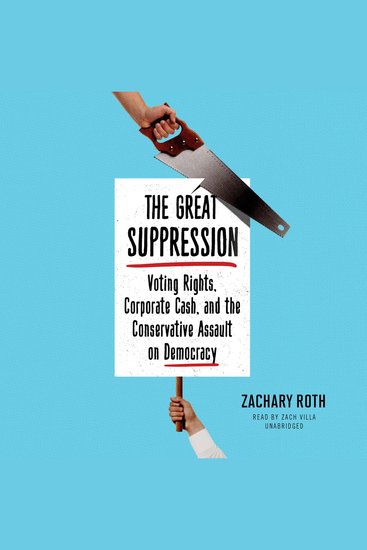
  • The Great Suppression - Voting Rights Corporate Cash and the Conservative Assault on Democracy - cover

    The Great Suppression - Voting...

    Zachary Roth

    • 0
    • 0
    • 0
    A deeply reported look inside the new conservative movement working to undermine American democracy. 
    Control of the country is up for grabs—and Republicans have been rigging the game in their favor. Twenty-two states have passed restrictions on voting. Ruthless gerrymandering has given the GOP a long-term grip on Congress. Meanwhile, the Supreme Court has eviscerated campaign finance laws, boosting candidgates backed by big money. 
    It would be worrying enough if these were just schemes for partisan advantage. But the reality is even more disturbing. As reporter Zachary Roth reveals, a growing number of Republicans distrust the very idea of democracy—and they’re doing everything they can to limit it. 
    In The Great Suppression, Roth unearths the deep historical roots of this antiegalitarian worldview, and introduces us to its modern-day proponents: the GOP officials pushing to make it harder to cast a ballot; the lawyers looking to scrap all limits on money in politics; the libertarian scholars reclaiming judicial activism to roll back the New Deal; and the corporate lobbyists working to ban local action on everything from the minimum wage to the environment. And he travels from Rust Belt cities to southern towns to show us how these efforts are hurting the most vulnerable Americans and preventing progress on pressing issues. 
    A sharp, searing polemic in the tradition of Rachel Maddow and Matt Taibbi, The Great Suppression is an urgent wake-up call about a threat to our most cherished values, and a rousing argument for why we need democracy now more than ever.
    Ver libro
  • Cyber Wargaming - Research and Education for Security in a Dangerous Digital World - cover

    Cyber Wargaming - Research and...

    Nina A. Kollars, Benjamin H....

    • 0
    • 0
    • 0
    Government, industry, and academia need better tools to explore threats, opportunities, and human interactions in cyberspace. The interactive exercises called cyber wargames are a powerful way to solve complex problems in a digital environment that involves both cooperation and conflict. Cyber Wargaming is the first book to provide both the theories and practical examples needed to successfully build, play, and learn from these interactive exercises. 


    The contributors to this book explain what cyber wargames are, how they work, and why they offer insights that other methods cannot match. The lessons learned are not merely artifacts of these games—they also shed light on how people interpret and interact with cyberspace in real life. This book covers topics such as cyber action during conventional war, information effects in conflict scenarios, individual versus group decision-making, the intersection of cyber conflicts and nuclear crises, business resilience, emerging technologies, and more. 


    Cyber Wargaming will be a vital resource for listeners interested in security studies and wargame design in higher education, the military, and the private sector.
    Ver libro
  • Democracy in Action - Collective Problem Solving in Citizens' Governance Spaces - cover

    Democracy in Action - Collective...

    Carolyn M. Hendriks, Albert W. Dzur

    • 0
    • 0
    • 0
    Government and market failures spur many citizens to practical action today. Around the globe people form renewable energy cooperatives, provide support for marginalized populations, and deliver alternative justice and care services. What motivates citizens to begin such practical problem-solving? How do they engage others? What knowledge do they generate? How do they interact with state and market actors? What risks and opportunities do they hold for contemporary democracy? 


    To answer these questions, Dzur and Hendriks develop the concept of citizens' governance space to delineate these efforts from contentious social movements, formal civic associations, and local community organizations. Drawing on cases from around the globe, the authors examine how citizens do functional policy work, develop and disrupt knowledge, and selectively partner with governments and corporations. They reveal complexities and risks posed by citizens' governance spaces while also showing how they offer a distinct form of democratic participation centered on practical efforts and outcomes. 


    Democracy in Action provides a new lens for recognizing and understanding the more practical ways that citizens contribute to governance and democracy.
    Ver libro
  • Reclaiming Our Democracy - Every Citizen’s Guide to Transformational Advocacy 2024 Edition - cover

    Reclaiming Our Democracy - Every...

    Sam Daley-Harris

    • 0
    • 0
    • 0
    Almost everyone shies away from advocacy as a way to make a difference. We donate to climate change organizations, but we don’t meet with a member of Congress or write a letter to the editor. We donate to groups working to end gun violence, anti-hunger organizations, groups dedicated to racial justice, and many others, but we don’t become advocates on those issues beyond signing an online petition or going to an occasional rally.   
    	Why? Because most of us see advocacy as too hard or too frustrating, too complicated, or too partisan, too dirty or too time-consuming, too ineffective or too costly. 
    	But what if that’s all wrong? What if deep engagement dissolves discouragement and can actually bring joy? What if you can become an advocate for a cause you care about and feel fulfilled, not frustrated? And what if engaging as an advocate is essential to protecting our democracy? 
    	President Jimmy Carter called the first edition of Reclaiming Our Democracy “A road map for global involvement in planning a better future.” In this completely revised and updated 2024 edition, Sam Daley-Harris uses his decades of experience leading and coaching citizens’ advocacy groups to expand that road map and create an indispensable guide to engaged citizenship, an inspiring master class in transformational advocacy. 
    	Reclaiming Our Democracy provides a powerful way to make a difference and heal our democracy in the process. It’s not the only solution needed, but is one essential, missing piece: citizens awakening to their power.
    Ver libro
  • When Left Moves Right - The Decline of the Left and the Rise of the Populist Right in Postcommunist Europe - cover

    When Left Moves Right - The...

    Maria Snegovaya

    • 0
    • 0
    • 0
    Over the past two decades, postcommunist countries have witnessed a sudden shift in the electoral fortunes of their political parties: previously successful center-left parties suffered dramatic electoral defeats and disappeared from the political scene, while right-wing populist parties soared in popularity and came to power. This dynamic echoed similar processes in Western Europe and raises a question: Were these dynamics in any way connected? When Right Moves Left argues that they were. And that the root of the connection between them lies in the pro-market rebranding of the ex-communist left—the key explanatory variable. This book asserts that, though the left's pro-market shift initially led to electoral rewards, it had a less straightforward impact on left-wing parties' electoral fortunes in the long run. 


    The book draws upon different levels of analysis: cross-country observational data, case studies, and individual-level experimental surveys. It argues that scholars should incorporate the economic policy dimension when explaining the demise of the left and the rise of the populist right in the region. It also examines important parallels between the dynamics of Western and postcommunist countries by arguing that the idiosyncrasy of Eastern European politics has been overstated in scholarly literature.
    Ver libro