Junte-se a nós em uma viagem ao mundo dos livros!
Adicionar este livro à prateleira
Grey
Deixe um novo comentário Default profile 50px
Grey
Assine para ler o livro completo ou leia as primeiras páginas de graça!
All characters reduced
Regional Integration - Building Cohesion and Cooperation Across Borders - cover
LER

Regional Integration - Building Cohesion and Cooperation Across Borders

Fouad Sabry

Editora: One Billion Knowledgeable

  • 0
  • 0
  • 0

Sinopse

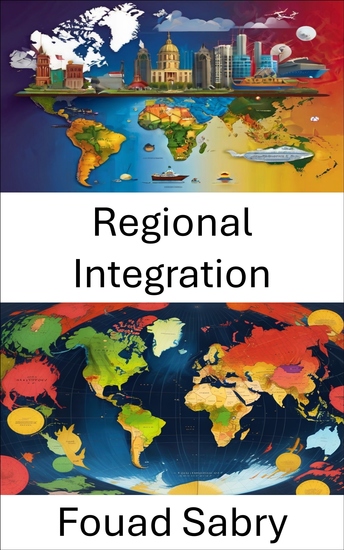
Unlock the significance of regional integration with "Regional Integration," an essential part of the "Political Science" series. This book delves into the processes, benefits, and challenges of regional integration, offering key insights into global politics. It is an invaluable resource for professionals, students, and enthusiasts who seek a deeper understanding of governance and international cooperation.
 
Chapters Brief Overviews:
 
1: Regional Integration: Defines regional integration and its role in promoting unity among nations.
 
2: Association of Caribbean States: Explores efforts to enhance cooperation and address Caribbean challenges.
 
3: Economic Integration: Covers mechanisms of economic integration and their effects on trade and stability.
 
4: Middle East Economic Integration: Discusses challenges and opportunities for integration in the Middle East.
 
5: Structural Adjustment: Analyzes structural adjustment programs and their impact on regional strategies.
 
6: New Constitutionalism: Examines the influence of legal frameworks on integration governance.
 
7: Global Governance: Explores global governance's role in supporting integration efforts.
 
8: International Organization: Looks at the role of international bodies in facilitating integration.
 
9: Globalization: Studies the link between globalization and regional cooperation.
 
10: Neoliberalism: Explains neoliberalism's impact on regional policies and strategies.
 
11: Global Financial System: Assesses how the global financial system influences regional stability.
 
12: Trade Barrier: Examines trade barriers' effect on cooperation and integration.
 
13: Trade Justice: Explores how trade justice promotes fair regional integration.
 
14: Trade and Development: Analyzes the link between trade policies and regional growth.
 
15: International Economics: Discusses economic theories relevant to regional cooperation.
 
16: New International Economic Order: Explores how a new order affects regional integration.
 
17: Criticism of the World Trade Organization: Considers critiques of the WTO and their impact on integration.
 
18: IBSA Dialogue Forum: Examines how the IBSA Forum fosters South-South cooperation.
 
19: Environmental Governance: Looks at environmental governance in regional strategies.
 
20: Alter-globalization: Explores the alter-globalization movement's effect on integration.
 
21: Global Waste Trade: Analyzes global waste trade's influence on environmental policy.
 
This book not only breaks down these essential topics but also answers top public questions, offering readers a comprehensive view of the field. It's a valuable resource for those seeking a deep understanding of regional integration, providing knowledge that surpasses its cost.
Disponível desde: 17/10/2024.
Comprimento de impressão: 336 páginas.


Outros livros que poderiam interessá-lo

  • Influence - The Psychology of Persuasion - cover

    Influence - The Psychology of...

    Robert Cialdini

    • 0
    • 0
    • 0
    This work provides a concise synthesis of the key insights and analysis from Influence by Robert Cialdini. It is an independent summary, not the original book, and has no affiliation with or endorsement from the original publication. Created for readers who want a clear, thought-provoking overview, it distills the central themes and ideas while preserving the depth and relevance of the work. 
    A classic study of why people say “yes,” this book explores six universal principles of persuasion—reciprocity, commitment and consistency, social proof, authority, liking, and scarcity. It reveals how these psychological triggers shape decisions, often unconsciously, and how they can be used ethically to guide behavior. At once scientific and practical, it equips readers to recognize when they are being influenced, and to apply the same principles responsibly in sales, leadership, and everyday interactions.
    Ver livro
  • The Invention of Scarcity - Malthus and the Margins of History - cover

    The Invention of Scarcity -...

    Deborah Valenze

    • 0
    • 0
    • 0
    With the publication of Essay on the Principle of Population and its projection of food shortages in the face of ballooning populations, British theorist Thomas Robert Malthus secured a leading role in modern political and economic thought. In this startling new interpretation, Deborah Valenze reveals how canonical readings of Malthus fail to acknowledge his narrow understanding of what constitutes food production. 


    Valenze returns to the eighteenth-century contexts that generated his arguments, showing how Malthus mobilized a redemptive narrative of British historical development and dismissed the ways that people adapted to the challenges of subsistence needs. She uses history, anthropology, and food studies to redirect our attention to the margins of Malthus's essay, where activities such as hunting and gathering were rendered extraneous. She demonstrates how Malthus's omissions and his subsequent canonization provided a rationale for colonial imposition of British agricultural models, regardless of environmental diversity. 


    By broadening our conception of human livelihoods, Valenze suggests pathways to resistance against the hegemony of Malthusian political economy. She invites us to imagine a world where monoculture is in retreat and the margins are recentered as spaces of experimentation, nimbleness, and human flourishing.
    Ver livro
  • The Middle Kingdom of Egypt - A Period of Restoration and Growth - cover

    The Middle Kingdom of Egypt - A...

    Omar Khalil

    • 0
    • 0
    • 0
    The Middle Kingdom of Egypt marked a transformative period following the turmoil of the First Intermediate Period. This era, spanning roughly from 2050 to 1710 BCE, saw the reunification of Egypt under the leadership of Mentuhotep II, the pharaoh who established stability after years of political fragmentation. As the nation emerged from chaos, the Middle Kingdom laid the foundations for a revitalized state, fostering political, cultural, and economic growth. 
    The collapse of the Old Kingdom had left Egypt divided, with rival factions vying for control. This power vacuum led to the rise of regional rulers known as nomarchs, whose increasing autonomy weakened central authority. The struggle for dominance between these local leaders marked the First Intermediate Period, characterized by instability and fragmented governance. However, the emergence of Mentuhotep II, a ruler from Thebes, marked a turning point. Determined to restore order, he led a series of military campaigns to reunite Upper and Lower Egypt. His victory over the Herakleopolitan kings signified the dawn of a new era. 
    Reunification under Mentuhotep II not only consolidated political power but also reestablished the role of the pharaoh as a central figure of authority. As the unifier of Egypt, Mentuhotep II portrayed himself as the restorer of ma'at—harmony and justice. His reign marked the beginning of the 11th Dynasty and set a precedent for strong, centralized rule. The restoration of internal stability allowed for significant cultural and artistic developments, reflecting a renewed sense of national identity.
    Ver livro
  • Fifteen Out of the Box Ideas which will Change the World - cover

    Fifteen Out of the Box Ideas...

    Martin K. Ettington

    • 0
    • 0
    • 0
    The world is not as we think it is. We are taught standard accepted beliefs from birth and many of them are not correct or a misunderstanding of the truth. 
    Who am I to say so? At this writing I’m nearly seventy years old and I’ve spent my life observing reality as an engineer and explorer of the unknown. 
    I’ve had many weird and paranormal experiences and done lots of research. Many patterns have made themselves known to me and this is why I make these types of statements. 
    This book is an effort to shed light on these misunderstandings and change your perception of the world we live in. 
    Much of what I will relate is based on my subjective experiences and research many would say does not conform to the accepted scientific method yet you will see that my observations make a lot of common sense. 
    Some of these concepts have been around for thousands of years but are not commonly accepted today. My effort is to show you why these ideas are likely true and how these concepts also are built on to provide new understandings. 
    At the end of each chapter logic is provided on how general belief in these new ideas will change humanity. 
    My hope is that by the end of this book you the reader will open your mind more about many things which are strange but possibly true.
    Ver livro
  • Battle of Edgehill The: The History and Legacy of the Opening Battle of the English Civil War - cover

    Battle of Edgehill The: The...

    Editors Charles River

    • 0
    • 0
    • 0
    The outcome of the English Civil War was no doubt unthinkable to many across Europe before it actually happened, and the Battle of Edgehill represented the first sign that things might not go according to the typical plan. The tiny hamlet of Edgehill sits atop an escarpment in the parish of Ratley and Upton in Warwickshire, England, an unremarkable location in and of itself, like many others in Warwickshire. It attracts a few tourists, some of whom are on the lookout for ghosts. Some claim to hear cries of pain and terror, the clash of swords, cannon fire, and the lament of lost souls. The first report of such phenomena was made shortly before Christmas 1642 when a number of Edgehill inhabitants claimed to have seen two ghostly armies fighting in the sky. So strong and widespread did these claims become that King Charles I sent a commission to investigate. The commissioners supposedly witnessed the apparitions and were able to identify some of the combatants as participants in the Battle of Edgehill, which occurred three months earlier on October 23, 1642. This included Sir Edmund Verney, who lost a hand in the battle and was observed missing an appendage. The apparitions supposedly ended when villagers buried the corpses of soldiers who still lay on the battlefield, but people still claim to hear signs of the celestial battle 370 years later. 
    The enormous upheaval in English society in 1642 may very well have engendered such tales. For the simple villagers, it seemed as if heaven and earth had been rent asunder. After all, the whole concept of divinely ordained kings was that God had created the system and placed a king over England, making the monarch, Charles I of the House of Stuart, God’s viceregent. But that year, the unthinkable happened when the king and Parliament broke with each other, raising their standards of war. The divinely appointed order was broken, and the result was bloodshed, terror, and chaos.
    Ver livro
  • Side Affects - On Being Trans and Feeling Bad - cover

    Side Affects - On Being Trans...

    Hil Malatino

    • 0
    • 0
    • 0
    Some days—or weeks, or months, or even years—being trans feels bad. Yet as Hil Malatino points out, there is little space for trans people to think through, let alone speak of, these bad feelings. Negative emotions are suspect because they unsettle narratives of acceptance or reinforce virulently phobic framings of trans as inauthentic and threatening. 


    In Side Affects, Malatino opens a new conversation about trans experience that acknowledges the reality of feeling fatigue, envy, burnout, numbness, and rage amid the ongoing onslaught of casual and structural transphobia in order to map the intricate emotional terrain of trans survival. Trans structures of feeling are frequently coded as negative on both sides of transition. Before transition, narratives are framed in terms of childhood trauma and being in the "wrong body." Post transition, trans individuals—especially trans people of color—are subject to unrelenting transantagonism. 


    By moving these unloved feelings to the center of trans experience, Side Affects proposes an affective trans commons that exists outside political debates about inclusion. Acknowledging such powerful and elided feelings as anger and exhaustion, Malatino contends, is critical to motivating justice-oriented advocacy and organizing—and recalibrating new possibilities for survival and well-being.
    Ver livro