Junte-se a nós em uma viagem ao mundo dos livros!
Adicionar este livro à prateleira
Grey
Deixe um novo comentário Default profile 50px
Grey
Assine para ler o livro completo ou leia as primeiras páginas de graça!
All characters reduced
Random Sample Consensus - Robust Estimation in Computer Vision - cover
LER

Random Sample Consensus - Robust Estimation in Computer Vision

Fouad Sabry

Editora: One Billion Knowledgeable

  • 0
  • 0
  • 0

Sinopse

What is Random Sample Consensus
 
Random sample consensus, also known as RANSAC, is an iterative method that is used to estimate the parameters of a mathematical model based on a collection of observed data that includes outliers. This method is used in situations where the outliers are permitted to have no impact on the values of the estimates. The conclusion is that it is also possible to view it as a tool for detecting outliers. An algorithm is considered to be non-deterministic if it is able to generate a suitable result only with a certain probability, and this likelihood increases as the number of iterations that are permitted via the method increases. In 1981, Fischler and Bolles, who were working at SRI International, were the ones who initially published the algorithm. In order to solve the Location Determination Problem (LDP), which is a problem in which the objective is to find the points in space that project onto an image and then convert those points into a set of landmarks with known positions, they utilized RANSAC.
 
How you will benefit
 
(I) Insights, and validations about the following topics:
 
Chapter 1: Random sample consensus
 
Chapter 2: Estimator
 
Chapter 3: Least squares
 
Chapter 4: Outlier
 
Chapter 5: Cross-validation (statistics)
 
Chapter 6: Errors and residuals
 
Chapter 7: Mixture model
 
Chapter 8: Robust statistics
 
Chapter 9: Image stitching
 
Chapter 10: Resampling (statistics)
 
(II) Answering the public top questions about random sample consensus.
 
(III) Real world examples for the usage of random sample consensus in many fields.
 
Who this book is for
 
Professionals, undergraduate and graduate students, enthusiasts, hobbyists, and those who want to go beyond basic knowledge or information for any kind of Random Sample Consensus.
Disponível desde: 30/04/2024.
Comprimento de impressão: 144 páginas.
Outros livros que poderiam interessá-lo

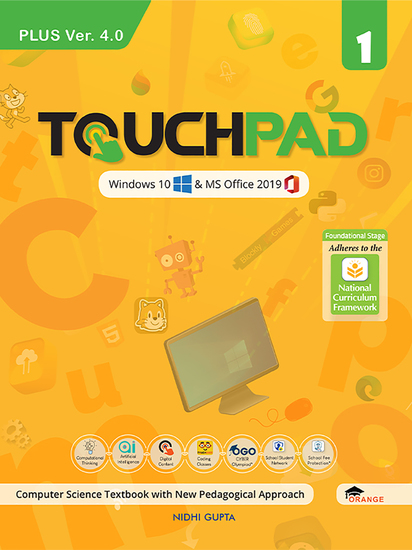
  • Touchpad Plus Ver 40 Class 1 - cover

    Touchpad Plus Ver 40 Class 1

    Nidhi Gupta

    • 0
    • 0
    • 0
    Computer Science Textbook with New Pedagogical Approaches 
    
    KEY FEATURES 
    - National Education Policy 2020 
    - Tech Funda: This section provides a practical information or tip to the students. 
    - Clickipedia: This section provides interesting computer facts. 
    - Lab Session: This is a lab activity to develop practical skills. (Subject Enrichment) 
    - Explore More: This section contains supplement topics for add-on knowledge. 
    - QR Code: Scan the QR Code given on the first page of each chapter to start chapter animation. 
    - Mind Boggler: This section has puzzle or fun based activity to help understand the concepts better. 
    
    DESCRIPTION 
    Computer technology has become essential and an integral part of life at work, in recreation, social networking and education too. With the constant development of new technology, it has become more significant in helping and preparing students for jobs. Computers have revolutionised the way education is imparted to children. 
    
    Touchpad Plus Version 4.0 is a complete computer science curriculum solution for grades 1-8. It is based on Windows 10 and MS Office 2019, with new and future-ready content. Fun is the most important element of learning. Keeping in mind the concept of Joyful Learning, varied activities have been designed based on multiple intelligences and 21st century skills for holistic development. 
    
    The books have a conversational style introduction of each chapter to make learning fun and engaging. The topics and their approaches are integrated in different themes as per ICT learning. Grade I and II books have four-line writing space to enhance writing skills in children. Each book is accompanied by digital learning resources that offer interesting animation and interactive tests for the student to supplement classroom learning with independent learning. 
    
    The books are curated in a way that they make students and teachers equal partners in the learning process and take learning beyond classroom. We welcome and look forward to all meaningful and valuable suggestions for improving the book 
    
    WHAT WILL YOU LEARN 
    You will learn about: 
    - Digital World 
    - Cyber World 
    - Coding World 
    - Computational Thinking 
    - Artificial Intelligence 
    
    WHO THIS BOOK IS FOR 
    Grade 1 
    
    TABLE OF CONTENTS 
    1. Computer—A Machine 
    2. Uses of a Computer 
    3. Parts of a Computer 
    4. The Keyboard and the Mouse 
    5. Tux Paint 
    6. Reasoning and Critical Thinking 
    7. Introduction to ScratchJr 
    8. Introduction to Artificial Intelligence 
    ADD-ONS 
    ASSESSMENTS
    Ver livro
  • CISSP:Cybersecurity Operations and Incident Response - Digital Forensics with Exploitation Frameworks & Vulnerability Scans - cover

    CISSP:Cybersecurity Operations...

    Richie Miller

    • 0
    • 0
    • 0
    If you want to become a Cybersecurity Professional, this book is for you! 
    If you are studying for CompTIA Security+ or CISSP, this book will help you pass your exam. Passing security exams isn’t easy. In fact, due to the raising security beaches around the World, both above mentioned exams are becoming more and more difficult to pass. Whether you want to become an Infrastructure Engineer, IT Security Analyst or any other Cybersecurity Professional, this book (as well as the other books in this series) will certainly help you get there! 
    GET THIS BOOK NOW AND START LEARNING TODAY! 
    In this book you will discover:Data Sources to Support an IncidentHow to Assess Organizational SecurityFile Manipulation & Packet CapturesForensics & Exploitation FrameworksData Sanitization ToolsHow to Apply Policies, Processes and Procedures for Incident ResponseDetection and AnalysisTest Scenarios & SimulationsThreat Intelligence LifecycleDisaster Recovery & Business ContinuityHow to Implement Data Sources
    Ver livro
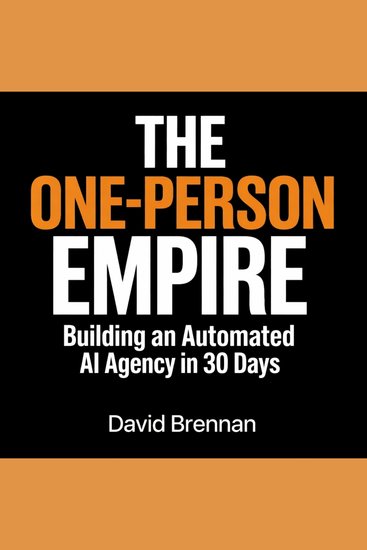
  • The One-Person Empire - Building an Automated AI Agency in 30 Days - cover

    The One-Person Empire - Building...

    David Brennan

    • 0
    • 0
    • 0
    This audiobook is narrated by an AI Voice. Stop Selling Your Time. Start Selling "Digital Workers." 
    Are you watching the AI revolution from the sidelines, wondering how to turn the "gold rush" into actual cash? 
     
    The days of the traditional Social Media Marketing Agency (SMMA) are fading. The new wave is here: the AI Automation Agency (AAA). Businesses are desperate to cut costs and automate workflows, but they don't know how. That is where you come in. 
     
    You don't need to be a coding genius or a Python developer to build a six-figure agency. You just need the right blueprint to connect the tools that already exist. 
     
    In this comprehensive guide, you will discover the exact roadmap to launching, scaling, and automating your own agency from scratch. 
    This isn't theoretical fluff about "the future of AI"—this is a tactical playbook for building bots, selling them for thousands, and generating recurring monthly revenue. 
     
    Here is just a fraction of what you will learn: 
     
    The "No-Code" Stack: How to master tools like ChatGPT, RedditViral, Make.com, Zapier, Notion, and Voiceflow to build complex automations in minutes. 
    The Irresistible Offer: How to package "invisible" AI services into high-ticket products that businesses are happy to pay for. 
    Client Acquisition 2.0: Forget cold calling. Learn how to use AI lead scrapers to fill your calendar with qualified buyers. 
    The "Digital Employee" Model: How to build Customer Support Chatbots and Lead Gen Agents that work 24/7 for your clients. 
    Pricing Psychology: Why charging by the hour kills your business (and how to charge for value instead). 
    The market is wide open, but the window of opportunity won't stay open forever. Be the architect of the future, not just a participant.
    Ver livro
  • Ethics and Responsible AI - Guiding the Future of Artificial Intelligence with Integrity Transparency and Humanity - cover

    Ethics and Responsible AI -...

    Brian Paul

    • 0
    • 0
    • 0
    In an age where artificial intelligence (AI) holds the promise of revolutionizing industries and transforming societies, the ethical considerations surrounding its development and deployment have never been more critical. "Ethics and Responsible AI" delves deep into the heart of AI ethics, guiding readers through the complex terrain of responsible AI with a vision for a future where technology serves humanity responsibly and ethically. 
    From unraveling the ethical foundations of AI to exploring the challenges posed by bias, fairness, and accountability, this book offers a comprehensive examination of the ethical dimensions shaping the world of intelligent machines. Real-world case studies illustrate both the potential benefits and pitfalls of AI, providing valuable lessons for developers, policymakers, and users alike. 
    Readers will discover strategies for mitigating bias, ensuring transparency, and promoting fairness in AI systems. The book emphasizes the importance of accountability, delving into legal and ethical considerations surrounding AI liability. It also explores the delicate balance between transparency and proprietary algorithms, shedding light on the need for explainability in AI decision-making processes. 
    "Ethics and Responsible AI" doesn't stop at technical considerations. It addresses the broader societal impact of AI, examining issues related to privacy, accessibility, and inclusivity. The book provides insights into how cultural variations influence ethical perspectives on AI and discusses the role of international collaborations and standards in shaping responsible AI practices.
    Ver livro
  • Artificial Intelligence - Concepts Evolution and Future Prospects - cover

    Artificial Intelligence -...

    Bright Mills

    • 0
    • 0
    • 0
    Artificial Intelligence (AI) is a transformative field of computer science dedicated to building systems that can perform tasks typically requiring human intelligence. These tasks include learning, reasoning, problem-solving, perception, language understanding, and decision-making. This comprehensive guide explores the foundational principles of AI, its historical evolution, methodologies, real-world applications, ethical challenges, and the future it holds. The document begins by defining AI, its goals, and its place in the broader field of computer science. It discusses the major branches, such as machine learning, natural language processing, computer vision, robotics, and expert systems. Following that, the paper delves into the historical timeline of AI from early philosophical concepts to the rise of neural networks and deep learning in the 21st century. The core methodologies are explored in-depth, including supervised, unsupervised, and reinforcement learning, as well as symbolic AI, heuristic approaches, and hybrid models. It further illustrates how AI is integrated across industries like healthcare, finance, manufacturing, education, transportation, and defense. The guide also addresses the critical ethical and societal questions surrounding AI: data privacy, algorithmic bias, surveillance, job displacement, and the need for regulation and responsible AI development. 
    Finally, it speculates on the future trajectory of AI, including artificial general intelligence (AGI), quantum AI, and human-AI symbiosis. It highlights both the immense opportunities AI offers and the serious challenges it poses. 
    This 10,000-word exposition aims to serve students, researchers, policymakers, and enthusiasts by offering a detailed, accessible, and balanced perspective on one of the most powerful technologies of the 21st century.
    Ver livro
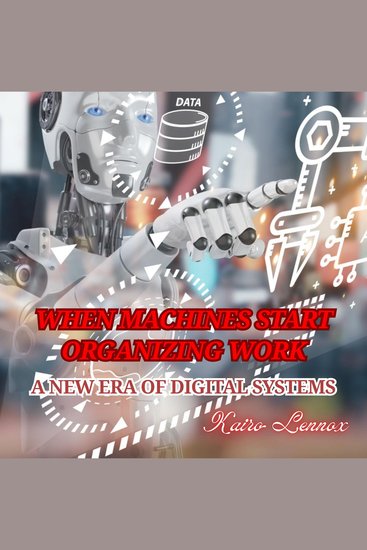
  • When Machines Start Organizing Work - A New Era of Digital Systems - cover

    When Machines Start Organizing...

    Kairo Lennox

    • 0
    • 0
    • 0
    A useful and perceptive examination of how intelligent technologies are changing the composition and functioning of contemporary organizations can be found in When Machines Start Organizing Work: A New Era of Digital Systems. The nature of work is changing beyond conventional management models as companies depend more and more on automation, artificial intelligence, data analytics, and digital platforms. This book explores how, in a variety of businesses, machines are actively participating in workflow organization, process coordination, and strategic decision support. 
    The book offers a thorough explanation of the mechanisms underlying digital transformation as well as how businesses may leverage these technologies to increase efficiency, productivity, and agility. Readers will learn how machine-driven solutions improve communication, optimize resource allocation, streamline operations, and produce more responsive business environments. The book illustrates how digital systems are changing the interaction between technology, workers, and organizational performance through useful explanations and real-world applications. 
    This book, which is intended for professionals, managers, entrepreneurs, students, and business leaders, provides useful information for navigating a world that is becoming more and more computerized. It highlights the value of human creativity, leadership, and moral decision-making while outlining the advantages, difficulties, and potential of machine-organized labor. Readers will acquire the knowledge necessary to comprehend and thrive in a new era where digital systems are essential to work organization and organizational performance.
    Ver livro