¡Acompáñanos a viajar por el mundo de los libros!
Añadir este libro a la estantería
Grey
Escribe un nuevo comentario Default profile 50px
Grey
Suscríbete para leer el libro completo o lee las primeras páginas gratis.
All characters reduced
Power Vacuum - Dynamics of Authority and Control in Transitional Regimes - cover

Power Vacuum - Dynamics of Authority and Control in Transitional Regimes

Fouad Sabry

Editorial: One Billion Knowledgeable

  • 0
  • 0
  • 0

Sinopsis

Power Vacuum explores the significant role of power vacuums in global politics and their wide-reaching consequences. It delves into how leadership voids can reshape political landscapes, shift alliances, and spark conflicts. This book offers an in-depth analysis of power vacuums and the instability they cause, as well as the measures governments can take to mitigate such crises.
 
Chapters Brief Overview:
 
1: Power Vacuum – Defines the concept and its role in political shifts.
 
2: Rogue State – Analyzes how rogue states exploit vacuums to further destabilize regions.
 
3: Hafez al-Assad – Studies the Syrian leader's power consolidation amid Middle Eastern vacuums.
 
4: Legitimacy of NATO Bombing of Yugoslavia – Questions interventions in power-devoid Yugoslavia.
 
5: War Powers Resolution – Examines how unclear authority leads to military conflicts.
 
6: Succession of States – Discusses state breakups and the resulting legal and political vacuums.
 
7: Adnan Pachachi – Details efforts to stabilize Iraq after Saddam Hussein’s downfall.
 
8: Ricardo Sanchez – Highlights military responses to the early Iraq War vacuum.
 
9: Jaafar Nimeiry – Reviews the Sudanese leader’s tumultuous rule during domestic instability.
 
10: 2003 in Iraq – Explores the long-lasting effects of the power vacuum post-invasion.
 
11: U.S. Military Operations – Reviews U.S. interventions spurred by regional vacuums.
 
12: Breakup of Yugoslavia – Examines the ethnic conflict following Yugoslavia's dissolution.
 
13: Cold War Events – Chronicles Cold War conflicts fueled by power voids in post-colonial nations.
 
14: Coups and Coup Attempts – Lists coups and their causes in leadership vacuums.
 
15: Bill Clinton’s Foreign Policy – Explores Clinton’s response to international crises from vacuums.
 
16: U.S. Foreign Interventions – Looks at how vacuums have shaped U.S. global actions.
 
17: Ming-Kotte War – Discusses Sri Lanka's regional instability and Ming involvement.
 
18: 17 July Revolution – Analyzes Iraq's 1968 revolution and subsequent power consolidation.
 
19: Ming Treasure Voyages – Highlights China’s expansion during regional vacuums.
 
20: Libyan Crisis – Investigates the ongoing conflict after Gaddafi’s fall.
 
21: 1985 Sudanese Coup – Studies the political reconfigurations following Sudan’s 1985 coup.
 
This book is an essential read for understanding how power vacuums, from historical events to modern conflicts, shape political structures and global interactions. Through an analysis of case studies like the breakup of Yugoslavia, the Iraq War, and various coups, readers gain a broad understanding of the ripple effects of leadership voids and the actions taken to address these crises.
Disponible desde: 07/10/2024.
Longitud de impresión: 538 páginas.
Otros libros que te pueden interesar

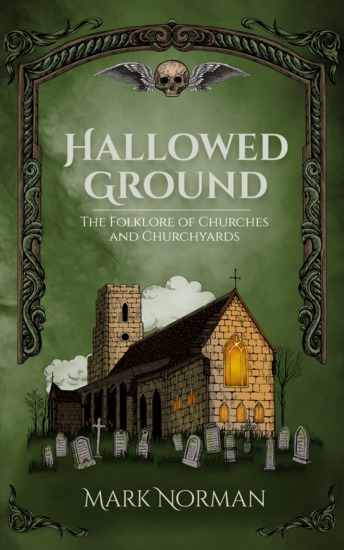
  • Hallowed Ground - The Folklore of Churches and Churchyards - cover

    Hallowed Ground - The Folklore...

    Mark Norman

    • 0
    • 0
    • 0
    Hallowed Ground examines the surprising traditions, customs, superstitions, and secular imagery found in Christian churches and churchyards, with a particular emphasis on the traditional rural protestant church.   Beginning with stories associated with the construction of church buildings themselves and the role that they played in the community, the book moves through a number of subjects where everything might not be as it would seem it should be in the Christian church and its grounds.   Expect vestiges of pagan symbols hidden in the fabric of the church building and clergymen rumored to hold strange arcane knowledge of their own, kept within their personal occult libraries. Learn the ways in which you can use the church and its grounds to divine who might die in the next twelve months, where you might find love, and how you might cure illnesses.   Watch out for a number of figures you wouldn’t expect to find on such holy ground, from run-ins with the devil to spectral figures inhabiting the church or its graves. Discover some of the ways in which magic and witchcraft seep into the hallowed ground of the churchyard from outside.  Hallowed Ground will offer more than a few surprises about the folklore that surrounds the church and churchyard and a fascinating insight into the social history of our place of traditional Sunday worship, all delivered with the academic rigor and accessible, engaging style for which the author is known.
    Ver libro
  • Siddartha - cover

    Siddartha

    Hermann Hesse

    • 0
    • 0
    • 0
    Siddhartha is a 1922 novel by Hermann Hesse that deals with the spiritual journey of self-discovery of a man named Siddhartha during the time of the Gautama Buddha. The book, Hesse's 9th novel, was written in German, in a simple, lyrical style. It was published in the U.S. in 1951 and became influential during the 1960s.    The story takes place in the ancient Nepalese kingdom of Kapilavastu. Siddhartha decides to leave his home in the hope of gaining spiritual illumination by becoming an ascetic wandering beggar of the Śamaṇa. Joined by his best friend Govinda, Siddhartha fasts, becomes homeless, renounces all personal possessions, and intensely meditates, eventually seeking and personally speaking with Gautama, the famous Buddha, or Enlightened One.
    Ver libro
  • Mary and Margaret - Whence Comes Freedom - cover

    Mary and Margaret - Whence Comes...

    Clark Thomas Riley

    • 0
    • 0
    • 0
    Mary Bennet and Margaret Dashwood, the youngest sisters of Pride and Prejudice and Sense and Sensibility. were women on surpassing intelligence and strength of character. Mary joins forces with the nascent abolition movement in collaboration with the underappreciated William Collins. Under the pen name of Joseph Weatherstone, they create together a philosophic giant who advances the cause. Margaret with her minder Jane siezes her wanderlust and escapes from cold gray England for the warm, spice filled air of the Caribbean. Each achieves great victories, overcoming the strictures of a male dominated society.
    Ver libro
  • A Rare Recording of Ezra Pound - cover

    A Rare Recording of Ezra Pound

    Ezra Pound

    • 0
    • 0
    • 0
    Ezra Weston Loomis Pound (October 30, 1885 - November 1, 1972), born in what is now Hailey, Idaho, was a major American figure in the early modernist poetry movement, and a fascist collaborator in Italy during World War II. Angered by the carnage of World War I, Pound blamed the war on finance capitalism, which he called "usury". He moved to Italy in 1924, and through the 1930s and 1940s promoted an economic theory known as social credit, wrote for publications owned by the British fascist Sir Oswald Mosley, embraced Benito Mussolini's fascism, and expressed support for Adolf Hitler. During World War II and the Holocaust in Italy, he made hundreds of paid radio broadcasts for the Italian government attacking the United States, Franklin D. Roosevelt and, above all, Jews. He was arrested in 1945 by American forces in Italy on charges of treason, spending months in a U.S. military camp in Pisa--including three weeks in an outdoor steel cage. Deemed unfit to stand trial, he was incarcerated in St. Elizabeth's psychiatric hospital in Washington, D.C., for over 12 years. After a campaign by his fellow writers, he was released from St. Elizabeth's in 1958 and lived in Italy until his death in 1972.
    Ver libro
  • Manifesto for the Revitalisation of Cities - A Solution to Portugal's Housing Crisis - cover

    Manifesto for the Revitalisation...

    Miguel Rebelo

    • 0
    • 0
    • 0
    The housing crisis in Portugal serves to illustrate a problem that has implications beyond the borders of the country, shedding light on challenges that are faced by major European and global cities. The rise in housing prices, driven by real estate speculation, the growth of tourism and the influx of foreign investment, has made it increasingly challenging for many in the population, especially the middle and lower classes, to access home ownership or renting. 
    The digitalisation of work has opened the possibility for highly qualified professionals to consider where they would like to live, regardless of the physical location of their job. Cities like Lisbon and Porto have become increasingly attractive destinations, offering a good quality of life combined with a range of professional opportunities. Nevertheless, this phenomenon has placed additional strain on the real estate market, leading to rising prices and the displacement of residents to the outskirts. 
    The housing policies that have been adopted thus far have not been as effective as might have been hoped, and in some cases may even have had the opposite effect. It seems that measures such as strict rent control, poorly targeted subsidies and the massive construction of new housing without proper urban and infrastructural planning have not solved the problem, and in some cases may have made it worse. Perhaps it would be beneficial to reconsider these approaches, acknowledging their shortcomings and adapting them to reflect the current situation. 
    It may be worth considering rehabilitating vacant buildings as a viable and sustainable solution. By restoring existing buildings, we can explore ways to increase the supply of affordable housing, revitalise run-down urban areas and preserve historical and cultural heritage to promote more inclusive and sustainable cities.
    Ver libro
  • The Eurasian Century - Hot Wars Cold Wars and the Making of the Modern Century - cover

    The Eurasian Century - Hot Wars...

    Hal Brands

    • 0
    • 0
    • 0
    We often think of the modern era as the age of American power. In reality, we're living in a long, violent Eurasian century. That giant, resource-rich landmass possesses the bulk of the global population, industrial might, and potential military power. Eurasia is a strategic prize without equal—which is why the world has been roiled, reshaped, and nearly destroyed by clashes over the supercontinent. 


    Since the early twentieth century, autocratic powers have aspired for dominance by seizing commanding positions in the world's strategic heartland. Offshore sea powers, namely the United Kingdom and America, have sought to make the world safe for democracy by keeping Eurasia in balance. America's rivalries with China, Russia, and Iran are the next round in this geopolitical game. If this new authoritarian axis succeeds in enacting a radically revised international order, America and other democracies will be vulnerable and insecure. 


    Hal Brands argues that a better understanding of Eurasia's strategic geography can illuminate the contours of rivalry and conflict in today's world. The Eurasian Century explains how revolutions in technology and warfare, and the rise of toxic ideologies of conquest, made Eurasia the center of twentieth-century geopolitics—with pressing implications for the struggles that will define the twenty-first.
    Ver libro