¡Acompáñanos a viajar por el mundo de los libros!
Añadir este libro a la estantería
Grey
Escribe un nuevo comentario Default profile 50px
Grey
Suscríbete para leer el libro completo o lee las primeras páginas gratis.
All characters reduced
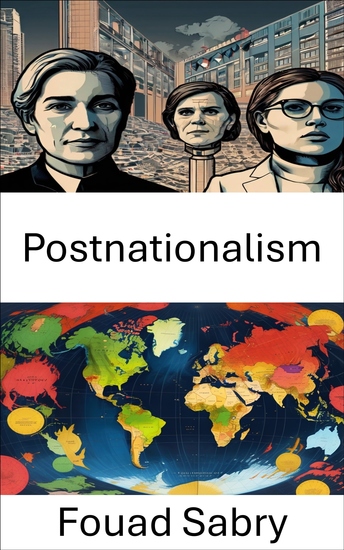
Postnationalism - Beyond Borders A Political Exploration - cover

Postnationalism - Beyond Borders A Political Exploration

Fouad Sabry

Editorial: One Billion Knowledgeable

  • 0
  • 0
  • 0

Sinopsis

In "Postnationalism," part of the "Political Science" series, explore the evolving challenges to nation-states and traditional nationalism. This book provides insights into national sovereignty, global justice, and postnationalist democracy.
 
Chapter Overviews:
 
1. Postnationalism: Defines and traces the history of postnationalism.
 
2. Multiculturalism: Examines how multicultural identities challenge national sovereignty.
 
3. Transnationalism: Analyzes how cross-border interactions affect state boundaries.
 
4. Civic Nationalism: Discusses civic nationalism’s role in inclusive communities.
 
5. Transnational Citizenship: Redefines the individual-state relationship in a globalized world.
 
6. Constitutional Patriotism: Focuses on loyalty to democratic principles over ethnic nationalism.
 
7. Nationalism Studies: Reviews key theories and debates in nationalism studies.
 
8. Types of Nationalism: Explores different nationalisms and their relevance to postnationalism.
 
9. Multiculturalism in Canada: Analyzes multiculturalism’s impact on Canadian identity.
 
10. Ethnic Nationalism: Examines ethnic nationalism’s challenges to postnationalism.
 
11. Nation: Discusses the evolving role of the nation in a postnationalist context.
 
12. Patriotism: Looks at patriotism’s relationship with global and national loyalties.
 
13. Royal Commission on Bilingualism and Biculturalism: Reviews its impact on Canadian multiculturalism.
 
14. Will Kymlicka: Examines Kymlicka’s contributions to multiculturalism and minority rights.
 
15. Cultural Conservatism: Discusses cultural conservatism’s opposition to postnationalism.
 
16. Canadian Nationalism: Explores Canadian nationalism’s interaction with postnationalist ideals.
 
17. Canadian Identity: Analyzes Canadian identity amid multicultural and global influences.
 
18. Who We Are: A Citizen's Manifesto: Reviews the manifesto’s vision of citizenship.
 
19. Denationalized Citizenship: Investigates denationalized citizenship’s implications for statehood.
 
20. Canadian Values: Explores the role of Canadian values in national and postnationalist discourse.
 
21. Laurentian Elite: Analyzes the Laurentian elite’s influence on Canadian politics.
 
"Postnationalism" offers essential insights into global political dynamics, making it a valuable read for those interested in the shifting landscape of nationalism.
Disponible desde: 05/08/2024.
Longitud de impresión: 188 páginas.

Otros libros que te pueden interesar

  • Rare Recording of Father Charles Coughlin A - Vol 4 - cover

    Rare Recording of Father Charles...

    Father Charles Coughlin

    • 0
    • 0
    • 0
    Father Charles Coughlin (October 25, 1891 - October 27, 1979), was a controversial Canadian-American Catholic priest based in Michigan. Calling for monetary reforms, the nationalization of major industries and railroads, and protection of the rights of labor, Coughlin used weekly radio broadcasts to reach a mass audience of up to thirty million listeners during the 1930s. An early supporter of Franklin D. Roosevelt and his New Deal, Coughlin later became a harsh critic. Coughlin’s commentary also became more anti-semitic, and he supported some of the fascist policies of Hitler, Mussolini, and Hirohito. As a result, many American Catholic leaders, as well as the Vatican, wanted Coughlin silenced. After the outbreak of World War II in 1939, the Roosevelt administration finally forced the cancellation of his radio program and forbade the dissemination of his newspaper, Social Justice. In this recording, Coughlin discusses the concept of "unjust aggressors" both within the United States and abroad.
    Ver libro
  • READING PEOPLE - Decoding Body Language Understanding Facial Expressions and Mastering the Art of Human Interaction (2024 Guide for Beginners) - cover

    READING PEOPLE - Decoding Body...

    SIGMUND MOODY

    • 0
    • 0
    • 0
    "Reading People" is your comprehensive guide to unraveling the mysteries of human behavior, providing insights into the subtle cues that reveal thoughts, feelings, and intentions. Dive into the fascinating world of nonverbal communication, facial expressions, and behavioral patterns, and enhance your ability to understand and connect with others on a deeper level.Body Language Decoded: Learn to interpret the language of the body, from gestures and postures to movements and eye contact.Facial Expressions Unveiled: Explore the nuances of facial expressions and understand the emotions they convey.SIGMUND MOODYUnderstanding Behavioral Patterns: Gain insights into recurring behavioral patterns that offer clues to an individual's personality and intentions.Detecting Deception: Develop the skills to recognize signs of dishonesty and deceit in both verbal and nonverbal communication.Cultural Sensitivity: Navigate the impact of cultural differences on communication, fostering inclusive and effective interactions.Building Strong Connections: Utilize your newfound knowledge to establish rapport, enhance relationships, and communicate with empathy. 
    🔍 Ready to become a master at reading people? Dive into "Reading People" and unlock the secrets to understanding human behavior. Whether you're navigating professional interactions, building personal relationships, or honing your social skills, this guide empowers you to decode the signals that shape our everyday interactions. Elevate your interpersonal skills—start reading people with precision today! 🔍 
     
    Ver libro
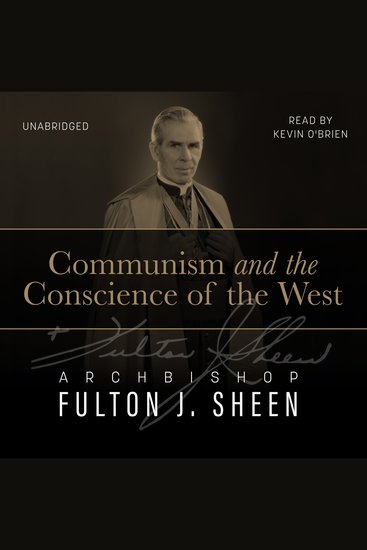
  • Communism and the Conscience of the West - cover

    Communism and the Conscience of...

    Fulton J. Sheen

    • 0
    • 0
    • 0
    For decades, this book has been recognized as the finest book ever written by a Catholic on the subject of communism. Dedicated to Our Lady in prayerful hope for the conversion of Russia, this is one of Fulton Sheen’s most forgotten yet most important books. In Communism and the Conscience of the West, Sheen explains the problems with society stemming from socialism and communism, which continue to infect universities and political discourse today. This timeless book exposes communism’s defects, its attitude toward the family, the decline of historical liberalism, and the rise of the antireligious spirit that pervades our world.  
    Readers will be impressed as Sheen diagnoses the issues facing our once peaceful cities, with history being put on trial, scrubbed, rewritten, and explained in terms of class hate. While communism destroys human freedom, Sheen illustrates how man is free as a result of two guarantees: one economic and the other spiritual. The economic enables man to call something his own which is outside of himself. The spiritual is the soul, which makes man independent of an earthly tyrant or a political dictator. In short, man’s soul is his own on the inside, as his property is his own on the outside.  
    Sheen carefully illustrates how even though we are living at a time when man has all the material conditions necessary for his happiness, “having lost the purpose of life which religion supplied, modern man became increasingly frustrated as his disappointed hedonism turned to pessimism. Thus man, who isolated himself from the religious community, now by reaction finds himself absorbed by the political community as despair becomes the dominant note of contemporary philosophy and literature.” For anyone seeking to understand one of the greatest threats to the Faith and our world, Communism and the Conscience of the West will be your guide.
    Ver libro
  • The Great Famine of the 14th Century - Europe's Population Crisis - cover

    The Great Famine of the 14th...

    Sarah Willards

    • 0
    • 0
    • 0
    The Great Famine of the 14th century did not erupt suddenly; it was the result of a long-simmering crisis deeply rooted in environmental, agricultural, and demographic factors. Europe, by the early 1300s, was already teetering on the edge of unsustainability. For decades, the continent had experienced a population boom, pushing communities to cultivate every inch of arable land. Marginal lands—forests, wetlands, and rocky hills—were cleared to make room for crops, but the soil was thin and poorly suited for long-term farming. This overuse exhausted the land, reducing yields and straining food supplies even in stable years. 
    At the same time, Europe entered a period of climatic deterioration now known as the Little Ice Age. Beginning in the early 14th century, temperatures across the continent began to drop slightly but consistently. This seemingly minor shift had devastating effects on agriculture. Cooler, wetter summers shortened the growing season and increased rainfall, which flooded fields and rotted seeds before they could sprout. Harsh winters extended well into the spring, delaying planting and shrinking the harvest window. These erratic weather patterns culminated in a series of catastrophic crop failures between 1315 and 1317. 
    Adding to these environmental pressures was a demographic crisis. By the turn of the century, Europe’s population had grown to levels unseen in centuries. Villages were packed, and food demand had reached unprecedented highs. Yet agricultural output could not keep pace. The productivity of medieval farming methods had plateaued, and innovations were slow to arrive. The result was a fragile system stretched beyond its limits. Even a single poor harvest could lead to hunger; multiple bad years spelled disaster.
    Ver libro
  • Adolescent Psychotherapy - A Radical Relational Approach - cover

    Adolescent Psychotherapy - A...

    Bronagh Starrs

    • 0
    • 0
    • 0
    Counsellors and psychotherapists are faced with ever-increasing complexity in their work with adolescents. In this book, Bronagh Starrs offers an understanding of developmental and therapeutic process from a relational-phenomenological Gestalt perspective. 


    Starrs shows how the adolescent's presenting symptom issues are statements of compromised life space integrity and demonstrates therapeutic sensibility to the adolescent's first-person experience. Throughout the book, the clinician is offered extensive relational and creative strategies to support integrity repair for the adolescent. The developmental impact of various life space contexts are discussed, including parental separation, complex family configuration, grief, adoption, and emerging sexual orientation and gender experience. Therapeutic responses to common creative adjustments are explored including anxiety, school refusal, depression, self-harm, suicide, eating disorders, alcohol and drug use, and sexual trauma. 


    Adolescent Psychotherapy will help counsellors and psychotherapists to develop deeper levels of competency in their work as adolescent psychotherapists, as they navigate the complex and fascinating experience of therapy with teenagers. This exceptional contribution is suitable for both experienced practitioners and students of counselling and psychotherapy.
    Ver libro
  • Intelligence - Exploring Different Types and Theories of Cognitive Ability - cover

    Intelligence - Exploring...

    Coral Nunez

    • 0
    • 0
    • 0
    Intelligence is a multifaceted and complex concept that has intrigued scholars, psychologists, and philosophers for centuries. While it is often linked to academic success, intelligence encompasses far more than the ability to solve problems or excel in standardized tests. At its core, intelligence is the capacity to learn, adapt, reason, understand, and apply knowledge to navigate the world around us. Its study has evolved significantly over time, with numerous theories and models aiming to define, measure, and understand it in its various forms. 
      
    The concept of intelligence is not fixed; rather, it changes depending on cultural, environmental, and societal contexts. Different societies may value specific cognitive abilities, such as logical reasoning, creativity, or emotional understanding, over others. This variance has led to the development of numerous theories that attempt to capture the essence of human intelligence. From early psychological studies to contemporary research, the exploration of intelligence continues to spark debate among scholars and practitioners alike.
    Ver libro