Junte-se a nós em uma viagem ao mundo dos livros!
Adicionar este livro à prateleira
Grey
Deixe um novo comentário Default profile 50px
Grey
Assine para ler o livro completo ou leia as primeiras páginas de graça!
All characters reduced
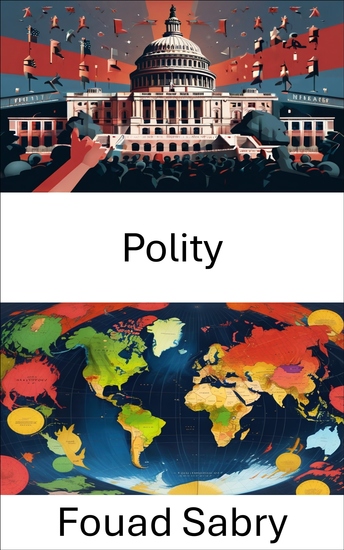
Polity - Understanding Governance Structures and Their Impact on Society - cover
LER

Polity - Understanding Governance Structures and Their Impact on Society

Fouad Sabry

Editora: One Billion Knowledgeable

  • 0
  • 0
  • 0

Sinopse

Unlock the secrets of political organization with "Polity," essential for those serious about understanding governance and policy. This exploration delves into political systems, structures, and institutions, offering insights into their roles in shaping our world.
 
1: Polity - Explore the essence of a polity and its significance in the political landscape.
 
2: Country - Understand a country as a political entity, focusing on development, recognition, and sovereignty.
 
3: Government - Learn about different government forms and their functions, including democratic and autocratic systems.
 
4: Politics - Examine political activities, processes, and how behavior influences governance.
 
5: State (Polity) - Analyze the state as a fundamental polity unit, its functions, powers, and relationships.
 
6: Sovereignty - Explore the principle of sovereignty, its evolution, and its role in state authority.
 
7: Thomas Hobbes - Discover Hobbes’ contributions to political theory, including his views on governance.
 
8: List of Sovereign States - Review sovereign states, understanding their recognition and roles globally.
 
9: International Relations - Investigate international relations, including diplomacy, conflict, and cooperation.
 
10: Federation - Learn about federal governance structures, their benefits, challenges, and impact on unity.
 
11: Authority - Explore authority within political systems, its legitimacy, and the balance of power.
 
12: Leviathan (Hobbes' Book) - Delve into "Leviathan," examining its arguments on social contract theory.
 
13: State - Revisit the state, focusing on its role in maintaining order and providing public goods.
 
14: Negative Liberty - Understand negative liberty's implications for individual freedom in political discourse.
 
15: Insurgency - Analyze insurgency, its causes, consequences, and state responses.
 
16: Governance - Examine governance principles, including effectiveness and accountability in policy implementation.
 
17: Superstate - Explore the idea of a superstate, its benefits, challenges, and implications for sovereignty.
 
18: People - Consider the people's role in political systems, focusing on participation and representation.
 
19: Sovereign State - Reassess the sovereign state’s evolution and significance in modern politics.
 
20: Body Politic - Delve into the body politic metaphor, exploring how political entities function as a unit.
 
21: Quasi-State - Investigate quasi-states and their characteristics in the international system.
 
"Polity" is a vital resource for professionals, students, and enthusiasts. It blends historical and theoretical perspectives, equipping readers with the knowledge to navigate political systems. Deepen your understanding and enhance your expertise in political science with this essential guide.
Disponível desde: 17/10/2024.
Comprimento de impressão: 271 páginas.


Outros livros que poderiam interessá-lo

  • Jerusalem on Earth - Clamoring at Heaven's Gate: Post-Six Day War Jerusalem - cover

    Jerusalem on Earth - Clamoring...

    Abraham Rabinovich

    • 0
    • 0
    • 0
    As the guns in Jerusalem fell silent in 1967 nothing could be heard across the hushed city except the faint flutter of history. Then it started again — the rumble of heavy vehicles, the unforgiving crump of explosives. This time the sounds were of bulldozers plowing through border barriers and the demise of minefields. Jewish and Arab Jerusalem were separated briefly only by a strip of neutered no-man’s-land so narrow that a boy could throw a stone across it, so filled with shadows that it was impossible to probe its depth. What would emerge from those shadows?Jerusalem on Earth is an anecdotal overview of the turbulent post-Six Day War decades. This revised edition expands on the first, published in 1988, and includes a close-up view of Mayor Teddy Kollek shaping the city during his 28-year tenure. The author covered City Hall for the Jerusalem Post during much of this period and encountered a world-class collection of visionaries and eccentrics.
    -An Australian sheepshearer who wants to be recognized as king of Judah sets fire to al-Aqsa Mosque in Jerusalem, third holiest site in Islam. Riots in the Moslem world reportedly kill thousands and Arab armies are ordered to prepare for holy war. Israeli police quickly track down the arsonist, heading off further deterioration.
    -An ultra-orthodox eccentric crossed into Jordan as a young man to obtain weapons for a revolt against the secular Zionist state. He is returned and tried. Thirty years later he invites his former prosecutor to join him in a learned debate before a packed hall on the German philosopher Friedrich Nietzche who wrote that god is dead.
    -Arab and Jewish underworlds in Jerusalem are the first economic sectors to join forces after the Six Day War. The police are not far behind, forming Arab-Jewish patrols.
    -A rare look into the inner sanctums of the Hassidic world when street conflicts break out among feuding factions. Yeshiva students “take to the mattresses” mafia-style as tensions mount.
    -The Vatican sues one of its own religious orders for selling property to a Jewish institution. Jewish lawyers expert in church law represent each side. In the end, the government aborts the sale in order to demonstrate that Israel is not out to Judaize Jerusalem. Not long afterwards, the Vatican establishes diplomatic crelations with the Jewish state.
    -Danish-born Sister Abraham, who speaks 15 languages and navigates the city on a bicycle, is the first white woman to serve as a nun in the Ethiopian church. 
    -Israeli army reserve units maintained an enclave behind Jordanian lines on Mount Scopus under UN auspices for 19 years. Years later, intelligence officers would reveal its secrets.
    - In what psychologists call "the Jerusalem syndrome" several tourists are briefly hospitalized each year when they assume the persona of biblical figures on Jerusalem’s streets.
    - The murder of two nuns, a mother and daughter, in a convent temporarily suspends hostilities between the "White Russian" church in East Jerusalem and the "Red Russian" church in West Jerusalem.
    -A Jewish family and an Arab family, both with numerous children, find themselves neighbors when the border barriers are removed. They would become virtually one family.
    Ver livro
  • Aastha Khanna - cover

    Aastha Khanna

    Rekha Balakrishna

    • 0
    • 0
    • 0
    Sex on sets: India's first intimacy coordinator, Aastha Khanna, wants to create a safe space for performers
    Ver livro
  • State of Disaster - The Failure of US Migration Policy in an Age of Climate Change - cover

    State of Disaster - The Failure...

    Maria Cristina Garcia

    • 0
    • 0
    • 0
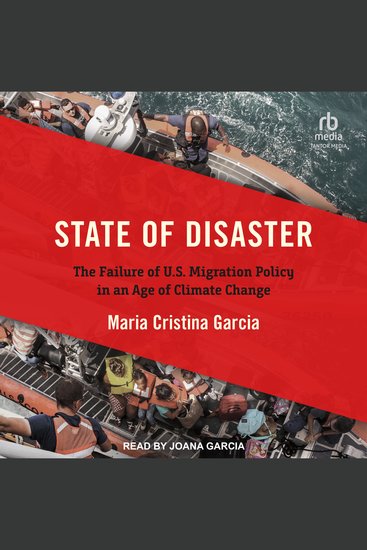
    Natural disasters and the dire effects of climate change cause massive population displacements and lead to some of the most intractable political and humanitarian challenges seen today. Yet, as Maria Cristina Garcia observes in this critical history of U.S. policy on migration in the Global South, there is actually no such thing as a "climate refugee" under current U.S. law. Most initiatives intended to assist those who must migrate are flawed and ineffective from inception because they are derived from outmoded policies. In a world of climate change, U.S. refugee policy simply does not work. 


    Garcia focuses on Central America and the Caribbean, where natural disasters have repeatedly worsened poverty, inequality, and domestic and international political tensions. She explains that the creation of better U.S. policy for those escaping disasters is severely limited by the 1980 Refugee Act, which continues to be applied almost exclusively for reasons of persecution directly related to politics, race, religion, and identity. Garcia contends that the United States must transform its outdated migration policies to address today's realities. Climate change and natural disasters are here to stay, and much of the human devastation left in their wake is essentially a policy choice.
    Ver livro
  • Hidden Mercy - AIDS Catholics and the Untold Stories of Compassion in the Face of Fear - cover

    Hidden Mercy - AIDS Catholics...

    Michael J. O'Loughlin

    • 0
    • 0
    • 0
    The 1980s and 1990s, the height of the AIDS crisis in the United States, was decades ago now, and many of the stories from this time remain hidden: A Catholic nun from a small Midwestern town packs up her life to move to New York City, where she throws herself into a community under assault from HIV and AIDS. A young priest sees himself in the many gay men dying from AIDS and grapples with how best to respond, eventually coming out as gay and putting his own career on the line. A gay Catholic with HIV loses his partner to AIDS and then flees the church, focusing his energy on his own health rather than fight an institution seemingly rejecting him. 


    Set against the backdrop of the HIV and AIDS epidemic of the late twentieth century and the Catholic Church's crackdown on gay and lesbian activists, journalist Michael O'Loughlin searches out the untold stories of those who didn't look away, who at great personal cost chose compassion. 


    This is one journalist's—gay and Catholic himself—compelling picture of those quiet heroes who responded to human suffering when so much of society told them to look away. These pure acts of compassion and mercy offer us hope and inspiration as we continue to confront existential questions about what it means to be Americans, Christians, and human beings responding to those most in need.
    Ver livro
  • The Prophet - cover

    The Prophet

    Kahlil Gibran

    • 0
    • 0
    • 0
    The book is structured around the story of a prophet named Almustafa who is about to board a ship to return to his homeland after twelve years of exile. As he prepares to leave, the people of the city he has been living in gather around him and ask him to share his wisdom before he departs. Almustafa proceeds to share his insights on a wide range of topics, including love, marriage, children, work, and death. Gibran's writing is known for its lyrical beauty and its ability to convey deep, philosophical ideas in a simple and accessible way. Each chapter of "The Prophet" is a poetic meditation on a different aspect of life, and the book has been praised for its timeless wisdom and its ability to inspire readers to think deeply about their own lives and the world around them. Read in English, unabridged.
    Ver livro
  • Bagavad Gita in Tamil - Complete All 18 Chapters - Life Lessons from Gita - cover

    Bagavad Gita in Tamil - Complete...

    Viyasar

    • 0
    • 0
    • 0
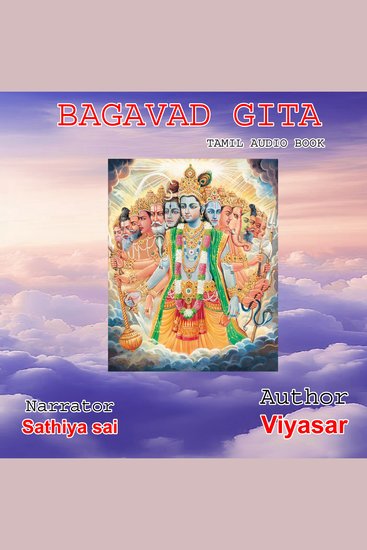
    The Bhagavad Gita is a 700-verse Hindu scripture embedded within the epic Mahabharata, depicting a dialogue between Arjuna and Krishna on the battlefield of Kurukshetra. Arjuna, facing his relatives in battle, experiences despair and a crisis of conscience. Krishna, his charioteer and an avatar of Vishnu, provides philosophical and spiritual guidance, addressing themes of duty (dharma), action (karma), devotion (bhakti), and knowledge (jnana). The Gita explores the nature of the self, the divine, and humanity's place in the world, offering paths to liberation and spiritual fulfillment. 
    Ver livro