¡Acompáñanos a viajar por el mundo de los libros!
Añadir este libro a la estantería
Grey
Escribe un nuevo comentario Default profile 50px
Grey
Suscríbete para leer el libro completo o lee las primeras páginas gratis.
All characters reduced
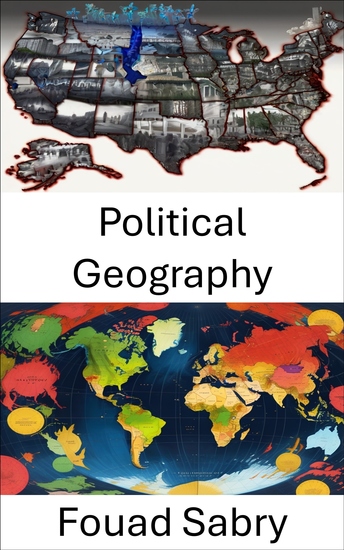
Political Geography - Global Power Dynamics Mapping the Terrain of Influence - cover

Political Geography - Global Power Dynamics Mapping the Terrain of Influence

Fouad Sabry

Editorial: One Billion Knowledgeable

  • 0
  • 0
  • 0

Sinopsis

Explore 'Political Geography,' a pivotal work in the 'Political Science' series that unravels the intricate tapestry of global politics. This essential volume delves into the interplay of territory, borders, and geopolitical strategies, offering deep insights crucial for professionals, students, and anyone passionate about understanding our world's political dynamics.
 
1. Political Geography: Examines how spatial arrangements of power influence national and international policies.
 
2. Human Geography: Explores the human element in geographical contexts, revealing how populations and cultures shape political landscapes.
 
3. Physical Geography: Investigates how natural landscapes and environmental factors impact global interactions.
 
4. Environmental Determinism: Analyzes the controversial theory linking environmental conditions to societal development and geopolitical strategies.
 
5. Geopolitics: Navigates the strategic interplay of geographical factors in global power struggles.
 
6. Karl Haushofer: Explores Haushofer's theories and their impact on modern political thought.
 
7. Economic Geography: Examines the relationship between economic activities, resources, and political power.
 
8. Halford Mackinder: Analyzes Mackinder's geopolitical theory on Eurasia and global dominance.
 
9. Feminist Geography: Highlights gender's influence on spatial arrangements and geopolitical strategies.
 
10. Friedrich Ratzel: Studies Ratzel's theories on the organic state and territorial expansion.
 
11. Geostrategy: Investigates geographic considerations in military and political planning.
 
12. Nicholas J. Spykman: Examines Spykman's Rimland theory and its influence on U.S. foreign policy.
 
13. Rudolf Kjellén: Explores Kjellén's contributions to political geography.
 
14. Geopolitik: Understands Geopolitik as a German geopolitical doctrine.
 
15. Ellen Churchill Semple: Discovers Semple's work in cultural geography.
 
16. Cultural Geography: Examines how cultural factors shape geographical landscapes and political boundaries.
 
17. The Geographical Pivot of History: Analyzes Mackinder's concept and its implications for global power dynamics.
 
18. Critical Geography: Investigates alternative viewpoints challenging traditional geopolitical narratives.
 
19. Geography: Outlines fundamental principles and methodologies of the discipline.
 
20. Outline of Geography: Summarizes key geographical concepts for political analysis.
 
21. List of Human Geographers: Explores influential figures in human geography.
 
An indispensable resource for scholars and enthusiasts alike, 'Political Geography' equips readers with essential knowledge to navigate the complexities of our geopolitical world.
Disponible desde: 05/08/2024.
Longitud de impresión: 198 páginas.
Otros libros que te pueden interesar

  • Lifehouse - Taking Care of Ourselves in a World on Fire - cover

    Lifehouse - Taking Care of...

    Adam Greenfield

    • 0
    • 0
    • 0
    How to reclaim power in a time of perpetual crisis 


    We are living through a Long Emergency: a near-continuous train of pandemics, heatwaves, droughts, resource wars, and other climate-driven disasters. In Lifehouse, Adam Greenfield asks what might happen if the tactics and networks of care that spring up in response to these times might be brought together in a single, coherent way of life? 


    Using examples from the Black Panthers' "survival programs," the astonishingly effective Occupy Sandy disaster-relief effort, and the neighborhood-based mutual aid groups that sustained many during COVID lockdowns to the large-scale, self-organized polities of municipalist Spain and Kurdish Rojava, Greenfield argues for rethinking local power as a bulwark against despair—a way to discover and develop the individual and collective capacities that have gone underutilized during all the long years of late capitalism, and a means for thriving in the face of impending catastrophe.
    Ver libro
  • Race Marxism: Book Summary & Analysis - cover

    Race Marxism: Book Summary &...

    Briefly Summaries

    • 0
    • 0
    • 0
    This is a concise summary and analysis of Race Marxism, by James Lindsay.
     
    It is not the original book and is not affiliated with or endorsed by James Lindsay.
     
    Ideal those seeking a quick and insightful overview.
     
    Race Marxism explores the complex intersection of critical race theory (CRT) and Marxist ideology, offering a deep dive into how these frameworks influence modern discussions on race, politics, and society. The book examines CRT's origins, its relationship to Marxism, and its impact on culture, education, and institutions. With a critical lens, it questions the philosophical foundations and practical implications of these ideas, aiming to challenge prevailing narratives and encourage intellectual discourse on race and social justice.
    Ver libro
  • Underserved - Harnessing the Principles of Lincoln's Vision for Reconstruction for Today's Forgotten Communities - cover

    Underserved - Harnessing the...

    Ja'Ron Smith, Chris Pilkerton

    • 0
    • 0
    • 0
    Underserved is a tangible blueprint for today's conservative who understands the need for a new and viable political plan of action—one that addresses the needs of the underserved communities that make up these United States of America. Utilizing the concept of the "Party of Lincoln" and the conservative principles set forth over centuries by the movement's most recognized thought leaders, Underserved examines President Lincoln's intentions for Reconstruction, President Grant's aims to implement that vision, and Frederick Douglass's influence on both men in the process. Underserved brings home the very real impact of a failed plan that has had negative implications on modern America, whether conservative, moderate, or liberal. 


    With this historical plan as the linchpin for creating a framework that services disenfranchised communities, authors Ja'Ron K. Smith and Chris Pilkerton challenge conservative policy makers to employ strategies that mirror those originally presented over 160 years ago, while making necessary concessions for its modern audience. 


    From education and workforce development to criminal justice reform and healthcare disparities, Underserved makes a bold statement about what is necessary to see a change in the current state of affairs and presents a realistic action plan to make it happen.
    Ver libro
  • A Real Right to Vote - How a Constitutional Amendment Can Safeguard American Democracy - cover

    A Real Right to Vote - How a...

    Richard L. Hasen

    • 0
    • 0
    • 0
    Throughout history, too many Americans have been disenfranchised or faced needless barriers to vote. Part of the blame falls on the Constitution, which does not contain an affirmative right to vote. The Supreme Court has made matters worse by failing to protect voting rights and limiting Congress's ability to do so. The time has come for voters to take action and push for an amendment to the Constitution that would guarantee this right for all. 


    Drawing on troubling stories of state attempts to disenfranchise military voters, women, African Americans, students, former felons, Native Americans, and others, Richard Hasen argues that American democracy can and should do better in assuring that all eligible voters can cast a meaningful vote that will be fairly counted. He shows how a constitutional right to vote can deescalate voting wars between political parties that lead to endless rounds of litigation and undermine voter confidence in elections, and can safeguard democracy against dangerous attempts at election subversion. 


    The path to a constitutional amendment is undoubtedly hard, especially in these polarized times. A Real Right to Vote explains what's in it for conservatives who have resisted voting reform, and reveals how the pursuit of an amendment can yield tangible dividends for democracy long before ratification.
    Ver libro
  • Sanctions - What Everyone Needs to Know - cover

    Sanctions - What Everyone Needs...

    Bruce W. Jentleson

    • 0
    • 0
    • 0
    A concise, authoritative overview of a little-understood yet extremely important phenomenon in world politics: the use of economic sanctions by one country to punish another. 


    It's hard to browse the news without seeing reports of yet another imposition of sanctions by one country on another. The United States has sanctions against more than thirty countries. Russia has repeatedly imposed sanctions against former Soviet republics. China has developed its own approach, including targeting private entities such as the NBA. And it's not just major powers: Japan and South Korea have sanctioned each other over WWII and colonial legacies; Saudi Arabia against Qatar because of differences over Iran; and France, Germany, and Norway against Brazil over the Amazon forest and climate change. In Sanctions: What Everyone Needs to Know®, Bruce Jentleson—one of America's leading scholars on the subject—answers the fundamental questions about sanctions today: Why are they used so much? What are their varieties? What are the key factors affecting their success? Why have they become the tool of first resort for states engaged in international conflict? Jentleson demonstrates that examining sanctions is key to understanding international relations and explains how and why they will likely continue to bear on global politics.
    Ver libro
  • Finding My Humanity - I am because you are - cover

    Finding My Humanity - I am...

    Ryan Ubuntu Olson

    • 0
    • 0
    • 0
    In a world increasingly shaped by fear, division, and rising authoritarianism, Finding My Humanity is a timely memoir that invites us back to what connects us most—our mutual capacity for love, empathy, and courage- indeed our shared humanity. Ryan Ubuntu Olson's journey begins in rural Colorado, where he wrestles with his identity in a community that offers little space for difference. As a queer young man navigating isolation, discrimination, and heartbreak, he is forced to reckon with what it means to live authentically in the face of rejection. But what begins as a personal struggle evolves into something far greater. On a conservative Catholic college campus, Ryan Ubuntu unexpectedly becomes a public advocate, confronting bias and building community. That role propels him into global human rights work, where he supports activists and inclusive development efforts in countries like Kenya, Jamaica, Peru, Malawi, and Cambodia. From the grassroots to the halls of the United Nations, Ryan Ubuntu becomes a bridge between lived experience and global policy, shaping strategies for inclusion and dignity worldwide. More than a memoir, Finding My Humanity is a reflection on what it means to turn pain into purpose—and how one person’s story can spark collective action. With raw honesty and unwavering hope, Ryan Ubuntu explores how our personal "why" can become a driving "how" in the fight for justice, connection, and change. Narrated by the author himself, the audiobook seeks to add deeper meaning to the memoir by adding the human depth and conviction that can only be expressed in the tone and intonation of the person most impacted by the memoir's greatest meaning. Whether you're seeking purpose, healing, or inspiration, this is a book for anyone ready to lead with heart in a world hungry for hope.
    Ver libro