Junte-se a nós em uma viagem ao mundo dos livros!
Adicionar este livro à prateleira
Grey
Deixe um novo comentário Default profile 50px
Grey
Assine para ler o livro completo ou leia as primeiras páginas de graça!
All characters reduced
Peace and Conflict Studies - Understanding Global Dynamics From Diplomacy to Resolution - cover
LER

Peace and Conflict Studies - Understanding Global Dynamics From Diplomacy to Resolution

Fouad Sabry

Editora: One Billion Knowledgeable

  • 0
  • 0
  • 0

Sinopse

Peace and Conflict Studies is a vital resource in Political Science, exploring global peacebuilding and conflict resolution. In an interconnected world, understanding these dynamics is crucial. This book covers key theories and practices, from Johan Galtung's groundbreaking work to modern applications in peace journalism and environmental peacebuilding.
 
1-Foundations - Introduction to peace and conflict studies, exploring core concepts and methodologies.
 
2-Johan Galtung - Explore Galtung's theories on structural violence and peacebuilding.
 
3-PRIO - Investigate the Peace Research Institute Oslo's influence on global peace strategies.
 
4-Abdul Aziz Said - Delve into Said's work in interfaith dialogue and peacebuilding.
 
5-AU SIS - Discover the role of American University's School of International Service in shaping diplomats.
 
6-Peace Education - Analyze education's role in cultivating peace, from grassroots to formal systems.
 
7-Adam Curle - Reflect on Curle's pioneering efforts in humanizing conflict resolution.
 
8-Peace Journalism - Understand how peace journalism promotes non-violent solutions.
 
9-Peacebuilding - Explore the strategies and challenges of post-conflict peacebuilding.
 
10-Mari Fitzduff - Highlight Fitzduff's contributions to mediation and dialogue in peace studies.
 
11-An Agenda for Peace - Discuss Boutros-Ghali’s UN report on preventive diplomacy and peace strategies.
 
12-Mohammed Abu-Nimer - Examine Abu-Nimer's work in interfaith dialogue and Middle East peacebuilding.
 
13-Kristian Berg Harpviken - Analyze Harpviken’s research on humanitarian interventions.
 
14-Environmental Peacebuilding - Investigate how ecological efforts contribute to peace.
 
15-Janie Leatherman - Explore Leatherman's work on gender and peacebuilding.
 
16-Center for Justice and Peacebuilding - Highlight the center’s role in training leaders in conflict resolution.
 
17-Mats Berdal - Examine Berdal's research on post-conflict state-building.
 
18-Hizkias Assefa - Reflect on Assefa's contributions to peacebuilding in Africa.
 
19-Carter School - Discuss the impact of the Carter School on global peace education.
 
20-Shahrbanou Tadjbakhsh - Analyze Tadjbakhsh’s work on humanitarian action and peace ethics.
 
21-Séverine Autesserre - Explore Autesserre’s advocacy for grassroots peacebuilding.
 
This book is essential for professionals, students, and enthusiasts eager to deepen their understanding of global conflict dynamics. It offers unique insights and practical knowledge, making it a worthwhile investment in your intellectual journey.
Disponível desde: 21/08/2024.
Comprimento de impressão: 210 páginas.

Outros livros que poderiam interessá-lo

  • From Red Terror to Terrorist State - Russia's Secret Service and Its Fight for World Domination: from Felix Dzerzhinsky to Vladimir Putin - cover

    From Red Terror to Terrorist...

    Yuri Felshtinsky, Vladimir Popov

    • 0
    • 0
    • 0
    'Detail worthy of a John le Carre novel.' Telegraph The history of modern Russia traditionally has Communism at its centre: Lenin defines its rise, Gorbachev its fall, and Putin its aftermath. In this radical new history, Yuri Felshtinsky and Vladimir Popov, however, introduce a new historical axis: the Cheka―the Bolsheviks' nebulous revolutionary intelligence service. Wrapped around the Party in a fight to the death from 1918 under its first head Felix Dzerzhinsky, only Stalin was able to resist its stranglehold at the cost of enormous bloodshed. Luring Russia into submission over less than a century, its murder-plots and unrivalled scheming culminated in the capture of the Kremlin in 2000. Drawing on Popov's secret documents of over two decades as a senior officer in one of the KGB's key covert sections, and on Felshtinsky's encyclopedic knowledge of Russian state archives open in the 1990s, little-known sources, and access to leading oligarchs, a new Russian history emerges. The story they tell is often unexpected while introducing a new cast of characters still of great influence―potentially surpassing Lenin's role―on our world today. From Red Terror to Terrorist State is the first complete history of the Cheka. Written from the inside, it fundamentally transforms our understanding of Russia and rethinks the way today's Kremlin views itself and the rest of the world. Animated by lifelong study, this authoritative narrative by two exceptional Russian-intelligence experts presents ground-breaking new insights based on an unrivalled wealth of new factual details.
    Ver livro
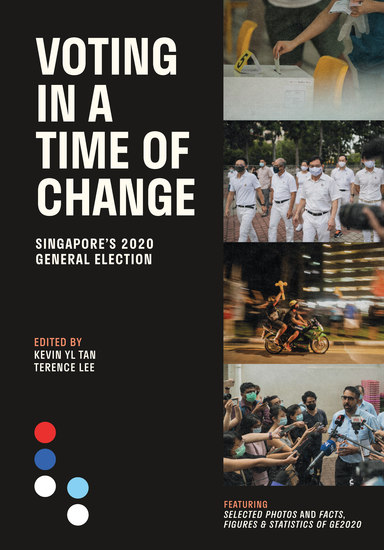
  • Voting in a Time of Change - cover

    Voting in a Time of Change

    Kevin YL Tan, Terrence Lee

    • 0
    • 0
    • 0
    GE2020: an election that should not be forgotten for yielding startling outcomes, including the appointment of the first Leader of the Opposition. 
     
     
    Voting in a Time of Change is part of a longitudinal study by editors Kevin YL Tan and Terence Lee, who have been assembling trenchant analyses of each General Election by leading academics and commentators since GE2011. Their long game makes possible specific and unique insights. Of GE2020, this is what they have to say: 
     
     
    “The major political shift in Singapore that started in 2011 is marching on, even amidst a Covid-19 pandemic that was to have been a great disrupter. Whether we call this a ‘New Normal’ – as many did back in 2011 – or otherwise is not as important as the momentum for change that has built up since then. Covid-19 thus became a political backdrop to a social and political shift that was merely searching for a catalyst.” 
     
     
    What insights and lessons can we carry forward to the next General Elections? This is an indispensable milestone publication for citizens who wish to commit to even more informed choices, and for political observers who are keeping close tabs on the evolution of our political landscape.
    Ver livro
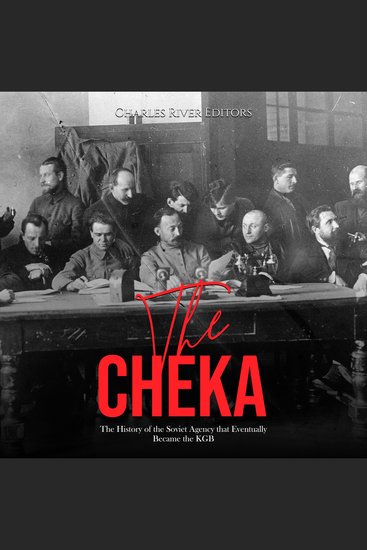
  • Cheka The: The History of the Soviet Agency that Eventually Became the KGB - cover

    Cheka The: The History of the...

    Editors Charles River

    • 0
    • 0
    • 0
    The KGB is one of the most famous abbreviations of the 20th century, and it has become synonymous with the shadowy and often violent actions of the Soviet Union’s secret police and internal security agencies. In fact, it is often used to refer to the Soviet state security agencies throughout its history, from the inception of the inception of the Cheka (Extraordinary Commission) in 1917 to the official elimination of the KGB in 1992. Whether it’s associated with the Russian Civil War’s excesses, Stalin’s purges, and even Vladimir Putin, the KGB has long been viewed as the West’s biggest bogeyman during the second half of the 20th century. 
    	However, the KGB did not appear out of thin air. Naturally, the earliest Soviet leaders utilized intelligence agencies that collected information both abroad and within the Soviet Union, targeting foreign opponents and domestic opponents alike. Lenin did not imagine the scale of the opposition he would have to face after the revolution, and he quickly came to the conclusion that "a special system of organized violence" must be created to implement the dictatorship of the proletariat. 
    	Thus, from nearly the beginning of the Bolshevik takeover of Russia, Lenin and his successors established and relied on a particularly ruthless agency: the All-Russian Extraordinary Commission for Combating Counter-Revolution and Sabotage, later abbreviated to the Extraordinary Commission. Known colloquially as the Cheka (Extraordinary Commission), it soon became as feared by non-socialists as the Tsar’s secret police had ever been. The main means approved by the Council of People's Commissars on December 20, 1917, which the Cheka had to use to fight the counter-revolution, were "seizure of property, resettlement, deprivation of cards, publication of lists of enemies of the people, etc."
    Ver livro
  • Free Speech - What Everyone Needs to Know® - cover

    Free Speech - What Everyone...

    Nadine Strossen

    • 0
    • 0
    • 0
    This concise but comprehensive book lays out specific answers to myriad topical questions about free speech law, and also general explanations of how and why the law distinguishes between protected and punishable speech. 


    The book focuses on modern First Amendment law, explaining the historic factors that propelled its evolution in a more speech-protective direction—in particular, the Civil Rights Movement. It highlights the many cases, involving multiple issues, in which robust speech-protective principles aided advocates of racial justice and other human rights causes. The book also shows how these holdings reflect universal, timeless values, which have been incorporated in many other legal systems, and have inspired countless thinkers and activists alike. 


    Without oversimplifying the complexities of free speech law, the book's lively question-and-answer format summarizes this law in an understandable, interesting, and memorable fashion. It addresses the issues in a logical sequence, presenting facts and eloquent language from landmark Supreme Court opinions. It will be illuminating to a wide range of listeners, from those who know nothing about free speech law, to those who have studied it but seek a well-organized summary of major doctrinal rules, as well as insights into their background, rationales, and interconnections.
    Ver livro
  • Inventing the Future - Postcapitalism and a World Without Work - cover

    Inventing the Future -...

    Nick Srnicek, Alex Williams

    • 0
    • 0
    • 0
    This major new manifesto offers a "clear and compelling vision of a postcapitalist society" and shows how left-wing politics can be rebuilt for the twenty-first century (Mark Fisher, author of Capitalist Realism 


    Neoliberalism isn't working. Austerity is forcing millions into poverty and many more into precarious work, while the left remains trapped in stagnant political practices that offer no respite. 


    Inventing the Future is a bold new manifesto for life after capitalism. Against the confused understanding of our high-tech world by both the right and the left, this book claims that the emancipatory and future-oriented possibilities of our society can be reclaimed. Instead of running from a complex future, Nick Srnicek and Alex Williams demand a postcapitalist economy capable of advancing standards, liberating humanity from work and developing technologies that expand our freedoms. 


    This new edition includes a new chapter where they respond to their various critics.
    Ver livro
  • The Souls Of Black Folk - cover

    The Souls Of Black Folk

    W. E. B. Du Bois

    • 0
    • 0
    • 0
    The creator was an American humanist, communist, history specialist and Skillet Africanist social equality lobbyist. Brought into the world in Extraordinary Barrington, Massachusetts, he experienced childhood in a somewhat lenient and coordinated local area, and subsequent to finishing graduate work at the College of Berlin and Harvard, where he was the main African American to procure a doctorate, he turned into a teacher of history, human science, and financial matters at Atlanta College. He was one of the organizers behind the Public Relationship for the Progression of Minorities Individuals (NAACP) in 1909. 
    Earlier,he had ascended to public unmistakable quality as a head of the Niagara Development, a gathering of African-American activists who needed equivalent freedoms for blacks. He and his allies went against the Atlanta split the difference, an arrangement created by Booker T. Washington which given that Southern blacks would work and submit to white political rule, while Southern whites ensured that blacks would get fundamental instructive and financial open doors. All things being equal, he demanded full social liberties and expanded political portrayal, which he trusted would be achieved by the African-American scholarly first class. He alluded to this gathering as the Skilled 10th, an idea under the umbrella of racial inspire, and accepted that African Americans required the opportunity for high level training to foster their initiative.
    Ver livro