Junte-se a nós em uma viagem ao mundo dos livros!
Adicionar este livro à prateleira
Grey
Deixe um novo comentário Default profile 50px
Grey
Assine para ler o livro completo ou leia as primeiras páginas de graça!
All characters reduced
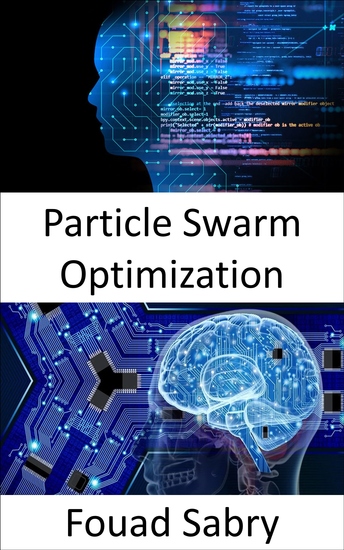
Particle Swarm Optimization - Fundamentals and Applications - cover
LER

Particle Swarm Optimization - Fundamentals and Applications

Fouad Sabry

Editora: One Billion Knowledgeable

  • 0
  • 0
  • 0

Sinopse

What Is Particle Swarm Optimization
 
Particle swarm optimization, often known as PSO, is a computer method that was developed in the field of computational science. This method optimizes a problem by iteratively trying to improve a candidate solution with relation to a specific measure of quality. It solves a problem by having a population of potential solutions, which are referred to as particles here, and moving these particles around in the search space in accordance with a basic mathematical formula over the particle's position and velocity. This method is called particle-based search. The movement of each particle is led toward the best known positions in the search space, which are updated when better places are identified by other particles. However, the movement of each particle is also impacted by its best known position in its local region. It is anticipated that this will direct the hive toward the optimal options.
 
How You Will Benefit
 
(I) Insights, and validations about the following topics:
 
Chapter 1: Particle swarm optimization
 
Chapter 2: Particle filter
 
Chapter 3: Swarm intelligence
 
Chapter 4: Bees algorithm
 
Chapter 5: Fish School Search
 
Chapter 6: Artificial bee colony algorithm
 
Chapter 7: Derivative-free optimization
 
Chapter 8: Multi-swarm optimization
 
Chapter 9: Dispersive flies optimisation
 
Chapter 10: Metaheuristic
 
(II) Answering the public top questions about particle swarm optimization.
 
(III) Real world examples for the usage of particle swarm optimization in many fields.
 
(IV) 17 appendices to explain, briefly, 266 emerging technologies in each industry to have 360-degree full understanding of particle swarm optimization' technologies.
 
Who This Book Is For
 
Professionals, undergraduate and graduate students, enthusiasts, hobbyists, and those who want to go beyond basic knowledge or information for any kind of particle swarm optimization.
Disponível desde: 01/07/2023.
Comprimento de impressão: 73 páginas.


Outros livros que poderiam interessá-lo

  • Alone but Not Lonely - Exploring for Extraterrestrial Life - cover

    Alone but Not Lonely - Exploring...

    Louis Friedman

    • 0
    • 0
    • 0
    Humans have always been fascinated by the possibility of extraterrestrial life, often wondering if we are alone in the universe. Drawing on nearly fifty years as a leader in planetary exploration, Louis Friedman brings into focus the subject of extraterrestrial life, separating knowledge from conjecture, fact from fiction, to draw scientific and technical conclusions that answer this enduring question. 


    Friedman argues that intelligent life is probably rare in the universe (maybe even uniquely on Earth) but that simple life is likely abundant on millions or billions of planets waiting now to be discovered. He asserts that studying and searching for extraterrestrial life cannot be done by interstellar probes—due to the vastness of space and the comparative brevity of human lifespans—but it can be done remotely by a new technique involving the solar gravity lens that can magnify exoplanets by tens of billions. This technique will allow humankind to explore exoplanets and open up an exciting new field of comparative astrobiology. 


    Wide-ranging in scope, this book discusses the history of searching for extraterrestrial life, the scientific evidence thereof, and finally his own conclusions on what's next.
    Ver livro
  • The Digital Paradigm Shift - A Groundbreaking Machine's Impact on Civilization - cover

    The Digital Paradigm Shift - A...

    John Harpoon

    • 0
    • 0
    • 0
    The journey into the digital age began with the spark of human ingenuity and the desire to simplify complex tasks. Early civilizations laid the groundwork for computation by devising systems to manage trade, record history, and calculate astronomical events. These early tools, such as the abacus and mechanical calculators, may seem rudimentary by modern standards, yet they were the building blocks of a monumental transformation. 
    In the late 19th and early 20th centuries, the seeds of the digital age began to take root. Pioneers like Charles Babbage and Ada Lovelace envisioned the potential of programmable machines long before the technology to build them existed. Lovelace's notes on Babbage's Analytical Engine contained the first algorithm intended for implementation on a machine, earning her recognition as the world’s first computer programmer. Their ideas laid a conceptual foundation that would inspire future innovators. 
    The advent of World War II catalyzed the development of modern computing. The need for advanced cryptography, ballistics calculations, and logistical coordination drove governments and researchers to invest in computational technologies. Alan Turing, often referred to as the father of computer science, developed the Turing Machine, a theoretical construct that became a cornerstone of computer science. His work at Bletchley Park, cracking the German Enigma code, not only shortened the war but also showcased the immense potential of automated computation.
    Ver livro
  • Embracing the Future of Cloud Computing - Harnessing the Cloud: Strategies for Efficient and Scalable Computing - cover

    Embracing the Future of Cloud...

    Emma Davies

    • 0
    • 0
    • 0
    " Embracing the Future of Cloud Computing: Harnessing the Cloud: Strategies for Efficient and Scalable Computing" does not stop at how cloud computing has the potential to revolutionize the world; rather, it goes into very practical suggestions as to how one may realize full benefits from this new technology. First, it covers the basics of cloud computing in regard to how one can build secure, scalable, and efficient cloud environments. Hence, it can become a great assistant for business people, IT professionals, and generally those who are interested in the cloud. 
    This will take the readers through some of the key decisions associated with the adoption of the cloud-from an understanding of the very concept of cloud services, PaaS, and SaaS-right into actually diving into what makes each different in the public, private, and hybrid cloud models. In fact, it would let one understand the depth of cloud architecture on essential subjects involving cost management, performance optimization, security best practices, and strategy for cloud migration. 
    It will also allow for the identification of current state-of-the-art technologies with respect to blockchain, IoT, and AI in such a manner that it shall be understood how these may integrate with cloud computing to enable new paths toward economic opportunities to open up. 
    The book "Embracing the Future of Cloud Computing" conveys the ability and means for successful strategic implementation of cloud computing-from scratch but also with enhancement in view. A guide prepared with a dedicated practical approach toward its implementation, underlined by forward-looking methodologies, is a guarantee of further success within this rapidly changing digital environment.
    Ver livro
  • The Fundamentals of Vitalism - cover

    The Fundamentals of Vitalism

    Gregoriy Shifrin

    • 0
    • 0
    • 0
    Recognition of the energy, the evolutionary essence of Nature, allows us to believe that vitalism - the power of life - is not determined by the divine spirit in living organisms, but by bioenergetics. It is the totality of the processes of converting incoming external energy into biologically useful work of living systems.
    Ver livro
  • The Digital Transformation - Strategies for Success - cover

    The Digital Transformation -...

    Craig Dames

    • 0
    • 0
    • 0
    Digital transformation is reshaping industries and altering how businesses operate, engage with customers, and deliver value. In its most fundamental form, digital transformation involves integrating digital technologies into all areas of a business, leading to fundamental changes in how organizations operate and deliver value to customers. It's not just about adopting new technologies; it’s about rethinking business processes, culture, and customer interactions. This transformation is driven by various factors, including rapid advancements in technology, the increasing reliance on data, and changing consumer expectations. 
    The evolution of technology has been a critical enabler of digital transformation. Over the past few decades, businesses have moved from traditional, manual processes to adopting digital solutions such as cloud computing, artificial intelligence, and data analytics. This shift has allowed companies to streamline operations, improve efficiency, and provide more personalized customer experiences. The rise of smartphones, social media, and the internet of things (IoT) has further accelerated the pace of change, creating new opportunities and challenges for businesses across all sectors. 
    One of the key drivers of digital transformation is the need for organizations to remain competitive in an increasingly digital world. Companies that fail to adapt to these changes risk falling behind as competitors leverage new technologies to enhance their offerings and customer interactions. Digital transformation enables businesses to automate processes, reduce operational costs, and improve decision-making by harnessing the power of data. Furthermore, it fosters greater innovation by allowing companies to experiment with new business models and services that were previously not possible.
    Ver livro
  • Data Science and Machine Learning Demystified - Mastering Data Science and Machine Learning: Advanced Techniques and Applications - cover

    Data Science and Machine...

    Liam Stone

    • 0
    • 0
    • 0
    Are you prepared to dive deeply into the fascinating realm of machine learning and data science? Explore the pages of "Data Science and Machine Learning Demystified: Mastering Data Science and Machine Learning- Advanced Techniques and Applications," where data and innovation come together to show the revolutionary potential of modern technology. 
    We dissect the intricacies of modern techniques and uses that go beyond the bounds of conventional data science and machine learning in this extensive book. This book is your guide as you navigate the ever-changing world of modern technology, covering topics such as time series analysis, computer vision, deep learning, natural language processing (NLP), ethical considerations, and data preprocessing. 
    Do you want to be able to use the tools that spur innovation in many industries? Are you eager to discover the intricacies of deep neural network architecture, comprehend the subtleties of deploying AI ethically, and delve into the practice of time series analytic forecasting? "Data Science and Machine Learning Demystified: Mastering Data Science and Machine Learning- Advanced Techniques and Applications" is a must-read to satisfy your curiosity and advance your knowledge. 
    With its painstakingly written chapters, valuable insights, and applicable knowledge, this book gives you the knowledge and abilities you require to succeed in the rapidly evolving fields of data science and machine learning. Explore the possibilities of advanced algorithms, capitalize on the development of ethical AI, and chart a path to become a pioneer in the field of disruptive technology. Seize the opportunity to obtain this invaluable book as you progress toward becoming an expert in the areas of machine learning and data science.
    Ver livro