¡Acompáñanos a viajar por el mundo de los libros!
Añadir este libro a la estantería
Grey
Escribe un nuevo comentario Default profile 50px
Grey
Suscríbete para leer el libro completo o lee las primeras páginas gratis.
All characters reduced
Parallel Voting - Analyzing Dual Ballots and Electoral Outcomes - cover

Parallel Voting - Analyzing Dual Ballots and Electoral Outcomes

Fouad Sabry

Editorial: One Billion Knowledgeable

  • 0
  • 0
  • 0

Sinopsis

Unlock the complexities of modern electoral systems with "Parallel Voting," a comprehensive exploration of the hybrid electoral method that blends majoritarian and proportional representation. In today's evolving political landscape, understanding how different electoral systems affect outcomes and party dynamics is essential. This book offers a gateway to mastering these concepts in political science.
 
Chapters Overview:
 
1-Parallel Voting-Learn how majoritarian and proportional systems merge in this hybrid method.
 
2-Plurality Voting-Explore the mechanisms of plurality voting and its influence on political stability.
 
3-Proportional Representation-Understand how proportional representation ensures fairer political outcomes.
 
4-Party-List Proportional Representation-Discover how the party-list system impacts voter satisfaction.
 
5-Additional Member System-Examine the benefits of integrating this system into existing frameworks.
 
6-Mixed-Member Proportional Representation-Understand the balance between majoritarian and proportional systems.
 
7-First-Past-the-Post Voting-Uncover how simplicity impacts fairness and party dominance.
 
8-Electoral Reform in New Zealand-Learn from New Zealand's transition to a mixed-member proportional system.
 
9-Party-List System-See how this system enhances proportional representation.
 
10-Electoral System of Scotland-Understand how Scotland’s electoral system shapes regional politics.
 
11-Electoral Reform-Analyze the effects of reforms on political representation.
 
12-Semi-Proportional Representation-Review how this method balances electoral outcomes.
 
13-Electoral System-Examine the effects of different electoral systems on political dynamics.
 
14-Majoritarian Representation-Discover the influence of majority rule on political relations.
 
15-Scorporo-Investigate this lesser-known system and its unique applications.
 
16-Dual-Member Proportional Representation-Learn about this hybrid approach to electoral fairness.
 
17-Mixed Electoral System-Explore blended systems for optimized political representation.
 
18-Rural–Urban Proportional Representation-Discover how this system addresses geographic disparities.
 
19-Mixed Single Vote-See how this system balances majoritarian and proportional aspects.
 
20-Mixed-Member Majoritarian Representation-Understand this system’s blend of majoritarian and proportional elements.
 
21-Next Italian General Election-Explore changes to Italy’s electoral landscape.
 
"Parallel Voting" not only expands your knowledge but also offers a deeper understanding of modern democracies' shaping mechanisms. This book is an essential resource for professionals, students, and political science enthusiasts eager to comprehend electoral systems and their practical applications. Boost your expertise and remain ahead in the field of political science.
Disponible desde: 07/09/2024.
Longitud de impresión: 265 páginas.

Otros libros que te pueden interesar

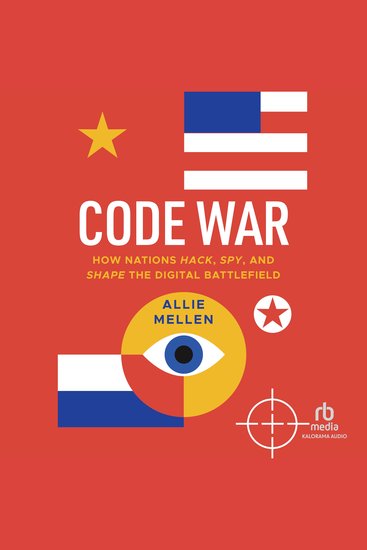
  • Code War - How Nations Hack Spy and Shape the Digital Battlefield - cover

    Code War - How Nations Hack Spy...

    Allie Mellen

    • 0
    • 0
    • 0
    Cyberattacks are the ultimate geopolitical weapon of the twenty-first century. They are used to damage presidential campaigns, shut down electric grids, sway public sentiment, and cost businesses and governments alike billions of dollars. 
    Popular culture portrays cyberattacks as unstoppable and mysterious actions taken by shadowy, unpredictable forces. 
    Code War: How Nations Hack, Spy, and Shape the Digital Battlefield shatters this depiction, revealing nation-state cyberattacks for what they are: calculated, measured actions to achieve state objectives. 
     
    World-renowned cybersecurity expert Allie Mellen draws on her extensive experience with nation-state cyberattacks and AI threats to break down how and why nations deploy cyberattacks in their own unique ways, driven by their military doctrine, national history, and, most importantly, geopolitical strategy. 
     
    Mellen deconstructs the most infamous cyberattacks of our time to reveal how and why attacks like Stuxnet, WannaCry, NotPetya, and the Sony Pictures hack happened and how their success altered the international landscape. 
    Code War also demonstrates how individuals, business professionals, and government officials can use this knowledge to understand and respond to the practical realities of nation-state cyberattacks.
    Ver libro
  • The Hitler Youth - How Germany Indoctrinated a New Generation - cover

    The Hitler Youth - How Germany...

    Julian Flanders

    • 0
    • 0
    • 0
    In this fascinating book, Julian Flanders examines the impact of the Hitlerjugend (Hitler Youth Movement) on Germany's young people and how it shaped German society under Adolf Hitler. By 1940 membership had reached eight million - more than 90 per cent of German children. Between 1933 and the outbreak of World War II in 1939, the movement drove a wedge between youth, the educational system, and even their own dissenting families, producing a generation of anti-intellectuals indoctrinated with Nazi ideology. On the eve of war, the Hitler Youth constituted the single most successful mass movement in the Third Reich and comprised many of its most committed Nazis. Members of Hitlerjugend went on to play a substantial role in World War II, as many underage troops fought and died for their country.
    Ver libro
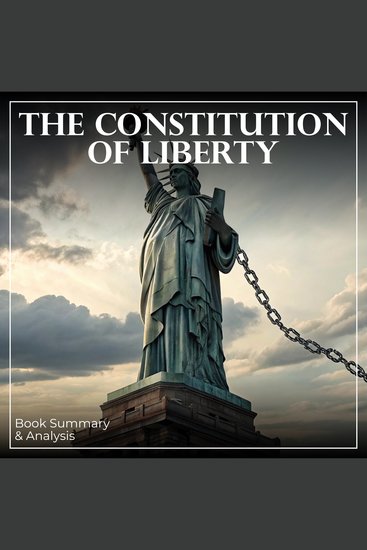
  • Constitution of Liberty The: Book Summary & Analysis - cover

    Constitution of Liberty The:...

    Briefly Summaries

    • 0
    • 0
    • 0
    This is a concise summary and analysis of The Constitution of Liberty, by Friedrich A. Hayek.
    It is not the original book and is not affiliated with or endorsed by Friedrich A. Hayek.
    Ideal those seeking a quick and insightful overview.
     
    The Constitution of Liberty is a timeless exploration of the principles of freedom, justice, and the rule of law in modern societies. This influential work provides a compelling argument for the preservation of individual liberty as the foundation of prosperity and social order. The book examines the relationship between government and the individual, emphasizing the importance of limited government and spontaneous order in fostering innovation and progress. Thought-provoking and meticulously reasoned, this work challenges readers to reflect on the philosophical and practical underpinnings of a free society.
    Ver libro
  • Coming Clean - The Rise of Critical Theory and the Future of the Left - cover

    Coming Clean - The Rise of...

    Eric Heinze

    • 0
    • 0
    • 0
    What has gone wrong with the left—and what leftists must do if they want to change politics, ethics, and minds. 


    Leftists have long taught that people in the West must take responsibility for centuries of classism, racism, colonialism, patriarchy, and other gross injustices. Of course, right-wingers constantly ridicule this claim for its "wokeness." 


    In Coming Clean, Eric Heinzerejects the idea that we should be less woke. In fact, we need more wokeness, but of a new kind. Yes, we must teach about these bleak pasts, but we must also educate the public about the left's own support for regimes that damaged and destroyed millions of lives for over a century—Stalin in the Soviet Union, Mao Zedong in China, Pol Pot in Cambodia, or the Kim dynasty in North Korea. 


    Criticisms of Western wrongdoing are certainly important, yet Heinze explains that leftists have rarely engaged in the kinds of open and public self-scrutiny that they demand from others. Citing examples as different as the Ukraine war, LGBTQ+ people in Cuba, the concept of "hatred," and the problem of leftwing antisemitism, Heinze explains why and how the left must change its memory politics if it is to claim any ethical high ground.
    Ver libro
  • The Shortest History of Ancient Rome - A Millennium of Western Civilization from Kingdom to Republic to Empire--A Retelling for Our Times (The Shortest History Series) - cover

    The Shortest History of Ancient...

    Ross King

    • 0
    • 0
    • 0
    "For who is so indifferent or indolent as not to wish to know by what means the Romans succeeded in subjecting nearly the whole inhabited world to their sole government―a thing unique in history?"―Polybius, second century BCE 
    Ancient Rome gave rise to the Roman Empire, one of history's greatest civilizations. It flourished for roughly five hundred years and, at its height, made up at least twenty percent of the world's population. It left an indelible mark on the world, shaping politics, laws, philosophy, and architecture, and gave us Roman numerals, the calendar, aqueducts, and concrete. Alongside the Greeks, the Romans laid the groundwork for Western civilization. 
    In this fast-paced history, Ross King introduces the emperors and warriors, the madmen and upstarts, and the artists and gladiators responsible for the empire's rise, reign, and ruin. King's vivid narrative offers fresh context for key political and religious events and paints lively portraits of Rome's most formidable and notorious leaders. Spanning over one thousand years of Roman history, The Shortest History of Ancient Rome brings an ancient civilization to vibrant life, elucidating why the Romans still matter to us today.
    Ver libro
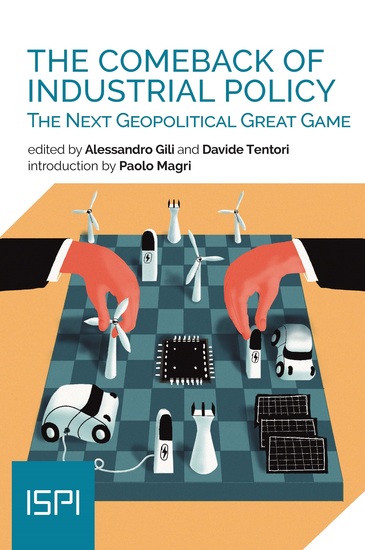
  • The Comeback of Industrial Policy - The Next Geopolitical Great Game - cover

    The Comeback of Industrial...

    Alessandro Gili, Davide Tentori

    • 0
    • 0
    • 0
    Industrial policies are the key element underlying today's geopolitical scramble and a pillar of national security.
    Reacting to Western weaknesses and bottlenecks in the global supply chains, highlighted by multiple shocks such as the pandemic, the war in Ukraine, and the recent Israel-Hamas war, the US in first place and the EU later have started to introduce new industrial legislation aimed at making up for lost ground with respect to other industrial
    powerhouses, such as China. Besides being policy tools to accelerate the green and digital transitions, however, the US Inflation Reduction Act and the Net Zero Industry Act, as well as the US and the EU Chips Acts, entail subsidies, local content requirements and export controls targeted at strengthening the domestic industrial base for critical technologies, fostering strategic autonomy and de-risking from excessive foreign dependencies.
    This race poses risks for the weaponisation of industrial policies and fragmentation of international trade and also potentially jeopardises technological development. How can we strike a balance between economic security and efficiency? Which sectors are the most critical and which ones are the leading global powers pursuing? What will the consequences be for global value chains and international trade? Is it possible to reach an agreement on rules for a new level playing field to prevent economic competition turning into economic warfare?
    Ver libro