Join us on a literary world trip!
Add this book to bookshelf
Grey
Write a new comment Default profile 50px
Grey
Subscribe to read the full book or read the first pages for free!
All characters reduced
Parallel Manipulator - Design and Applications for Advanced Robotic Systems - cover

Parallel Manipulator - Design and Applications for Advanced Robotic Systems

Fouad Sabry

Publisher: One Billion Knowledgeable

  • 0
  • 0
  • 0

Summary

Unlock the complexities of modern robotics with "Parallel Manipulator," an essential addition to the "Robotics Science" series by Fouad Sabry. This book delves into the intricate world of parallel manipulators, their applications, and their significance in the advancement of robotics technology. Ideal for professionals, students, and enthusiasts alike, this comprehensive guide offers insights that exceed the cost of purchase, empowering readers to master concepts critical to the field.
 
Chapters Brief Overview:
 
1: Parallel manipulator: Discover the foundational concepts and principles of parallel manipulators.
 
2: Industrial robot: Explore the integration of parallel manipulators in industrial automation.
 
3: Inverse kinematics: Understand the techniques for calculating robot movement and positioning.
 
4: Cartesian coordinate robot: Learn about the structure and functionality of Cartesian robots.
 
5: Robot kinematics: Examine the mathematical framework governing robot motion.
 
6: Linkage (mechanical): Analyze mechanical linkages and their role in robotic systems.
 
7: Degrees of freedom (mechanics): Investigate the significance of degrees of freedom in robotics.
 
8: Robot calibration: Grasp the methods for ensuring precision and accuracy in robots.
 
9: Delta robot: Study the design and applications of highspeed delta robots.
 
10: Serial manipulator: Delve into the characteristics of serial manipulators and their uses.
 
11: Kinematic pair: Learn about kinematic pairs and their importance in robot design.
 
12: Kinematic chain: Understand the connections in robotic structures through kinematic chains.
 
13: Robotic arm: Explore the various types and functionalities of robotic arms.
 
14: Mechanism (engineering): Discover the engineering principles behind mechanical mechanisms.
 
15: Kinematics equations: Examine the kinematic equations that describe robot movement.
 
16: Cable robots: Investigate the unique features and applications of cabledriven robots.
 
17: Large workspace robot: Learn about robots designed for extensive operational spaces.
 
18: Fivebar linkage: Explore the mechanics and applications of the fivebar linkage system.
 
19: Freedom and constraint topologies: Understand the relationships between freedom and constraints in design.
 
20: Cartesian parallel manipulators: Analyze the innovative design of Cartesian parallel manipulators.
 
21: Gimbal lock: Delve into the challenges posed by gimbal lock in robotics.
 
Equip yourself with cuttingedge knowledge and stay ahead in the rapidly evolving field of robotics. This book not only provides foundational theories but also practical applications, making it a crucial resource for anyone looking to enhance their expertise. Your investment in "Parallel Manipulator" is an investment in your future in robotics.
Available since: 01/28/2025.
Print length: 179 pages.
Other books that might interest you

  • How to record an audiobook - A step-by-step guide to bringing your audiobook to life - cover

    How to record an audiobook - A...

    Elisabeth Valentine Kristiansen

    • 0
    • 0
    • 0
    Do you want to learn how to record an audiobook people will actually buy, listen to and enjoy?  
    How to record an audiobook. A step-by-step guide to bringing your audio book to life is a comprehensive guide that takes authors though the process of creating an audiobook from start to finish. It will help you prepare, practise, record, edit and publish your audiobook. 
    This book gives you the knowledge and pratical skills to create an audiobook that people will actually listen to and enjoy. It will help you avoid the common mistakes that could cost you time, money and energy. 
    The book takes you through the 5 parts to audiobook creation:The Text: How to work with the words of your book, creating the audiobook script, prepare for and practise reading out-loud, how to deal with jargon, footnotes, illustrations etc and how to deliver it in a compelling way.The Voice: How you need to care for it, how to warm up, what to do if you get a cold etc.The Mindset: Setting yourself up for success and how to avoid the common pitfalls of recording performance.The Studio: Studio basics, the equipment and how use it, choosing studio vs homestudio, recording techniques, studio checklists,The Post production and getting it published it on Audible, Amazon and Itunes. 
    Writing a book is one of the best ways to establish yourself as an expert in your field! With the fast-growing increase of audiobook sales and popularity, having an audio book is essential and YOU should be the one to narrate it. Your voice is a big part of your brand and when you narrate your book, you’re speaking directly to your audience, which builds their trust in you as an authority. 
    Let your audience get to know, like and trust you by being the voice, that brings your book to life.
    Show book
  • Mars and Its Mystery - What the Telescope Showed of the Canals - cover

    Mars and Its Mystery - What the...

    Edward Sylvester Morse

    • 0
    • 0
    • 0
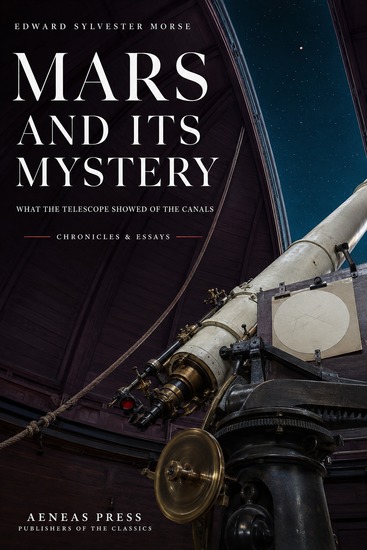
    The canals of Mars as the astronomers were arguing about them, by a zoologist who had spent years in Japan and looked at the evidence with an outsider's eye. Morse, who had watched Mars through Lowell's telescope at Flagstaff, came down firmly on Lowell's side. This edition binds 60 plates of painting with the text, among them Friedrich, Church and Redon, alongside 12 illustrations restored and coloured for this volume.
    Show book
  • IGNOU MCA Discrete Mathematics Previous Years Unsolved Papers MCS 212 - cover

    IGNOU MCA Discrete Mathematics...

    Manish Soni

    • 0
    • 0
    • 0
    Welcome to Discrete Mathematics: Theory, Problems, and Solutions, a comprehensive resource designed to enhance your understanding of this fundamental area of mathematics. This book is specifically tailored for students, educators, and enthusiasts seeking to deepen their grasp of discrete mathematics through the lens of unsolved and challenging questions.This book seeks to bridge that gap. By presenting a collection of IGNOU-MCS 212 PREVIOUSLY UNSOLVED QUESTION PAPERS(MCA-NEW), we provide a unique opportunity to engage with the material in a new and dynamic way. Each question is carefully selected to challenge and provoke thought, encouraging a deeper exploration of the subject matter.Our goal is not only to present problems but to foster a deeper appreciation for the beauty and utility of discrete mathematics. We hope that by working through these questions, you will develop a stronger intuition for the subject and acquire problem-solving skills that will serve you well in both academic and professional contexts.We extend our heartfelt gratitude to the numerous educators and students who have contributed to the evolution of this book. Their insights and feedback have been invaluable in shaping its content. We also acknowledge the efforts of the authors and researchers whose work has inspired the selection of these problems.As you embark on this journey through the pages of Discrete Mathematics: Theory, Problems, and Solutions, we encourage you to approach each problem with curiosity and determination. Embrace the challenge, and allow the process of solving these questions to deepen your understanding and appreciation of discrete mathematics.May this book serve as a valuable tool in your educational endeavors and inspire a lifelong interest in the fascinating world of discrete mathematics.
    Show book
  • A Little Cocaine to Loosen My Tongue - cover

    A Little Cocaine to Loosen My...

    Sigmund Freud

    • 0
    • 0
    • 0
    In the 1880s, Freud discovered cocaine and became enthusiastic about what was not yet considered a party drug. Favoring the use of cocaine in the treatment of neurasthenia, as an energizer, or as an anesthetic, Freud made a creative and fashionable use of it, heralding practices that our society knows well. Several surprising texts are gathered here on cocaine. Freud recounts the use of coca in history, particularly in South America, from where it was imported. In Cocaine Addiction and Cocaine Phobia, the inventor of psychoanalysis defended coca against its accusers as a dangerous product. Finally, in the letters to Martha Bernays, his future wife, we discover an intimate and loving Freud, telling how he escaped boring dinners thanks to his dear magic substance.
    Show book
  • The Catalyst - RNA and the Quest to Unlock Life's Deepest Secrets - cover

    The Catalyst - RNA and the Quest...

    Thomas R. Cech

    • 0
    • 0
    • 0
    For over half a century, DNA has dominated science and the popular imagination as the "secret of life." But over the last several decades, a quiet revolution has taken place. In a series of breathtaking discoveries, the biochemist Thomas R. Cech and a diverse cast of brilliant scientists have revealed that RNA—long overlooked as the passive servant of DNA—sits at the center of biology's greatest mysteries: How did life begin? What makes us human? Why do we get sick and grow old? In The Catalyst, Cech finally brings together years of research to demonstrate that RNA is the true key to understanding life on Earth, from its very origins to our future in the twenty-first century. 


    A gripping journey of discovery, The Catalyst moves from the early experiments that first hinted at RNA's spectacular powers, to Cech's own paradigm-shifting finding that it can catalyze cellular reactions, to the cutting-edge biotechnologies poised to reshape our health. We learn how RNA may have jump-started life itself, and how, at the same time, it can cut our individual lives short through viral diseases and cancer. We see how RNA is implicated in the aging process and explore the darker depths of the supposed fountain of youth, telomerase. And we catch a thrilling glimpse into how RNA-powered therapies may enable us to improve and even extend life beyond nature's current limits.
    Show book
  • The Last Dark Sky - How We Are Lighting Up the Night - cover

    The Last Dark Sky - How We Are...

    Douglas Donovan

    • 0
    • 0
    • 0
    This audiobook is narrated by an AI Voice. 
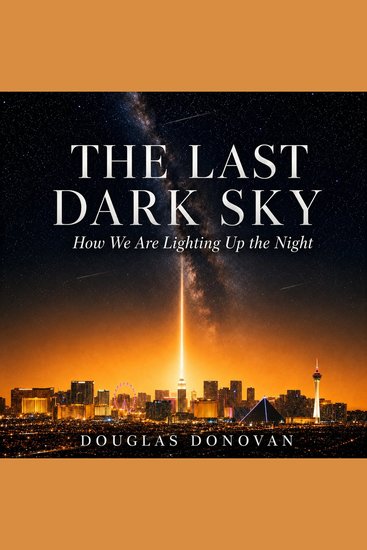
    It is midnight in Las Vegas, and a beam of light powerful enough to be seen from space is shooting straight up into the desert sky — drawing insects by the hundreds of thousands, and the bats that feed on them, into an ecosystem that exists for no reason other than that we built a light and pointed it upward. A continent away, an astronomer is waiting patiently for photons that have traveled for eleven billion years, hoping nothing gets in their way before they land. 
     
    For nearly the whole of human history, the night sky was not a special occasion — it was the Milky Way overhead, thousands of stars, a shared inheritance that guided sailors, timed harvests, and filled every mythology on Earth. Today, a third of humanity, and four out of five people in North America, can no longer see it from home. 
     
    *The Last Dark Sky* tells the story of how we got here — from whale-oil lamps and gaslit boulevards to Edison’s bulb, the neon strip, and the Las Vegas beam that started it all — and then takes an unexpected turn skyward. Because just as artificial light finished conquering our own backyards, a new threat arrived from orbit: tens of thousands of satellites, streaking across telescope images and threatening the very darkness that billion-dollar observatories were built in remote deserts to protect. 
     
    Blending history, astronomy, ecology, and hard-won optimism, this is the story of a species racing to see farther into the universe than ever before — while making it harder, with every passing year, to simply step outside and look up. 
    The night sky was never really ours to keep. The only question this book leaves you with is whether we’re willing to give any of it back.
    Show book