¡Acompáñanos a viajar por el mundo de los libros!
Añadir este libro a la estantería
Grey
Escribe un nuevo comentario Default profile 50px
Grey
Suscríbete para leer el libro completo o lee las primeras páginas gratis.
All characters reduced
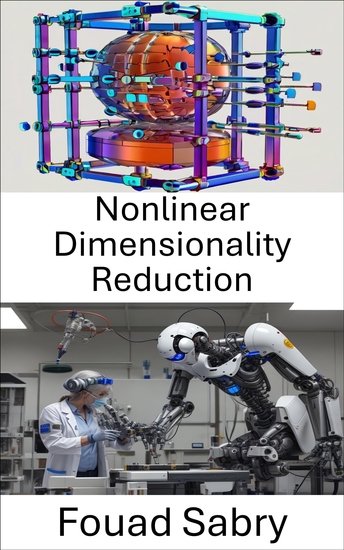
Nonlinear Dimensionality Reduction - Advanced Techniques for Enhancing Data Representation in Robotic Systems - cover

Nonlinear Dimensionality Reduction - Advanced Techniques for Enhancing Data Representation in Robotic Systems

Fouad Sabry

Editorial: One Billion Knowledgeable

  • 0
  • 0
  • 0

Sinopsis

1: Nonlinear dimensionality reduction: Explore foundational concepts and the importance of reducing highdimensional data for easier analysis.
 
2: Linear map: Introduces the basics of linear mapping and its role in reducing data dimensionality in machine learning.
 
3: Support vector machine: Learn how support vector machines apply dimensionality reduction in classification tasks and pattern recognition.
 
4: Principal component analysis: Delve into PCA's technique for transforming data into a set of linearly uncorrelated variables.
 
5: Isometry: Examine how isometric techniques preserve distances between points while reducing data dimensions.
 
6: Dimensionality reduction: Understand the broader scope of dimensionality reduction and its applications in various fields.
 
7: Semidefinite embedding: Study semidefinite programming and its connection to dimensionality reduction methods.
 
8: Kernel method: Discover the power of kernel methods in handling nonlinear relationships in data reduction.
 
9: Kernel principal component analysis: Explore KPCA’s capability to perform dimensionality reduction in a highdimensional feature space.
 
10: Numerical continuation: Learn how numerical continuation techniques assist in understanding highdimensional systems.
 
11: Spectral clustering: Understand how spectral clustering leverages dimensionality reduction to group similar data points.
 
12: Isomap: A look at Isomap, a technique that combines multidimensional scaling with geodesic distances for dimensionality reduction.
 
13: Johnson–Lindenstrauss lemma: Delve into the mathematics of the JohnsonLindenstrauss lemma, which ensures dimensionality reduction maintains geometric properties.
 
14: LinearnonlinearPoisson cascade model: Study how this model integrates linear and nonlinear methods in dimensionality reduction.
 
15: Manifold alignment: Learn about manifold alignment and its importance in aligning data from different domains in dimensionality reduction.
 
16: Diffusion map: Understand how diffusion maps use the diffusion process for dimensionality reduction in complex datasets.
 
17: Tdistributed stochastic neighbor embedding: Explore tSNE's ability to reduce dimensionality while preserving local structures in data.
 
18: Kernel embedding of distributions: Study how kernel embedding allows for dimensionality reduction on distributions, not just datasets.
 
19: Random projection: A practical approach to dimensionality reduction that relies on random projections for fast computation.
 
20: Manifold regularization: Learn about manifold regularization techniques and their impact on learning from highdimensional data.
 
21: Empirical dynamic modeling: Discover how empirical dynamic modeling aids in dimensionality reduction through time series data analysis.
Disponible desde: 17/12/2024.
Longitud de impresión: 320 páginas.

Otros libros que te pueden interesar

  • Holistic Homesteading - A Guide to a Sustainable and Regenerative Lifestyle - cover

    Holistic Homesteading - A Guide...

    Roxanne Ahern

    • 0
    • 0
    • 0
    Make healthier life choices to heal yourself and the environment through self-sufficiency. Holistic Homesteading by Roxanne Ahern provides the tools for living slowly, intentionally, and better through permaculture, edible gardening, and organic farming. 


    Live the Homestead Life. Ahern's book guides new and seasoned homesteaders in improving personal and environmental health. Holistic Homesteading is geared toward people who are interested in pursuing intentional lifestyles and organic farming methods. It is both for those who have access to land and those who are interested in retrofitting urban and suburban lifestyles and landscapes to shift towards sustainability. 


    Utilize Sustainable Organic Farming Techniques. Learn about permaculture design, holistic nutrition, and sustainable farming in rural and urban settings. Holistic Homesteading covers how to use organic soil and zero chemicals to grow the best vegetables and fruits, responsible and humane animal husbandry that improves the ground and carbon sequestration, as well as the best canning and preserving techniques. Ahern also provides tips on safely foraging for flowers and mushrooms.
    Ver libro
  • Mindful Living: Simple Steps to Save Our Planet - "Embrace Mindful Living! Access impactful audio lessons to effortlessly contribute to saving our planet" - cover

    Mindful Living: Simple Steps to...

    Dorian Halesworth

    • 0
    • 0
    • 0
    "Mindful Living: Simple Steps to Save Our Planet" 
    Embrace Mindful Living for a Sustainable Future: A Simple, Yet Profound Guide with Clear Insights and Explanations 
    Are you eager to enhance your understanding of transforming daily habits into sustainability practices and contribute positively to our planet’s health? 
    Looking for a comprehensive resource that offers all the essential insights for a sustainable lifestyle? 
    Your search ends here! 
    This guide is your ultimate companion for deepening your awareness, applying sustainable strategies, and engaging in practical exercises. With this, you're set for meaningful change. 
    Key Highlights of This Enlightened Guide: 
    - In-depth insights into transforming daily habits for a sustainable future. 
    - Detailed explanations for adopting eco-friendly practices. 
    - Effective strategies for integrating sustainability into everyday life. 
    Our guide sets itself apart through comprehensive coverage, ensuring your efforts lead to impactful results. Concepts are thoroughly explored rather than just touched upon. 
    Please note this guide is an independent resource designed for your benefit, unaffiliated with any official entity. 
    Crafted with a clear structure and straightforward language, our guide ensures seamless transitions between topics. Say farewell to complex terminology and welcome clear, precise, and actionable content. 
    Why wait? Click the BUY NOW button, secure your guide, and begin your journey towards a sustainable future today! 
    Begin the transformation towards mindful living now!
    Ver libro
  • The Dopamine Trap - The Clinical Truth About the Modern Brain - cover

    The Dopamine Trap - The Clinical...

    Gregory Bicaj

    • 0
    • 0
    • 0
    You are not weak. You are not lazy. You are not broken. Your brain is simply running the wrong program for the world it lives in.
    In The Dopamine Trap, Albanian-Swiss neuroscientist and clinical psychologist Gregory Bicaj draws on twenty years of laboratory research and direct clinical work to explain why modern life leaves so many people anxious, distracted, exhausted, and strangely empty—despite having more comfort, convenience, and entertainment than any previous generation.
    The answer lies in dopamine. Not the "pleasure chemical" of popular mythology, but the brain's engine of wanting, anticipation, and craving. Smartphones, social media feeds, news cycles, and streaming platforms are not neutral tools. They are environments engineered to keep the brain's reward system perpetually activated—producing a state of chronic overstimulation that quietly degrades focus, mood, patience, creativity, and the capacity for genuine satisfaction.
    Bicaj introduces his "Three Brains Principles"—a working model grounded in evolutionary neuroscience—to show that most suffering and most foolish decisions arise not from personal failure, but from the wrong brain system being in charge at the wrong moment. With this framework, the chaos of compulsive phone-checking, emotional reactivity, and chronic restlessness becomes not a character flaw but a legible biological problem with practical solutions.
    Moving from neuroscience to clinic to daily life, The Dopamine Trap offers a complete, step-by-step path back to a mind that can think deeply, rest fully, and feel real pleasure again. Readers will learn:
    
    - Why dopamine fuels wanting far more than liking—and how that gap traps modern people in habits they do not enjoy
    - How variable-ratio reinforcement makes smartphones function like slot machines, and why willpower alone cannot break the cycle
    - How to measure their true "stimulation load" using practical audits from cognitive psychology research
    - How to run a 48-hour diagnostic reset that reveals the difference between preference and dependence
    - How to rebuild the brain's default mode network—the system responsible for creativity, self-reflection, and meaning-making—through structured rest
    - How to reintroduce pleasure safely without reigniting compulsive patterns
    - How to redesign their environment so that the easiest path leads toward focus instead of distraction
    - Why boredom is not the enemy of a meaningful life but one of its most important preconditions
    - A complete 30-day discipline playbook built on implementation intentions, identity-based change, and habit science
    Through vivid case studies, landmark research from Bruce Alexander, Anna Lembke, Gloria Mark, Anders Ericsson, Mihaly Csikszentmihalyi, and others, and concrete clinical experience, Bicaj shows that recovery is not about eliminating pleasure or achieving monastic discipline. It is about recalibrating a reward system that has been pushed far beyond its design limits—so that ordinary life, real conversation, sustained thought, and quiet moments can feel like enough again.
    For readers of Jonathan Haidt and Gabor Maté, The Dopamine Trap is both a rigorous explanation and a compassionate, practical guide. The goal is not a perfect brain. It is a freer one.
    Ver libro
  • Human Righats - cover

    Human Righats

    Ismail Serageldin

    • 0
    • 0
    • 0
    Ismail Serageldin is the Co-Chair of the Board of Trustees of the Nizami  Ganjavi International Center (NGIC).  He was the Founding Director of the Bibliotheca Alexandrina, the New Library of Alexandria in Egypt (2001-2017).  Before that he was the Vice-President of the World Bank (1993-2000) in charge of Environmentally Sustainable Development (ESD), and the Chairman of the Consultative Group for International Agricultural Research (CGIAR).  He served on many international committees and commissions, including serving as a member of the High Level group for the Alliance of Civilizations convened by the Secretary General of the United Nations (2006-2007).   He was also a distinguished professor at Wageningen University and the College de France. He is a member of many Academies and serves on many commissions, boards, and advisory committees for academic, research, and NGO institutions. He has lectured widely and published more than 100 books and 500 articles. He has received many awards from many countries and has received more than 40 honorary doctorates from all over the world.
    Ver libro
  • Animal Crossing - cover

    Animal Crossing

    Kelsey Lewin

    • 0
    • 0
    • 0
    Before the world of Animal Crossing became a pandemic lifeline for millions, the "social sim" communication game Dо̄butsu no Mori, or "Animal Forest," debuted in 2001 on Nintendo 64 in Japan, then once again in 2002 on GameCube to critical and commercial success all over the world. 


    An open-ended casual game ahead of its time, Animal Crossing set the stage for the series's many incarnations to come with its focus on building community and friendship, its in-game currency of Bells, and its village of Animalese-speaking friends like Tom Nook, K. K. Slider, and the mean Mr. Resetti. You could visit the villages of your friends and give them gifts—all without being connected to the internet. 


    Video game preservationist and historian Kelsey Lewin tells the story of how a mundane-sounding game full of bug-catching, letter-writing, and furniture-collecting became one of Nintendo's best-loved franchises, with Animal Crossing: New Horizons eclipsing Super Mario Bros. for all-time sales in Japan, unlocking gaming's massive potential to tap into our desire to plant trees, find friends, and make the world a better place.
    Ver libro
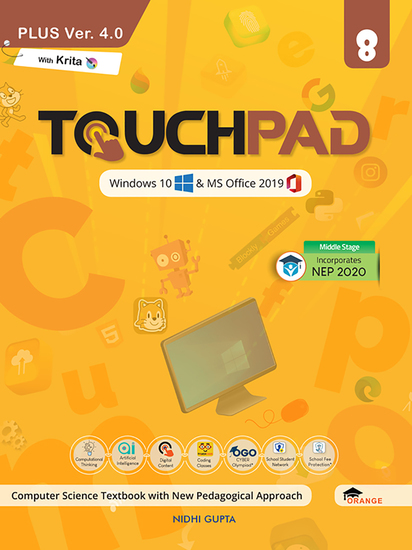
  • Touchpad Plus Ver 40 Class 8 - cover

    Touchpad Plus Ver 40 Class 8

    Nidhi Gupta

    • 0
    • 0
    • 0
    Computer Science Textbook with New Pedagogical Approaches 
    
    KEY FEATURES 
    - National Education Policy 2020 
    - Tech Funda: This section provides a practical information or tip to the students. 
    - Clickipedia: This section provides interesting computer facts. 
    - Lab Session: This is a lab activity to develop practical skills. (Subject Enrichment) 
    - Explore More: This section contains supplement topics for add-on knowledge. 
    - QR Code: Scan the QR Code given on the first page of each chapter to start chapter animation. 
    - Mind Boggler: This section has puzzle or fun based activity to help understand the concepts better. 
    
    DESCRIPTION 
    Computer technology has become essential and an integral part of life at work, in recreation, social networking and education too. With the constant development of new technology, it has become more significant in helping and preparing students for jobs. Computers have revolutionised the way education is imparted to children. 
    
    Touchpad Plus Version 4.0 is a complete computer science curriculum solution for grades 1-8. It is based on Windows 10 and MS Office 2019, with new and future-ready content. Fun is the most important element of learning. Keeping in mind the concept of Joyful Learning, varied activities have been designed based on multiple intelligences and 21st century skills for holistic development. 
    
    The books have a conversational style introduction of each chapter to make learning fun and engaging. The topics and their approaches are integrated in different themes as per ICT learning. Grade I and II books have four-line writing space to enhance writing skills in children. Each book is accompanied by digital learning resources that offer interesting animation and interactive tests for the student to supplement classroom learning with independent learning. 
    
    The books are curated in a way that they make students and teachers equal partners in the learning process and take learning beyond classroom. We welcome and look forward to all meaningful and valuable suggestions for improving the book 
    
    WHAT WILL YOU LEARN 
    You will learn about: 
    - Digital World 
    - Cyber World 
    - Coding World 
    - Computational Thinking 
    - Artificial Intelligence 
    
    WHO THIS BOOK IS FOR 
    Grade 8 
    
    TABLE OF CONTENTS 
    1. Computer Networking 
    2. Krita- Image Editing 
    3. Trending Technologies 
    4. Images, Links & Frames in HTML5 
    5. Forms in HTML5 
    6. Algorithmic Intelligence 
    7. Loops in Python 
    8. Functions and String in Python 
    9. List in Python 
    10. Domains of AI 
    11. Future of AI 
    ADD-ONS 
    ASSESSMENTS
    Ver libro