Junte-se a nós em uma viagem ao mundo dos livros!
Adicionar este livro à prateleira
Grey
Deixe um novo comentário Default profile 50px
Grey
Assine para ler o livro completo ou leia as primeiras páginas de graça!
All characters reduced
New Imperialism - The Global Dynamics of 21st Century Expansion - cover
LER

New Imperialism - The Global Dynamics of 21st Century Expansion

Fouad Sabry

Editora: One Billion Knowledgeable

  • 0
  • 0
  • 0

Sinopse

Explore the resurgence of imperialistic practices in "New Imperialism," a pivotal volume in the "Political Science" series. This essential read examines the economic, political, and cultural dimensions of contemporary imperialism, offering insights into modern power dynamics and international relations.
 
1: New Imperialism: Unpack New Imperialism's emergence and relevance in today’s global landscape.
 
2: British Empire: Explore the British Empire's legacy and its influence on modern imperialistic patterns.
 
3: Colonialism: Delve into colonialism's foundational principles and their evolution over time.
 
4: Imperialism: Examine the broader concept of imperialism, tracing its development and variations.
 
5: Western Imperialism in Asia: Analyze Western imperialism's economic and political consequences in Asia.
 
6: Treaty of Shimonoseki: Investigate how the Treaty of Shimonoseki shaped modern imperialistic interactions.
 
7: Pax Britannica: Understand the Pax Britannica era and its influence on global politics and economics.
 
8: Scramble for Africa: Explore the Scramble for Africa and its implications for modern imperialism.
 
9: Decolonization: Study decolonization's influence on contemporary imperialistic practices.
 
10: Colonial Empire: Examine the structure and impact of colonial empires on modern imperialism.
 
11: History of Colonialism: Gain insight into colonialism’s history and its role in New Imperialism’s resurgence.
 
12: National Border Changes (1815-1914): Explore the geopolitical shifts that have influenced modern imperialism.
 
13: Informal Empire: Examine informal empire concepts and their impacts on global politics.
 
14: Late Modern Period: Understand the late modern period's contribution to New Imperialism's evolution.
 
15: Maritime Power: Investigate maritime power's role in imperialistic strategies and global trade.
 
16: Japanese Colonial Empire: Analyze the Japanese colonial empire's influence on regional and global imperialism.
 
17: International Relations (1814–1919): Study key historical trends shaping modern imperialism.
 
18: Anti-Imperialism: Explore anti-imperialism's rise and its impact on contemporary resistance movements.
 
19: Timeline of European Imperialism: Trace significant events in a timeline of European imperialism.
 
20: Modern Great Powers: Examine modern great powers and their role in imperialistic dynamics.
 
21: European Colonisation of Southeast Asia: Study the effects of European colonization in Southeast Asia on imperialism.
 
"New Imperialism" offers more than historical analysis; it provides a critical framework for understanding today’s international relations. With comprehensive coverage and expert insights, this book is an invaluable resource for professionals, students, and enthusiasts seeking to grasp modern imperialism's complexities.
Disponível desde: 17/10/2024.
Comprimento de impressão: 552 páginas.

Outros livros que poderiam interessá-lo

  • Pipestone - My Life in an Indian Boarding School - cover

    Pipestone - My Life in an Indian...

    Laurence M. Hauptman, Adam...

    • 0
    • 0
    • 0
    Best known as a leader of the Indian takeover of Alcatraz Island in 1969, Adam Fortunate Eagle now offers an unforgettable memoir of his years as a young student at Pipestone Indian Boarding School in Minnesota. In this rare firsthand account, Fortunate Eagle lives up to his reputation as a "contrary warrior" by disproving the popular view of Indian boarding schools as bleak and prisonlike. 


    Fortunate Eagle attended Pipestone between 1935 and 1945, just as Commissioner of Indian Affairs John Collier's pluralist vision was reshaping the federal boarding school system to promote greater respect for Native cultures and traditions. But this book is hardly a dry history of the late boarding school era. Telling this story in the voice of his younger self, the author takes us on a delightful journey into his childhood and the inner world of the boarding school. Along the way, he shares anecdotes of dormitory culture, student pranks, and warrior games. Although Fortunate Eagle recognizes Pipestone's shortcomings, he describes his time there as nothing less than "a little bit of heaven." 


    Were all Indian boarding schools the dispiriting places that history has suggested? This book allows listeners to decide for themselves.
    Ver livro
  • Doing Nothing Is No Longer an Option - One Woman's Journey into Everyday Antiracism - cover

    Doing Nothing Is No Longer an...

    Jenny Booth Potter

    • 0
    • 0
    • 0
    During a bus ride with a group of fellow college students, Jenny Booth Potter came to a life-changing realization. She decided that racism in all its forms—in policies and systems, in organizations and churches, in neighborhoods and families–could no longer be tolerated. And even though Jenny didn't know what to do about racism, she was certain of one thing: doing nothing is no longer an option. That declaration Jenny made to her peers was more than seven words uttered on a bus. It was a vow, a lifetime commitment to seek racial justice.
    With candor and humility, Jenny shares her very imperfect but relentless journey of growing in awareness of racism, of reckoning with her own white privilege, and of learning how to be an antiracism advocate alongside her young family. If you're anything like Jenny was on that bus—overwhelmed by the enormity of racism and compelled to do something, but uncertain if you can actually make any difference—then this book is for you. Join Jenny and see for yourself what everyday antiracism looks like.
    Ver livro
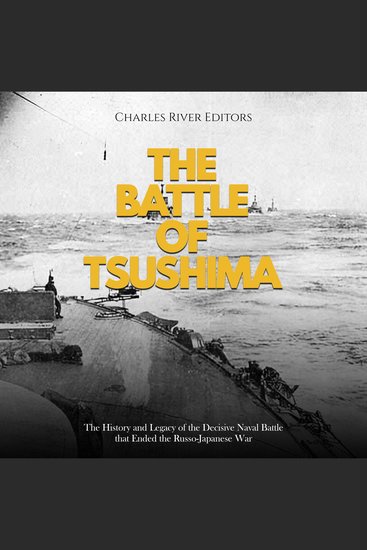
  • Battle of Tsushima The: The History and Legacy of the Decisive Naval Battle that Ended the Russo-Japanese War - cover

    Battle of Tsushima The: The...

    Editors Charles River

    • 0
    • 0
    • 0
    By the end of the 19th century, the Russian Empire seemed to be at the zenith of its power and reach. It was the largest country in the world, stretching from the Black Sea on the eastern edge of Europe to the Bering Straits in the extreme east of Asia. Even by rail, it took over ten days to travel from one side of the country to the other. Its standing army of over 1.3 million men was the largest in the world, and the “Russian Steamroller” was regarded as one of the most potent military forces available to any ruler. 
    	The sudden and unexpected rise of Japanese influence in the region was opposed by Russia, Germany, and France, who threatened war with Japan unless the terms that ended the war were changed. Reluctantly, the Japanese agreed to withdraw from Manchuria, but they never forgot or forgave what they saw as the way in which the unwarranted European influence was used against them.  
    	Japanese suspicions were reinforced when Russia subsequently concluded a treaty of alliance with China and forced the tottering regime to grant a lease of the Liaodong peninsula to Russia. Russian troops occupied Port Arthur and began to build massive fortifications around the city. The port was linked to Russia by a new railroad that connected to the Trans-Siberian Railroad at the Chinese city of Harbin. Russia also insisted on the right to use its troops to defend the new railroad throughout its length in China. Although the terms by which Russia leased the port from China were temporary, it was clear that Port Arthur was intended to become Russia’s new warm-water port on the Pacific.  
    	To most observers, it seemed clear that Japan and Russia were destined to come into conflict in Korea and Manchuria. Both empires were set on expansion, and both saw these areas as important. However, Russia’s vastly larger population, army, and navy seemed to make it inevitable that Japan would lose if the conflict escalated into war.
    Ver livro
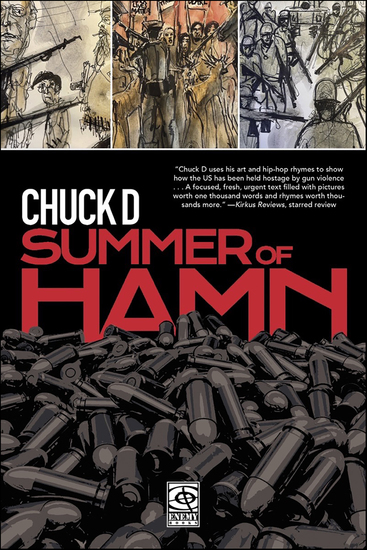
  • Summer of Hamn - cover

    Summer of Hamn

    Chuck D

    • 0
    • 0
    • 0
    The tragedy of gun violence is depicted in annotated illustrations that illuminate a society gone hamn; from legendary hip-hop artist Chuck D (Public Enemy, Prophets of Rage, etc.)—Selected for the In the Margins Book Awards 2024 Nonfiction Recommendation List"With his latest work of graphic nonfiction, Chuck D uses his art and hip-hop rhymes to show how the US has been held hostage by gun violence and a growing sense of hopelessness . . . A focused, fresh, urgent text filled with pictures worth 1,000 words and rhymes worth thousands more." —Kirkus Reviews, Starred ReviewIN SUMMER OF HAMN, legendary hip-hop artist Chuck D takes on gun violence with rhythmic, inventive writing and passionately raw art. He has long spoken out against gun violence, including how it intersects with rap and hip-hop culture. Summer of Hamn is the bound journal Chuck D carried with him in the summer of 2022—a summer marked by a particularly high rate of gun death.In these pages, victims are memorialized, politicians are skewered, and vehement pleas to eradicate gun violence are made. Jaw-dropping statistics (40% of all personal guns in the world are owned by US citizens; there are 100 million more guns in the US than there are citizens) intersect with poetic reflections ("Another mall shooting seems normalized in Columbus / Raining outside in Ohio / Raining inside folks panic / Inside hearing shots bust"), all written in Chuck's hand over vibrant, utterly original, neoexpressionist ink and watercolor art.This book is the follow-up to STEWdio the debut trilogy on Chuck D's Enemy Books imprint, in which he invented a new medium—the "naphic grovel"—a bound journal brimming with his observations and reflections of current events in both art and prose. Summer of Hamn is the second release on the imprint.
    Ver livro
  • WORKBOOK & SUMMARY for How to Win Friends and Influence People by Dale Carnegie - cover

    WORKBOOK & SUMMARY for How to...

    BOOK TIGERS

    • 0
    • 0
    • 0
    Would you like to have more friends? 
    Would you like to be able to influence personal and business relationships to your advantage? 
    This book will show you exactly how to do it! 
    We all want friends and successful business relationships, but sometimes it can be challenging, especially if we are not from the same backgrounds. Knowing how to deal effectively with different people and having the confidence to interact effectively with them is a key skill for all of us if we want to get on in life and it can be learned quite quickly when you have the right tools at your disposal. 
    Inside the pages of the Workbook and Summary, of How to Win Friends and Influence People by Dale Carnegie, you will find out how he accomplished his goals and can help you reach yours, with chapters about:The fundamentals of dealing with othersHow to get people to like youMaking a great first impressionLearning the art of conversationAvoid making enemiesAdmitting your mistakes and when you are wrongDeveloping leadership qualitiesAnd much more… 
    This how to win friends and influence people book is a great place to start if you want to make serious changes in your life that will change the way you interact with the people you come into contact with. 
    It provides top tips on influencing others and getting them to see you as someone they would want to know, giving you the best chances of ultimate success in whatever you do! 
    Disclaimer: This is an UNOFFICIAL Workbook and summary, not the original book. 
    It is designed to record all the key points of the original and will provide you with an overview before or after reading the original.
    Ver livro
  • Take a ThoughtWholesome and Good - cover

    Take a ThoughtWholesome and Good

    Larry Troxel

    • 0
    • 0
    • 0
    Far from being a poet of note or the wordsmith I wish to be, I’ve been flattered by others asking how I do it. Without the benefit of salient literary instruction, I’m urged to write as providential inspiration may move while caring immensely about the outcome. I have learned that writing poems is cathartic and a wonderful laxative for the mind. Thus, to that question, I responded with the poem Take a Thought…Wholesome and Good to describe my way. That isn’t to say all poets follow the same creative pattern and surely they don’t—I boast only of myself.
    Ver livro