Junte-se a nós em uma viagem ao mundo dos livros!
Adicionar este livro à prateleira
Grey
Deixe um novo comentário Default profile 50px
Grey
Assine para ler o livro completo ou leia as primeiras páginas de graça!
All characters reduced
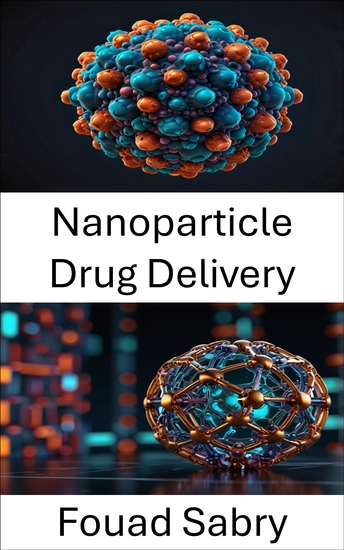
Nanoparticle Drug Delivery - Advancements in Targeted Therapeutic Strategies and Delivery Systems - cover
LER

Nanoparticle Drug Delivery - Advancements in Targeted Therapeutic Strategies and Delivery Systems

Fouad Sabry

Editora: One Billion Knowledgeable

  • 0
  • 0
  • 0

Sinopse

In "Nanoparticle Drug Delivery," Fouad Sabry delves into the cuttingedge world of nanotechnology and its applications in drug delivery systems. This book provides a comprehensive understanding of nanoparticles, from their role in gene therapy to their impact on braintargeted drug delivery. Ideal for professionals, students, and anyone fascinated by the intersection of science and medicine, this work serves as an invaluable resource on nanocapsules
 
Nanoparticle drug delivery-This chapter introduces the concept of nanoparticles and their role in drug delivery, highlighting their ability to improve therapeutic outcomes
 
Polystyrene (drug delivery)-Learn about the applications of polystyrene nanoparticles, particularly in targeted drug delivery systems for various medical conditions
 
Vectors in gene therapy-This chapter explores the use of nanoparticles as vectors for gene therapy, offering insights into their effectiveness in delivering genetic material to cells
 
Poly(amidoamine)-Poly(amidoamine) dendrimers are examined here as key nanocarriers in drug delivery, focusing on their versatility and biocompatibility
 
Lipidbased nanoparticle-Lipid nanoparticles are discussed for their use in delivering lipophilic drugs, showcasing their potential for controlled drug release
 
Nanocarrier-Explore the different types of nanocarriers, including their structure and functionality, and their critical role in the transport of drugs
 
Gold nanoparticles in chemotherapy-This chapter focuses on the application of gold nanoparticles in chemotherapy, detailing their ability to target cancer cells and enhance treatment efficacy
 
Nanocapsule-Learn about nanocapsules—one of the most promising drug delivery systems, highlighting their structure, function, and therapeutic potential
 
Hamid Ghandehari-A detailed look at Hamid Ghandehari's pioneering work in nanotechnology, particularly his contributions to nanoparticlebased drug delivery
 
Nanoparticles for drug delivery to the brain-This chapter addresses the challenges and advancements in using nanoparticles to deliver drugs across the bloodbrain barrier
 
Cytokine delivery systems-Investigate the role of nanoparticles in delivering cytokines, molecules crucial for immune response, and their therapeutic potential
 
Aquasome-Explore aquasomes, a type of nanoparticle that offers enhanced stability and controlled drug release, especially in aqueous environments
 
Nanomedicine-This chapter provides a broader view of nanomedicine, discussing its application in diagnostics, treatment, and the future of healthcare
 
Drug carrier-A deep dive into the various types of drug carriers, with a focus on how nanoparticles enhance their effectiveness in transporting drugs
 
Liposome-Liposomes are explored as versatile nanocarriers, with a focus on their application in delivering both hydrophobic and hydrophilic drugs
 
Intranasal drug delivery-This chapter examines the potential of nanoparticles in intranasal drug delivery, an innovative route for bypassing the bloodbrain barrier
 
Targeted drug delivery-Learn how nanoparticles enable highly targeted drug delivery, improving the precision of treatment while minimizing side effects
 
Colloidal gold-Colloidal gold nanoparticles are explored for their unique properties in drug delivery, particularly in diagnostic and therapeutic applications
 
PHresponsive tumortargeted drug delivery-Investigate how pHsensitive nanoparticles can deliver drugs directly to tumor sites, maximizing therapeutic efficacy
 
Dendrimer-Dendrimers, a type of nanoparticle, are discussed for their multifunctional roles in drug delivery systems
 
Magnetic nanoparticles in drug delivery-This chapter highlights the use of magnetic nanoparticles to precisely target drug delivery, offering a novel approach to treatment
Disponível desde: 12/03/2025.
Comprimento de impressão: 288 páginas.


Outros livros que poderiam interessá-lo

  • Nature's Balancing Act - How Small Quirks of Physics Makes Life Possible - cover

    Nature's Balancing Act - How...

    Ken Hicks

    • 0
    • 0
    • 0
    Are the physical laws of our universe finely tuned, such that life can exist? What does this imply about how our universe formed? Questions like these are examined in Nature's Balancing Act, presented for a wide audience. From the Big Bang to present-day research, ranging from gravitational waves to experiments on antimatter, our physical laws are shown to be slightly off balance, allowing life to exist.In its opening chapters, the following is asked: What would happen if the strong nuclear force, which binds protons and neutrons together, were slightly stronger or weaker? We know today that pushing the nuclear force off balance by just a few percent would create a different universe, unlike our own. Also, for life to exist, there must be a slight imbalance in the way matter and antimatter were created in the Big Bang. These are just two examples of the fine tuning of physical laws that must happen for the cosmological conditions to be right for life to exist. If the universe wasn't “just so,” you wouldn't be here to hear about it!Even with a favorable universe, how did life on Earth begin? Can human life continue to exist for millions of years, or will we cause our own extinction? These topics are considered in the book and provide a fascinating look at our existence on Earth and the possibility of life elsewhere.
    Ver livro
  • Robot Souls - Programming in Humanity - cover

    Robot Souls - Programming in...

    Eve Poole

    • 0
    • 0
    • 0
    Two of the biggest design problems in Artificial Intelligence are how to build robots that behave in line with human values and how to stop them ever going rogue. One under-explored solution to these alignment and control problems might be to examine how these are already addressed in the design of humans. 


    Looking closely at the human blueprint, it contains a suite of capacities that are so clumsy they have generally been kept away from AI. It was assumed that robots with features like emotions and intuition, that made mistakes and looked for meaning and purpose, would not work as well as robots without this kind of code. But on considering why all these irrational properties are there, it seems that they emerge from the source code of soul. Because it is actually this 'junk' code that makes us human and promotes the kind of reciprocal altruism that keeps humanity alive and thriving. 


    Robot Souls looks at developments in AI and reviews the emergence of ideas of consciousness and the soul. It places our 'junk code' in this context and argues that it is time to foreground that code, and to use it to look again at how we are programming AI.
    Ver livro
  • Inclusive Design for Organisations - Including your missing 20% by embedding web and mobile accessibility - cover

    Inclusive Design for...

    Professor Jonathan Hassell

    • 0
    • 0
    • 0
    Most organisations are oblivious to, or terrified about, web accessibility.
    You may be aware that 20% of your customers – people with disabilities – could be clicking away from your websites or mobile apps every day, without having bought anything or found the information they needed. You may have received complaints about accessibility problems you don't understand, with people asking for what seem like impossible fixes. Your web teams may have read the industry standard WCAG guidelines, but found them impenetrable. You probably know you could be sued if you don't do the right thing, but you don't know how far you need to go to prevent that. And apart from eliminating risk, what else is in it for your organisation?
    In this audiobook, award-winning international accessibility thought-leader Jonathan Hassell shows you how to transform your organisation to consistently and cost-efficiently create websites, mobile apps and other digital products that are usable for all of your customers.
    Inclusive Design for Organisations  gives you a clear, strategic business-aligned framework how to embed accessibility policies and processes consistently throughout your organisation, and how to measure the return on your investment.
    With insights from leading worldwide accessibility experts who have implemented these processes in their organisations, this book comes with a free library of downloadable support tools, templates, podcasts and videos to help you on your journey to accessibility maturity.
    Inclusive Design for Organisations, and its companion, Inclusive Design for Products, will help you comply with both parts of the new International Standard ISO 30071-1.
    Ver livro
  • Biology - Uncovering the Complexities of Life and the Natural World - cover

    Biology - Uncovering the...

    Jeron Iris

    • 0
    • 0
    • 0
    Biology is the study of life and living organisms, encompassing their structure, function, growth, evolution, and interactions with their environment. This diverse field seeks to answer fundamental questions about life, such as how organisms survive, reproduce, and evolve over time. Understanding biology is crucial not only for gaining knowledge about the natural world but also for addressing issues in medicine, agriculture, environmental science, and biotechnology. 
      
    At its core, biology explores the characteristics of life, which include organization, metabolism, homeostasis, growth, reproduction, response to stimuli, and adaptation. All living organisms share these characteristics, though they may express them in various ways. From the microscopic bacteria that live in the soil to the complex human body, biological processes are at work, and each organism plays a part in maintaining the balance of ecosystems. 
      
    A key concept in biology is the cell, the basic unit of life. All living organisms are made up of cells, which come in two main types: prokaryotic and eukaryotic. Prokaryotic cells are simpler and lack a nucleus, while eukaryotic cells are more complex and contain a nucleus that houses the organism’s genetic material. These cells combine to form tissues, organs, and systems that carry out essential functions within an organism.
    Ver livro
  • GitHub Copilot - A comprehensive guide to GitHub Copilot - cover

    GitHub Copilot - A comprehensive...

    Et Tu Code

    • 0
    • 0
    • 0
    Unlock the power of GitHub Copilot, the revolutionary AI pair programming tool that helps you write better code faster! 
    This comprehensive guide takes you by the hand and shows you how to get started with GitHub Copilot, leveraging its advanced features to streamline your coding workflow. 
    From setup and configuration to advanced techniques for debugging, testing, and refactoring, this book covers it all. 
    Learn how to use GitHub Copilot's intelligent suggestions, code completion, and error detection capabilities to improve your coding speed and accuracy. Discover how to integrate Copilot with your favorite IDEs, including Visual Studio Code, IntelliJ, and more.
    Ver livro
  • Strata - Stories from Deep Time - cover

    Strata - Stories from Deep Time

    Laura Poppick

    • 0
    • 0
    • 0
    The epic stories of our planet's 4.54-billion-year history are written in strata―ages-old remnants of ancient seafloors, desert dunes, and riverbeds striping landscapes around the world. In this brilliantly original debut work, science writer Laura Poppick decodes strata to lead us on a journey through four global transformations that made our lives on Earth possible: the first accumulations of oxygen in the atmosphere; the deep freezes of "Snowball Earth"; the rise of mud on land and accompanying proliferation of plants; and the dinosaurs' reign on a hothouse planet 
    Poppick introduces us to the researchers who have devoted their careers to understanding the events of deep time. She travels to sites as various as a Minnesotan iron mine that runs half a mile deep and a corner of the Australian Outback where glacial deposits date from the coldest times on Earth. Ultimately, she demonstrates that the planet's oceans, continents, atmosphere, life, and ice have always conspired to bring stability to Earth, even if we are only just beginning to understand how these different facets interact. 
    A work in the tradition of John McPhee, Strata allows us to observe how the planet has responded to past periods of environmental upheaval, and shows how Earth's ancient narratives could hold lessons for our present and future.
    Ver livro