Junte-se a nós em uma viagem ao mundo dos livros!
Adicionar este livro à prateleira
Grey
Deixe um novo comentário Default profile 50px
Grey
Assine para ler o livro completo ou leia as primeiras páginas de graça!
All characters reduced
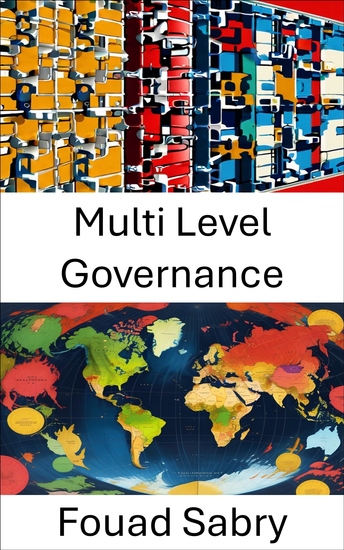
Multi Level Governance - Power and Policy in a Networked World - cover
LER

Multi Level Governance - Power and Policy in a Networked World

Fouad Sabry

Editora: One Billion Knowledgeable

  • 0
  • 0
  • 0

Sinopse

Unveil the intricate web of modern governance!
 
In our interconnected world, decision-making involves a complex interplay among local, national, and supranational actors. "Multi-Level Governance" delves into this critical concept within Political Science.
 
Demystifying Multi-Level Governance:
 
- Chapter 1: Defines multi-level governance and its core principles.- Chapter 2: Examines Europe's context as a prime example.- Chapter 3: Explores the European Committee of the Regions and its role.- Chapter 4: Analyzes supranational unions and their policy influence.- Chapter 5: Looks into the political dynamics within the EU.
 
From Policy to Practice:
 
- Chapter 6: Discusses paradiplomacy and cities in international relations.- Chapter 7: Tackles climate change through multi-level governance.- Chapter 8: Reviews the Cities for Climate Protection program.- Chapter 9: Examines the territorialization of carbon governance.- Chapter 10: Addresses the politicization of multi-level governance.
 
Understanding the Big Picture:
 
- Chapter 11: Introduces neofunctionalism as a theoretical framework.- Chapter 12: Showcases the Alliance of Liberals and Democrats for Europe.- Chapter 13: Explores regional integration and its governance links.- Chapter 14: Examines the Council of European Municipalities and Regions.- Chapter 15: Analyzes cross-border governance challenges and opportunities.
 
Expanding the Scope:
 
- Chapter 16: Looks at the global organization United Cities and Local Governments.- Chapter 17: Introduces UNU-CRIS, a UN research institute on regionalization.- Chapter 18: Provides an example of soil governance.- Chapter 19 & 20: Profiles scholars Gary Marks and Liesbet Hooghe.- Chapter 21: Presents a case study on Greece's Kallikratis Programme.
 
"Multi-Level Governance" offers insights and answers to pressing public questions, empowering professionals, students, and anyone curious about political decision-making.
Disponível desde: 01/08/2024.
Comprimento de impressão: 204 páginas.

Outros livros que poderiam interessá-lo

  • Australia on the Brink - cover

    Australia on the Brink

    Ian Lowe

    • 0
    • 0
    • 0
    In 1996, the first independent national report on the state of Australia’s environment found that we faced serious problems. With increasing urgency, five subsequent reports declared those problems were all getting worse, each calling for immediate action to protect our future. The 2021 report determined that, ‘Overall, the state and trend of the environment of Australia are poor and deteriorating as a result of increasing pressures from climate change, habitat loss, invasive species, pollution and resource extraction,’ and warned of the dramatic impact on our health and living standards. It is now clearer than ever that the consequences of long-term inaction are upon us.Accelerating climate change and the loss of our unique biodiversity are the most obvious signs of the grim outlook for future generations of Australians. But the international trends are equally worrying, with quixotic economic systems casting doubt on the wisdom of running down our domestic production of essential goods and services in favour of a dependence on trade. It is no exaggeration to conclude that Australian society itself is at risk.In Australia on the Brink, Ian Lowe argues that the essential first steps in addressing these threats are stabilising the global climate and protecting our local biota. We must also change the emphasis of resource extraction from a damaging reliance on trade to improving our capacity to meet our own needs. This is our best – perhaps our only – chance of restoring a sense of social stability, and the equality of opportunity that was once a hallmark of this country.
    Ver livro
  • Famous Men of Rome - cover

    Famous Men of Rome

    John Haaren, A. B. Poland

    • 0
    • 0
    • 0
    "Famous Men of Rome" features 29 stories covering the history of Rome from its founding to the last emperor. You will read about the lives of Horatius, Camillus, Caesar, Cicero, and many others. The biographies of "Famous Men of Rome" are in chronological order and the whole book will bring you through the three stages of Ancient Rome: monarchy, republic, and empire. Although women are not the "famous" individuals listed in the book, the notable women of the time definitely play roles in the stories. "Famous Men of Rome" is faithful to this vision of learning history through biography. The chapters cover eleven centuries, from the legendary founding of Rome to its slow unraveling in the early centuries after Christ. Each chapter is a fascinating read.
    Ver livro
  • Crypto Investment - cover

    Crypto Investment

    Isidore Weeks

    • 0
    • 0
    • 0
    Investing in cryptocurrency can offer several potential benefits such as high volatility leading to potentially high returns, increased accessibility and 24/7 trading, and the potential for digital currencies to become widely adopted as a new asset class. Additionally, blockchain technology underlying cryptocurrencies offers secure and transparent transactions. However, it is important to thoroughly research and understand the risks involved before investing, as the market is highly volatile and not backed by any government.
    Ver livro
  • Discovering Peace: How Violence Has Faded Through Time - Elevate your understanding with our audiobook on how violence has faded over time - cover

    Discovering Peace: How Violence...

    Ethan Drayton

    • 0
    • 0
    • 0
    Discovering Peace: How Violence Has Faded Through Time   
    ⭐⭐ Simplified Audio Guide ⭐⭐   
    Looking to deepen your understanding of how humanity has moved towards peace instead of conflict? 
    Seeking a comprehensive guide that covers all the elements leading to the embrace of peace over time? 
    Your search ends here! 
    This guide serves as your definitive companion for exploring the evolution of peace, applying historical insights, and engaging in thought-provoking analysis. With this, you're set for a journey of enlightenment. 
    Updated to reflect the latest insights into humanity's shift towards peace. 
    Key features of this enriched guide:   
    - Profound insights about humanity's embrace of peace over conflict 
    - Detailed explanation of how societies have turned away from violence 
    - Effective strategies for understanding and discussing these historical trends 
    Our guide distinguishes itself through comprehensive coverage, which is essential for your in-depth understanding. Concepts aren't merely skimmed; they are delved into with precision. 
    Please note that this guide is not affiliated with any official entity and is purely an independent resource for your benefit. 
    Designed with a clear structure and easy-to-understand language, our guide on Discovering Peace ensures smooth transitions between topics. Say goodbye to dense jargon and welcome clear, precise, and technically accurate content. 
    So, why wait? Click the BUY NOW button, secure your guide, and begin your journey to understanding how humanity has embraced peace over conflict!
    Ver livro
  • The Flowering War - Toltec Teachings on Healing Ancestral Trauma Overcoming Your Internal Enemies and Fulfilling Your Life Purpose - cover

    The Flowering War - Toltec...

    Dr. Oscar C. Pérez PhD

    • 0
    • 0
    • 0
    In every generation of every family there is one person that is born carrying an unequal amount of the emotional and energetic burden of their lineage. In an intact culture, this person would be recognized for bearing a gift, a seed: the potential to become the healer of their family line. This potential would be cultivated, and the individual guided to learn how to use this gift to heal their personal and ancestral wounds, as well as guide others in their own process of healing. 
      
    This understanding has been lost in our modern society, and instead those bearing this gift are criticized, belittled, ostracized for the very sensitivity that would make them exceptional healers. They become the “black sheep” of their families and communities. 
      
    The Flowering War is a companion, a guide, and a roadmap for those individuals, those that have carried too much and been seen too little, those that have an incredible gift that, when untended, can become a devastating burden. It is for those that I’ve come to know as “Griefbearers,” the potential healers of generations of untended wounds and accumulated trauma. It is for those that have lost their way in bearing this burden but somehow, miraculously, keep going. It is for those would-be healers, consumed by self-criticism and self-doubt. For those wrestling with addiction and self-destruction. It is a Light to guide them out of the Darkness. 
      
    The Flowering War is for those that are determined to break the harmful patterns of their lives and their lineages. It draws on the ancestral living wisdom of the Toltecs to guide you to a greater understanding of yourself, your purpose in life, and the essential role you play in healing an increasingly wounded world. 
      
    If you recognize yourself in these words, this book is for you.
    Ver livro
  • Thanks for Your Service - The Causes and Consequences of Public Confidence in the US Military - cover

    Thanks for Your Service - The...

    Peter D. Feaver

    • 0
    • 0
    • 0
    A definitive study on the decades-long run of high public confidence in the military and why it may rest on some shaky foundations. 


    What explains the high levels of public confidence in the US military and does high confidence matter? In Thanks for Your Service, the eminent civil-military relations scholar Peter D. Feaver addresses this question and focuses on what it means for the military. Proprietary survey data show that confidence is partly based on public beliefs about the military's high competence, adherence to high professional ethics, and a determination to stand apart from the bitter divisions of partisan politics. However, as Feaver argues, confidence is also shaped by a partisan gap and by social desirability bias, the idea that some individuals express confidence in the military because they believe that is the socially approved attitude to hold. Not only does Feaver help us understand how and why the public has confidence in the military, but he also exposes problems that policymakers need to be aware of. Specifically, this book traces how confidence in the institution shapes public attitudes on the use of force and may not always reinforce best practices in democratic civil-military relations.
    Ver livro