Junte-se a nós em uma viagem ao mundo dos livros!
Adicionar este livro à prateleira
Grey
Deixe um novo comentário Default profile 50px
Grey
Assine para ler o livro completo ou leia as primeiras páginas de graça!
All characters reduced
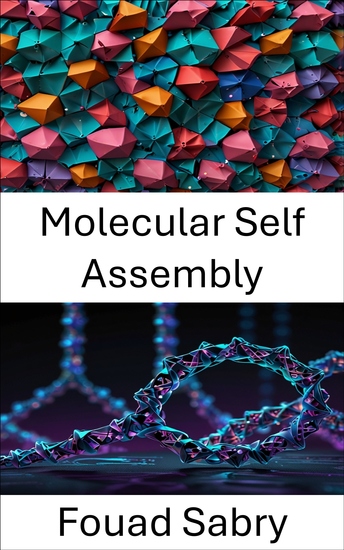
Molecular Self Assembly - Advancing Nanostructure Design Through DNA Guided Molecular Engineering - cover
LER

Molecular Self Assembly - Advancing Nanostructure Design Through DNA Guided Molecular Engineering

Fouad Sabry

Editora: One Billion Knowledgeable

  • 0
  • 0
  • 0

Sinopse

Dive into the revolutionary world of Molecular Self Assembly, where nature’s most complex structures inspire innovative designs for technology and science. This book provides a comprehensive exploration of the fundamental principles of molecular selfassembly, DNA origami, and nanotechnology. By understanding these concepts, readers will gain insight into how molecular systems can be engineered to solve problems ranging from medicine to energy storage. This essential resource is perfect for professionals, graduate and undergraduate students, and enthusiasts in fields like nanotechnology, biochemistry, and molecular engineering.
 
Chapters Brief Overview:
 
1: Molecular selfassembly: An introduction to the natural process of selfassembly in molecular systems.
 
2: Nanobiotechnology: Explores the interface between nanotechnology and biological systems, highlighting its potential applications.
 
3: Selfassembly: An indepth look at how molecules spontaneously organize into structured, functional systems.
 
4: Molecular machine: Discusses the design and application of molecular machines that perform tasks at the nanoscale.
 
5: Roeland Nolte: Examines the contributions of Roeland Nolte to the field of supramolecular chemistry and molecular assembly.
 
6: Supramolecular polymer: Focuses on polymers assembled through noncovalent interactions, offering new material possibilities.
 
7: Crystal engineering: Investigates how molecular selfassembly plays a key role in the design of crystalline materials.
 
8: Macromolecular cages: Introduces macromolecular cages, their structure, and their applications in chemistry and biology.
 
9: DNA origami: Discusses the groundbreaking concept of using DNA to form intricate, programmable nanostructures.
 
10: Supramolecular chemistry: Explores the chemistry behind noncovalent interactions and their applications in molecular engineering.
 
11: Supramolecular catalysis: Looks at how supramolecular chemistry can enhance catalysis in molecular reactions.
 
12: Selfassembly of nanoparticles: Explores how nanoparticles selfassemble to form functional materials with unique properties.
 
13: Resorcinarene: An indepth study of resorcinarene compounds and their role in molecular selfassembly.
 
14: Protein complex: Discusses the role of protein complexes in molecular recognition and selfassembly processes.
 
15: Nanotechnology: Provides an overview of nanotechnology, exploring its applications and connection to molecular selfassembly.
 
16: Bacillus virus phi29: Focuses on the phi29 virus and its role in advancing molecular engineering techniques.
 
17: Mechanically interlocked molecular architectures: Discusses the creation of complex molecular architectures using interlocking components.
 
18: DNA nanotechnology: Explores the cuttingedge field of DNA nanotechnology and its impact on molecular engineering.
 
19: Molecular engineering: Delves into the design and manipulation of molecules for practical applications in technology.
 
20: Molecular recognition: Investigates the molecular recognition processes that drive selfassembly and functional systems.
 
21: RNA origami: Concludes with RNA origami, examining how RNA molecules can be used to form nanostructures akin to DNA origami.
 
By exploring each of these topics, this book reveals how molecular selfassembly and DNA origami are pushing the boundaries of what’s possible in fields like medicine, technology, and materials science. The book offers an indepth, yet accessible, exploration of these cuttingedge topics, making it an invaluable resource for anyone seeking to understand the rapidly advancing field of molecular engineering.
Disponível desde: 11/03/2025.
Comprimento de impressão: 234 páginas.


Outros livros que poderiam interessá-lo

  • Younger Dryas Period The: The History of the Earth’s Drastic Climate Change at the End of the Pleistocene Era - cover

    Younger Dryas Period The: The...

    Editors Charles River

    • 0
    • 0
    • 0
    From about 12,900 to 11,700 before present (BP), near Ice Age conditions returned to the Northern Hemisphere of the planet. It was a sudden shift from the warm temperatures that had prevailed for nearly 2,000 years. This period is referred to by archaeologists, geologists, and earth scientists as the Greenland Stadial, but it is more commonly known as the Younger Dryas. The Younger Dryas marked the end of the last glacial period, the end of the Pleistocene Era, and the beginning of the Holocene Era, which is the current era. It was a period of great change, when climate change happened quite quickly, directly affecting the flora, fauna, and humans of the Northern Hemisphere in the process. The impact on the human populations was perhaps most important because, in some places, it virtually destroyed emerging cultures, while in other places, it might have propelled humans to develop new survival traits and technologies later used to move humanity into the Neolithic era. Although scholars now know quite a bit about the Younger Dryas, many elements of it are still debated. Other aspects serve as a predictor of what humans can expect in the future. 
    	There is, however, still plenty of information about the Younger Dryas that remains unknown or open to debate. Not all scholars agree on the dates of the Younger Dryas or how long it lasted. Even more controversial are the alternate theories about what caused the Younger Dryas and the effect it had on the Northern Hemisphere’s bio-populations. This book examines the background of the Younger Dryas, its effects on bio-populations, and how it contributed to the emergence of the Neolithic Era. Alternative theories will be examined and compared to more standard ideas currently prevailing in academia.
    Ver livro
  • Algorithm - cover

    Algorithm

    Introbooks Team

    • 0
    • 0
    • 0
    A scrutiny of how algorithm has been widely used in order to perform any task has been done here. The step-by-step solution to any problem is an algorithm.  
    The set of rules and steps which should be followed so that the task is performed smoothly, is called an algorithm. It is the guidelines presented/ listed in a systematic way which is required while performing the task. 
    The era of modernization where computer holds almost all the importance is also based on an algorithm. There are multiple problem-solving operations which require certain guidelines so that the goals are achieved. The languages of the computer which builds a relation between machine and humans work on these algorithms. No wonder the world knows what to do and how but the computer needs guidelines! 
    The instructions provided by the user makes it possible for the computer to work out the problem-solving statement. There have to be some standards of the algorithm that the device should understand. The algorithm is not only used in computers but it also holds great utilization in cooking and mathematics. 
    The algorithm can be in various ways but as for coding there are has to be certain specific coded terms. The algorithm should be simple so that it is easy to understand and can be followed. There are various areas where algorithms are used in mathematics. The big problems which need expert solutions need proper methodology. This method is provided by algorithms. It is not necessary that the algorithms should be short. It varies from problem to problem. The mathematics subject has always been a tough one. Many difficult problems need proper step-by-step explanation. The different answers to various problems can be efficiently explained by algorithms provided. The simpler specifications help to solve bigger problems as well. The algorithm contains the constrained set of instructions in understandable language. The more procedure-oriented problems appear more need of algorithm is required. The algorithm used in computers is different based on the type of problem. The algorithm can be of several types in computers, such as string operator type, recursive backtracking and divide and operator. Randomized operator algorithms are also of great use. There are various properties of algorithms such as they should be input and output specified. They should be definite and effective. The finiteness of algorithm should be maintained by the means of input and output specified. It means that the input should be given to the processor and then output should be received. The moment when a computer receives the input, the command is achieved and it starts its working to produce the output. The relation between the input and output should be maintained. The algorithm should be specific and if these properties are hindered, the system is malfunctioned. The command and coding require a brief introduction. The algorithm provided is that brief instruction which acts as the helping hand for the coder. 
    Not only in computers, but even in mathematics, the formula provided is kind of a helping hand for any problem. The algebraic problems are in need of some pre-instructions which ensure the absolute results.
    Ver livro
  • Prolonged Casualty Care - Managing the Critical Casualty - cover

    Prolonged Casualty Care -...

    Aebhric O'Kelly

    • 0
    • 0
    • 0
    Prolonged Casualty Care is a comprehensive, clinically grounded audiobook designed for medical responders operating in austere, remote, and high-threat environments where evacuation is delayed or denied. Built upon contemporary Tactical Combat Casualty Care (TCCC) doctrine and the Joint Trauma System Prolonged Casualty Care guidelines, this audiobook provides a structured progression from immediate battlefield trauma management into the realities of sustained, resource-limited care. 
    The content is written for listeners qualified at the Combat Life Saver level or higher and systematically expands into the clinical, nursing, logistical, and decision-making challenges that define prolonged care. Each chapter follows a clear minimum, better, best framework, allowing practitioners to adapt evidence-based interventions to their available resources, skill level, and operational constraints. Topics include haemorrhage control, airway and ventilation, circulation and resuscitation, head injury and temperature management, pain and sedation, antibiotics and sepsis, wound and burn care, nursing interventions, documentation, communications, and telemedicine support. 
    More than a procedural guide, Prolonged Casualty Care emphasises clinical judgement, reassessment, and systems thinking over time. It prepares medics, clinicians, and medical planners to sustain life, preserve function, and prevent secondary injury when definitive care is not immediately accessible. 
    This audiobook is based on the Joint Trauma Systems' Clinical Practice Guidelines for PCC. It also draws from Dr Rocky Farr's book called 'The end of the Golden Hour' which can be downloaded for free here. https://tinyurl.com/Rocky-Farr 
    This audiobook is intended as both a standalone learning resource and a doctrinal companion for advanced training programmes in prolonged field care, remote medicine, and operational healthcare.
    Ver livro
  • Introduction to Chemistry - cover

    Introduction to Chemistry

    Introbooks Team

    • 0
    • 0
    • 0
    Chemistry studies the nature (atomic and molecular structure, etc.), properties, composition and transformations of matter. Here are some benefits that chemistry can provide: 
    ♦ fabrics of the clothes we use in day-to-day are materials obtained through the development of Chemistry;the artificial fibers (nylon, tergal, etc.), synthetic rubbers, plastics, part of a group of materials called polymers; polymers have been numerous applications: plastic bags, towels, bottles, plastic pipes, electrical coatings, toys, records, upholstery, pan coatings; 
    Biochemistry has allowed not only to know precise mechanisms of the body, such as influence them, enabling the development of molecular biology and pharmacology, fundamental to the progress of medicine. And in the area of ​​Food Engineering, for example, is that chemistry plays a significant role? Yes. It is vital! 
    For example, the food industry uses the so-called "additives": substances are capable of providing the following foods: - antioxidant (inhibits the oxidation process); - Preservatives (increase durability); - Stabilizers (helps keep emulsions and suspensions); - Sweeteners (transmits sweet taste to products), etc. Most countries have four types of artificial sweeteners found in the consumer market: - saccharin (Pan American) - the CYCLAMATE (Brasfanta) - the ACESULFAME-K (Hoechst) - aspartame (Monsanto). Obtaining these sweeteners requires well-established synthetic routes developed in research in the field of chemistry. To understand the metabolism of sweeteners in humans and investigate the toxicity mechanisms have been proposed that involve a series of chemical reactions (w / details, see ref. *). As can be seen, chemistry has provided numerous benefits to humanity. On the other hand, we can not forget that many chemical processes are responsible for the degradation of the environment in which we live.
    Ver livro
  • Bitcoin Price Prediction using Machine Learning - Podcast - cover

    Bitcoin Price Prediction using...

    Bryan DeHart

    • 0
    • 0
    • 0
    This podcast explores Bitcoin price prediction using machine learning techniques. It focuses on the use of the XGBoost classifier, demonstrating its high accuracy (99.08%) compared to other algorithms such as logistic regression, SVM, and Random Forest. The study analyzes a historical Bitcoin price dataset, applying data preprocessing and evaluating model performance through metrics such as accuracy, recall, and F1 score. The results show the effectiveness of XGBoost in predicting Bitcoin price changes, offering valuable insights for investors. Future research is discussed to improve the model's accuracy by integrating additional data and ensemble learning techniques.
    Ver livro
  • ChatGPT talks on science for young people: Genetics! - Discover the secrets of life with the help of artificial intelligence - cover

    ChatGPT talks on science for...

    Paulo Dario

    • 0
    • 0
    • 0
    This book follows a series of "conversations" with these tools, mainly with "chatGPT 4.0" but also with "Bard". It's well known that chatGPT is hampered in its research up to a certain point in time and, because they are language modeling tools, they end up inventing... a lot, especially in bibliographic references. However, accessory tools are emerging that make it possible to improve and even correct this situation, tools that will certainly become much more powerful in the future, but which are already a reality. So, using all these AI tools, a book has been created that aims to be a pedagogical tool that answers a series of questions that can be asked by secondary and higher education students, or even people who are just interested in these issues, but who don't have the access or predisposition to use these types of AI tools.
    Ver livro