¡Acompáñanos a viajar por el mundo de los libros!
Añadir este libro a la estantería
Grey
Escribe un nuevo comentario Default profile 50px
Grey
Suscríbete para leer el libro completo o lee las primeras páginas gratis.
All characters reduced
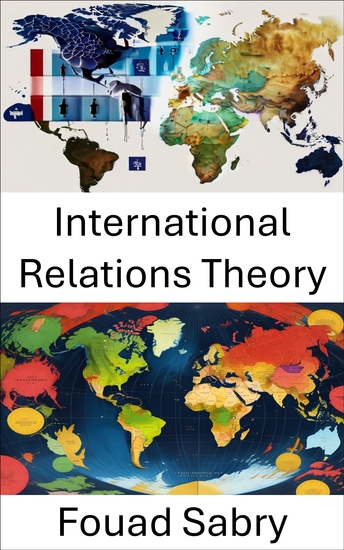
International Relations Theory - Exploring Power and Conflict in Global Politics - cover

International Relations Theory - Exploring Power and Conflict in Global Politics

Fouad Sabry

Editorial: One Billion Knowledgeable

  • 0
  • 0
  • 0

Sinopsis

Explore the essential world of "International Relations Theory," a crucial guide within Political Science. This comprehensive book offers a foundation for understanding the dynamics of global politics, power structures, and diplomatic strategies, making it indispensable for students, scholars, and enthusiasts alike.
 
Chapter Overview:
 
1: Introduction to core concepts and debates in International Relations.
 
2: Neorealism's focus on power and security.
 
3: Broad overview of key theories and methods.
 
4: Examination of international security and state strategies.
 
5: Realism’s emphasis on the anarchic international system.
 
6: Constructivism's role of social constructs in global politics.
 
7: Offensive Realism's view of states seeking dominance.
 
8: The English School’s balanced approach to international society.
 
9: Complex Interdependence's multiple channels of state interaction.
 
10: Liberalism's focus on cooperation and peace.
 
11: Reflectivism’s critique of traditional theories.
 
12: Robert Gilpin’s contributions to political economy.
 
13: The concept of anarchy in international relations.
 
14: Feminism’s focus on gender dynamics in global politics.
 
15: Jennifer Sterling-Folker’s work on international theory.
 
16: Liberal Institutionalism’s role of international institutions.
 
17: Social Theory’s influence of social structures on politics.
 
18: Major debates within international relations theory.
 
19: Classical Realism's historical roots and impact.
 
20: The Rationalist–Constructivist debate.
 
21: The link between international trade and state security.
 
Unlock a deeper understanding of international relations with this essential guide, offering invaluable insights for navigating global political dynamics.
Disponible desde: 11/08/2024.
Longitud de impresión: 205 páginas.
Otros libros que te pueden interesar

  • The Intimacy of Power: An insight into private office Whitehall's most sensitive network - Why Private Office Matters - cover

    The Intimacy of Power: An...

    Alun Evans

    • 0
    • 0
    • 0
    Have you ever wondered what happens behind the scenes in the corridors of power during a major crisis or after a ministerial reshuffle? How do new government ministers get to grips with their portfolios and priorities? Who guides and supports them? And why, sometimes – during events such as 'Partygate' – do things go wrong?
    In this meticulously researched book, former senior civil servant Alun Evans lifts the lid on a vital but little-known cog in the machinery of government: private office and the private secretaries who work within it.
    Private secretaries exercise huge influence, and yet most of us have never heard of them. They are the ones who manage the flow of work, who whisper quietly in ministers' ears and who have been Prime Ministers' closest, most trusted and most discreet confidants. At critical moments in our national history – from the Falklands War to the Westland affair, from Black Wednesday to the 2008 financial crash, from New Labour to the coalition government – they have been central but hidden players.
    With exceptional access to former Prime Ministers and decision-makers, Evans explores what private office is and why it matters to British democracy. He argues that following the egregious constitutional breaches of Boris Johnson's premiership, private office must once again be taken seriously so it can return to being the independent junction box of government and a vital part of the British constitution.
    Ver libro
  • Cold Civil War - Overcoming Polarization Discovering Unity and Healing the Nation - cover

    Cold Civil War - Overcoming...

    Jim Belcher

    • 0
    • 0
    • 0
    America's political landscape is experiencing dangerous polarization and fragmentation, with the extremes pulling the country apart. Voices on the left and right clash over different worldviews, definitions of America, and what it means to be an American citizen. The levels of incivility and hostility lead some to invoke the language of a cold civil war or even a looming civil war: one that could split the country in two. Is there any way to step back from this dangerous precipice?
    Political philosopher Jim Belcher shows that this is not merely a binary opposition between conservativism on the right and liberalism on the left, but also between conflicting visions of order and freedom on both sides. Through his unique quadrant framework, Belcher traces the people and movements in each position, examines their underlying narratives, and articulates their respective contributions and dangers. This quadrant framework not only reveals how polarization divides us but also shows us how to move beyond the right-left stalemate.
    At the core of the competing visions are the seeds of a new vital center, a robust and surprising model that has the ability to transcend political tribalism and bring America back together again before it is too late.
    Ver libro
  • Parliamentary America - The Least Radical Means of Radically Repairing Our Broken Democracy - cover

    Parliamentary America - The...

    Maxwell L. Stearns

    • 0
    • 0
    • 0
    Americans face increasingly stark choices each presidential election and a growing sense that our government can't solve the nation's most urgent challenges.  Our eighteenth-century system is ill-suited to our twenty-first-century world. Information-age technology has undermined our capacity to face common problems together and turned our democracy upside down, with gerrymanders letting representatives choose voters rather than voters choosing them. In Parliamentary America, Maxwell L. Stearns argues that the solution to these complex problems is a parliamentary democracy. 


    Stearns considers such leading alternatives as ranked choice voting, the national popular vote, and congressional term limits, showing why these can't solve our constitutional crisis. Instead, three amendments—expanding the House of Representatives, having House party coalitions choose the president, and letting the House end a failing presidency based on no confidence—will produce a robust multiparty democracy. 


    Stearns takes listeners on a world tour—England, France, Germany, Israel, Taiwan, Brazil, and Venezuela—showing what works in government, what doesn't, and how to make the best features our own. Genuine party competition and governing coalitions, commonplace across the globe, may seem like a fantasy in the United States. But we can make them a reality.
    Ver libro
  • Second Treatise of Government - cover

    Second Treatise of Government

    John Locke

    • 0
    • 0
    • 0
    The Second Treatise of Government is a political treatise written by English philosopher John Locke in 1689. It is considered one of the most important works on political philosophy, as it presents Locke's ideas on the natural rights of individuals and the proper role and limits of government in a society based on the consent of the governed. 
    In the Second Treatise, Locke argues that all individuals have natural rights to life, liberty, and property, which cannot be taken away by any authority, including the government. These rights are inherent and universal, and are not granted by any social contract or agreement. 
    Locke also argues that governments are formed by the consent of the governed, and are therefore obligated to protect the natural rights of their citizens. He asserts that the purpose of government is to promote the common good, and that governments that fail to do so may be overthrown by the people. 
    Moreover, Locke suggests that there are limits to the power of government, and that individuals have the right to resist or even overthrow a government that becomes tyrannical or violates their natural rights. 
    The Second Treatise of Government has had a significant impact on political theory and the development of democratic governance. It influenced the United States Declaration of Independence and the Constitution, as well as many other constitutions around the world.
    Ver libro
  • Utopia (Hero Classics) - cover

    Utopia (Hero Classics)

    Thomas More

    • 0
    • 0
    • 0
    Part of the Hero Classics series 
    Utopia is a distant island where the inhabitants are thriving and justice and reason prevail, in contrast to the realities of sixteenth-century Europe, where greed, superstition and unenlightened tradition reign. Using the framework of a traveller’s account to a fictional land, Thomas More created an ingenious treatise which envisioned a more humanist approach to laws and social structures, and coined the now common term “utopia”. 
    The Hero Classics series:MeditationsThe ProphetA Room of One’s OwnIncidents in the Life of a Slave GirlThe Art of WarThe Life of Charlotte BronteThe RepublicThe PrinceNarrative of the Life of Frederick Douglass, an American SlaveUtopia
    Ver libro
  • Congressional Tyranny: How Lawmakers Became Kings - cover

    Congressional Tyranny: How...

    A.A. Castor

    • 0
    • 0
    • 0
    What if the real dictators never wore military uniforms—but barongs and lapel pins? 
    In Congressional Tyranny, A.A. Castor pulls back the velvet curtain on one of the most dangerous illusions in modern Philippine democracy: that power resides in the President. With razor-sharp satire and sobering analysis, this book explores how lawmakers have quietly transformed themselves from representatives into rulers—armed not with guns, but with gavels, budgets, and contempt powers. 
    From weaponized budget hearings to backdoor appointments, media manipulation, and the jailing of critics without due process, Castor dissects how Congress has become the country's most powerful, unaccountable institution. With chapters like "Tyranny by Default" and "The Budget Becomes a Weapon," this book shines a light on the quiet coup happening under the guise of public service. 
    Congressional Tyranny is not a conspiracy theory—it's a mirror held up to a system designed to protect itself. A must-read for anyone who still believes that the greatest threat to democracy comes from above, when in truth, it may already be seated in session.
    Ver libro