Join us on a literary world trip!
Add this book to bookshelf
Grey
Write a new comment Default profile 50px
Grey
Subscribe to read the full book or read the first pages for free!
All characters reduced
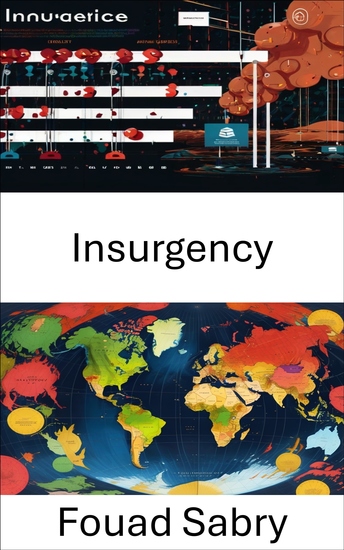
Insurgency - Strategies of Rebellion and Counterterrorism - cover

Insurgency - Strategies of Rebellion and Counterterrorism

Fouad Sabry

Publisher: One Billion Knowledgeable

  • 0
  • 0
  • 0

Summary

Unlock the secrets of modern conflict with "Insurgency," a critical addition to the Political Science series. This guide, tailored for professionals, students, and enthusiasts, explores the interplay of power, strategy, and politics in insurgent movements. It offers deep insights into the dynamics of conflict and resolution in today’s global landscape.
 
Chapters Overviews:
 
1: Insurgency - Explore insurgency’s definitions, evolution, and persistence.
 
2: Guerrilla Warfare - Learn insurgent tactics to counter superior forces.
 
3: Asymmetric Warfare - Analyze unequal power dynamics in warfare.
 
4: Paramilitary - Investigate paramilitary forces' roles in insurgencies.
 
5: Low-Intensity Conflict - Delve into prolonged conflicts with limited violence.
 
6: Unconventional Warfare - Discover strategies in unconventional warfare.
 
7: Counterinsurgency - Assess counterinsurgency strategies and their challenges.
 
8: Decapitation (Military Strategy) - Explore the strategy of targeting key leaders.
 
9: Fourth-Generation Warfare - Understand decentralized, non-state actor warfare.
 
10: Irregular Warfare - Examine diverse insurgent tactics in modern conflicts.
 
11: Police Action - Evaluate police action’s role in controlling insurgencies.
 
12: Iraqi Insurgency (2003–2006) - Analyze causes, strategies, and outcomes.
 
13: Colombia–United States Relations - Review counterinsurgency efforts in this relationship.
 
14: Steven Metz - Explore Steven Metz's insights into military strategy.
 
15: David Galula - Study David Galula's influential work on counterinsurgency.
 
16: David Kilcullen - Analyze Kilcullen’s innovative approaches to insurgency.
 
17: Foreign Internal Defense - Examine foreign support in internal conflicts.
 
18: McCormick Magic Diamond - Understand this framework’s role in insurgent strategies.
 
19: Guerrilla Warfare Tactics - Focus on practical strategies for guerrilla success.
 
20: Political Violence - Explore the link between political motives and violence.
 
21: Outline of War - Synthesize key themes, concluding with an overarching view of warfare.
 
"Insurgency" offers a multifaceted examination of insurgent movements, providing readers with practical knowledge and strategic insights. This book is a valuable resource for those wishing to enhance their understanding of political conflicts and insurgency strategies.
Available since: 10/13/2024.
Print length: 362 pages.

Other books that might interest you

  • Drawing Lines - Why Conservatives Must Begin to Battle Fiercely in the Arena of Ideas - cover

    Drawing Lines - Why...

    Kira Davis

    • 0
    • 0
    • 0
    It is time to draw our lines in the sand as Christians and Conservatives by engaging in public conversations with truth and conviction. 


    Kira Davis has built a brand on reaching out to the other side, on giving people space to be wrong, the space to discuss, the space to tolerate. Unfortunately, the people controlling the public conversations right now will have none of it. We're seeing the lengths they will go to and the lies they let stand in service of crushing 50 percent of this nation. They seek unity through complete elimination of the other side. There are times for compromise and times to draw a line in the sand; the latter has arrived. It is time to draw our lines as Christians and Conservatives.
    Show book
  • Trust Signals - cover

    Trust Signals

    Scott Baradell

    • 0
    • 0
    • 0
    What is a trust signal?Let’s say you’re interested in a book you aren’t familiar with—this book, for example. Before you buy it, you wonder, “Can I trust this author?” Can you trust that their book will be worth your money and your time?The author, in turn, tries to prove their trustworthiness in a number of ways:An accomplished and relevant biographyGlowing praise from well-known people on the coverFive-star reviews on AmazonAcclaim on social media by people you followCoverage in news media outlets you know and respectThese are examples of trust signals, the points of evidence that individuals, companies, and brands use to win one another’s trust.Mastering these signals is the single best way to build, grow, and protect your brand in today’s post-truth world—where trust is the most precious commodity of all.
    Show book
  • Liberty and Tyranny: Book Summary & Analysis - cover

    Liberty and Tyranny: Book...

    Briefly Summaries

    • 0
    • 0
    • 0
    This is a concise summary and analysis of Liberty and Tyranny , by Mark R. Levin.
     
    It is not the original book and is not affiliated with or endorsed by Mark R. Levin.
    Ideal those seeking a quick and insightful overview.
     
    In a time of political uncertainty and heated debate, Liberty and Tyranny provides a timeless and compelling exploration of the foundational principles of conservatism. The book delves into the ideas that shaped the United States, contrasting them with modern progressive ideologies that threaten individual freedoms and constitutional governance. Through a deeply reasoned argument, it calls for a return to limited government, personal responsibility, and free-market capitalism, while addressing the pressing issues of our era. This insightful and thought-provoking work serves as both a guide and a rallying cry for those who seek to preserve liberty in the face of encroaching tyranny.
    Show book
  • Beyond the Horizon - How Intelligence Limits Led to The Pearl Harbor Failure - cover

    Beyond the Horizon - How...

    Davis Truman

    • 0
    • 0
    • 0
    Beyond the Horizon: How Intelligence Limits Led to the Pearl Harbor Failure offers a compelling analysis of one of history's most infamous intelligence failures — the surprise attack on Pearl Harbor. Drawing on historical evidence and cognitive science, this thesis explores the systemic issues in U.S. intelligence operations leading up to the attack, including shortcomings in collection, analysis, and management. 
    These failures were not solely the result of institutional flaws but were deeply rooted in human decision-making's inherent cognitive and behavioral limitations. The book highlights how intelligence professionals can learn from the past to anticipate and mitigate future threats by uncovering these constraints. 
    Packed with insightful lessons and actionable recommendations, Beyond the Horizon is a vital resource for intelligence officers, policymakers, and historians. It emphasizes the importance of adapting to human limitations to protect against potential surprises.
    Show book
  • Free Exercise - Religion the First Amendment and the Making of America - cover

    Free Exercise - Religion the...

    Chris Beneke

    • 0
    • 0
    • 0
    CONGRESS SHALL MAKE NO LAW RESPECTING AN ESTABLISHMENT OF RELIGION, OR PROHIBITING THE FREE EXERCISE THEREOF. Those words, scratched on parchment in 1789, open the US Constitution's First Amendment. From them, countless interpretations have been drawn. As a consequence, an astonishing variety of activities in modern America—prayer after football games, Bible reading in classrooms, company healthcare policies, the baking of wedding cakes, and Ten Commandment displays around courthouses—have been alternately authorized, prohibited, or modified. 


    In this compelling historical account, Chris Beneke explains how the religion clauses came into existence and how they were woven into American culture. He brings prominent early national figures to life, including George Washington, James Madison, and Thomas Paine, while chronicling the First Amendment's relationship to defining social conditions like slavery, civility, family life, and the free market. 


    Going beyond traditional church-state scholarship, Beneke also demonstrates how white women, African Americans, Roman Catholics, Jews, and nonbelievers widened religious liberty's application and illuminated its boundaries. In doing so he makes a groundbreaking contribution to both constitutional history and the history of American pluralism.
    Show book
  • Moscow Rules - What Drives Russia to Confront the West - cover

    Moscow Rules - What Drives...

    Keir Giles

    • 0
    • 0
    • 0
    From Moscow, the world looks different. It is through understanding how Russia sees the world—and its place in it—that the West can best meet the Russian challenge. 


    Russia and the West are like neighbors who never seem able to understand each other. A major reason, this book argues, is that Western leaders tend to think that Russia should act as a "rational" Western nation—even though Russian leaders for centuries have thought and acted based on their country's different history and traditions. Russia, through Western eyes, is unpredictable and irrational, when in fact its leaders almost always act in their own predictable and rational ways. For Western leaders to try to engage with Russia without attempting to understand how Russians look at the world is a recipe for repeated disappointment and crises. 


    Keir Giles, a senior expert on Russia at Britain's prestigious Chatham House, describes how Russian leaders have used consistent doctrinal and strategic approaches to the rest of the world. These approaches may seem alien in the West, but understanding them is essential for successful engagement with Moscow. Giles argues that understanding how Moscow's leaders think—not just Putin but his predecessors and eventual successors—will help counterparts in the West develop a less crisis-prone and more productive relationship with Russia.
    Show book