Junte-se a nós em uma viagem ao mundo dos livros!
Adicionar este livro à prateleira
Grey
Deixe um novo comentário Default profile 50px
Grey
Assine para ler o livro completo ou leia as primeiras páginas de graça!
All characters reduced
Hung Parliament - Navigating Political Stalemate and Coalition Dynamics - cover
LER

Hung Parliament - Navigating Political Stalemate and Coalition Dynamics

Fouad Sabry

Editora: One Billion Knowledgeable

  • 0
  • 0
  • 0

Sinopse

Hung Parliament is a vital volume in the *Political Science* series. It breaks down the critical nuances of situations where no single political party holds a majority, offering readers an in-depth look into the mechanics of governance. Through examining key elections, coalitions, and the balance of power in parliamentary systems, this book provides a clear framework for understanding complex political dynamics.
 
Chapters Brief Overviews
 
1: Hung Parliament – Basics of a parliament with no outright majority.
 
2: Coalition Government – Formation and effects of coalition governments.
 
3: October 1974 UK General Election – The 1974 UK election and its historical relevance.
 
4: Minority Government – Challenges faced by minority governments.
 
5: Lib–Lab Pact – The 1977 Lib–Lab Pact and its impact on governance.
 
6: 2010 UK General Election – The election that resulted in a coalition government.
 
7: Confidence and Supply – Agreements ensuring minority government stability.
 
8: 2010 UK Government Formation – Negotiations behind the 2010 coalition.
 
9: 2015 UK General Election – Political shifts from the 2015 election.
 
10: Lib–Con Pact – The 2010 Lib–Con coalition agreement.
 
11: Politics of the UK – An overview of the UK’s political responses to hung parliaments.
 
12: Politics of Norway – A look at Norway’s coalition politics.
 
13: Politics of Barbados – Barbados’ approach to political stability through coalitions.
 
14: By-Election – The role of by-elections in changing political outcomes.
 
15: Folketing – Denmark’s Folketing and its coalition politics.
 
16: Snap Election – The strategy and implications behind snap elections.
 
17: James Thomas Milton Anderson – His influence on political theory.
 
18: Opinion Polling for 2010 UK Election – Polling’s influence on the 2010 UK election.
 
19: Balance of Power (Parliament) – How power dynamics shift in hung parliaments.
 
20: List of UK General Elections – Historical outcomes of UK general elections.
 
21: Successful Votes of No Confidence in UK – Key no-confidence votes that changed British history.
 
Hung Parliament presents a comprehensive analysis of coalition politics and parliamentary systems, designed for anyone keen on exploring political science in depth. Whether a student or professional, this book is a resource for understanding the inner workings of coalition governments and how they shape governance in various nations.
Disponível desde: 01/10/2024.
Comprimento de impressão: 376 páginas.
Outros livros que poderiam interessá-lo

  • The Shy Assassin - The Inspiring Story of Cyril 'Frank' Babbage Battle of Britain Spitfire Ace turned D-Day Mosquito Pilot - cover

    The Shy Assassin - The Inspiring...

    Air Marshal G.A. 'Black' Robertson

    • 0
    • 0
    • 0
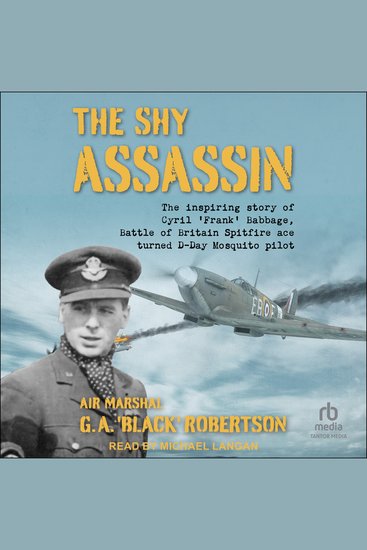
    One of the few RAF aircrew to play a central part in two of the Second World War's most momentous events, the Battle of Britain and D-Day, Cyril 'Frank' Babbage was a survivor. He wasn't just an immensely skilled pilot; he was also blessed with extraordinary good fortune. 
     
    Babbage's image shot to national prominence in late-August 1940, briefly becoming the face of 'The Few'. Photographs appeared in the press of him stepping out of a rowing boat on Bognor beach. There he was met by a small crowd who'd seen him rescued by fishermen after bailing out. He'd been shot down by a German fighter, but only after disposing of another one first. Babbage's fascinating wartime experiences are complimented brilliantly by the stories of those who crossed his path, famous names like Amy Johnson and Douglas Bader as well as countless other unsung heroes. Many of the latter were youngsters he served with all too briefly.Between his contrasting operational tours Babbage spent time as a flying instructor, insulated to a degree against the ravages of war. Wing Commander C. F. Babbage DFM, AE retired in the summer of 1964. Like so many of his ilk, he owed his final years of peacetime service to the sacrifices of others—others like those brave men with whom he flew, but who enjoyed less than their own share of good luck.
    Ver livro
  • The Congress of Vienna - Redrawing Europe's Map - cover

    The Congress of Vienna -...

    Nova Ashford

    • 0
    • 0
    • 0
    The Congress of Vienna, held between 1814 and 1815, came at a pivotal moment in European history. The continent had just endured the upheaval caused by the Napoleonic Wars, which had left Europe in chaos and instability. Napoleon Bonaparte's rise to power and subsequent expansionist ambitions had dramatically altered the political landscape, reshaping borders and redrawing alliances. By 1814, with Napoleon's defeat and exile, Europe was left to deal with the aftermath of a decade of war and turmoil. The challenge for the leaders of the major powers was to rebuild a stable Europe while ensuring that the events which had led to war would not be repeated. 
    The immediate concern was to restore order and prevent any single nation from becoming too powerful. Napoleon’s domination of Europe, followed by his eventual fall, had created an imbalance of power that threatened the security of the continent. The leaders of the great powers—Great Britain, Austria, Prussia, and Russia—realized that to avoid future conflict, they needed to create a system that would maintain peace and stability through diplomacy and careful balancing of power. This would be achieved not by restoring the status quo exactly as it had been before the Napoleonic Wars, but by reshaping Europe in a way that would prevent any one nation from becoming overwhelmingly dominant. 
    The Congress of Vienna aimed to establish a new framework based on the principles of legitimacy and a balance of power. Legitimacy referred to the restoration of rightful monarchs who had been overthrown by Napoleon, while the balance of power involved redistributing territory and influence in a way that would prevent any single country from threatening the security of the others. It was a delicate process, as the major powers had competing interests and varying visions of what a stable Europe would look like. Nonetheless, the common goal was to create a system that could provide long-term peace.
    Ver livro
  • Jewish Family Life - Customs Rituals and Values in Daily Living - cover

    Jewish Family Life - Customs...

    Joseph Arston

    • 0
    • 0
    • 0
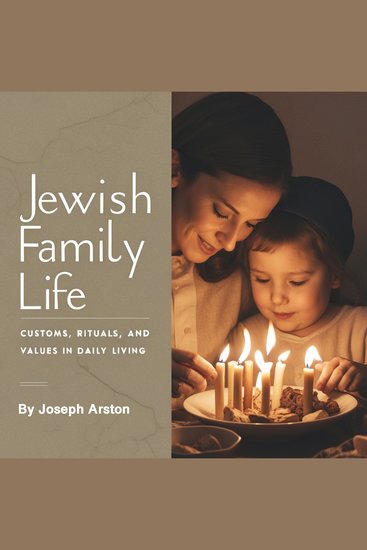
    Jewish family life is deeply rooted in tradition, values, and a strong sense of community. The family is not just a social unit but the very foundation of Jewish identity, shaping the faith, customs, and moral principles passed down through generations. Through daily practices, holidays, and shared rituals, Jewish families cultivate a home environment that nurtures both spiritual and ethical development. 
    At the core of Jewish family life is the concept of shalom bayit, or peace in the home. This principle emphasizes harmony, mutual respect, and love among family members. Parents play a crucial role in modeling these values, creating an atmosphere where kindness, patience, and understanding are prioritized. The Torah provides guidance on fostering a household filled with compassion and justice, reinforcing the idea that family is a sacred space where Jewish teachings come to life. 
    Another fundamental aspect of Jewish family life is the observance of Shabbat. The Sabbath is more than just a day of rest—it is a time for families to reconnect, reflect, and step away from the distractions of daily life. The preparation for Shabbat, including lighting the candles, reciting blessings over wine and bread, and sharing a festive meal, strengthens family bonds. Shabbat serves as a reminder of the importance of slowing down, appreciating one another, and finding holiness within the home. It is a time when parents pass down traditions and children absorb the rhythms of Jewish living.
    Ver livro
  • On Collective Memory - cover

    On Collective Memory

    Maurice Halbwachs

    • 0
    • 0
    • 0
    How do we use our mental images of the present to reconstruct our past? Maurice Halbwachs (1877-1945) addressed this question for the first time in his work on collective memory, which established him as a major figure in the history of sociology. This volume, the first comprehensive English-language translation of Halbwach’s writings on the social construction of memory, fills a major gap in the literature on the sociology of knowledge. 
    Halbwachs’ primary thesis is that human memory can only function within a collective context. Collective memory, Halbwachs asserts, is always selective; various groups of people have different collective memories, which in turn give rise to different modes of behavior. Halbwachs shows, for example, how pilgrims to the Holy Land over the centuries evoked very different images of the events of Jesus’ life; how wealthy old families in France have a memory of the past that diverges sharply from that of the nouveaux riches; and how working class construction of reality differ from those of their middle-class counterparts. 
     
    With a detailed introduction by Lewis A. Coser, this translation will be an indispensable source for new research in historical sociology and cultural memory.
    Ver livro
  • Florida Spectacular - Extraordinary Places and Exceptional Lives - cover

    Florida Spectacular -...

    Cathy Salustri

    • 0
    • 0
    • 0
    If when you think "Florida" you don't think "spectacular," Cathy Salustri is determined to change your mind. Explaining why the state is more than the "Florida Man" stories and the politics that so often make national news, and looking beyond the crowded beaches and theme parks, Salustri celebrates what makes the state worth a deeper understanding in this lively trip through its natural beauty and fascinating history. 


    Florida Spectacular lifts the curtain on multiple facets, including the legacy of Zora Neale Hurston and the Black community at Eatonville; the bravery of Emateloye Estenletkvte, a Seminole woman who escaped from captivity back to her homeland; the two "frenemy" Henrys, Flagler and Plant, and their projects in transportation and tourism; the three "Marjories," the influential environmentalists and writers; and people working to solve issues facing the state today, such as those who have used Florida's hurricanes to make storm forecasting better for the whole world. 


    Along the way, Salustri brings to light lesser-known moments from Florida's history that help illuminate the state's significance in American and world history. Salustri tours listeners through the hidden-in-plain-sight Florida, the overlooked treasures, the cultural complexities, the environmental challenges and successes.
    Ver livro
  • Our Western spring - Where is political divide leading us ? - cover

    Our Western spring - Where is...

    Nir Shvalb

    • 0
    • 0
    • 0
    "Progress is not just electronics and robots; it’s also adaptation and correction of social structures in light of these technological advances," Shvalb asserts, warning that "the old democracy won't survive if we don’t adjust it to the new era." 
    After reviewing the social phenomena leading societies to dangerous places, he points out, "History teaches us that civilizations tend to fade, and when they do, it can happen very suddenly." He then explores the influence of social networks on public discourse, noting that "fake news spreads six times faster than truthful news." As a scientist in the field of hard sciences, he examines the dangers of advancing technology, particularly the role of AI in societal unrest. Shvalb questions, "Can technological mega-giants know us intimately enough to control our choices?" 
    Life as we knew it no longer exists. The benefits technology has given us come with a heavy price. In a world where social interactions are shaped by powerful platforms guiding the way we think, behave, buy, and choose, there is a real risk to our societies that we must consider. The last part of the book is dedicated to practical solutions and suggestions. Yet, despite its serious themes, "Our Western Spring: Where is Political Divide Leading Us?" is engaging and fun to read. If you're curious about who suffered from scrotal ascites, what is considered the worst film of all time, or why China's government hates Winnie-the-Pooh, this book is for you. This blend of intriguing trivia and insightful analysis makes the book both thought-provoking and enjoyable, offering readers a captivating journey through the complexities of modern society.
    Ver livro