Junte-se a nós em uma viagem ao mundo dos livros!
Adicionar este livro à prateleira
Grey
Deixe um novo comentário Default profile 50px
Grey
Assine para ler o livro completo ou leia as primeiras páginas de graça!
All characters reduced
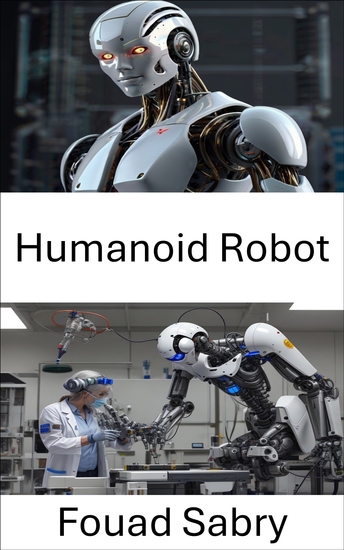
Humanoid Robot - Exploring the Intersection of Artificial Intelligence and Humanlike Machines - cover
LER

Humanoid Robot - Exploring the Intersection of Artificial Intelligence and Humanlike Machines

Fouad Sabry

Editora: One Billion Knowledgeable

  • 0
  • 0
  • 0

Sinopse

"Humanoid Robot" is a comprehensive exploration into the world of robotics, offering insights into the groundbreaking technologies, ethical considerations, and design innovations that shape humanoid robots. Whether you're a professional, student, or enthusiast, this book delves into the intricate relationship between humanity and robots, blending theory with practice for those eager to understand this rapidly advancing field.
 
Chapters Brief Overview:
 
1: Humanoid robot: This chapter explores the basic concept of humanoid robots, their history, and the key features that define them.
 
2: Robot: A broad overview of robots, their classifications, and the pivotal role they play in modern industries and society.
 
3: Domo (robot): Focuses on Domo, a humanoid robot developed to interact with humans in an engaging and intuitive way.
 
4: David Hanson (robotics designer): Highlights David Hanson's contributions to robotics, particularly in the field of lifelike humanoid robots.
 
5: Passive dynamics: This chapter examines passive dynamics in robotics, where robots move with minimal energy input to simulate natural motion.
 
6: Mobile robot: Covers the development and design of mobile robots, which navigate and perform tasks autonomously in dynamic environments.
 
7: Japanese robotics: A deep dive into Japan’s role as a leader in robotics innovation, with a special focus on humanoid robots.
 
8: ICub: Introduces the ICub robot, designed to mimic human learning and interaction in a variety of contexts.
 
9: Coco (robot): Investigates Coco, a robot created to interact socially, demonstrating humanlike communication capabilities.
 
10: Adaptable robotics: Discusses adaptable robots that adjust their movements and behavior based on their environment and needs.
 
11: Legged robot: Explores the design and functionality of legged robots, which are crucial for navigating complex terrains.
 
12: Neurorobotics: Analyzes the intersection of neuroscience and robotics, where robots are designed to replicate the behavior of the human brain.
 
13: Robotics: A broad overview of the field of robotics, covering its history, applications, and the future of this technology.
 
14: Bioinspired robotics: Explores robots designed based on principles found in nature, such as biomimicry and evolutionary strategies.
 
15: Oussama Khatib: Discusses the contributions of Oussama Khatib to robotics, particularly in humanrobot interaction and control.
 
16: Juggling robot: Examines the fascinating concept of robots capable of performing complex tasks like juggling, highlighting advanced robotic precision.
 
17: Soft robotics: Introduces soft robotics, focusing on the design of flexible robots that can interact more safely and effectively with humans.
 
18: Articulated soft robotics: Explores robots with articulated soft structures that combine flexibility and movement precision.
 
19: Continuum robot: Analyzes continuum robots, which use flexible structures for precise and adaptable movements, offering new possibilities for surgery and exploration.
 
20: Robert D. Gregg: Discusses the work of Robert D. Gregg in soft robotics and innovative robotic control techniques.
 
21: Robotics engineering: Concludes with an overview of robotics engineering, emphasizing the principles and technologies that guide the creation of robots.
 
In sum, "Humanoid Robot" is not just a technical manual—it's an engaging journey into the world of robotics. With a focus on realworld applications and theoretical foundations, this book is essential for those looking to understand the evolution and potential of humanoid robots.
Disponível desde: 02/01/2025.
Comprimento de impressão: 221 páginas.
Outros livros que poderiam interessá-lo

  • Data-Driven AI Architectures - Building Intelligent Systems for the Future - cover

    Data-Driven AI Architectures -...

    James Ferry

    • 0
    • 0
    • 0
    In an era where data is the new oil, "Data-Driven AI Architectures: Building Intelligent Systems for the Future" serves as an essential guide for anyone looking to harness the full potential of artificial intelligence (AI) through a data-centric lens. This comprehensive book delves into the intricate relationship between data and AI, offering a deep understanding of how data shapes and drives the development of intelligent systems. 
    "Data-Driven AI Architectures: Building Intelligent Systems for the Future" is an invaluable resource for data scientists, AI practitioners, and anyone interested in the transformative power of AI. With its practical insights, detailed explanations, and forward-looking perspectives, this book equips you with the knowledge and tools to build the intelligent systems of tomorrow. Whether you're a beginner or an experienced professional, this book will guide you through the complexities of data-driven AI, helping you to create innovative solutions and stay ahead in the rapidly evolving world of AI technology. 
     
    Ver livro
  • Powering Our Planet and Earth-Friendly Farming 2-in-1 Bundle - How Clean Energy Will Transform the Future Solutions for a Healthy Planet - cover

    Powering Our Planet and...

    TONY JACOBSON, MARK SEBA,...

    • 0
    • 0
    • 0
    What to Expect: 
    1. Renewable Energy Sources: 
    Dive into the exciting world of renewable energy and discover how clean energy solutions are reshaping our future. 
    2. Organic Farming Sustainable: 
    Explore the principles and practices of sustainable agriculture that promote a healthier planet. Discover how organic farming, permaculture, and regenerative agriculture can restore soil health, enhance biodiversity, and reduce the carbon footprint of food production. 
    3. Harnessing Renewable Energy at Home: 
    Empower yourself with the knowledge and skills to incorporate renewable energy solutions into your daily life. Learn about the benefits and challenges of installing solar panels, wind turbines, and other renewable energy systems at home. 
    4. Sustainable Living: 
    Adopt a more eco-friendly lifestyle with practical tips and strategies for reducing waste, conserving water, and minimizing your environmental impact. From simple changes in daily habits to more significant home upgrades, discover actionable steps to live more sustainably. 
    5. Creating a Greener Future: 
    Understand the broader impact of clean energy and sustainable farming on global efforts to combat climate change and promote environmental justice. This guide highlights inspiring stories of communities and individuals who are leading the way in sustainability, offering hope and motivation for creating a greener future. 
    Embark on a Journey to Sustainability whether you're a clean energy enthusiast eager to explore the latest innovations or a conscientious consumer interested in sustainable farming practices, this 2-in-1 bundle is your ultimate resource. Together, these guides provide a comprehensive roadmap to help you make informed decisions and take meaningful actions towards a healthier, more sustainable planet.
    Ver livro
  • Interpretation of Dreams The - Sigmund Freud - cover

    Interpretation of Dreams The -...

    Siegmund Freud

    • 0
    • 0
    • 0
    The Interpretation of Dreams is an 1899 book by Sigmund Freud, the founder of psychoanalysis, in which the author introduces his theory of the unconscious with respect to dream interpretation, and discusses what would later become the theory of the Oedipus complex. Freud revised the book at least eight times and, in the third edition, added an extensive section which treated dream symbolism very literally, following the influence of Wilhelm Stekel. Freud said of this work, "Insight such as this falls to one's lot but once in a lifetime." 
    Dated 1900, the book was first published in an edition of 600 copies, which did not sell out for eight years. The Interpretation of Dreams later gained in popularity, and seven more editions were published in Freud's lifetime. 
    Because of the book's length and complexity, Freud also wrote an abridged version called On Dreams. The original text is widely regarded as one of Freud's most significant works.
    Ver livro
  • Augmenting Intelligence - The Synergy between Artificial Intelligence and Intelligence Augmentation - cover

    Augmenting Intelligence - The...

    Raï

    • 0
    • 0
    • 0
    "Augmenting Intelligence: The Synergy between Artificial Intelligence and Intelligence Augmentation" by Raï is an enlightening journey that illuminates the dynamic relationship between Artificial Intelligence (AI) and Intelligence Augmentation (IA). This comprehensive guide embarks upon a journey of understanding, exploring how AI and IA, two distinct yet interconnected spheres, harmonize to pave the way for a promising future. Raï leads readers through a rich timeline, marking the historical significance of AI and IA, their profound impact on society, the workforce, and more specifically, the healthcare sector. The book delves into the unique blend of AI's power of autonomy and IA's potential to boost human intellect, providing a balanced view of their synergy. Rich with real-life case studies, in-depth research, and human-centric narratives, this book presents a detailed examination of the ethical dilemmas and regulatory challenges posed by AI and IA. Join Raï as he navigates this complex landscape, offering readers an insightful look into the future of these transformative technologies.
    Ver livro
  • Do You Believe in Fairies? - Compositions of Truth & Nature in Art & Poetry - cover

    Do You Believe in Fairies? -...

    Ashley Anne Strobridge

    • 0
    • 0
    • 0
    This is an audio journey through a collection of original Nature photography paired with original poetry & prose. Within you'll find lyrical audio descriptions of photos spanning the landscapes of my home state of Vermont, as well as a curated selection of photos from Virginia. This art is paired with whimsical & impactful poetry in themes of ecology, fantasy, social justice (BIPOC, LBGTQIA+ & Women's Rights, aging & disability), literature, conservation, history, family trauma, healing, & never forgetting pure Fascination with the Wonders of the Universe.This work is intended to create access to the wonders & benefits of Nature to those who may have mobility issues, disabilities (including visual impairment), or who otherwise lack access to the healing power of Nature due to financial hardship; racial, social, or fat-biased exclusion; or other circumstances.Art, Science, Magic, Nature, Truth, Justice, Love, & Creativity: through Astrobridge Artistry, I aim to Communicate the Magic & Wonder of Nature, hoping to make the beauty & healing powers of the natural world accessible & inviting to all. As someone with multiple disabilities & limited mobility myself, I pride myself on taking photos of, & being inspired by, beautiful & whimsical scenes in natural places that are easily accessible. Whether I'm on a dirt road 2 steps from my car door, on an accessible nature trail, or even right on my own balcony in Montpelier, VT in my Magic Garden in the Sky, illustrating that the beauty of Nature can be more accessible than you think, & that you don't need to have the ability to climb a rocky mountain trail to witness the majesty of Nature, is one of my main missions. It is important to me to share my photos & writing with a world with ever diminishing access to the truth & natural surroundings.2 photos are credited to my Mother, Diana Whittington (the Rainbow's Daughter & There & Back Again), & another is in Public Domain; the remainder of the photos were taken by me.
    Ver livro
  • Beyond the Stars - The Role of Dark Energy in Cosmic Expansion - cover

    Beyond the Stars - The Role of...

    Dirk Fallon

    • 0
    • 0
    • 0
    The concept of cosmic expansion is foundational to modern cosmology. It describes the way the universe has been stretching out over time, with galaxies moving away from each other. This phenomenon was first observed in the early 20th century by astronomer Edwin Hubble, who discovered that distant galaxies were receding from the Earth. The further a galaxy was, the faster it seemed to move away. This led to the realization that the universe itself was expanding, not just galaxies moving within a static space. The discovery was groundbreaking because it suggested that the universe had a beginning—a moment when all matter and energy were concentrated in a singular point. This insight laid the groundwork for the Big Bang theory, which proposes that the universe began from an incredibly hot and dense state and has been expanding ever since. 
    Before this discovery, the prevailing belief in astronomy was that the universe was static, neither expanding nor contracting. However, Hubble’s findings, supported by the work of other scientists like Alexander Friedmann and Georges Lemaître, showed that space itself was expanding. This meant that the fabric of the universe was stretching, causing galaxies to drift apart over time. Understanding cosmic expansion was pivotal not only in explaining the universe’s origins but also in forming the basis for further study of its evolution and ultimate fate. 
    At first, scientists believed that the expansion of the universe would eventually slow down due to gravitational pull. This expectation, however, changed with the discovery of dark energy in the late 20th century. Observations of distant supernovae revealed that not only was the universe expanding, but this expansion was actually accelerating. This unexpected acceleration is attributed to dark energy, a mysterious force that permeates space and drives galaxies apart at an ever-increasing rate.
    Ver livro