¡Acompáñanos a viajar por el mundo de los libros!
Añadir este libro a la estantería
Grey
Escribe un nuevo comentario Default profile 50px
Grey
Suscríbete para leer el libro completo o lee las primeras páginas gratis.
All characters reduced
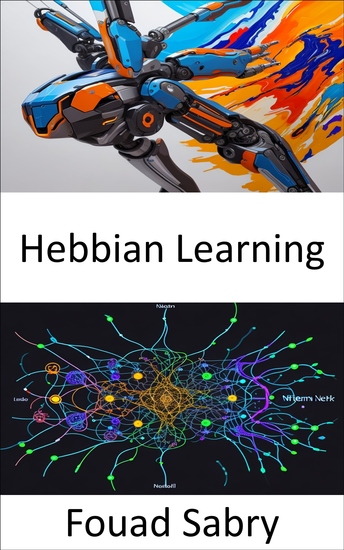
Hebbian Learning - Fundamentals and Applications for Uniting Memory and Learning - cover

Hebbian Learning - Fundamentals and Applications for Uniting Memory and Learning

Fouad Sabry

Editorial: One Billion Knowledgeable

  • 0
  • 0
  • 0

Sinopsis

What Is Hebbian Learning
 
The Hebbian theory is a neuropsychological theory that asserts that an improvement in synaptic efficacy results from the repetitive and persistent stimulation of a postsynaptic cell by a presynaptic cell. This is an effort to explain synaptic plasticity, which refers to the process through which neurons in the brain change in response to learning. It was first presented in Donald Hebb's book titled The Organization of Behavior, which was published in 1949. Hebb's rule, Hebb's postulate, and the cell assembly hypothesis are all names for the same body of thought. The way that Hebb expresses it is as follows: Let us assume that the persistence or repetition of a reverberatory action tends to create long-lasting cellular modifications that add to its stability. ... When an axon of cell A is close enough to excite a cell B and takes part in firing it repeatedly or consistently, a growth process or metabolic change takes occur in one or both of the cells, which results in an increase in cell A's efficiency as one of the cells firing cell B. This can happen in either cell.
 
How You Will Benefit
 
(I) Insights, and validations about the following topics:
 
Chapter 1: Hebbian theory
 
Chapter 2: Chemical synapse
 
Chapter 3: Long-term potentiation
 
Chapter 4: Synaptic plasticity
 
Chapter 5: Long-term depression
 
Chapter 6: Spike-timing-dependent plasticity
 
Chapter 7: Neural circuit
 
Chapter 8: Metaplasticity
 
Chapter 9: Oja's rule
 
Chapter 10: BCM theory
 
(II) Answering the public top questions about hebbian learning.
 
(III) Real world examples for the usage of hebbian learning in many fields.
 
Who This Book Is For
 
Professionals, undergraduate and graduate students, enthusiasts, hobbyists, and those who want to go beyond basic knowledge or information for any kind of hebbian learning.
 
What Is Artificial Intelligence Series
 
The artificial intelligence book series provides comprehensive coverage in over 200 topics. Each ebook covers a specific Artificial Intelligence topic in depth, written by experts in the field. The series aims to give readers a thorough understanding of the concepts, techniques, history and applications of artificial intelligence. Topics covered include machine learning, deep learning, neural networks, computer vision, natural language processing, robotics, ethics and more. The ebooks are written for professionals, students, and anyone interested in learning about the latest developments in this rapidly advancing field.The artificial intelligence book series provides an in-depth yet accessible exploration, from the fundamental concepts to the state-of-the-art research. With over 200 volumes, readers gain a thorough grounding in all aspects of Artificial Intelligence. The ebooks are designed to build knowledge systematically, with later volumes building on the foundations laid by earlier ones. This comprehensive series is an indispensable resource for anyone seeking to develop expertise in artificial intelligence.
Disponible desde: 20/06/2023.
Longitud de impresión: 100 páginas.
Otros libros que te pueden interesar

  • Radiolab Greatest Hits Vol 1 - Memory - cover

    Radiolab Greatest Hits Vol 1 -...

    Lulu Miller, Latif Nasser

    • 0
    • 0
    • 0
    Radiolab is one of the most popular and longest-running shows produced by WNYC, with over 2 million weekly listeners across public radio and podcasting.  
    Radiolab is on a curiosity bender. We ask deep questions and use investigative journalism to get the answers. A given episode might whirl you through science, legal history, and into the home of someone halfway across the world. The show is known for innovative sound design, smashing information into music. It is hosted by Lulu Miller and Latif Nasser. 
    VOLUME 1: MEMORY 
    “A 4-Track Mind” - A neurologist issues a dare to a ragtime piano player and a famous conductor. When the two men face off in an fMRI machine, the challenge is so difficult that one man instantly gives up. But the other achieves a musical feat that ought to be impossible. 
    “Memory and Forgetting” - Remembering is an unstable and profoundly unreliable process. Oliver Sacks joins us to tell the story of an amnesiac whose love for his wife and music transcend his seven-second memory. 
    “Finding Emilie” - Susan Gossiaux describes her daughter Emilie and the terrible phone call she received from Emilie’s boyfriend, Alan Lundgard. Susan and Alan tell about the devastating fork in the road that left Emilie lost in a netherworld, and how Alan found her again. 
    “Right to Be Forgotten” - In online news, stories live forever. The tipsy photograph of you at the college football game? It’s there. A charge for driving under the influence? That’s there, too. But what if … it wasn’t?  
    “Vanishing Words” - Agatha Christie’s clever detective novels may reveal more about the inner workings of the human mind than she intended. In this podcast, we look at what scientists uncover when they treat words like data.
    Ver libro
  • We're Overdosed - cover

    We're Overdosed

    Barry I. Gold

    • 0
    • 0
    • 0
    We're Overdosed looks at the history of opium and the drug's spread throughout the world. It traces the origin of morphine from opium, the subsequent synthesis of opioids, and the birth of the global pharmaceutical industry. From Barry I. Gold's point of view as a scientist, he offers thoughts about gaining control of prescription opioids through Federal legislation. With the tragic epidemic of deaths from overdose, chiefly from illicit sources, he shares how the U.S. could lead in eradicating world trade of illicit drugs. The story also looks forward and asks how new treatments offer hope in treating addiction.
    Ver libro
  • Giraffes for Kids: Amazing Facts and True Stories about Giraffes - cover

    Giraffes for Kids: Amazing Facts...

    Tristan Keefer

    • 0
    • 0
    • 0
    Teach your child about giraffes and learn everything there is to know about these majestic creatures! 
    Is your child fascinated by giraffes?  
    Do you find them watching nature channels and reading books about these wonderful creatures?  
    Do you have to pull your child away from the giraffes at the zoo until you ultimately give in and watch with a smile the wonder in their eyes? 
    Then you’ve come to the right place!  
    The animal kingdom is full of amazing and exciting creatures that you probably don’t know much about - and now it’s time to change that! Giraffes for Kids is filled with amazing and interesting facts about giraffes.  
    In this audiobook, you will:Discover how giraffes got their amazing long neckLearn fun facts about their bodyLearn all about the different species of giraffesDiscover where these amazing giants are foundLearn more about what they eat and how they behaveLearn about the real-life interactions between children and giraffes 
    If you’re a parent/caretaker whose kids are interested in giraffes, then this is a great audiobook for you. It educates children on the history of the giraffes, how they evolved, how they have been depicted in the past, and their relationship with humans. 
    Giraffes for Kids is filled with many interesting facts about the giraffes that will keep your children hooked!  
    Scroll up and click the “add to cart” button to get your copy!
    Ver libro
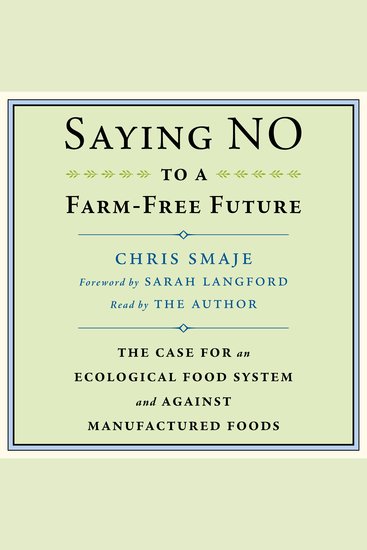
  • Saying NO to a Farm-Free Future - The Case For an Ecological Food System and Against Manufactured Foods - cover

    Saying NO to a Farm-Free Future...

    Chris Smaje

    • 0
    • 0
    • 0
    A defense of agroecological, small-scale farming and a robust critique of an industrialized future.  
    As a breakdown of the climate, state power and globalized markets pushes us toward an epochal transition, Chris Smaje offers us a hopeful vision of a relocalized, self-sufficient world.—David Bollier  
    One of the few voices to challenge The Guardian's George Monbiot on the future of food and farming (and the restoration of nature) is academic, farmer and author of A Small Farm Future Chris Smaje. In Saying NO to a Farm-Free Future, Smaje presents his defense of small-scale farming and a robust critique of Monbiot’s vision for an urban and industrialized future.  
    Responding to Monbiot’s portrayal of an urban, high-energy, industrially manufactured food future as the answer to our current crises, and its unchallenged acceptance within the environmental discourse, Smaje was compelled to challenge Monbiot’s evidence and conclusions. At the same time, Smaje presents his powerful counterargument – a low-carbon agrarian localism that puts power in the hands of local communities, not high-tech corporates.  
    In the ongoing fight for our food future, this book will help you to understand the difference between a congenial, ecological living and a dystopian, factory-centered existence. A must-read!
    Ver libro
  • The Life and Adventures of Venture - cover

    The Life and Adventures of Venture

    Venture Smith

    • 0
    • 0
    • 0
    Venture Smith (1729–1805) was an African captured as a child and transported to the American colonies to be sold as a slave. As an adult, he purchased his freedom and that of his family. His history was documented when he gave a narrative of his life to a schoolteacher, who wrote it down and published it under the title A Narrative of the Life and Adventures of Venture, a Native of Africa: But Resident above Sixty Years in the United States of America, Related by Himself. (Introduction by Wikipedia)
    Ver libro
  • Silence - The Psychology and the Craft for Emotional Wellbeing - cover

    Silence - The Psychology and the...

    Olga V. Lehmann

    • 0
    • 0
    • 0
    In Silence: The Psychology and the Craft for Emotional Wellbeing, the author―a psychotherapist, university professor, educator, and researcher―takes the listener into a thought-provoking and heartfelt journey. She offers original perspectives and vulnerable stories from her clients, students, and personal life. Drawing on, among others, ethnographic and autoethnographic accounts, Lehmann serves the listener with psychological insights, offering a timely, critical, and thorough viewpoint to contrast with an overload of misinformation about what silence is and how people should feel when quiet. The listener will be challenged to aspire to balance when communicating or connecting with themselves, with others, with nature, or with art, or, for some, as part of a spiritual path. Whether in nature, at work meetings, on the road, in a classroom, in the therapy room, or at the dinner table, silences appear as coordinates, and this book is the missing map for surviving and thriving when navigating toward well-being.
    Ver libro