Junte-se a nós em uma viagem ao mundo dos livros!
Adicionar este livro à prateleira
Grey
Deixe um novo comentário Default profile 50px
Grey
Assine para ler o livro completo ou leia as primeiras páginas de graça!
All characters reduced
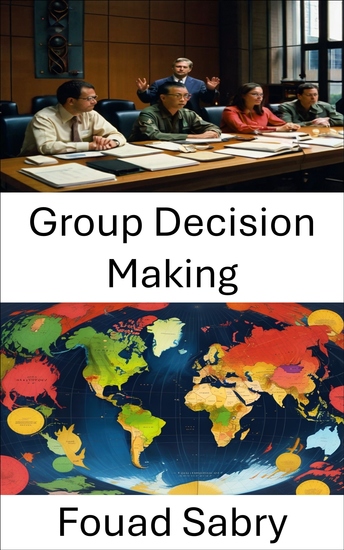
Group Decision Making - Collaborative Governance in Modern Politics Strategies for Effective Collective Choice - cover
LER

Group Decision Making - Collaborative Governance in Modern Politics Strategies for Effective Collective Choice

Fouad Sabry

Editora: One Billion Knowledgeable

  • 0
  • 0
  • 0

Sinopse

Group Decision Making is essential in Political Science, offering insights into the collective choices that shape governance and policy outcomes. This book is perfect for professionals, students, and enthusiasts looking to deepen their understanding of political processes and improve decision-making skills.
 
Chapter 1: Group Decision-Making - Explores the principles and processes involved in making decisions as a group.
 
Chapter 2: Cognitive Bias - Examines various cognitive biases and their impact on group decisions.
 
Chapter 3: Heuristic - Highlights the efficiency and pitfalls of mental shortcuts in political contexts.
 
Chapter 4: Cognitive Dissonance - Discusses the discomfort from conflicting beliefs and its effects on group choices.
 
Chapter 5: Decision-Making - Provides an overview of the decision-making process and strategies for consensus.
 
Chapter 6: Hindsight Bias - Explores the tendency to see events as predictable after they occur.
 
Chapter 7: List of Cognitive Biases - A reference guide to biases affecting group decisions.
 
Chapter 8: Attribution Bias - Investigates how groups misjudge causes of behaviors and events.
 
Chapter 9: False Consensus Effect - Examines the overestimation of agreement within groups.
 
Chapter 10: Anchoring (Cognitive Bias) - Discusses how initial information influences group decisions.
 
Chapter 11: Political Psychology - Connects psychological principles to political behaviors.
 
Chapter 12: Emotional Reasoning - Highlights the role of emotions in decision-making.
 
Chapter 13: The Wisdom of Crowds - Explores when group decisions are accurate.
 
Chapter 14: Dual Process Theory - Balances intuitive and analytical approaches in group settings.
 
Chapter 15: Selective Exposure Theory - Examines the preference for information that aligns with existing beliefs.
 
Chapter 16: Wisdom of the Crowd - Looks deeper into collective intelligence.
 
Chapter 17: Motivated Tactician - Discusses selective cognitive strategies in group decisions.
 
Chapter 18: Heuristic (Psychology) - Revisits heuristics from a psychological perspective.
 
Chapter 19: Shared Information Bias - Explores the focus on shared information over unique insights.
 
Chapter 20: Cognitive Bias Mitigation - Strategies for reducing cognitive biases in group decisions.
 
Chapter 21: Social Heuristics - Examines heuristics in social interactions affecting group dynamics.
 
This book provides valuable insights and practical strategies, making it an essential resource for enhancing understanding and effectiveness in collective political processes.
Disponível desde: 01/08/2024.
Comprimento de impressão: 324 páginas.

Outros livros que poderiam interessá-lo

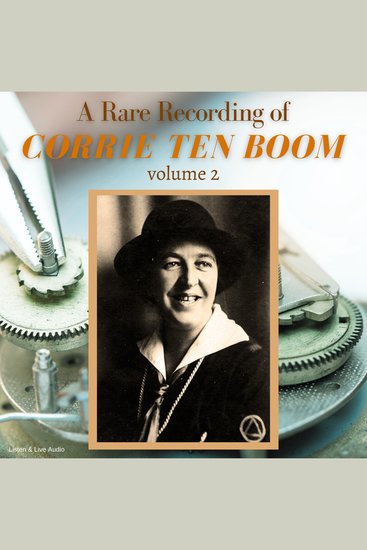
  • A Rare Recording of Corrie ten Boom Vol 2 - cover

    A Rare Recording of Corrie ten...

    Corrie ten Boom

    • 0
    • 0
    • 0
    Cornelia Arnolda Johanna "Corrie" ten Boom (April 15, 1892 - April 15, 1983) was a Dutch watchmaker who worked with her father Casper and other family members to help, reportedly, 800 Jews escape the Nazi Holocaust during World War II by hiding them in their home. Eventually, the family was caught, and ten Boom was arrested and sent to Ravens-brück concentration camp, but released after ten months due to a clerical error. Later in life, ten Boom wrote, "The Hiding Place," a biography that recounts the story of her family's efforts and how she was able to find hope while imprisoned at the concentration camp. It was later made in to a movie.
    Ver livro
  • Anxious Attachments - Overcoming Anxiety and Disorder in Relationships - cover

    Anxious Attachments - Overcoming...

    Brian Gibson

    • 0
    • 0
    • 0
    In a world where meaningful connections often involve anxiety and uncertainty, Anxious Attachments is a compassionate guide for anyone seeking to understand and overcome the complexities of anxiety in relationships. This transformative book offers a deep dive into the psychology of attachment and provides readers with practical strategies for nurturing healthier, more fulfilling connections. 
    Drawing from the latest research in psychology and real-life case studies, Anxious Attachments demystify the patterns that fuel anxiety in relationships. Whether you find yourself overwhelmed by insecurity, fear of abandonment, or a constant need for reassurance, this book is designed to help you break free from the cycle of anxiety that can sabotage intimacy and trust. 
    Embrace the journey to healthier, more secure relationships with Anxious Attachments. Whether single, dating, or in a long-term partnership, this book is your roadmap to overcoming anxiety and building the loving, lasting connections you deserve.
    Ver livro
  • A Rare Recording of President Richard Nixon’s 1974 State of the Union Addressing Watergate - cover

    A Rare Recording of President...

    President Richard Nixon

    • 0
    • 0
    • 0
    Richard Milhous Nixon (January 9, 1913 - April 22, 1994) was the 37th president of the United States, serving from 1969 to 1974. A member of the Republican Party, he previously served as a representative and senator from California and was the 36th vice president from 1953 to 1961 under President Dwight D. Eisenhower. His five years in the White House saw reduction of U.S. involvement in the Vietnam War, détente with the Soviet Union and China, the first crewed Moon landings, and the establishment of the Environmental Protection Agency and Occupational Safety and Health Administration. Nixon's second term ended early, when he became the only US president to resign from office, as a result of the Watergate scandal.
    Ver livro
  • Tairona Civilization - The Goldsmiths and Sacred Cities of Colombia - cover

    Tairona Civilization - The...

    Rolf Hedger

    • 0
    • 0
    • 0
    The Tairona civilization emerged in the Sierra Nevada de Santa Marta, a mountainous region in present-day northern Colombia. This environment, with its dense forests, rivers, and proximity to the Caribbean coast, provided the resources necessary for the development of a complex society. The origins of the Tairona can be traced back to around 200 CE, when early communities began establishing settlements in the highlands and along the coast. These groups developed distinct cultural traditions that set them apart from other indigenous societies in the region. 
    Archaeological evidence suggests that the Tairona were part of the broader Chibchan linguistic and cultural family, which included other groups in Central America and northern South America. Their language and customs connected them to a vast network of indigenous peoples, yet they developed a unique identity characterized by their architectural achievements, goldsmithing skills, and intricate social structures. Unlike nomadic tribes, the Tairona built permanent settlements that evolved into thriving city-states. These cities were connected by a network of stone-paved roads, stairways, and terraces, showcasing an advanced understanding of engineering and urban planning. 
    The natural landscape played a crucial role in shaping the early Tairona civilization. The Sierra Nevada de Santa Marta provided fertile land for agriculture, allowing them to cultivate maize, beans, and cassava. The coastal regions, on the other hand, gave them access to an abundance of marine resources, including fish and shellfish. This diversity of food sources enabled population growth and the expansion of settlements. Over time, the Tairona developed irrigation systems and terraced farming techniques to maximize agricultural production, ensuring food security for their communities.
    Ver livro
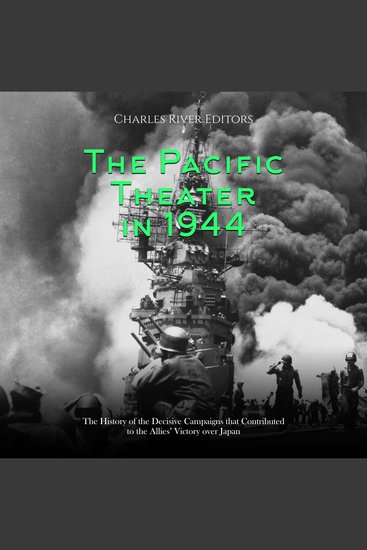
  • Pacific Theater in 1944 The: The History of the Decisive Campaigns that Contributed to the Allies’ Victory over Japan - cover

    Pacific Theater in 1944 The: The...

    Editors Charles River

    • 0
    • 0
    • 0
    The powerful forces of the United States Navy (USN), Marine Corps, and Army advanced inexorably against Imperial Japan in 1944. Following massive interdiction of Japanese merchant shipping by American submarines and multiple naval victories, the Americans stood poised to liberate the Philippines, then move on to locations closer to the Japanese home islands. 
    In early 1944, arguments raged over the best approach to the “strategic triangle” created by Formosa, Luzon, and China. Finally, on March 12th, the Joint Chiefs of Staff – consisting of Admirals William D. Leahy and Ernest J. King, and Generals George C. Marshall and Henry H. “Hap” Arnold - issued a directive picking the next target: “[T]he most feasible approach to the Formosa-Luzon-China area is by way of Marianas-Carolines-Palau-Mindanao area, and that the control of the Marianas-Carolines-Palau area is essential to the projection of our forces into the former area, and their subsequent effective employment therefrom.” 
    The Americans' plans focused on three islands near the southern end of a 15-island, north to south aligned island chain: Saipan, Tinian, and Guam. These islands, relatively large, offered space for the construction of large air bases within strategic bomber range of Japan itself, as well as closer targets. 
    The Japanese also recognized the strategic importance of the Mariana Islands, and Saipan in particular, given its location just 1,272 miles from Tokyo itself. This would place the Japanese capital well within the 3,250 mile range of the Boeing B-29 Superfortress. With these facts in their possession and the Marianas as one of the Americans' most logical next choices, the Japanese worked to move both reinforcements and materials for new fortifications to the southern Marianas in early 1944. 
    With that, the stage was set for the kind of deadly amphibious operations that would take place not only on the Marianas but also Iwo Jima and Okinawa after it. 
    Ver livro
  • Gay Erotica - 10 Gay Men First Time Stories - cover

    Gay Erotica - 10 Gay Men First...

    Karl Cumin

    • 0
    • 1
    • 0
    Ten explicit man on man and threesome stories, this bundle has everything you could want to get you going including coming out, spanking, doctors, younger man - older man, sex toys, bondage, and much more!  
      
    The stories:"Burning Pleasures" "Darren’s First Gay Experience""From Voyeur to More""Loving His Friend’s Confession""Shafted by the Mechanic""Plowed by the Waiter""Spanked by the Bodyguard" "Stretched and Plowed by an Older Guy""The Ex-Navy Seal’s Kinky Assignment""Under Doctor’s Orders" 
    All characters are over 18 and fictional.
    Ver livro