¡Acompáñanos a viajar por el mundo de los libros!
Añadir este libro a la estantería
Grey
Escribe un nuevo comentario Default profile 50px
Grey
Suscríbete para leer el libro completo o lee las primeras páginas gratis.
All characters reduced
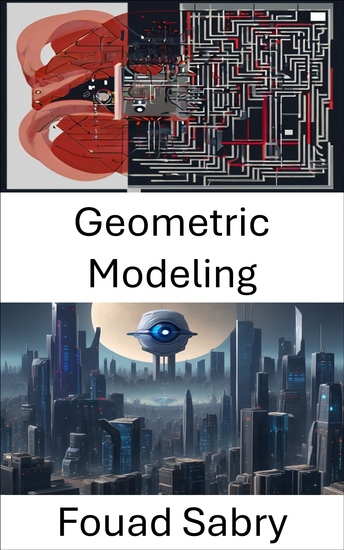
Geometric Modeling - Exploring Geometric Modeling in Computer Vision - cover

Geometric Modeling - Exploring Geometric Modeling in Computer Vision

Fouad Sabry

Editorial: One Billion Knowledgeable

  • 0
  • 0
  • 0

Sinopsis

What is Geometric Modeling
 
Geometric modeling is a branch of applied mathematics and computational geometry that studies methods and algorithms for the mathematical description of shapes.The shapes studied in geometric modeling are mostly two- or three-dimensional, although many of its tools and principles can be applied to sets of any finite dimension. Today most geometric modeling is done with computers and for computer-based applications. Two-dimensional models are important in computer typography and technical drawing. Three-dimensional models are central to computer-aided design and manufacturing (CAD/CAM), and widely used in many applied technical fields such as civil and mechanical engineering, architecture, geology and medical image processing.
 
How you will benefit
 
(I) Insights, and validations about the following topics:
 
Chapter 1: Geometric modeling
 
Chapter 2: Computer-aided design
 
Chapter 3: Computational geometry
 
Chapter 4: Bézier surface
 
Chapter 5: Constructive solid geometry
 
Chapter 6: Solid modeling
 
Chapter 7: Subdivision surface
 
Chapter 8: Mesh generation
 
Chapter 9: Procedural modeling
 
Chapter 10: Geometric constraint solving
 
(II) Answering the public top questions about geometric modeling.
 
(III) Real world examples for the usage of geometric modeling in many fields.
 
Who this book is for
 
Professionals, undergraduate and graduate students, enthusiasts, hobbyists, and those who want to go beyond basic knowledge or information for any kind of Geometric Modeling.
Disponible desde: 04/05/2024.
Longitud de impresión: 79 páginas.

Otros libros que te pueden interesar

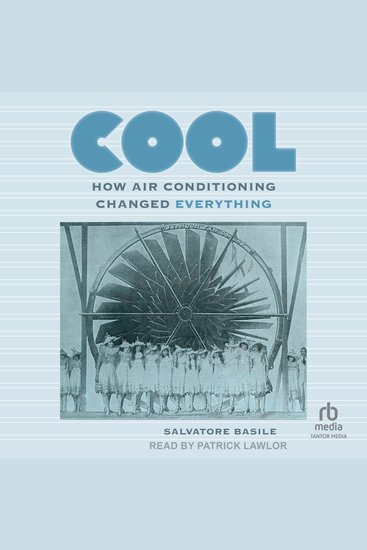
  • Cool - How Air Conditioning Changed Everything - cover

    Cool - How Air Conditioning...

    Salvatore Basile

    • 0
    • 0
    • 0
    "[A] history of air conditioning, chronicling the numerous gimmicks, failed attempts, con jobs, and eventual successes . . . a surprisingly interesting journey." —San Francisco Book Review 


    The air conditioner is often hailed as one of the modern world's greatest inventions—yet nearly as often blamed for global disaster. It has changed everything from architecture to people's food habits; saved countless lives, and caused countless deaths. First appearing in 1902, when Willis Carrier, an engineer barely out of college, developed the "Apparatus for Treating Air," everyone assumed it would instantly change the world. But the story of air conditioning and its rise to ubiquity is far from simple. 


    In Cool, Salvatore Basile tracks two fascinating stories: the struggle to perfect an effective cooling device, and the effort to convince people that they actually needed such a thing. With a cast of characters ranging from Leonardo da Vinci to Richard Nixon and Felix the Cat, Cool showcases the myriad reactions to air conditioning as it was developed and introduced to the world. Here is a unique perspective on a common convenience: how we came to rely on it today, and how it might change radically tomorrow.
    Ver libro
  • Building Scalable Web Apps with Nodejs and Express - Design and Develop a Robust Scalable High-Performance Web Application Using Nodejs Expressjs TypeScript and Redis - cover

    Building Scalable Web Apps with...

    Yamini Panchal

    • 0
    • 0
    • 0
    Easy API Design Using Express. js and Node. js (TypeScript)
     
    Book Description
    
     
    Embark on a journey to become an expert in backend web development with this essential guide using Node. js v20, Express. js, Redis and TypeScript. 
     
    The book covers foundational to advanced topics through one comprehensive example: a project management system. It ensures learning and application of skills in API caching with Redis, API testing using Mocha and Chai, and deployment on AWS. This approach simplifies complex concepts and provides a practical learning trajectory. 
     
    With expert tips and best practices, you'll create user-friendly features like sign-ups and project trackers. Plus, you'll learn how to make your apps faster with caching and add cool features like notifications. Finally, you'll ace testing and deploying your apps like an expert. 
     
    Table of Contents
    1. Introduction to Node. js
    2. Introduction to TypeScript
    3. Overview of Express. js
    4. Planning the App
    5. REST API for User Module
    6. REST API for Project and Task Modules
    7. API Caching
    8. Notification Module
    9. Testing API
    10. Building and Deploying Application
    11. The Journey Ahead
    Index
    Ver libro
  • Hot Spot - A Doctor's Diary From the Pandemic - cover

    Hot Spot - A Doctor's Diary From...

    Dr. Alex Jahangir, Katie...

    • 0
    • 0
    • 0
    When Nashville identified its first case of coronavirus in March 2020, the city was between Public Health Department directors and as unprepared as the rest of the world for what was to come. Dr. Alex Jahangir, a trauma surgeon acting at that time as chair of the Metro Nashville Board of Health, unexpectedly found himself head of the city's COVID-19 Task Force and responsible for leading it through uncharted waters. 


    What followed was a year of unprecedented challenge and scrutiny. Jahangir, who immigrated to the United States from Iran at age six, grew up in Nashville. He thought he knew the city well. But the pandemic laid bare ethnic, racial, and cultural tensions that daily threatened to derail what should have been a collective effort to keep residents healthy and safe. 


    Hot Spot is Jahangir's narrative of the first year of COVID, derived from his op notes (the journal-like entries surgeons often keep following operations) and expanded to include his personal reflections and a glimpse into the inner sanctums of city and state governance in crisis.
    Ver libro
  • The Wild Dark - Finding the Night Sky in the Age of Light - cover

    The Wild Dark - Finding the...

    Craig Childs

    • 0
    • 0
    • 0
    At a time when most people on Earth live in regions of acute light pollution, Craig Childs takes us on a journey to rediscover the awesome power of night itself.  
     
    Seeking not the absence of light, but the presence of the universe, master storyteller Craig Childs sets out to bike from the blinding lights of the Las Vegas Strip to one of the darkest spots in North America. A fearless explorer of both the natural world and the human imagination, Childs guides us on a quest to rediscover the heavens and to ask: "What does it do to us to not see the night sky?" The Wild Dark is at once an adventure story, a field guide, and a celebration of the awesome power of night itself, inviting us to look up and to look inward, eyes wide and sparkling with stars.
    Ver libro
  • Medical Engineering - Biomedical Chemical and Informatics Engineering (3 in 1) - cover

    Medical Engineering - Biomedical...

    Phil Gilberts

    • 0
    • 0
    • 0
    This title consists of three books in one, which are the following: 
    1 - Biomedical Engineering: Biochemical engineering integrates the principles of biology, chemistry, and engineering to develop processes for the large-scale production of valuable biochemicals. This interdisciplinary field plays a crucial role in industries such as pharmaceuticals, biotechnology, food and beverage, and environmental engineering. 
    One of the fundamental aspects of biochemical engineering is fermentation, which involves the controlled growth of microorganisms like bacteria, yeast, or fungi to produce desired compounds. 
    2 - Chemical Engineering: Chemical engineering is a multidisciplinary field that integrates principles from chemistry, physics, mathematics, and economics to tackle complex challenges across a diverse range of industries. At its core, chemical engineers focus on efficiently harnessing, transforming, and transporting chemicals, materials, and energy on a large scale. This involves not only designing and optimizing processes but also understanding the fundamental properties of substances and the underlying mechanisms governing their behavior. 
    One of the primary areas of focus for chemical engineers is process design and optimization. They develop innovative processes for the production of chemicals, fuels, pharmaceuticals, and materials, striving to maximize efficiency, minimize waste, and ensure safety. 
    3 - Informatics: Informatics integrates principles from various disciplines such as computer science, information theory, cognitive science, and social science to analyze and understand complex systems of information. 
    It involves the design, implementation, and application of computational solutions to real-world problems, focusing on both the technical aspects of computing systems and the human aspects of information processing and interaction.
    Ver libro
  • Ultimate Microservices with Go - Combine the Power of Microservices with Go to Build Highly Scalable Maintainable and Efficient Systems - cover

    Ultimate Microservices with Go -...

    Nir Shtein

    • 0
    • 0
    • 0
    Develop production-ready, high-performance, and scalable microservices with Go
    KEY FEATURES 
    ? Learn to design and implement resilient RESTful APIs using Go, with a focus on scalability and maintainability.
    ? Discover how Kubernetes empowers reliable microservice architecture, covering deployment, scaling, service discovery, and load balancing.
    ? Gain practical tools and insights for deploying microservices to production using Go and Kubernetes, ensuring smooth operations and high availability.
    DESCRIPTION
    Embark on a comprehensive journey through microservices architecture with a focus on harnessing the power of Go in modern cloud-based solutions. 
    This book begins with a succinct introduction to microservices and their synergy with cloud strategies, emphasizing Go's aptitude for developing scalable and efficient services. You'll then delve into the fundamentals of Go, covering essential practices and core concepts, and establishing a strong language foundation. 
    The exploration continues with a detailed examination of constructing a single service, emphasizing design, documentation, and structure. Through various design patterns, you'll learn to implement a server capable of serving as a RESTful API, an internal worker, and more. This hands-on approach equips you with the expertise to craft robust and sustainable services. 
    Finally, the book guides you through deploying your service to production using Kubernetes. You'll explore scaling techniques, performance optimization, and observability, ensuring your service is ready for the demands of the real world.
    WHAT WILL YOU LEARN 
    ? Gain a comprehensive understanding of microservices architecture, including its advantages, limitations, and alternative approaches. 
    ? Master the fundamentals of Go, from basic syntax and concepts to more advanced topics, enabling you to leverage its capabilities effectively. 
    ? Explore the key components of microservices architecture implemented using Go, understanding how they interact and contribute to the overall system. 
    ? Design and implement robust RESTful APIs with Go, incorporating essential features like pagination, rate-limiting, caching, retries, and timeouts for optimal performance. 
    ? Discover Kubernetes and its close relationship with microservices architecture, gaining insights into its role in orchestrating and managing containerized applications. 
    ? Learn to deploy production-ready services with Go, covering essential aspects such as authentication, monitoring, continuous integration and continuous deployment (CI/CD), fault tolerance design, and rollout procedures, all from the perspective of a developer.
    WHO IS THIS BOOK FOR?
    This book targets developers and software architects looking to enhance their microservices expertise using Go, offering insights into modern tech demands. It's beneficial for those mastering microservices basics and refining skills in Go, Kubernetes, and RESTful APIs. Whether advancing careers or improving proficiency, it equips readers for success in dynamic software development.
    Table of Contents
     1. Introduction to Microservices
    2. Usability of Go
    3. Go Essentials
    4. Embarking on the Go Journey
    5. Unlocking Go's Concurrency Power
    6. Core Elements of Microservices
    7. Building RESTful API
    8. Introduction to Kubernetes
    9. Deploying to Production
    10. Next Steps in Production    
    Index
    Ver libro