Junte-se a nós em uma viagem ao mundo dos livros!
Adicionar este livro à prateleira
Grey
Deixe um novo comentário Default profile 50px
Grey
Assine para ler o livro completo ou leia as primeiras páginas de graça!
All characters reduced
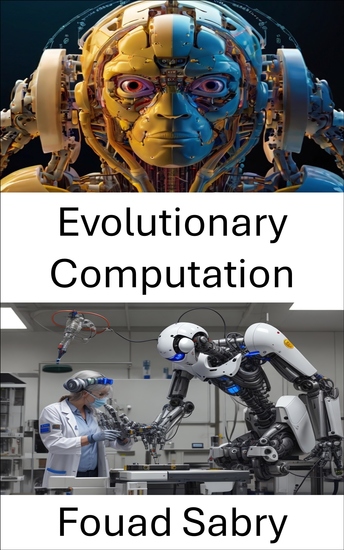
Evolutionary Computation - Harnessing Intelligent Algorithms for Advanced Robotic Systems - cover
LER

Evolutionary Computation - Harnessing Intelligent Algorithms for Advanced Robotic Systems

Fouad Sabry

Editora: One Billion Knowledgeable

  • 0
  • 0
  • 0

Sinopse

1. Evolutionary Computation: Introduction to evolutioninspired computing models.
 
2. Genetic Programming: Examines adaptive systems for evolving programs.
 
3. Genetic Algorithm: Analyzes the power of genetic optimization techniques.
 
4. Evolutionary Algorithm: Discusses algorithms driven by biological evolution.
 
5. Bioinspired Computing: Looks at natureinspired computational models.
 
6. Evolutionary Programming: Explores simulation of evolution in problemsolving.
 
7. Crossover (Genetic Algorithm): Details gene recombination processes.
 
8. Mutation (Genetic Algorithm): Reviews mutation’s role in diversity.
 
9. Chromosome (Genetic Algorithm): Describes genetic data structures.
 
10. Metaheuristic: Explores frameworks for finding nearoptimal solutions.
 
11. Evolution Strategy: Investigates adaptive mechanisms for optimization.
 
12. Effective Fitness: Defines fitness evaluation in evolutionary contexts.
 
13. Premature Convergence: Warns of early optimization pitfalls.
 
14. Genetic Representation: Examines data encoding in genetic algorithms.
 
15. Memetic Algorithm: Covers hybrid algorithms combining genetic and local searches.
 
16. Humanbased Computation: Reviews human influence in computation.
 
17. Lateral Computing: Examines lateral interactions in computational systems.
 
18. Natural Computing: Explores computing grounded in natural processes.
 
19. Artificial Life: Introduces lifelike systems and their applications.
 
20. Soft Computing: Investigates flexible, approximate computation methods.
 
21. Neuroevolution of Augmenting Topologies: Delves into evolving neural networks.
Disponível desde: 13/12/2024.
Comprimento de impressão: 229 páginas.
Outros livros que poderiam interessá-lo

  • How to Heal Trauma Using Polyvagal Theory - The Complete Guide to Vagus Nerve Activation Understanding Nervous System Dysregulation and Rewiring Your Body's Stress Response - cover

    How to Heal Trauma Using...

    Emily Stone

    • 0
    • 0
    • 0
    If your body still lives in the past even though your mind knows you're safe, then keep reading...


    You've tried talking about it. You've tried thinking your way through it. But trauma doesn't live in your thoughts—it lives in your nervous system.
     
    Your body is still keeping score, even when you're trying to move on.
     
    Traditional therapy asks you to understand your trauma. Polyvagal Theory teaches you to release it. Not through more talking, but through understanding the language your nervous system has been screaming in all along.
     
    This isn't about reliving your past. It's about rewiring your present.


    You'll discover:
    
    Why your body reacts before your mind can catch up
    How your vagus nerve controls your sense of safety
    The science behind why you freeze, flee, or fight
    How to shift from survival mode to thriving mode
    Why "just calm down" has never worked for you
    The missing piece in traditional trauma therapy
    
     
    Healing trauma isn't about being strong enough to push through it.
     
    It's about being wise enough to work with your body's natural systems. Your nervous system isn't broken—it's been protecting you. Now it's time to teach it that the danger has passed.


    Grab your copy and start speaking your body's language today!
    Ver livro
  • How to Choose Children’s Toys Wisely - …and Empower Your Child Through Play! - cover

    How to Choose Children’s Toys...

    Owen Jones

    • 0
    • 0
    • 0
    This comprehensive manual is designed to assist parents, guardians, and caregivers to tackle the often overwhelming task of selecting toys for children. With an array of options available, ranging from traditional favourites to the latest trends, it can be challenging to make informed decisions that prioritise both fun and developmental benefits.  
    This guide aims to demystify the toy-buying process by offering practical advice and insights. From understanding age-appropriate choices to considering safety, educational value, and durability, each aspect of toy selection is explored in detail.  
    By equipping adults with the knowledge and tools necessary to make thoughtful choices, we hope to enhance children’s play experiences and support their overall development.  
    Come with us as we explore the world of children’s toys and empower caregivers to create enriching play environments that foster creativity, learning, and joy.
    Ver livro
  • Probability Theory - cover

    Probability Theory

    Introbooks Team

    • 0
    • 0
    • 0
    Analysis theory of any random phenomena is known as probability. Main resource for concept of probability is probability theory. Probability theory is said to be one of many most important concepts or branches of mathematics. Following objects are known as main concepts or central objects:Random variablesStochastic processesRandom eventsMeasured quantities 
    Events are a kind of abstraction achieved through mathematical process. This abstraction is done on the base of non-deterministic events. Measured quantities can also be used for such abstraction. Measured quantities can be single occurrence or also follow random fashion for time evolving multiple occurrences. Making predictions about the outcome of random events is not always easy or even impossible sometimes. However, if influences are made on sequence of individual events, they will tend to follow certain patterns that are much easy to study, practice and predict. For instance, if outcome of coin flipping or roll of dice is influenced by outer factors such as friction, they will follow a specific pattern when proving outcome. Once this certain pattern is figured out and understood properly, it becomes much easier to predict the outcome with maximum accuracy. It means that it is hard to understand future outcome of subsequent random events that makes it hard to predict them. However, it is easy to predict pattern exhibited by these group of events that makes it easy to predict them and their corresponding events also. To describe such patterns certain mathematical results or concepts are used. Law of large numbers and central limit theorem are two main concepts that are used to study and describe such patterns followed by sequential random events. 
    Mathematical foundations of statistics consider probability theory as a practical part for any human activity in which, quantitative analysis of large data sets are involved. Involving in daily human activities makes probability theory a main concept of mathematics and statistics. It is also heavily involved in many mathematical and statistical concepts, which also makes it important for one to learn and understand basic concepts of this theory. Probability theory can also be used to describe complex systems, systems that hold only partial knowledge of their corresponding state. These descriptions are done the same way they are done in statistical mechanics. This is the main reason for which this theory is considered as a part of both mathematics and statistics. However, mathematics and statistics are parent theories for each other so any concept of mathematics can be a concept of statistics and any concept of statistics can be a concept of mathematics. Discovery of probabilistic behavior of physical phenomena is considered a great discovery in the field of physics. This probabilistic behavior was observed at atomic scales. This whole observation was heavily related to the concepts of probability theory. However, probability theory was not used as a complete base in that theory. This concept and research is broadly described in theory of quantum mechanics. Quantum mechanics is arguably the only field in physics, which is related with the concepts of probability theory. However, researches are still going on and more connections are much likely to be found out soon thanks to the deep relations between mathematics and physics. 
    Ver livro
  • Blockchain: Everything You Need to Know About Blockchain - cover

    Blockchain: Everything You Need...

    Cory Bowen

    • 0
    • 0
    • 0
    The World Is Undergoing a Deep 360° Revolution! Learn Everything You Need to Know About Blockchain In the past few years, the world has seen the tendency towards favoring decentralized systems, rather than depending on a central authority. The infrastructure that is allowing this revolution to take place is called Blockchain. What is it? In the words of Don and Alex Tapscott, two of the biggest experts in the cryptocurrency sphere, “The blockchain is an incorruptible digital ledger of economic transactions that can be programmed to record not just financial transactions, but virtually anything of value.” It is an extremely powerful concept, that permits to cut out every central system, using a relationship of trust instead. However, by diving deep inside this fascinating topic, it is easy to see that there is an entire part of blockchain that is not often discussed. This book goes into it and more!
    Ver livro
  • The Great Small Cat and Others - cover

    The Great Small Cat and Others

    May E. Southworth

    • 0
    • 0
    • 0
    A collection of seven tales about cats.  Caution:  Some of these tales have very sad endings. (Summary by MaryAnn)
    Ver livro
  • A Rare Recording of US Naval Rear Admiral and Computer Pioneer Grace Hopper Volume 2 - cover

    A Rare Recording of US Naval...

    Grace Hopper

    • 0
    • 0
    • 0
    Grace Brewster Hopper (December 9, 1906 to January 1, 1992) was an American computer scientist, mathematician, and United States Navy rear admiral. A pioneer of computer programming, Hopper was the first to devise the theory of machine-independent programming languages and used this theory to develop the FLOW-MATIC programming language and COBOL, an early high-level programming language still in use today. She was also one of the first programmers on the Harvard Mark I computer. She is credited with writing the first computer manual, "A Manual of Operation for the Automatic Sequence Controlled Calculator." The following audio recording is from a 1982 presentation.
    Ver livro