Junte-se a nós em uma viagem ao mundo dos livros!
Adicionar este livro à prateleira
Grey
Deixe um novo comentário Default profile 50px
Grey
Assine para ler o livro completo ou leia as primeiras páginas de graça!
All characters reduced
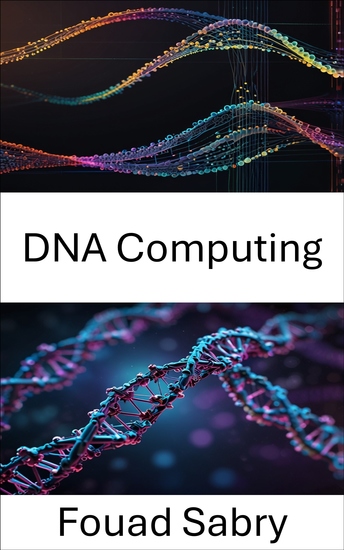
DNA Computing - Unveiling the Power of Molecular Information Processing - cover
LER

DNA Computing - Unveiling the Power of Molecular Information Processing

Fouad Sabry

Editora: One Billion Knowledgeable

  • 0
  • 0
  • 0

Sinopse

In an age where technology continually transforms our world, DNA Nanotechnology stands at the forefront of the next big revolution. "DNA Computing" explores this powerful intersection of biology and computing, making it an essential read for professionals, undergraduate and graduate students, and enthusiasts interested in this cuttingedge field. Whether you're seeking a deep dive into molecular computing or looking to broaden your understanding of modern scientific advancements, this book is a vital resource. It connects the theoretical foundations with practical applications, making the complex world of DNAbased computation accessible and engaging
 
Chapters Brief Overview:
 
DNA computing: Introduces the concept of DNA computing and its potential to solve complex problems faster than conventional computing
 
DNA: Explores the foundational biological structure of DNA and its importance in the realm of computation
 
Chemical computer: Delves into the creation of chemical computers, explaining how DNA molecules can simulate computational processes
 
Adaptor hypothesis: Covers the adaptor hypothesis and its role in understanding DNA's capability to function as a computational system
 
Molecular logic gate: Examines molecular logic gates that use DNA strands to perform logical operations, key to DNA computing
 
Lulu Qian: Discusses the contributions of Lulu Qian to the field, highlighting her work in designing DNAbased logic circuits
 
Timeline of quantum computing and communication: Provides a historical overview of quantum computing, shedding light on its convergence with DNA nanotechnology
 
Deoxyribozyme: Focuses on deoxyribozymes, catalytic DNA molecules, and their applications in DNA computing and nanotechnology
 
Natural computing: Explores natural computing, using DNA and biological processes to solve computational problems efficiently
 
Biological computing: Investigates how biological systems, including DNA, can be harnessed to perform computations
 
Type II topoisomerase: Analyzes the role of Type II topoisomerase in DNA manipulation, vital for DNA computing processes
 
Leonard Adleman: Chronicles the pioneering work of Leonard Adleman, the founder of DNA computing, and its significance
 
Toehold mediated strand displacement: Explains the concept of toeholdmediated strand displacement, a crucial mechanism in DNA computing
 
Linear optical quantum computing: Discusses the intersection of optical quantum computing and DNA, pushing the boundaries of computational technology
 
DNA nanotechnology: Offers a comprehensive overview of DNA nanotechnology, its applications, and its potential to revolutionize computing
 
Nucleic acid design: Explores the design of nucleic acid molecules for use in computing systems and their applications in nanotechnology
 
Quantum computing: Provides an indepth look at quantum computing, and its potential collaboration with DNAbased systems
 
Unconventional computing: Introduces unconventional computing methods, exploring how DNA can play a role in future computational models
 
Molecular models of DNA: Discusses molecular models of DNA and their relevance in understanding DNA's computational capabilities
 
Optical computing: Covers optical computing systems and their potential integration with DNAbased computations for faster processing
 
Nucleic acid secondary structure: Focuses on the secondary structures of nucleic acids and their impact on DNA computation and nanotechnology
 
In this book, you’ll find not just theoretical insights but also practical applications that will propel you to the forefront of DNA nanotechnology. From groundbreaking logic gates to the exploration of quantum computing, "DNA Computing" is a mustread for anyone eager to unlock the full potential of molecularbased technologies.
Disponível desde: 06/03/2025.
Comprimento de impressão: 329 páginas.

Outros livros que poderiam interessá-lo

  • Our Universe - But An incoming outgoing wave - cover

    Our Universe - But An incoming...

    Mike Blake

    • 0
    • 0
    • 0
    Our Universe - But. An incoming/outgoing wave:Poem rediscovering the theories of the creation of the Universe.Some think of string theory, others, that waves are involved etc.My poem postulates a possible cosmic wave outward from the Big Bang, in the order of present Scientific theory.
    Ver livro
  • Anecdotes of Dogs - cover

    Anecdotes of Dogs

    Edward Jesse

    • 0
    • 0
    • 0
    "Histories are more full of examples of the fidelity of dogs than of friends." The character, sensibilities, and intellectual faculties of animals have always been a favourite study, and they are, perhaps, more strongly developed in the dog than in any other quadruped, from the circumstance of his being the constant companion of man. I am aware how much has been written on this subject, but having accumulated many original and interesting anecdotes of this faithful animal, I have attempted to enlarge the general stock of information respecting it.It is a pleasing task, arising from the conviction that the more the character of the dog is known, the better his treatment is likely to be, and the stronger the sympathy excited in his behalf.(Summary by Edward Jesse, extracted from the Preface)
    Ver livro
  • How to Do Chemical Tricks - cover

    How to Do Chemical Tricks

    A. T. Anderson

    • 0
    • 0
    • 0
    While a bit outdated in many of the more complex descriptions of several of the phenomena described, this book is nonetheless still fun and relevant for a person interested in basic chemistry or physics tricks, and the devices built in the book can be easily replicated with more modern materials. The book is split up into many little experiments, tricks, with an explanation on how it works, what's happening, and how to reproduce the effects at home.(summary by Kyle Van DeGlast)
    Ver livro
  • The Desert Further Studies in Natural Appearances - cover

    The Desert Further Studies in...

    John Charles van Dyke

    • 0
    • 0
    • 0
    The Desert by John Charles Van Dyke, published in 1901, is a lush, poetic description of the natural beauty of the American Southwest. "What land can equal the desert with its wide plains, its grim mountains, and its expanding canopy of sky!" Van Dyke, a cultivated art historian, saw "sublimity" in the desert's "lonely desolation," which previous generations had perceived only as a wasteland, and his book has a conservationist flavor which seems distinctly modern. "The deserts should never be reclaimed," he writes. "They are the breathing spaces of the west and should be preserved for ever." The changing colors of the sky, hills, and sand impress Van Dyke, as do the mirages. He celebrates the "long overlooked commonplace things of nature"-- cactus and grease wood, desert animals, and "winged life," the birds and insects. His writing has a philosophical undertone. "Not in vain these wastes of sand ... simply because they are beautiful in themselves and good to look upon whether they be life or death." Anyone who views with equal awe fiery sunrises and weeds growing out of pavement cracks will enjoy this reading of Van Dyke's The Desert.(Summary by Sue Anderson)
    Ver livro
  • Queer Little Folks - cover

    Queer Little Folks

    Harriet Beecher Stowe

    • 0
    • 0
    • 0
    A wonderful children's classic - a collection of moral stories told by animals in the woods. The wittily written stories explore various issues in a fun way. - Summary by Claire Schreuder
    Ver livro
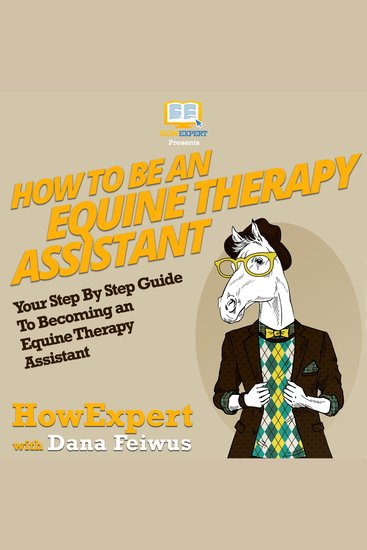
  • How To Be an Equine Therapy Assistant - Your Step By Step Guide To Becoming an Equine Therapy Assistant - cover

    How To Be an Equine Therapy...

    HowExpert, Dana Feiwus

    • 0
    • 0
    • 0
    If you want to improve other people’s lives as an equine therapy assistant, then check out this "How To Be an Equine Therapy Assistant" guide. 
    A person with a disability is only limited if they allow themselves to be. Where doctors’ methods fail, horses are there to help provide results. Equine therapeutic riding (commonly called horse therapy) is a fairly new form of therapy designed for people of all ages who live with any number of both physical and mental impairments.In its simplest sense, riding forces the human body to mimic the movement patterns of the horse’s pelvis, which in turn adds to their own range of movement while away from the barn. 
    Here’s what you’ll learn by reading this guide: 
    • Eligibility requirements for riders 
    • Explanations behind the reason that equine therapy works 
    • How to become a volunteer, which is a necessary component of every therapeutic riding program 
    • The positions open to volunteers 
    • Tips on handling the horses 
    • The equipment used during lessons 
    • The variety of exercises and activities utilized in each lesson 
    • The role of the volunteers in the improvement of the riders 
    • The visible/audible benefits of therapy riding 
    • The emotional impact of therapy riding on the volunteers 
    Equine therapy is a life-changing experience for everyone involved. There’s plenty more to learn in these pages before signing up to be a volunteer yourself! 
    About the Expert 
    My name is Dana Feiwus. I am a recent graduate of the University of North Texas with a major in English, Creative Writing. I began volunteering at ManeGait Therapeutic Horsemanship in McKinney, Texas two years ago because I was always fond of horses. However, I soon learned that therapy riding is about much more than horses, and I have been there almost every weekend since I began. 
    HowExpert publishes quick 'how to' guides on all topics from A to Z by everyday experts.
    Ver livro