Junte-se a nós em uma viagem ao mundo dos livros!
Adicionar este livro à prateleira
Grey
Deixe um novo comentário Default profile 50px
Grey
Assine para ler o livro completo ou leia as primeiras páginas de graça!
All characters reduced
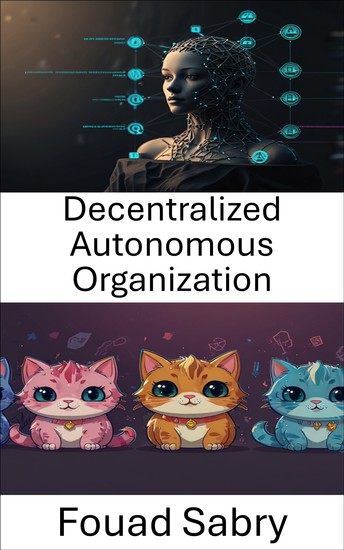
Decentralized Autonomous Organization - Unlocking the Future of Gaming Governance and Innovation - cover
LER

Decentralized Autonomous Organization - Unlocking the Future of Gaming Governance and Innovation

Fouad Sabry

Editora: One Billion Knowledgeable

  • 0
  • 0
  • 0

Sinopse

Decentralized Autonomous Organization-Learn the core principles of DAOs, focusing on their structure, functionality, and how they reshape governance models across industries
 
Tron (blockchain)-Dive into the blockchain behind Tron, exploring its vision for decentralizing the internet, with a focus on its scalability and entertainmentdriven ecosystem
 
The DAO-Understand the original DAO and its impact on the blockchain world, exploring the lessons learned and how they’ve shaped modern blockchain governance
 
Cardano (blockchain platform)-Delve into Cardano's unique proofofstake approach and its emphasis on scalability, security, and sustainability within blockchain networks
 
Solana (blockchain platform)-Discover how Solana's innovative consensus mechanism enhances speed and reduces costs, making it a formidable blockchain platform for decentralized applications
 
Ethereum Classic-Explore the early history of Ethereum, its split, and the lessons learned from Ethereum Classic’s journey in preserving blockchain integrity
 
Ethereum-A comprehensive guide to Ethereum, its smart contract functionality, and how it remains the heart of decentralized applications and financial ecosystems
 
Smart contract-Understand the inner workings of smart contracts, how they automate processes, and their role in establishing trustless agreements on blockchain platforms
 
Build Finance DAO-Gain practical insights into creating a financefocused DAO, understanding governance structures, and the role of tokenomics in decentralized finance
 
Dai (cryptocurrency)-Learn about Dai, the stablecoin that's central to decentralized finance (DeFi), and its role in promoting stability within a volatile cryptocurrency market
 
Polkadot (blockchain platform)-Explore Polkadot’s interoperability framework and how it allows multiple blockchains to work together seamlessly, enhancing the decentralized ecosystem
 
Blockchain-A deep dive into the foundational technology that powers all decentralized applications, focusing on its security, transparency, and distributed nature
 
Polygon (blockchain)-Learn about Polygon’s scaling solutions for Ethereum, its role in reducing network congestion, and its contribution to the broader blockchain ecosystem
 
Cryptocurrency-An introduction to cryptocurrencies, focusing on their role in the financial system, the underlying blockchain technology, and their growth as a new asset class
 
Decentralized application-Gain insight into decentralized applications (dApps), exploring their structure, functionality, and how they are transforming industries from finance to gaming
 
Tokenomics-Understand the principles of token economics, how tokens are used to incentivize behaviors within decentralized networks, and their impact on digital economies
 
Cryptocurrency wallet-Learn how cryptocurrency wallets function as the gateway to decentralized finance, ensuring secure and efficient transactions in the crypto space
 
Decentralized finance-Dive into decentralized finance (DeFi), exploring its innovations, challenges, and potential to disrupt traditional financial systems through smart contracts
 
Nonfungible token-Explore the emerging world of nonfungible tokens (NFTs), their cultural significance, and their applications in art, gaming, and digital ownership
 
Uniswap-Understand how Uniswap revolutionized decentralized exchanges (DEXs), enabling users to swap tokens directly without intermediaries
 
Cryptocurrency and crime-Learn about the darker side of the cryptocurrency world, exploring how criminals exploit the system and how regulators and the industry are responding
Disponível desde: 01/08/2025.
Comprimento de impressão: 249 páginas.

Outros livros que poderiam interessá-lo

  • Coleopterology - The World of Beetles: Earth's Most Diverse Creatures - cover

    Coleopterology - The World of...

    Mike Crawford

    • 0
    • 0
    • 0
    Beetles, belonging to the order Coleoptera, represent the largest group of insects, with over 400,000 described species and many more likely undiscovered. They account for nearly 40% of all known insects and about 25% of all animal life forms. Their sheer diversity, adaptability, and widespread presence make them one of the most successful groups in the animal kingdom. From the glistening metallic hues of jewel beetles to the formidable jaws of stag beetles, their forms and functions are incredibly varied, contributing to their ecological significance. 
    One of the key features that distinguish beetles from other insects is their hardened forewings, known as elytra. These protective wing cases cover the delicate hindwings and the dorsal side of the abdomen, shielding them from damage and desiccation. When beetles fly, the elytra lift to allow the hindwings to unfold and propel the insect. This unique adaptation has allowed beetles to explore diverse habitats, from rainforests and deserts to freshwater environments. 
    Beetles play essential roles in ecosystems. Some are decomposers, breaking down dead plants and animals and recycling nutrients back into the soil. Others are pollinators, contributing to the reproduction of flowering plants. Predatory beetles help control the populations of other insects, acting as natural pest control agents. Meanwhile, some species have specialized relationships with plants, fungi, or even mammals, highlighting their ecological versatility.
    Ver livro
  • Does Coffee Cause Cancer? - And 8 More Myths about the Food We Eat - cover

    Does Coffee Cause Cancer? - And...

    Dr. Christopher Labos

    • 0
    • 0
    • 0
    In this fascinating, refreshingly clarifying book about food, food myths, and how sloppy science perpetuates misconceptions about food, a medical doctor on his way to a conference gets drawn into conversations that answer the following questions:
    		
    		Does vitamin C prevent the common cold? And if it works, why does it only work in Canadian soldiers, ultramarathon runners, and skiers?
    		Was red meat really declared a carcinogen by the WHO? Does that mean I should become a vegetarian? And who decides what gets labeled as red meat and white meat?
    		Is salt really not that bad for you and did a group of researchers really want to experiment on prisoners to prove the point?
    		Does coffee cause cancer or heart attacks? Why did a California court say coffee needed a warning label?
    		Is red wine really good for your heart, and what makes the French Paradox such a paradox?
    		Why did the New England Journal of Medicine link eating chocolate with winning a Nobel Prize?
    		Why were eggs once bad for you but now good for you again? Does that mean I don’t need to worry about cholesterol?
    		Should I be taking vitamin D?
    Ver livro
  • TouchCode Class 2 - cover

    TouchCode Class 2

    Team Orange

    • 0
    • 0
    • 0
    An Activity Book to Develop Coding Skills 
    
    KEY FEATURES 
    - National Education Policy 2020 
    - Crack the Code: It includes fun-based adventurous activities. 
    - Time Taken: It lets the child analyse how much time he has taken for the activity. 
    - Active Learning: It is a section that contains hands-on activity for fun. 
    - Coding Fact: It gives an insight to the important and interesting fact of the concept. 
    - Gamification: Scan the QR code to enter the world of games on Computational Thinking. 
    
    DESCRIPTION 
    
    TouchCode, a series for grades 1–8, is a specially designed book to develop Computational Thinking skills and move towards making codes. 
    
    TouchCode books for Grades 1–5 have activities based on various skills that amplifies the CT skills and build a strong foundation for middle school. TouchCode books for Grades 6–8 take a step ahead and let the child enter the world of codes using blockbased coding. 
    
    WHAT WILL YOU LEARN 
    You will learn about: 
    - Reasoning 
    - Critical Thinking & Analysis 
    - Data Processing 
    - Algorithmic Intelligence 
    - Computational Thinking 
    
    WHO THIS BOOK IS FOR 
    Grade - 2 
    
    TABLE OF CONTENTS 
    LEVEL 1 REASONING 
    1.1 Counting Objects 
    1.2 Shapes 
    1.3 Number Pattern 
    1.4 Number Grid 
    1.5 Number Pyramid 
    1.6 Word Search 
    1.7 Word Circle 
    CHALLENGE 1 Balance Me! 
    LEVEL 2 CRITICAL THINKING & ANALYSIS 
    2.1 Picture Puzzle 
    2.2 Spot the Difference 
    2.3 Odd One Out 
    2.4 Directions 
    2.5 Map 
    2.6 Rhyming Words 
    2.7 Riddles 
    CHALLENGE 2 Counting Cat 
    Active Learning: Origami 
    LEVEL 3 DATA PROCESSING 
    3.1 Representing Information 
    3.2 Decoding 
    CHALLENGE 3 Code Cracker 
    LEVEL 4 ALGORITHMIC INTELLIGENCE 
    4.1 Stepwise Thinking 
    4.2 Algorithm 
    4.3 Understanding Programs 
    4.4 Decision Making 
    4.5 Loops 
    CHALLENGE 4 Finding the Way 
    Scoreboard 
    Gamification 
    Answers
    Ver livro
  • The Dinosaur's Descendants - cover

    The Dinosaur's Descendants

    Mark Ellsberry

    • 0
    • 0
    • 0
    DR. STEVEN ANDREWS is an assistant professor of paleontology at Montana State University when he is recruited for a top-secret National Security Agency job—a mission so secret that not even the President of the United States is aware of it.
    Ver livro
  • The Lagoon - Encounters with the Whales of San Ignacio - cover

    The Lagoon - Encounters with the...

    James Michael Dorsey

    • 0
    • 0
    • 0
    Once a killing ground for whalers hunting a leviathan they called the "devilfish," the San Ignacio Lagoon in Baja, Mexico, is now an environmental and spiritual sanctuary—the only place in the world where animals in their natural aquatic environment routinely seek out human contact. A nursery for the gray whale since before recorded history, the lagoon and its stories, told here by James Michael Dorsey, illuminate the magic of human connection to animals, and what those bonds teach us about ourselves and our purpose on this shared planet. 


    Weaving two decades of San Ignacio adventures with the history of the lagoon, Dorsey vividly captures the lively people of Baja, like the mystical godfather of whale-watching, Pachico Mayoral, as well as the whales he's bonded with over the years, like Slackjaw, Patch, and Dervish. Looming over his journeys are the many dangers to the area, from the Mitsubishi Corporation's attempts to build salt works to plans for resort development on the Baja coast, to pollution and climate change, and even to the orcas who hunt the gray whales. 


    A tale of wondrous bonds between the intelligent, spirited gray whales and the people from around the world who come to this place to touch, kiss, and play with them—The Lagoon is a testament to the importance of preserving these animals and their natural habitats.
    Ver livro
  • Dividing Lines - How Transportation Infrastructure Reinforces Racial Inequality - cover

    Dividing Lines - How...

    Deborah N. Archer

    • 0
    • 0
    • 0
    Our nation's transportation system is crumbling. But as acclaimed scholar and ACLU president Deborah Archer warns in Dividing Lines, before we can think about rebuilding and repairing, we must consider the role race has played in transportation infrastructure, from the early twentieth century and into the present day. 


    As Archer demonstrates, the success of the Civil Rights movement and the fall of Jim Crow in the 1960s did not mean the end of segregation. With state-sanctioned racism no longer legal, officials across the country turned to transportation infrastructure to keep Americans divided. A wealthy white neighborhood could no longer be "protected" by racial covenants and segregated shops, but a multilane road, with no pedestrian crossings, could be built along its border to make it difficult for people from a lower-income community to visit. Highways could not be routed through Black neighborhoods based on the race of their residents, but those neighborhoods' lower property values—a legacy of racial exclusion—could justify their destruction. 


    Drawing on a wealth of sources, including interviews with people who now live in the shadow of highways and other major infrastructure projects, Archer presents a sweeping, national account—from Atlanta and Houston to Indianapolis and New York City—of our persistent divisions.
    Ver livro