Join us on a literary world trip!
Add this book to bookshelf
Grey
Write a new comment Default profile 50px
Grey
Subscribe to read the full book or read the first pages for free!
All characters reduced
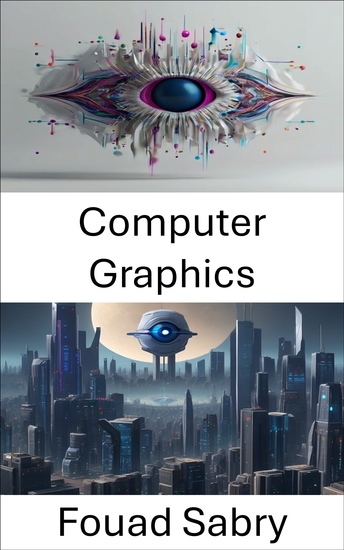
Computer Graphics - Exploring the Intersection of Computer Graphics and Computer Vision - cover

Computer Graphics - Exploring the Intersection of Computer Graphics and Computer Vision

Fouad Sabry

Publisher: One Billion Knowledgeable

  • 0
  • 0
  • 0

Summary

What is Computer Graphics
 
Computer graphics deals with generating images and art with the aid of computers. Today, computer graphics is a core technology in digital photography, film, video games, digital art, cell phone and computer displays, and many specialized applications. A great deal of specialized hardware and software has been developed, with the displays of most devices being driven by computer graphics hardware. It is a vast and recently developed area of computer science. The phrase was coined in 1960 by computer graphics researchers Verne Hudson and William Fetter of Boeing. It is often abbreviated as CG, or typically in the context of film as computer generated imagery (CGI). The non-artistic aspects of computer graphics are the subject of computer science research.
 
How you will benefit
 
(I) Insights, and validations about the following topics:
 
Chapter 1: Computer graphics
 
Chapter 2: Rendering (computer graphics)
 
Chapter 3: Raster graphics
 
Chapter 4: Vector graphics
 
Chapter 5: Scanline rendering
 
Chapter 6: Rasterisation
 
Chapter 7: Texture mapping
 
Chapter 8: Framebuffer
 
Chapter 9: Scientific visualization
 
Chapter 10: Volume rendering
 
(II) Answering the public top questions about computer graphics.
 
(III) Real world examples for the usage of computer graphics in many fields.
 
Who this book is for
 
Professionals, undergraduate and graduate students, enthusiasts, hobbyists, and those who want to go beyond basic knowledge or information for any kind of Computer Graphics.
Available since: 05/04/2024.
Print length: 96 pages.

Other books that might interest you

  • Urban Economics and Policy - The Forces Shaping City Growth (3 in 1) - cover

    Urban Economics and Policy - The...

    Lyric Vale

    • 0
    • 0
    • 0
    Cities are complex economic organisms, pulsing with intricate networks of human activity, capital flow, and systemic interactions that define our modern social landscapes. In the dynamic realm of urban economics, every street corner, housing development, and land transaction tells a story of economic forces, policy decisions, and human aspirations that collectively shape the growth, opportunity, and challenges of urban environments. This comprehensive exploration delves into the multifaceted world of Urban Economics, Housing and Urban Policy, and Urban Land Markets—revealing the sophisticated economic mechanisms that transform cities from mere geographical locations into vibrant, evolving economic ecosystems. 
    The narrative of urban economic development is a profound journey through the intersections of policy, market dynamics, and human potential. By examining the strategic frameworks that govern urban land use, housing accessibility, economic development, and spatial economic patterns, this book uncovers the hidden economic architectures that determine how cities grow, prosper, and respond to changing social and economic pressures. Readers will navigate through the complex terrain of urban economic theory and practice, exploring how local and national policies, real estate markets, infrastructure investments, and global economic trends interact to create the economic DNA of our urban environments. From understanding land valuation and housing affordability to analyzing the economic implications of urban design and development, this exploration offers a comprehensive lens into the economic forces that continually reshape our urban landscapes.
    Show book
  • Ultimate Agile Administration with Jira - Solutions for Agile Project Administration Using Dashboards Automation Rules and Plugin Integration with Jira - cover

    Ultimate Agile Administration...

    Yogita Chhaya

    • 0
    • 0
    • 0
    "Empowering Administrators and Teams With Ultimate Solutions for Agile Project Success with Jira Software"


    Book Description
    The “Ultimate Agile Administration with Jira” begins with an in-depth exploration of Agile fundamentals, providing a comprehensive overview of Scrum and Kanban frameworks. Readers will gain proficiency in setting up projects, covering the Jira product family, key terminologies, and project templates. 


    Readers will learn to create boards and implement Agile best practices within Jira. It will help to configure boards for visualizing team progress, planning sprints, and efficiently prioritizing and estimating tasks. It offers insights into Jira administration, guiding customization of workflows, screens, and issues to meet unique team requirements and seamlessly integrate them into existing projects. In the final section, the book explores team-managed projects in Jira, covering Filters, Dashboards, Reporting, and Automation Rules. Tips and tricks are also provided to optimize team productivity. 


    The book offers an overview of Atlassian Marketplace plugins, Atlassian Analytics, and Jira Product Discovery. It comprehensively explores the features of the Jira Advanced Roadmap. 


    Table of Contents
    
    1. Getting Started with Agile, Jira, and Jira Terminologies
    2. Working with Project Templates
    3. Creating Users, Groups, Roles, and Understanding Permissions
    4. Managing Backlog, Sprints, and Boards
    5. Understanding Issue types and Issue type Schemes
    6. Customizing Fields, Field Configuration schemes, Screens, and Screen schemes
    7. Configuring Workflows in Jira in Agile Projects
    8. Filters, Dashboards, and Agile Reporting
    9. Jira Automation Rules
    10. Managing Team- Managed Projects
    11. Jira Best Practices and Must-know Features in Advanced Roadmaps
    12. Atlassian Marketplace and Plugins   
    Index
    Show book
  • Ultimate Cilium and eBPF for Cloud Native Development - Master eBPF and Cilium for Unmatched Cloud Security Performance and Observability in Modern Cloud Environments - cover

    Ultimate Cilium and eBPF for...

    Gaurav Shekhar

    • 0
    • 0
    • 0
    Unlock the Power of Cilium and eBPF to Revolutionize Cloud-Native Security and Networking
    Book Description
    Ciliume and BPF are revolutionizing cloud-native development by providing unparalleled observability, security, and performance enhancements. Ultimate Cilium and eBPF for Cloud Native Development bridges the knowledge gap, empowering developers, DevOps engineers, and IT professionals to leverage these technologies for building robust, scalable cloud-native applications.
    This book explores eBPF and Cilium in depth, starting with core concepts and fundamental principles to establish a solid foundation. Subsequent chapters cover practical applications, including tutorials on implementing Cilium in Kubernetes, optimizing network performance, and enhancing security with eBPF. Key takeaways include mastering eBPF programming, deploying Cilium for networking, monitoring applications, and leveraging eBPF for advanced security. Real-world case studies and hands-on examples provide practical insights and reinforce learning.
    By the end of this book, you will be equipped to implement and manage eBPF and Cilium in cloud-native projects. You will gain the skills to optimize performance, ensure robust security, and achieve superior observability, positioning yourself at the forefront of cloud-native development.
    Table of Contents
    1. Introduction to Cloud Native Networking
    2. Fundamentals of eBPF
    3. Getting Started with Cilium
    4. Advanced Cilium Features
    5. eBPF Programming for Cloud-Native Environments
    6. Cilium Internals
    7. Security with Cilium and eBPF
    8. Observability and Monitoring
    9. Load Balancing and Service Discovery
    10. Performance Optimization
    11. Troubleshooting and Debugging
    12. Extended Use Cases
    13. Future of Cloud Native Networking with eBPF      
    
    Index
    Show book
  • Pollution - The Environmental Crisis That Threatens Our Health - cover

    Pollution - The Environmental...

    Marcus Klein

    • 0
    • 0
    • 0
    Pollution is a pervasive and urgent global issue that affects every corner of the planet, from the air we breathe to the water we drink and the land we depend on for survival. Over the past century, the rapid pace of industrialization, urbanization, and population growth has contributed significantly to environmental degradation. What was once seen as the price of progress has now become a formidable challenge that threatens the health of humans, animals, and ecosystems alike.  
      
    The scope of pollution is vast and multifaceted. It encompasses a wide range of pollutants, including chemicals, plastics, heavy metals, and greenhouse gases, which infiltrate the air, water, and soil. While air pollution from vehicle emissions and industrial activities poses immediate health risks, water pollution contaminates vital freshwater resources, threatening marine ecosystems and human livelihoods. Land pollution, driven by improper waste disposal and deforestation, further exacerbates the crisis by depleting soil fertility and destroying habitats. Together, these forms of pollution create a complex web of environmental and health hazards that demand immediate attention.  
      
    Human health is intricately tied to the environment, making pollution a direct and indirect cause of numerous diseases and conditions. Respiratory ailments, cardiovascular issues, and neurological disorders are increasingly linked to exposure to polluted air and toxic chemicals. Vulnerable populations, such as children and low-income communities, bear a disproportionate burden of these impacts, amplifying social inequalities. Beyond physical health, the psychological toll of living in a degraded environment adds another layer of complexity to the crisis. 
    Show book
  • James Webb Space Telescope The: The History of the Most Powerful Telescope in Space - cover

    James Webb Space Telescope The:...

    Editors Charles River

    • 0
    • 0
    • 0
    On April 24, 1990, the Space Shuttle Discovery lifted off from Kennedy Space Center on the Space Shuttle Program’s 35th mission, but this was no ordinary mission. In its payload bay, Discovery was carrying the Hubble Space Telescope, with the objective of putting the telescope into orbit. 	The Hubble telescope, working in space less than 400 miles above the Earth’s surface, produced photos of galaxies previously unseen as they existed only 500 million years before the “Big Bang.” It was fortuitous that Hubble outlived its anticipated lifespan by many years, because the launch of its successor, the James Webb Space Telescope, was delayed by 15 years.   
    	Several new obstacles delayed the launch, but NASA believed that it was finally prepared to proceed in 2020 after completion of construction four years prior. Then came the COVID pandemic, and 2020 became the year of “delayed events,” with the launch of the most sophisticated space telescope in history proving to be no exception.  
    	The increase in excitement was palpable. Scientists had viewed much of the universe through Hubble, almost as it was when it was formed, but they learned that none of these galaxies were the first ones formed. Then ultimately realized that “Hubble wasn’t the right instrument to detect those first galaxies.” “The farther we can see in space, the farther we can see in time…and that’s not a metaphor. That’s actually literally true,” explained scientist Amber Straughn. The Webb Space Telescope represents “looking in a part of space that we’ve never seen before.” The telescope will be able to detect the earliest galaxies because of its unparalleled sensitivity. Another factor is the kind of light it will collect, “light that our eyes aren’t designed to see.”
    Show book
  • The Theory That Would Not Die - How Bayes' Rule Cracked the Enigma Code Hunted Down Russian Submarines & Emerged Triumphant from Two Centuries of C - cover

    The Theory That Would Not Die -...

    Sharon Bertsch McGrayne

    • 0
    • 1
    • 0
    "This account of how a once reviled theory, Baye’s rule, came to underpin modern life is both approachable and engrossing" (Sunday Times).  A New York Times Book Review Editors’ Choice Bayes' rule appears to be a straightforward, one-line theorem: by updating our initial beliefs with objective new information, we get a new and improved belief. To its adherents, it is an elegant statement about learning from experience. To its opponents, it is subjectivity run amok. In the first-ever account of Bayes' rule for general readers, Sharon Bertsch McGrayne explores this controversial theorem and the generations-long human drama surrounding it.   McGrayne traces the rule’s discovery by an 18th century amateur mathematician through its development by French scientist Pierre Simon Laplace. She reveals why respected statisticians rendered it professionally taboo for 150 years—while practitioners relied on it to solve crises involving great uncertainty and scanty information, such as Alan Turing's work breaking Germany's Enigma code during World War II.   McGrayne also explains how the advent of computer technology in the 1980s proved to be a game-changer. Today, Bayes' rule is used everywhere from DNA de-coding to Homeland Security. Drawing on primary source material and interviews with statisticians and other scientists, The Theory That Would Not Die is the riveting account of how a seemingly simple theorem ignited one of the greatest controversies of all time.
    Show book