¡Acompáñanos a viajar por el mundo de los libros!
Añadir este libro a la estantería
Grey
Escribe un nuevo comentario Default profile 50px
Grey
Suscríbete para leer el libro completo o lee las primeras páginas gratis.
All characters reduced
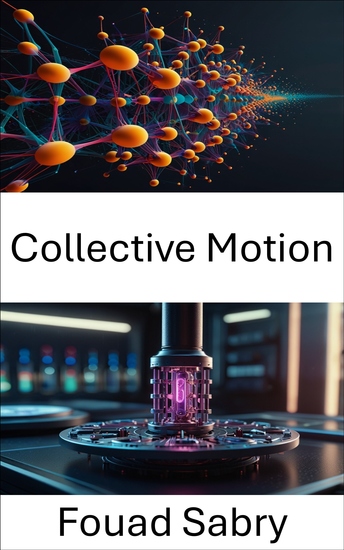
Collective Motion - Exploring the Dynamics of Nanomotor Interactions in Complex Systems - cover

Collective Motion - Exploring the Dynamics of Nanomotor Interactions in Complex Systems

Fouad Sabry

Editorial: One Billion Knowledgeable

  • 0
  • 0
  • 0

Sinopsis

"Collective Motion" is an essential exploration within the Nanomotor series, where cuttingedge science and innovative concepts converge. This book provides a deep dive into the dynamic world of nanotechnology, offering insights into the mechanisms behind selfpropelled particles, biohybrid systems, and active matter. Whether you're an undergraduate student, a graduate researcher, or a professional in the field, this work will expand your understanding of the complex behavior and technological potential of nanoscale systems. As technology continues to evolve, the concepts in "Collective Motion" will be critical for anyone involved in nanomotor development, nanorobotics, and related fields. The benefits of this book go beyond its price, providing valuable knowledge and insight that will accelerate your learning and professional growth.
 
Chapters Brief Overview:
 
1: Collective motion: Introduces the phenomena where particles or organisms exhibit coordinated movement.
 
2: Coffee ring effect: Explores how particles aggregate at the edges of a droplet, influencing material deposition.
 
3: Microswimmer: Discusses smallscale swimmers that mimic biological systems for applications in medicine and industry.
 
4: Rheotaxis: Examines how particles or organisms move in response to fluid flow, impacting bioengineering.
 
5: Biohybrid microswimmer: Describes the fusion of biological and synthetic systems to create efficient microswimmers.
 
6: Liquid marbles: Investigates the unique behavior of droplets encased in powder layers, enabling innovative applications.
 
7: Vicsek model: Introduces a model for understanding the collective behavior of selfpropelled particles.
 
8: Nanorobotics: Focuses on designing and controlling robots at the nanoscale for precision applications.
 
9: Active matter: Studies materials that consume energy and exhibit dynamic behavior on their own, opening new technological possibilities.
 
10: Electroosmotic pump: Explores pumps that move liquids by applying electric fields, ideal for labonachip applications.
 
11: Soft matter: Investigates materials with properties between solids and liquids, important for flexible and responsive systems.
 
12: Swarm behaviour: Looks at the collective movement and decisionmaking processes of groups, inspiring algorithms and robotics.
 
13: Clustering of selfpropelled particles: Discusses how particles form clusters under specific conditions, relevant for designing nanomotor systems.
 
14: Electrophoresis: Describes the movement of particles in a fluid under the influence of an electric field, central to microfluidics.
 
15: Selfpropelled particles: Provides a foundation for understanding the fundamental forces and behaviors behind selfmotility.
 
16: Molecular motor: Examines the operation of molecularlevel engines that can power nanoscale machines.
 
17: Chemotactic drugtargeting: Discusses the use of selfpropelled particles for targeted drug delivery, enhancing treatment efficacy.
 
18: Nanomotor: Focuses on the design and functioning of motors at the nanoscale, revolutionizing biomedical and mechanical applications.
 
19: Micromotor: Investigates motors capable of driving microscale devices, vital for precision tasks.
 
20: Janus particles: Explores particles with two distinct sides, influencing their behavior in various environments.
 
21: Micropump: Looks into pumps at the micro scale that can be used in medical, environmental, and industrial applications.
 
This book is an indispensable resource for professionals, students, and enthusiasts interested in nanotechnology and nanomotors, offering a blend of theoretical knowledge and practical insight for a rapidly advancing field. Dive into the intricate world of Nanomotor systems and discover the cuttingedge technologies shaping the future.
Disponible desde: 15/03/2025.
Longitud de impresión: 266 páginas.

Otros libros que te pueden interesar

  • From Swamp to Wetland - The Creation of Everglades National Park - cover

    From Swamp to Wetland - The...

    Chris Wilhelm

    • 0
    • 0
    • 0
    This book chronicles the creation of Everglades National Park, the largest subtropical wilderness in the United States. Prior to the park's creation, the Everglades was seen as a reviled and useless swamp, unfit for typical recreational or development projects. 


    Park advocates drew on new ideas concerning the value of biota and ecology, the importance of wilderness, and the need to protect habitats, marine ecosystems, and plant life to redefine the Everglades. Using these ideas, the Everglades began to be recognized as an ecologically valuable and fragile wetland—and thus a region in need of protective status. 


    While these new ideas foreshadowed the later emergence of modern environmentalism, tourism and the economic desires of Florida's business and political elites also impacted the park's future. These groups saw the Everglades' unique biology and ecology as a foundation on which to build a tourism empire. 


    Yet, even after the park's creation, conservative landowners successfully fought to limit the park and saw it as a threat to their own economic freedoms. The battle to save the swamp's biodiversity continues, and Everglades Park stands at the center of ongoing restoration efforts.
    Ver libro
  • Data Mesh Architecture - Achieving Excellence in Efficiency and Innovation - cover

    Data Mesh Architecture -...

    Simon Winston

    • 0
    • 0
    • 0
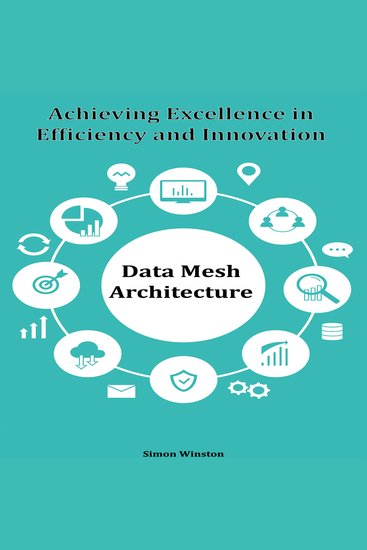
    In an era where data reigns supreme, organizations are seeking innovative solutions to tame the ever-growing data landscape. "Demystifying Data Mesh" is your essential guide to understanding and implementing one of the most revolutionary concepts in data architecture: the Data Mesh. 
    With real-world case studies, practical examples, and actionable insights, "Demystifying Data Mesh" equips you with the knowledge and tools to implement Data Mesh in your organization. You'll discover how to ensure data quality, security, and governance while harnessing the full potential of your data assets. 
    As the data landscape continues to evolve, staying ahead of the curve is essential. This book not only provides a deep understanding of Data Mesh but also explores the future trends and possibilities it brings to the table, including its relationship with AI, machine learning, and the cloud. 
    Whether you're a data engineer, data scientist, data analyst, or a business leader looking to make data-driven decisions, this book is your gateway to unlocking the true potential of your data. "Demystifying Data Mesh" empowers you to revolutionize your data architecture and harness the power of data like never before. 
     
    Ver libro
  • Nature’s Ghosts: The world we lost and how to bring it back - cover

    Nature’s Ghosts: The world we...

    Sophie Yeo

    • 0
    • 0
    • 0
    Winner of the 2024 Richard Jefferies Award for nature writingShortlisted for the 2024 Wainwright Prize for Writing on ConservationA Times Science Book of the Year 
    ‘Sophie writes fantastically, chronicling the most important issues facing nature conservationists today.’ Chris Packham 
    For thousands of years, humans have been the architects of the natural world. Our activities have permanently altered the environment – for good and for bad. 
    In Nature’s Ghosts, award-winning journalist Sophie Yeo examines how the planet would have looked before humans scrubbed away its diversity: from landscapes carved out by megafauna to the primeval forests that emerged following the last Ice Age, and from the eagle-haunted skies of the Dark Ages to the flower-decked farms of more recent centuries. 
    Uncovering the stories of the people who have helped to shape the landscape, she seeks out their footprints even where it seems there are none to be found. And she explores the timeworn knowledge that can help to fix our broken relationship with the earth. 
    Along the way, Sophie encounters the environmental detectives – archaeological, cultural and ecological – reconstructing, in stunning detail, the landscapes we have lost. 
    Today, the natural world is more vulnerable than ever; the footprints of humanity heavier than they have ever been. But, as this urgent book argues, from the ghosts of the past, we may learn how to build a more wild and ancient future. 
    Sophie Yeo's Nature’s Ghosts is a non-fiction masterpiece that takes us on a journey through the science of ecology, exploring the habitats and ecosystems that have been altered by human activity. The book emphasises the need for protection of these resources, offering a glimpse into the past to help us understand how we can shape a better future. 
    For fans of Robert Macfarlane (Is a River Alive?), Robin Wall Kimmerer (The Democracy of Species), Isabella Tree (Wilding), Jennifer Ackerman (What an Owl Knows), and Derek Gow (Birds, Beasts and Bedlam). 
    HarperCollins 2024
    Ver libro
  • Gentle Rain and Tropical Birds - Soundscapes for a Holistic Life - cover

    Gentle Rain and Tropical Birds -...

    Greg Cetus

    • 0
    • 0
    • 0
    Experience the calming patter of gentle rain mingled with the melodious songs of tropical birds, creating a serene audio environment perfect for unwinding and enhancing holistic living. This collection aims to harmonize body and mind, promoting relaxation, mindfulness, and a deeper connection to the natural world, making every moment more tranquil.
    Ver libro
  • In Plain Sight: Book Summary & Analysis - cover

    In Plain Sight: Book Summary &...

    Briefly Summaries

    • 0
    • 0
    • 0
    This is a concise summary and analysis of In Plain Sight, by Ross Coulthart.
     
    It is not the original book and is not affiliated with or endorsed by Ross Coulthart.
     
    Ideal those seeking a quick and insightful overview.
    
     
    In Plain Sight investigates the mystery of unidentified flying objects (UFOs) and the secretive government operations surrounding them. The book explores high-level revelations about military encounters, covert investigations, and the evidence suggesting that UFOs are not just the stuff of conspiracy theories but a significant, unexplained phenomenon. Drawing on interviews and classified documents, it presents a compelling case for the existence of extraterrestrial encounters and the cover-ups that have obscured the truth.
    Ver libro
  • Artificial Intelligence Class 4 - cover

    Artificial Intelligence Class 4

    Geeta Zunjani

    • 0
    • 0
    • 0
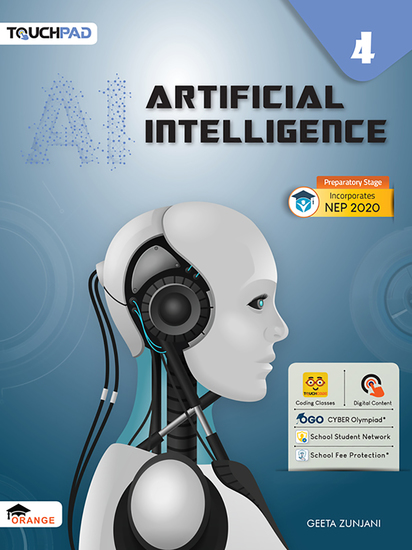
    Touchpad Artificial Intelligence series has some salient features such as AI Reboot, AI Deep Thinking, 
    AI in Life, AI Lab and AI Ready which ensures that NEP 2020 guidelines are followed. 
    
    KEY FEATURES 
    - National Education Policy 2020 
    - AI Game: It contains an interesting game or activity for the students to try on their own or with their classmates to learn how the game mechanics work while having fun. 
    - Brainy Fact: It presents an interesting fact relevant to the topic or the chapters. 
    - AI in Life: It presents questions that promotes the moral growth and experiential learning. 
    - AI Deep Thinking: It presents a question/scenario in which the students are required to think deeply and apply their knowledge. 
    - Digital Solutions 
    
    DESCRIPTION 
    Artificial Intelligence is the most talked about subject and we all understand that the future lies in knowing it well. The Touchpad AI series is written for classes I to VII keeping in mind about the future and scope that lies in AI. Classes VIII to XII are strictly based on CBSE curriculum. They have competency-based questions to ensure that students are capable of applying their learning to solve some real-life challenges. The knowledge is spread in a phased manner so that at no age the kid finds it difficult to understand the theory. 
    
    Each lesson begins with a short conversation between human characters and one humanoid which tries to explain in simple words about the topics related to Artificial Intelligence. The story is built up in such a way that the curiosity of the reader compels to read the entire lesson. The idea behind introducing humanoid is to touch the hearts of our kids with the existence of friendly robots in the form of humanoids. 
    
    Touchpad Artificial Intelligence series has some salient features such as AI Reboot, AI Deep Thinking, AI in Life, AI Lab and AI Ready which ensures that NEP 2020 guidelines are followed. 
    
    There are plenty of Video Sessions for students and teachers to go beyond the syllabus and enrich their knowledge. There are some brainstorming questions in the form of AI Task in between the topics to ensure that students give pause to their learning and use their skills to reach to some creative ideas in solving given problems. 
    
    I would like to humbly acknowledge the support provided by my family, friends and Orange Education Pvt Ltd team to accomplish this noble task. I am sure that this book will prove to be a tool in making the students future ready for Artificial Intelligence. Wishing learners great success in future endeavours. Enjoy the journey of happy learning!! All your feedbacks and suggestions will always be wholeheartedly welcomed to improve and grow. 
    
    WHAT WILL YOU LEARN 
    You will learn about: 
    - Human-Machine Interaction 
    - Introduction to AI 
    - AI in Apps 
    - Types of Robots 
    - Myths and Facts of AI 
    
    WHO THIS BOOK IS FOR 
    Grade 4 
    
    TABLE OF CONTENTS 
    
    1. AI Inventions 
    a) LOVOT 
    b) Embodied Moxie 
    c) Meeting Ow 
    d) Kuri Mobil 
    2. Human vs. Machine Intelligence 
    a) What is Intelligence? 
    b) Human Intelligence 
    c) Artificial Intelligence 
    d) Are Computers Smarter? 
    e) Similarities between Humans and Machines 
    f) Differences between Human and Artificial Intelligence 
    
    3. How AI Works in Different Applications 
    a) Optical Character Recognition 
    b) Speech Recognition 
    c) Face Recognition 
    Test Sheet 1 
    
    4. Latest Robots 
    a) Definition of Robots 
    b) Types of Robots according to their Applications 
    c) Latest Robots 
    
    5. Fields Where Robots Are Used 
    a) Security and Surveillance 
    b) Manufacturing 
    c) Military 
    d) Customer Service 
    e) Cooking 
    f) Healthcare 
    g) Space Exploration 
    h) Entertainment 
    i) Agriculture 
    j) Underwater Research 
    Test Sheet 2 
    
    AI Ready 
    Projects
    Ver libro