¡Acompáñanos a viajar por el mundo de los libros!
Añadir este libro a la estantería
Grey
Escribe un nuevo comentario Default profile 50px
Grey
Suscríbete para leer el libro completo o lee las primeras páginas gratis.
All characters reduced
Big Man Anthropology - Understanding Political Influence and Leadership Dynamics - cover

Big Man Anthropology - Understanding Political Influence and Leadership Dynamics

Fouad Sabry

Editorial: One Billion Knowledgeable

  • 0
  • 0
  • 0

Sinopsis

"Big Man Anthropology" presents an engaging exploration of how influential leaders in small-scale societies shape their political, social, and economic landscapes.
 
1: Big Man (Anthropology): Explore the "Big Man" concept, focusing on how these leaders exert influence and authority in their communities.
 
2: Cargo Cult: Examine Cargo Cults, revealing how their expectations reflect broader themes of leadership and power dynamics.
 
3: Melanesia: Delve into Melanesian context, highlighting unique leadership characteristics and social organization in the region.
 
4: Reciprocity (Cultural Anthropology): Learn about reciprocity's principle and its influence on leadership and social relations in small societies.
 
5: Kula Ring: Investigate the Kula Ring system, a traditional trade network in Melanesia, and its role in leadership and social bonds.
 
6: Moka Exchange: Explore Moka Exchange in Papua New Guinea, emphasizing its significance in reinforcing hierarchical structures.
 
7: Ongka's Big Moka: Analyze Ongka's Big Moka case study, illustrating Moka Exchange's complexities and leadership dynamics.
 
8: Melanesian Mythology: Discover Melanesian mythology's influence on leadership and social order in their societies.
 
9: Melanesians: Gain insights into Melanesian cultures, focusing on embedded leadership structures within their social fabric.
 
10: Andrew Strathern: Learn about Andrew Strathern's contributions to understanding leadership in Melanesian societies.
 
11: History of Oceania: Contextualize Oceania's history to appreciate leadership and political structures' evolution.
 
12: Gift Economy: Examine gift economies' role in establishing and maintaining social hierarchies and leadership.
 
13: Pacific Islander: Explore the broader Pacific Islander context, noting similarities and differences in leadership structures.
 
14: Chiefdom: Investigate chiefdoms and their impact on leadership dynamics and social organization across cultures.
 
15: Religion in Papua New Guinea: Examine the interplay of religion and leadership in Papua New Guinea, highlighting spiritual beliefs' influence.
 
16: Oceanian Art: Discover how Oceanian art reflects and reinforces leadership and social hierarchies in Pacific societies.
 
17: Melpa Language: Explore Melpa language's role in communication and leadership within Melanesian cultures.
 
18: Melanesia Cup: Understand the Melanesia Cup's cultural significance and its influence on leadership dynamics.
 
19: Dema Deity: Examine the Dema deity's role in illustrating the intersection of religion and leadership.
 
20: 2017 FIBA Melanesia Basketball Cup: Analyze the impact of the 2017 FIBA Melanesia Basketball Cup on regional leadership and social cohesion.
 
21: 2017 FIBA Women's Melanesia Basketball Cup: Explore the Women's Melanesia Basketball Cup's role in shaping gender dynamics and leadership.
Disponible desde: 17/10/2024.
Longitud de impresión: 216 páginas.

Otros libros que te pueden interesar

  • Filthy Rich Politicians - The Swamp Creatures Latte Liberals and Ruling-Class Elites Cashing in on America - cover

    Filthy Rich Politicians - The...

    Matt K. Lewis

    • 0
    • 0
    • 0
    From one of America's sharpest conservative journalists is this searing, thought-provoking and hilarious takedown of the ruling class running amok in Washington. These are your elected officials. Some are slyly taking advantage of the system. They are hoping no one is savvy enough to notice. But Matt Lewis has. And this is what he’s learned.  Today’s politicians are an unsavory lot—a hybrid of plutocrats and hypocrites. And it’s worse (and more laughable) than you can imagine. Lewis will introduce you to a crop of latte liberals, ivy league populists, insider traders, trust-fund babies, and swamp creatures as he exposes how truly ludicrous money in politics has gotten.  In Filthy Rich Politicians, Lewis embarks on an investigative deep dive into the ridiculous state of modern American democracy—a system where the rich get elected and the elected get rich. One of the brightest conservative writers of his generation, Lewis doesn’t just complain: he articulates how Americans can achieve accountability from their elected leaders through radically commonsense reforms. But many of these ruling-class elites have a vested financial interest in rejecting the reforms so desperately needed to rebuild Americans’ trust in the institutions that once made our nation great.  This is not an “eat the rich” kind of book, and it is not for those who want to stoke class warfare, topple the whole regime, and burn it all to the ground. This is a must-read book for thoughtful readers who yearn for transparency and will commit to holding their elected leaders accountable to those they are supposed to represent—we the people.  The reforms spelled out in this book would incentivize good behavior in our leaders, stymie corruption, and prevent politicians from using the system (and our taxpayer dollars) to feather their filthy rich nests.  It is only by taking these steps to reform the system that we can rebuild trust in our institutions and preserve American democracy for future generations. There really is no richer inheritance we could leave them.
    Ver libro
  • Geopolitics and Energy Diplomacy in the Caspian Region - Developments after the Downfall of the Soviet Union - cover

    Geopolitics and Energy Diplomacy...

    Yunis Gurbanov

    • 0
    • 0
    • 0
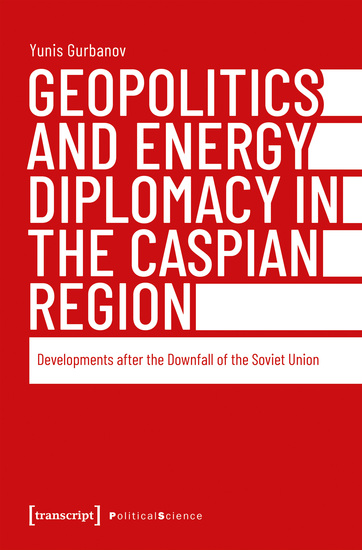
    Could the Caspian Region replace Russia's or the Persian Gulf's immense energy potential with their energy resources? Yunis Gurbanov explores the strategic importance of the region in post-USSR Eurasian policies of major global actors, namely China, the EU, the USA, and Russia, and examines Azerbaijan's, Kazakhstan's, and Turkmenistan's oil and gas resources as alternatives to conventional suppliers. He shows that the Caspian region's resources could serve as alternative energy sources on a global level, mitigating dependence on traditional suppliers and stabilizing energy prices.
    Ver libro
  • Third Eye Spies - Learn Remote Viewing from the Masters - cover

    Third Eye Spies - Learn Remote...

    Russell Targ

    • 0
    • 1
    • 0
    “Russell Targ’s Third Eye Spies is a masterwork in the history and practice of remote viewing.” —Dean Radin, MS, PhD, chief scientist at the Institute of Noetic Sciences and author of Real Magic and other books  Explore the evidence of psychic powers and learn the skills of remote viewing from the masters for yourself.   Russell Targ has been successfully teaching people how to tap into their psychic abilities for more than fifty years. This began in 1972 when he cofounded a CIA-sponsored ESP research program at Stanford Research Institute. The program yielded such incredible results as the description of a secret Russian weapons factory in Siberia and the location of several kidnapped US officials, including the ambassador to Iran. The founders also trained six Army intelligence officers to create an Army psychic corps that became known as Stargate.Third Eye Spies will introduce you to the most successful and gifted remote viewers in the world along with the evidence of their psychic abilities. Remote viewing is the opportunity to describe and experience objects and events in the distance, the past, and the future. Targ shares the simple techniques masters of remote viewing use to expand the mind’s eye beyond one’s physical location. With Third Eye Spies, you will be able to step beyond the boundaries of your physical body and learn to live with psychic abilities.
    Ver libro
  • Drawing Lines - Why Conservatives Must Begin to Battle Fiercely in the Arena of Ideas - cover

    Drawing Lines - Why...

    Kira Davis

    • 0
    • 0
    • 0
    It is time to draw our lines in the sand as Christians and Conservatives by engaging in public conversations with truth and conviction. 


    Kira Davis has built a brand on reaching out to the other side, on giving people space to be wrong, the space to discuss, the space to tolerate. Unfortunately, the people controlling the public conversations right now will have none of it. We're seeing the lengths they will go to and the lies they let stand in service of crushing 50 percent of this nation. They seek unity through complete elimination of the other side. There are times for compromise and times to draw a line in the sand; the latter has arrived. It is time to draw our lines as Christians and Conservatives.
    Ver libro
  • The Palestine Laboratory - How Israel Exports the Technology of Occupation Around the World - cover

    The Palestine Laboratory - How...

    Antony Loewenstein

    • 0
    • 0
    • 0
    ** Winner of the 2023 Walkley Book Award for Non-fiction Journalism ** 
    ** Shortlisted for the 2023 Moore Prize for Human Rights Writing ** 
    Israel’s military industrial complex uses the occupied, Palestinian territories as a testing ground for weaponry and surveillance technology that they then export around the world to despots and democracies. For more than 50 years, occupation of the West Bank and Gaza has given the Israeli state invaluable experience in controlling an “enemy” population, the Palestinians. It’s here that they have perfected the architecture of control. 
     
    Best-selling journalist Antony Loewenstein, author of Disaster Capitalism, uncovers this largely hidden world in a global investigation with secret documents, revealing interviews and on-the-ground reporting. This book shows in-depth, for the first time, how Palestine has become the perfect laboratory for the Israeli military-techno complex: surveillance, home demolitions, indefinite incarceration and brutality to the hi-tech tools that drive the 'Start-up Nation'. From the Pegasus software that hacked Jeff Bezos' and Jamal Khashoggi’s phones, the weapons sold to the Myanmar army that has murdered thousands of Rohingyas and drones used by the European Union to monitor refugees in the Mediterranean who are left to drown.  
    Israel has become a global leader in spying technology and defence hardware that fuels the globe’s most brutal conflicts. As ethno-nationalism grows in the 21st century, Israel has built the ultimate model. 
    “A sad and sordid record of how "the light unto the nations" became the purveyor of the means of violence and brutal repression from Guatemala to Myanmar and wherever else the opportunity arose.” - Noam Chomsky 
    “A sharp exposé of how Israel's suppression of Palestine has translated into lucrative anti-terrorist systems that the Israeli government exports globally...[An] eye-opening delineation of the alarming ramifications of Israel's status as an 'ethnonationalist state.” - Kirkus Reviews
    Ver libro
  • Nazis on the Potomac - The Top-Secret Intelligence Operation that Helped Win World War II - cover

    Nazis on the Potomac - The...

    Robert K. Sutton

    • 0
    • 0
    • 0
    “A fascinating account” of the secret Virginia facility code-named PO Box 1142, where the US gathered intelligence and interrogated German prisoners (Journal of Counterterrorism & Homeland Security International).   About fifteen miles south of Washington, DC, Fort Hunt, Virginia is a green open space enjoyed by residents. But not so long ago, it was the site of one of the highest-level clandestine operations of World War II.   Shortly after the US entered the war, the military realized it had to work on exploiting any advantages it might gain on the Axis Powers. One part of this endeavor was to establish a secret facility not too close to—but also not too far from—the Pentagon, which would interrogate and eavesdrop on the highest-level Nazi prisoners and also translate and analyze captured German war documents. That complex was established at Fort Hunt, known by the code name: PO Box 1142.   The American servicemen who did the interrogating and translating were young, bright, hardworking, and absolutely dedicated to their work. Many of them were Jews who’d escaped Nazi Germany as children—some had come to America with their parents, others had escaped alone, but their experiences, and what they’d been forced to leave behind, meant they had personal motivation to do whatever they could to defeat Nazi Germany. They were perfect for the difficult and complex job at hand. They never used corporal punishment in interrogations of German soldiers but developed and deployed dozens of tricks to gain information. The Allies won the war against Hitler for a host of reasons, discussed in hundreds of volumes. This is the first book to describe the intelligence operations at PO Box 1142 and their part in that success. It will never be known how many American lives were spared, or whether the war ended sooner with the programs at Fort Hunt, but it’s doubtless that they made a difference—and gave the young Jewish men stationed there the chance to combat the evil that had befallen them and their families.   “Fills a gap in World War II intelligence history by documenting the origins of a number of European Theater intelligence successes thanks to the work of Ft. Hunt interrogators.” —Studies in Intelligence  Includes photographs
    Ver libro