Junte-se a nós em uma viagem ao mundo dos livros!
Adicionar este livro à prateleira
Grey
Deixe um novo comentário Default profile 50px
Grey
Assine para ler o livro completo ou leia as primeiras páginas de graça!
All characters reduced
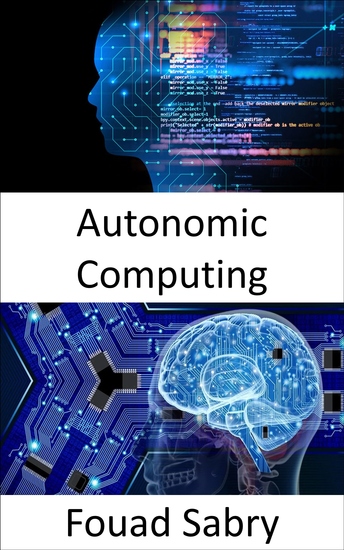
Autonomic Computing - Fundamentals and Applications - cover
LER

Autonomic Computing - Fundamentals and Applications

Fouad Sabry

Editora: One Billion Knowledgeable

  • 0
  • 0
  • 0

Sinopse

What Is Autonomic Computing
 
Autonomic computing (AC) refers to the utilization of distributed computing resources that have self-management qualities. These resources can adjust to changes that are unpredictable while masking the fundamental complexity from users and operators. This endeavor, which was started by IBM in 2001, has as its ultimate goal the creation of computer systems that are capable of managing themselves, the overcoming of the constantly increasing complexity of managing computing systems, and the reduction of the barrier that complexity poses to further expansion.
 
How You Will Benefit
 
(I) Insights, and validations about the following topics:
 
Chapter 1: Autonomic computing
 
Chapter 2: List of computer scientists
 
Chapter 3: Algorithmic efficiency
 
Chapter 4: Outline of computer science
 
Chapter 5: Self-management (computer science)
 
Chapter 6: Autonomic networking
 
Chapter 7: Computer cluster
 
Chapter 8: Cloud computing
 
Chapter 9: Policy-based management
 
Chapter 10: Glossary of artificial intelligence
 
(II) Answering the public top questions about autonomic computing.
 
(III) Real world examples for the usage of autonomic computing in many fields.
 
(IV) 17 appendices to explain, briefly, 266 emerging technologies in each industry to have 360-degree full understanding of autonomic computing' technologies.
 
Who This Book Is For
 
Professionals, undergraduate and graduate students, enthusiasts, hobbyists, and those who want to go beyond basic knowledge or information for any kind of autonomic computing.
Disponível desde: 04/07/2023.
Comprimento de impressão: 214 páginas.

Outros livros que poderiam interessá-lo

  • The Complete Family Guide to Dementia - Everything You Need to Know to Help Your Parent and Yourself - cover

    The Complete Family Guide to...

    Thomas F. Harrison, Brent P....

    • 0
    • 0
    • 0
    If you are facing the unique challenges of caring for a parent with dementia, you are not alone. What do you do when your loved one so plainly needs assistance, but is confused, angry, or resistant to your help? Where can you find the vital information you need, when you need it? Journalist Thomas Harrison and leading geriatric psychiatrist Brent Forester show that you don’t have to be a medical expert to be a good care provider in this authoritative guide. They explain the basics of dementia and offer effective strategies for coping with the medical, emotional, and financial toll. With the right skills, you can navigate changing family roles, communicate better with your parent, keep him or her safe, and manage difficult behaviors. Learn how to "care smarter, not harder"—and help your loved one maintain the best possible quality of life. 
    Winner (Second Place)—American Journal of Nursing Book of the Year Award, Consumer Health Category 
    Winner (Third Place)—Foreword INDIES Book of the Year Award, Family & Relationships Category
    Ver livro
  • How Far the Light Reaches - A Life in Ten Sea Creatures - cover

    How Far the Light Reaches - A...

    Sabrina Imbler

    • 0
    • 0
    • 0
    A fascinating tour of creatures from the surface to the deepest ocean floor: this "miraculous, transcendental book" invites us to envision wilder, grander, and more abundant possibilities for the way we live (Ed Yong, author of An Immense World). A queer, mixed race writer working in a largely white, male field, science and conservation journalist Sabrina Imbler has always been drawn to the mystery of life in the sea, and particularly to creatures living in hostile or remote environments. Each essay in their debut collection profiles one such creature, including:     ·the mother octopus who starves herself while watching over her eggs,     ·the Chinese sturgeon whose migration route has been decimated by pollution and dams,     ·the bizarre, predatory Bobbitt worm (named after Lorena),     ·the common goldfish that flourishes in the wild,     ·and more.  Imbler discovers that some of the most radical models of family, community, and care can be found in the sea, from gelatinous chains that are both individual organisms and colonies of clones to deep-sea crabs that have no need for the sun, nourished instead by the chemicals and heat throbbing from the core of the Earth. Exploring themes of adaptation, survival, sexuality, and care, and weaving the wonders of marine biology with stories of their own family, relationships, and coming of age, How Far the Light Reaches is a shimmering, otherworldly debut that attunes us to new visions of our world and its miracles.    WINNER OF THE LOS ANGELES TIMES BOOK PRIZE in SCIENCE & TECHNOLOGY  Finalist for the Lambda Literary Award One of TIME’s 10 Best Nonfiction Books of the Year •  A PEOPLE Best New Book  •  A Barnes & Noble and SHELF AWARENESS Best Book of 2022  •  An Indie Next Pick  •  One of Winter’s Most Eagerly Anticipated Books: VANITY FAIR, VULTURE, BOOKRIOT
    Ver livro
  • Art of Deception The: Book Summary & Analysis - cover

    Art of Deception The: Book...

    Briefly Summaries

    • 0
    • 0
    • 0
    This is a concise summary and analysis of The Art of Deception, by Kevin D. Mitnick and William L. Simon.
     
    It is not the original book and is not affiliated with or endorsed by Kevin D. Mitnick and William L. Simon.
     
    Ideal those seeking a quick and insightful overview.
    
     
    The Art of Deception provides a captivating look into the world of social engineering, revealing how hackers manipulate human behavior to gain access to sensitive information. Through real-life examples and expert analysis, the book explores the psychological tactics used in deception, offering insights into how individuals and organizations can protect themselves from these types of attacks. It emphasizes the importance of awareness and vigilance in an increasingly connected world.
    Ver livro
  • The Blue Revolution - Hunting Harvesting and Farming Seafood in the Information Age - cover

    The Blue Revolution - Hunting...

    Nicholas Sullivan

    • 0
    • 0
    • 0
    Overfishing. For the world's oceans, it's long been a worrisome problem with few answers. But as older fishing fleets retire and new technologies develop, a better, more sustainable way to farm this popular protein has emerged to profoundly shift the balance. The Blue Revolution tells the story of the recent transformation of commercial fishing: an encouraging change from maximizing volume through unrestrained wild hunting to maximizing value through controlled harvesting and farming. 


    Nicholas P. Sullivan presents this new way of thinking about fish, food, and oceans by profiling the people and policies transforming an aging industry into one that is "post-industrial"—fueled by "sea-foodies" and locavores interested in sustainable, traceable, quality seafood. He discusses the global challenges to preserving healthy oceans, including conservation mechanisms, the impact of climate change, and unregulated and criminal fishing in international waters. 


    In a fast-growing world where more people are eating more fish than ever before, The Blue Revolution brings encouraging news for conservationists and seafood lovers about the transformation of an industry historically averse to change, and it presents fresh inspiration for entrepreneurs and investors eager for new opportunities in a blue-green economy.
    Ver livro
  • Human Anatomy - A Comprehensive Guide to the Body's Structures and Functions - cover

    Human Anatomy - A Comprehensive...

    Ava Westwood

    • 0
    • 0
    • 0
    The human body is a remarkable and intricate system, made up of trillions of cells working in harmony to maintain life. Understanding its structure and function is essential for gaining insights into how the body operates and sustains itself. At the most basic level, the body is organized into four primary levels: cells, tissues, organs, and systems. Cells are the building blocks of life, each with specialized functions that contribute to the overall well-being of the organism. Tissues are formed from similar cells working together to perform specific functions. Organs are composed of various tissues that cooperate to carry out more complex tasks, and when organs work together in coordinated groups, they form systems that carry out essential bodily functions. 
    The organization of the body is designed for efficiency and survival, ensuring that all processes, from digestion to respiration, occur seamlessly. For example, the digestive system processes food and absorbs nutrients, the respiratory system ensures oxygen exchange, and the circulatory system distributes oxygen and nutrients to the cells while removing waste products. Each system is interconnected, and any disruption to one can affect the others, highlighting the importance of balance and coordination in maintaining health. 
    A key concept in understanding the body’s functioning is homeostasis, the body’s ability to maintain a stable internal environment despite external changes. This balance is critical to the survival of cells and, by extension, the organism as a whole. The body’s systems are continuously monitoring and adjusting to changes in temperature, pH levels, fluid balance, and other internal factors to keep everything within optimal ranges. For instance, when body temperature rises, the body sweats to cool down, and when it drops, it shivers to generate heat. Similarly, the kidneys help regulate fluid balance by adjusting urine production according to hydration levels.
    Ver livro
  • Obesity - The other pandemic of the 21st century - cover

    Obesity - The other pandemic of...

    Ada Cuevas, Donna Ryan

    • 0
    • 0
    • 0
    Obesity is becoming one of the preeminent public health concerns, with prevalence increasing throughout the world.
    Covering many aspects of contemporary obesity research, this timely book by some of the leading experts in the field explores issues relating to the biology, diagnosis, treatment, and prevention of obesity, including childhood obesity. The work is attuned to the needs of those living with obesity, with a chapter devoted to
    the harm caused by weight stigma and false narratives around lifestyle choices.
    'Obesity, the other pandemic of the 21st century' reviews the available evidence to prove that obesity should be considered not just as a key contributor towards other comorbidities, but as a disease by itself. Importantly, the effect of the COVID-19 pandemic on obesity is addressed, which raised the complexity and severity of the obesity and should be a call to action for the prevention and early treatment of this disease. This book has been developed by World Obesity Federation collaborators, and is aimed at healthcare practitioners, academics, policymakers, students, patients living with obesity and all those impacted by the issue.
    The research covered in these pages goes some way towards proving that obesity is quickly becoming 'the other pandemic' of the 21st century. Much like any major pandemic, the consequence of inaction is truly alarming.
    Ver livro