¡Acompáñanos a viajar por el mundo de los libros!
Añadir este libro a la estantería
Grey
Escribe un nuevo comentario Default profile 50px
Grey
Suscríbete para leer el libro completo o lee las primeras páginas gratis.
All characters reduced
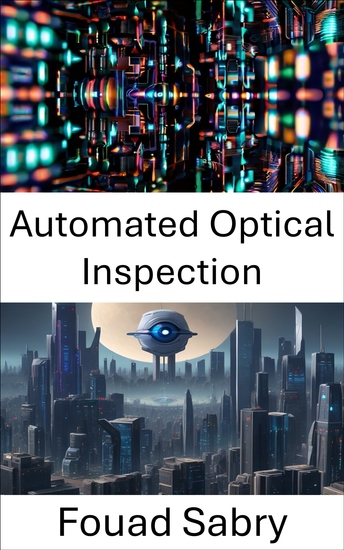
Automated Optical Inspection - Advancements in Computer Vision Technology - cover

Automated Optical Inspection - Advancements in Computer Vision Technology

Fouad Sabry

Editorial: One Billion Knowledgeable

  • 0
  • 0
  • 0

Sinopsis

What is Automated Optical Inspection
 
Automated optical inspection (AOI) is an automated visual inspection of printed circuit board (PCB) manufacture where a camera autonomously scans the device under test for both catastrophic failure and quality defects. It is commonly used in the manufacturing process because it is a non-contact test method. It is implemented at many stages through the manufacturing process including bare board inspection, solder paste inspection (SPI), pre-reflow and post-re-flow as well as other stages.
 
How you will benefit
 
(I) Insights, and validations about the following topics:
 
Chapter 1: Automated Optical Inspection
 
Chapter 2: Printed Circuit Board
 
Chapter 3: Ball Grid Array
 
Chapter 4: Surface-mount Technology
 
Chapter 5: Gerber Format
 
Chapter 6: Reflow Oven
 
Chapter 7: Reflow Soldering
 
Chapter 8: Rework (Electronics)
 
Chapter 9: Solder Paste
 
Chapter 10: Selective Soldering
 
(II) Answering the public top questions about automated optical inspection.
 
(III) Real world examples for the usage of automated optical inspection in many fields.
 
Who this book is for
 
Professionals, undergraduate and graduate students, enthusiasts, hobbyists, and those who want to go beyond basic knowledge or information for any kind of Automated Optical Inspection.
Disponible desde: 14/05/2024.
Longitud de impresión: 104 páginas.

Otros libros que te pueden interesar

  • Doing AI - A Business-Centric Examination of AI Culture Goals and Values - cover

    Doing AI - A Business-Centric...

    Richard Heimann

    • 0
    • 0
    • 0
    When businesses try to "do AI," they place an abstract solution before problems and customers without fully considering whether it is wise, whether the hype is true, or how AI will impact their organization in the long term. Often absent is sound reasoning for why they should go down this path in the first place. 


    Doing AI explores AI for what it actually is—and what it is not—and the problems it can truly solve. Author Richard Heimann unravels the tricky relationship between problems and high-tech solutions, exploring the pitfalls in solution-centric thinking and explaining how businesses should rethink AI in a way that aligns with their cultures, goals, and values. 


    As the Chief AI Officer at Cybraics Inc., Richard Heimann knows from experience that AI-specific strategies are often bad for business. Doing AI is his comprehensive guide that will help readers understand AI, avoid common pitfalls, and identify beneficial applications for their companies. 


    This book is a must-listen for anyone looking for clarity and practical guidance for identifying problems and effectively solving them, rather than getting sidetracked by a shiny new "solution" that doesn't solve anything.
    Ver libro
  • Hands-On Monitoring and Alerting with Prometheus - Build Resilient Real-time Monitoring and Alerting Systems Using Prometheus PromQL and Proven Best Practices for Modern Infrastructure - cover

    Hands-On Monitoring and Alerting...

    Muhammad Badawy

    • 0
    • 0
    • 0
    Build reliable, scalable monitoring and alerting systems with Prometheus, PromQL, and real-world demos
    Book Description
    Prometheus has emerged as the leading open-source monitoring solution for building resilient, observable systems, and Hands-On Monitoring and Alerting with Prometheus shows you exactly how to utilize its full potential.
    The book begins with the fundamentals of modern monitoring and the core architecture of Prometheus. Through hands-on labs, you’ll master Prometheus service discovery, labeling, and relabeling to organize metrics at scale.
    Whether you are collecting metrics from Linux machines, Windows servers, Docker containers, or databases, this book equips you with practical skills through real-world examples and tutorials. You will learn how to install and configure Prometheus, use its service discovery features, label and relabel metrics, and build powerful queries using PromQL - all leading to actionable insights through alerts and dashboards.
    You’ll configure alerts and Alertmanager integrations, apply advanced techniques, and put everything together with real-world applications. Each chapter builds practical skills so you can confidently design and operate a robust observability stack.
    Whether you're a DevOps engineer, SRE, or system architect, this book is your gateway to production-grade monitoring. Don’t just collect metrics—turn them into action with Prometheus today.
    Table of Contents
    1. Introduction and Key Concepts in Monitoring
    2. Prometheus Server Architecture and Features
    3. Different Types of Prometheus Metrics
    4. Metrics Exporters for Infrastructure Monitoring
    5. Prometheus Service Discovery Feature
    6. Metrics Labeling and Relabeling
    7. Prometheus Query Language PromQL
    8. Alerts and Alert Receivers
    9. Advanced Prometheus Techniques
    10. Prometheus and Real-world Applications
    11. Conclusion: Future Steps      
    
    Index
    Ver libro
  • When Machines Learn - AI and the Transformation of Society - cover

    When Machines Learn - AI and the...

    Lars Meyer

    • 0
    • 0
    • 0
    Explore a future where artificial intelligence (AI) transforms every aspect of life, from jobs to ethical decisions. "When Machines Learn: AI and the Transformation of Society" takes you on a gripping journey through the evolution of AI, revealing its transition from primitive concepts to seamlessly integrated sophisticated systems. Witness groundbreaking applications that set the stage for a revolution. 
     
    As humanity stands at a critical crossroads, delve into the intricate dance between AI and its impact on the workforce. Jobs will evolve, industries will be reborn, and a new skilled labor market will emerge from automation's wake. Peel back layers of fear and uncertainty to reveal the silver lining of opportunities that lie ahead. 
     
    However, this brave new world raises moral dilemmas. Address the challenging questions of bias, equality, and the need for transparent and accountable systems. Explore implications for privacy in a data-driven world and navigate the tightrope between technological advancement and protecting individual rights. 
     
    Discover how AI will shape the future by redefining societal values. Human-AI collaboration enhances human capabilities, while case studies showcase explosive potential. The book examines international policies and the geopolitical race for AI supremacy, illustrating how AI can redefine daily life, from personalized experiences to strides in health, education, and transportation. 
     
    Equip yourself with knowledge to face the imminent AI future. "When Machines Learn" is your essential guide to understanding and embracing the AI revolution. Step into its pages to navigate the boundless possibilities of tomorrow.
    Ver libro
  • The Basics of Blockchain Explained - The New Revolutionary Technology That's Going to Change the World Forever - cover

    The Basics of Blockchain...

    Thomas Kain

    • 0
    • 0
    • 0
    An introduction to the basics of blockchain technology. 
    Are you confused by the blockchain? 
    Do you know what it is and how it works? 
    Do you want to know how it can change the world? 
    Then, you’ve chosen the right book. 
    Blockchain technology is not new. In fact, it was introduced in 2009 with the Bitcoin cryptocurrency, but since then, things have moved on at a significant pace. These days, many industries are developing their own blockchain-based solutions, looking to replace their existing database and record-keeping systems with one that works faster and is far more secure. 
    In this book, you will learn:What blockchain isHow blockchain works – a brief overview and a more technical lookThe history of blockchain technology and BitcoinThe advantages and disadvantages of blockchain technologyHow blockchain works with the financial industryHow it works with other industriesHow decentralized apps and smart contracts workWhat the proof-of-work concept is and how it worksThe current and future use cases for the blockchainWhat Ripple and the R3 consortium areAnd much more 
    The blockchain has already changed the world in so many ways, and most of us aren’t even aware that the systems we’ve used every day have changed. Not every blockchain is decentralized; some still have a centralized intermediary. Not every blockchain is open-source. Banks, governments, and financial institutions are all maintaining control but in a more open, secure way that is far less open to fraud than previous financial transaction systems. 
    If you want to learn more about the blockchain and how it might benefit you in the future, click the “Add to cart” button now and get started.
    Ver libro
  • The Honey Trap - How the Good Intentions of Urban Beekeepers Risk Ecological Disaster - cover

    The Honey Trap - How the Good...

    Dana L. Church

    • 0
    • 0
    • 0
    The last decade has seen an explosion of urban beekeeping in the US, Canada, and Europe, a well-intentioned response to perceived threats to the global honey bee population. Many thousands of people have taken up this seemingly environmentally friendly hobby, tending backyard and rooftop hives (or paying a company to do so) and encouraging honey bees to make honey and pollinate flowers. What could be wrong with that? 


    Quite a lot, in fact. In The Honey Trap, scientist and author Dana Church demonstrates that despite reports to the contrary, honey bees are nowhere near extinction. Rather, their nurturing by urban beekeepers is having far-reaching and potentially devastating consequences for the 19,999 other species of bees on the planet, with knock-on effects for plants, both cultivated and wild, and our ecosystems more generally. 


    With engaging storytelling and a wealth of knowledge about bees and their ways, Church unravels the complexities of human interactions with our winged friends and demonstrates how dangerously selfish our thinking can be. It's a wake-up call for humanity to embrace sustainable practices and protect these vital pollinators before it's too late.
    Ver libro
  • Odontology - Teeth and Their Secrets: The Study of Dental Health - cover

    Odontology - Teeth and Their...

    Mike Crawford

    • 0
    • 0
    • 0
    Teeth have played a crucial role in the survival and adaptation of countless species throughout history. Their development and evolution provide insight into the dietary habits, environmental changes, and biological adaptations of various organisms, including humans. From primitive jawless fish to modern mammals, the transformation of teeth reflects an ongoing evolutionary process shaped by natural selection and functional necessity. 
    The earliest evidence of tooth-like structures dates back over 500 million years to the era of jawless fish. These ancient creatures possessed dermal denticles—small, tooth-like scales covering their bodies—that provided protection and may have eventually contributed to the formation of true teeth. As vertebrates evolved, the emergence of jaws revolutionized feeding strategies, allowing for more efficient food consumption and leading to the diversification of teeth in different species. 
    In early jawed fish, known as placoderms, teeth were not yet distinct from the jawbone but were integrated into it. Over time, evolutionary pressures favored the development of separate, more specialized teeth. This adaptation enabled vertebrates to exploit a wider range of food sources, leading to increased survival and reproduction. With the rise of sharks and bony fish, teeth became more complex, capable of being replaced throughout an organism’s life, a trait still seen in many species today.
    Ver libro