Junte-se a nós em uma viagem ao mundo dos livros!
Adicionar este livro à prateleira
Grey
Deixe um novo comentário Default profile 50px
Grey
Assine para ler o livro completo ou leia as primeiras páginas de graça!
All characters reduced
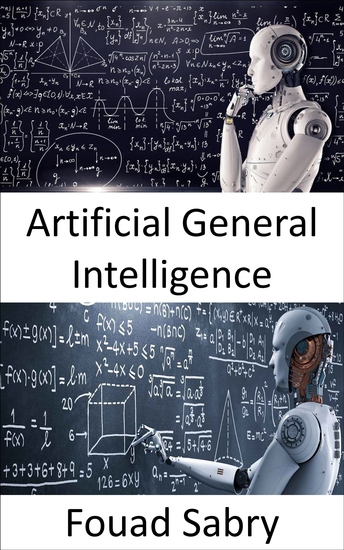
Artificial General Intelligence - Machines may eventually be as clever as humans and possibly even smarter but the game is still far from over - cover
LER

Artificial General Intelligence - Machines may eventually be as clever as humans and possibly even smarter but the game is still far from over

Fouad Sabry

Editora: One Billion Knowledgeable

  • 0
  • 0
  • 0

Sinopse

What Is Artificial General Intelligence
 
The capacity of an intelligent agent to grasp or learn any intellectual work that can be accomplished by a human being is the definition of artificial general intelligence, or AGI.This is a key objective of certain artificial intelligence research, as well as a subject that is often discussed in science fiction and studies of the future. AGI is also known as strong AI, complete AI, or general intelligent action; however, some academic sources reserve the term "strong AI" for computer systems that experience awareness or consciousness. Other names for AGI include general intelligent action and full AI.
 
How You Will Benefit
 
(I) Insights, and validations about the following topics:
 
Chapter 1: Artificial general intelligence
 
Chapter 2: Artificial intelligence
 
Chapter 3: Chinese room
 
Chapter 4: Hugo de Garis
 
Chapter 5: Technological singularity
 
Chapter 6: The Age of Spiritual Machines
 
Chapter 7: Mind uploading
 
Chapter 8: Symbolic artificial intelligence
 
Chapter 9: Neats and scruffies
 
Chapter 10: Artificial brain
 
Chapter 11: Physical symbol system
 
Chapter 12: History of artificial intelligence
 
Chapter 13: Philosophy of artificial intelligence
 
Chapter 14: AI winter
 
Chapter 15: Outline of artificial intelligence
 
Chapter 16: Hubert Dreyfus's views on artificial intelligence
 
Chapter 17: Timeline of artificial intelligence
 
Chapter 18: How to Create a Mind
 
Chapter 19: Conference on Artificial General Intelligence
 
Chapter 20: Hypothetical technology
 
Chapter 21: GPT-2
 
(II) Answering the public top questions about artificial general intelligence.
 
(III) Real world examples for the usage of artificial general intelligence in many fields.
 
(IV) 17 appendices to explain, briefly, 266 emerging technologies in each industry to have 360-degree full understanding of artificial general intelligence' technologies.
 
Who This Book Is For
 
Professionals, undergraduate and graduate students, enthusiasts, hobbyists, and those who want to go beyond basic knowledge or information for any kind of artificial general intelligence.
Disponível desde: 10/07/2022.
Comprimento de impressão: 365 páginas.

Outros livros que poderiam interessá-lo

  • Soil Health - Building and Maintaining Fertile Ground - cover

    Soil Health - Building and...

    Gertrude Harris

    • 0
    • 0
    • 0
    Soil structure is the physical arrangement of particles and aggregates that form the soil matrix, affecting everything from root growth to water retention and air circulation. The fundamental components of soil include sand, silt, and clay, each contributing unique properties that define the texture and function of the soil. Understanding soil structure is crucial for anyone looking to improve or maintain soil health, as it directly influences the soil’s ability to support plant life. 
    The size of soil particles determines its texture, which in turn affects its drainage and nutrient-holding capacity. Sand particles are the largest, with relatively little ability to retain nutrients or water, but they allow for excellent drainage. Silt particles are smaller and retain water better, though they may also become compacted more easily. Clay, the smallest of the soil particles, holds both water and nutrients but can create a dense, heavy structure that may not drain well, especially when wet. 
    Soil texture influences its ability to hold nutrients and support plant growth. A balanced mixture of sand, silt, and clay—known as loam—is ideal for most plants, as it combines the drainage properties of sand with the nutrient and water retention capabilities of silt and clay. Loam provides the necessary balance of aeration, moisture, and nutrient availability for healthy root systems. 
    The way these particles aggregate into clusters—known as soil structure—is just as important as texture. Soil aggregates, or clumps of soil particles bound together by organic matter, create small spaces for air and water to flow through. This porosity is essential for maintaining soil health. Well-aggregated soil has good permeability and
    Ver livro
  • Oath and Law - cover

    Oath and Law

    Hippocrates

    • 0
    • 0
    • 0
    The Oath and Law by Hippocrates is a document that outlines the ethical code of conduct for medical professionals. The oath is a pledge to uphold the highest standards of care for patients, and the law is a set of guidelines for how physicians should behave. The oath and law are designed to protect patients and ensure that they receive the best possible care. Read in English, unabridged.
    Ver livro
  • Trolling Ourselves to Death - Democracy in the Age of Social Media (Oxford Studies in Digital Politics) - cover

    Trolling Ourselves to Death -...

    Jason Hannan

    • 0
    • 0
    • 0
    Almost forty years ago, Neil Postman argued that television had brought about a fundamental transformation to democracy. By turning entertainment into our supreme ideology, television had recreated public discourse in its image and converted democracy into show business. In Trolling Ourselves to Death, Jason Hannan builds on Postman's classic thesis, arguing that we are now not so much amusing, as trolling ourselves to death. 


    Contrary to the popular view of the troll as an exclusively anonymous online prankster, Hannan asserts that trolls have emerged from the cave, so to speak. Trolls now include politicians, performers, patriots, and protesters. What was once a mysterious phenomenon limited to the darker corners of the Internet has since gone mainstream, eroding our public culture and changing the rules of democratic politics. 


    Synthesizing media ecology with historical materialism, Hannan explores the disturbing rise of political unreason in the form of mass trolling and sheds light on the proliferation of disinformation, conspiracy theory, "cancel culture," and digital violence. Taking inspiration from Robert Brandom's innovative reading of Georg Wilhelm Friedrich Hegel, Trolling Ourselves to Death makes a case for building "a spirit of trust" to curb the epidemic of mass distrust that feeds the plague of political trolling.
    Ver livro
  • When the Wind Stops: Inside the Global Energy Transition - cover

    When the Wind Stops: Inside the...

    Alex Southwick

    • 0
    • 0
    • 0
    The world is racing to reinvent how it powers itself — yet every solution carries its own cost. Wind farms rise where wildlands once stretched untouched, lithium mines carve into deserts, and the dream of “clean” energy grows tangled in politics, inequality, and human ambition. 
    In When the Wind Stops, Alex Southwick takes readers behind the headlines of the global energy revolution. From Arctic oil rigs standing silent in thawing seas to the vast solar fields of Morocco and the wind-swept coasts of Denmark, Southwick meets the engineers, visionaries, and communities living through this historic shift. 
    This is not a simple story of progress or failure. It’s a portrait of transition — messy, imperfect, and deeply human. With characteristic clarity and empathy, Southwick explores what it means to change the very systems that built modern civilization, and the moral choices that come with it. 
    When the Wind Stops is a journey into the heart of our energy age — a reflection on power in every sense of the word, and a reminder that even as the wind falters, the will to adapt endures.
    Ver livro
  • Black Holes and Beyond - The Darkest Corners of Space - cover

    Black Holes and Beyond - The...

    Dirk Fallon

    • 0
    • 0
    • 0
    Black holes are some of the most fascinating and mysterious objects in the universe. These regions of space are so dense that their gravitational pull is strong enough to prevent anything, even light, from escaping. The term "black hole" was first coined by physicist John Archibald Wheeler in 1967, though the concept dates back to the early 20th century, when Albert Einstein's theory of general relativity suggested that objects could collapse into singularities, points of infinite density. A black hole is the result of such a collapse, where a star's mass is concentrated in an infinitely small space. 
    At the heart of a black hole is the singularity, surrounded by a boundary known as the event horizon. The event horizon marks the point beyond which nothing can escape the black hole’s gravitational influence. This includes not only matter but also radiation, which is why black holes appear "black." Despite their invisibility, black holes are detectable through their interactions with surrounding matter, such as the accretion of gas and dust that emits detectable radiation. 
    The formation of a black hole typically begins when a massive star exhausts its nuclear fuel. Without the outward pressure from nuclear fusion to counterbalance gravity, the core of the star collapses under its own weight. If the star is massive enough, this collapse can continue, compressing the core into a singularity. The outer layers of the star are expelled in a supernova explosion, and the remaining core becomes a black hole.
    Ver livro
  • Secure Edge Computing for IoT - Master Security Protocols Device Management Data Encryption and Privacy Strategies to Innovate Solutions for Edge Computing in IoT - cover

    Secure Edge Computing for IoT -...

    Oluyemi Odeyinka

    • 0
    • 0
    • 0
    Securing the Future of IoT with Advanced Edge Computing Solutions
    Book Description
    Embark on a journey into the cutting-edge world of secure edge computing. In this meticulously crafted handbook, delve deep into the intricacies of this transformative technology that is reshaping the landscape of computing. 
    From its fundamental principles to advanced applications, this book leaves no stone unturned in demystifying the complexities of secure edge computing. Explore the architecture that underpins this paradigm shift, unraveling how it seamlessly integrates cloud resources with local devices to enhance efficiency and reliability. Dive into the nuances of security in edge computing, understanding the unique challenges posed by distributed networks and diverse endpoints. 
    Discover real-world case studies and best practices from industry experts, gaining invaluable insights into deploying and managing secure edge computing solutions across various domains. With clear explanations, practical examples, and actionable advice, Secure Edge Computing For IoT empowers you to harness the full potential of this transformative technology while fortifying your digital infrastructure against evolving security risks. Prepare to embark on a journey of innovation and resilience at the edge of tomorrow’s computing landscape. 
    
    Table of Contents
    
    1. Introduction to IoT and Edge Computing
    2. Edge Computing Fundamentals and Use Cases
    3. Edge Networking and Routing Protocols
    4. IoT and Edge Computing Security
    5. Data Analytics and Machine Learning at Edge
    6. Secure Edge Design and Development
    7. Secure Edge Penetration Testing and Incident Management
    8. Edge Computing Cybersecurity and Cryptography
    9. Cloud Computing in the Context of Edge Computing
    10. Secure Edge Development and Implementation   
    Index
    Ver livro