¡Acompáñanos a viajar por el mundo de los libros!
Añadir este libro a la estantería
Grey
Escribe un nuevo comentario Default profile 50px
Grey
Suscríbete para leer el libro completo o lee las primeras páginas gratis.
All characters reduced
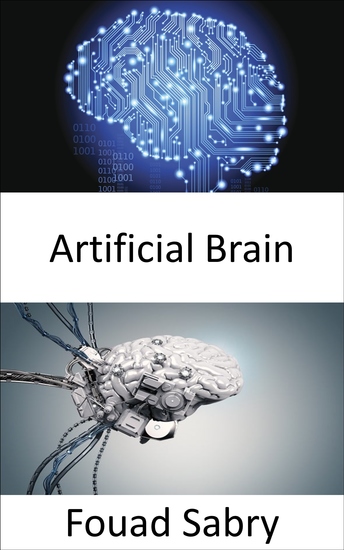
Artificial Brain - Giving the robots the intelligence for complex tasks - cover

Artificial Brain - Giving the robots the intelligence for complex tasks

Fouad Sabry

Editorial: One Billion Knowledgeable

  • 0
  • 0
  • 0

Sinopsis

What Is Artificial Brain
 
An artificial brain is a combination of computer software and hardware that has cognitive capacities that are analogous to those of a human or animal brain.
 
How You Will Benefit
 
(I) Insights, and validations about the following topics:
 
Chapter 1: Artificial brain
 
Chapter 2: Artificial intelligence
 
Chapter 3: Chinese room
 
Chapter 4: Technological singularity
 
Chapter 5: The Age of Spiritual Machines
 
Chapter 6: Mind uploading
 
Chapter 7: Bio-inspired computing
 
Chapter 8: Neuromorphic engineering
 
Chapter 9: Artificial general intelligence
 
Chapter 10: The Singularity Is Near
 
Chapter 11: Neural network
 
Chapter 12: Physical symbol system
 
Chapter 13: Philosophy of artificial intelligence
 
Chapter 14: Neuroinformatics
 
Chapter 15: Outline of artificial intelligence
 
Chapter 16: Hubert Dreyfus's views on artificial intelligence
 
Chapter 17: Brain simulation
 
Chapter 18: How to Create a Mind
 
Chapter 19: Cognitive computer
 
Chapter 20: Hypothetical technology
 
Chapter 21: Turing's Wager
 
(II) Answering the public top questions about artificial brain.
 
(III) Real world examples for the usage of artificial brain in many fields.
 
(IV) 17 appendices to explain, briefly, 266 emerging technologies in each industry to have 360-degree full understanding of artificial brain' technologies.
 
Who This Book Is For
 
Professionals, undergraduate and graduate students, enthusiasts, hobbyists, and those who want to go beyond basic knowledge or information for any kind of artificial brain.
Disponible desde: 10/07/2022.
Longitud de impresión: 382 páginas.
Otros libros que te pueden interesar

  • The Demon in the Machine - How Hidden Webs of Information Are Solving the Mystery of Life - cover

    The Demon in the Machine - How...

    Paul Davies

    • 0
    • 0
    • 0
    What is life? For generations, scientists have struggled to make sense of this fundamental question, for life really does look like magic: even a humble bacterium accomplishes things so dazzling that no human engineer can match it. Huge advances in molecular biology over the past few decades have served only to deepen the mystery. 


    In this penetrating and wide-ranging book, world-renowned physicist and science communicator Paul Davies searches for answers in a field so new and fast-moving that it lacks a name; it is a domain where biology, computing, logic, chemistry, quantum physics, and nanotechnology intersect. At the heart of these diverse fields, Davies explains, is the concept of information: a quantity which has the power to unify biology with physics, transform technology and medicine, and force us to fundamentally reconsider what it means to be alive—even illuminating the age-old question of whether we are alone in the universe. 


    The Demon in the Machine journeys across an astounding landscape of cutting-edge science. Weaving together cancer and consciousness, two-headed worms and bird navigation, Davies reveals how biological organisms garner and process information to conjure order out of chaos, opening a window onto the secret of life itself.
    Ver libro
  • Multiple Sclerosis (MS) - Basics to Mastery - Evidence-based neurology handbook for diagnosis treatment and everyday living - cover

    Multiple Sclerosis (MS) - Basics...

    Dean Stratton

    • 0
    • 0
    • 0
    This audiobook is narrated by an AI Voice.  
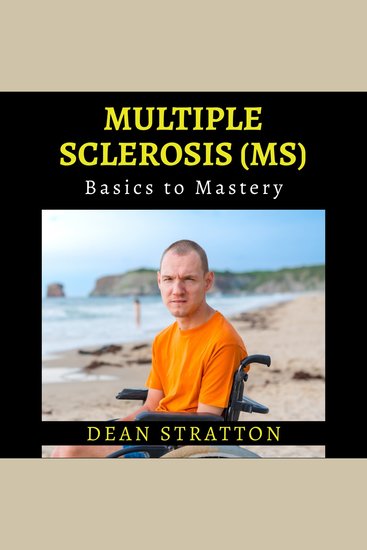
    Written for curious beginners, students, clinicians-in-training, and informed patients, this guide explains the science and day-to-day realities of multiple sclerosis in clear, compassionate language. You’ll learn how an immune-mediated attack on myelin disrupts brain and spinal cord signaling; how typical presentations such as optic neuritis, sensory change, imbalance, and weakness are evaluated; and how diagnosis uses clinical history plus MRI evidence of dissemination in time and space, sometimes supported by cerebrospinal-fluid oligoclonal bands and the McDonald criteria. Understand current disease-modifying therapies (injectable, oral, and monoclonal), what they can and cannot do, and how acute relapses are treated (usually high-dose corticosteroids; plasma exchange when steroid-refractory). Equally, this book emphasizes rehabilitation, fatigue and mood management, heat sensitivity, cognition, exercise, nutrition, pregnancy planning, and shared decision-making. A vivid opening vignette follows “Aisha,” a young designer with sudden blurred vision, through referral, imaging, treatment choices, and building a relapse action plan—turning complex neurology into practical steps. 
    ✓ Plain-English primers with clinician-level sidebars, flowcharts, and a jargon-free glossary. 
    ✓ Case vignettes and “ask your neurologist” checklists mapped to every stage of care. 
    ✓ MRI & lab walkthroughs: lesion patterns, dissemination rules, red flags, and pitfalls. 
    ✓ Treatment landscape decoded: DMT classes, safety monitoring, vaccination timing. 
    ✓ Daily-living playbook: fatigue pacing, mobility, cognition, work, travel, and heat. 
    ✓ Practical tools: symptom tracker, flare diary, medication matrix, goal-setting sheets.
    Ver libro
  • Hydrogen Runner - cover

    Hydrogen Runner

    Claudia K Leber

    • 0
    • 0
    • 0
    Earth has become civilized! 
    The only fuel these days is hydrogen. 
    Out near the Sun where we collect the hydrogen, with pirates attacking it is a little less civilized. My name is Martin Mercer. I'm a Hydrogen Runner. To be a runner you have to think on your feet. Use your instincts. Because on a run you are reduced to one basic instinct, to Survive!
    Ver libro
  • Machine Readable Me - The Hidden Ways Tech Shapes our Identities - cover

    Machine Readable Me - The Hidden...

    Zara Rahman

    • 0
    • 0
    • 0
    As we go about our day-to-day lives, digital information about who we are is gathered from all angles via biometric scans, passport applications, and, of course, social media. This data can never fully capture our complex, fluid identities over decades of our lives. Yet, this data populates numerous databases we may not even be aware of that can make life-or-death decisions such as who is allowed access to welfare benefits or who is granted food parcels as they pass war-torn borders.
    Machine Readable Me considers how and why data that is gathered about us is increasingly limiting what we can and can't do in our lives and, crucially, what the alternatives are.
    Ver libro
  • Megalodon The: The History and Legacy of the World’s Largest Prehistoric Predator - cover

    Megalodon The: The History and...

    Editors Charles River

    • 0
    • 0
    • 0
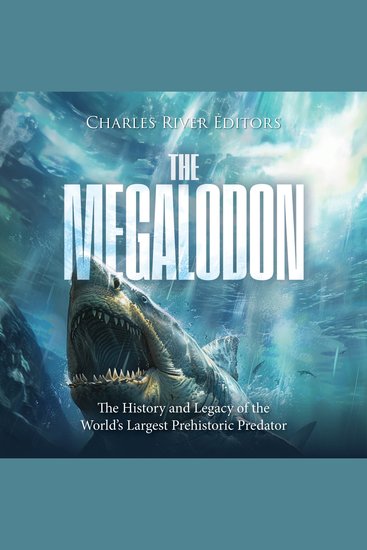
    As scary as the shark in Jaws is, the extinct megalodon had teeth three times the length of those found within the jaws of a great white shark, so a human would only have been a small snack. In fact, the megalodon was capable of swallowing a small car. Known to scientists as Otodus megalodon or Carcharocles megalodon (otodus meaning “tooth shaped like an ear”; carcharocles meaning “well known for jaggedness”; and megalodon meaning “big tooth”), this predator lived approximately 23–3.6 million years ago), from the early Miocene Epoch to the early Pliocene Epoch. The genus name Otodus and the family name Otodontidae are now the most commonly used, but scientific literature remains full of the older designation, and many of the shark experts regard the new family designation as flawed.  
    	For many years, megalodon was thought to be more closely related to the great white shark (Carcharodon carcharias), and though both are still part of the order Lamniformes, the two species now reside in different families: Lamnidae and Otodontidae (megalodon). Either way, while great white sharks can reach sizes of 20 feet long and nearly 2.5 tons in weight, the average megalodon was twice as big, and some of them may have been about three times as big. The sheer size allowed it to target prey as big as whales, and the massive jaw allowed it to simply tear through any kind of body with no regard for the prey’s most vulnerable spots.  
    	While all of that seems to be beyond dispute, almost everything else about the history of the megalodon is up for debate, from its origins to its extinction.  The Megalodon: The History and Legacy of the World’s Largest Prehistoric Predator covers that expansive history in detail, from what is known to what remains most mysterious.
    Ver libro
  • Swimming Upstream - One man's fight to save the Atlantic wild salmon - cover

    Swimming Upstream - One man's...

    Patsy Peril, Deirdre Nuttall

    • 0
    • 0
    • 0
    'Unlike me, the Atlantic wild salmon does not have a voice, so it cannot tell the story of why and how it has been driven to the point of extinction.'
    Once, the River Shannon was teeming with wild salmon swimming upstream. But when the enormous hydro-electric station at Ardnacrusha was built in 1929, what began as the Free State's crowning achievement would have a devastating impact on the environment.
    In this evocative and thought-provoking memoir, Patsy Peril recalls a life deeply entwined with Irish wildlife and embedded in the history of modern Ireland. From a childhood spent on the water to a national conservation campaign, Patsy has a lifetime of knowledge to share about the wild Atlantic salmon – and a plan to save it.
    Ver libro